
Instant heat for Kentucky Lake living, no chimney required.
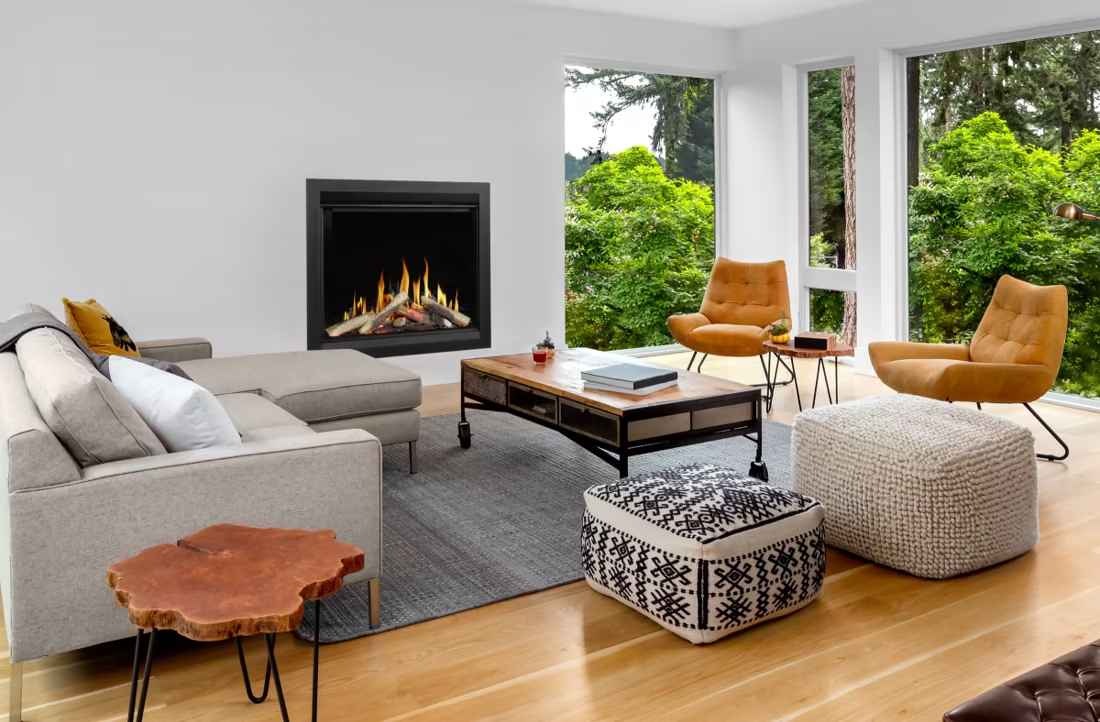
From lakefront cabins on Kentucky Lake and Lake Barkley to year-round homes around Benton, an electric fireplace adds real ambiance and supplemental warmth without venting, gas lines, or masonry work. Find the right unit and connect with a trusted local dealer.
Every Project Starts From One of These Five Situations
The easiest heat upgrade for lake homes and cabins.
Marshall County sits in a 4A climate zone with about 4,262 heating degree days and winter lows averaging 23°F—cold enough for regular fires but nowhere near the extremes of a place like Duluth, MN. Much of the county's housing stock is tied to Kentucky Lake, Lake Barkley, and the Land Between the Lakes recreation area, which means a lot of seasonal cabins, weekend homes, and rental properties in addition to full-time residences around Benton. That mix matters: electric fireplaces are a natural fit for properties that need supplemental heat and instant ambiance without committing to a chimney, a gas line, or a wood-cutting routine.
Most of rural Marshall County isn't on a natural gas grid, and propane delivery to lakeside cabins adds cost and hassle. Electric solves both problems—a plug-in unit runs off a standard household outlet, and a built-in or wall-mounted unit typically just needs a dedicated 120V or 208/240V circuit run by a licensed electrician. Jackson Purchase Energy Corporation, the TVA-distributor cooperative serving most of the county, is the electric provider most homeowners here already have—no new utility account or gas hookup required. For lake cottages that sit empty during the week, or rental cabins where a landlord wants heat and a fireplace look without a chimney to maintain, electric is often the simplest path.
Three steps. No salesperson until you're ready.
Tell us about your project
Your zip code, your situation, and the fuel you're leaning toward—or let the answers point you to one.
See what's actually available
The brands dealers within 100 miles genuinely carry—real options, never a catalog mirage.
Get your dealer & Project Guide
A trusted local dealer, plus the free Project Guide & Parts List that names every component of the job.
Frequently Asked Questions
How much does an electric fireplace installation cost in Marshall County?
A basic freestanding or wall-mount plug-in electric fireplace runs $150 to $600 for the unit itself and needs no installation beyond hanging it and plugging it in. A built-in or recessed electric fireplace—set into a wall cavity or an existing masonry firebox—typically runs $800 to $2,500 once you factor in framing, trim, and an electrician running a dedicated circuit if the unit draws more than a standard outlet can handle. Converting an existing wood fireplace to an electric insert is usually on the lower end of that range since the firebox opening already exists. Local dealers can give a firm number after seeing your space and your existing electrical service.
Do electric fireplaces actually put out real heat, or are they just for looks?
Most electric fireplaces include a built-in fan-forced heater rated around 4,600 to 5,000 BTU, enough to comfortably heat a single room of 400 to 1,000 square feet depending on insulation and ceiling height. That's supplemental heat, not whole-home heat—it works well for a lake cabin's main living area, a sunroom addition, or a bedroom, but it isn't sized to replace a furnace in a Marshall County winter with HDD in the low 4,000s. Many homeowners here run the flame effect year-round for ambiance and switch the heater on only when they want extra warmth in that specific room.
What's the best type of electric fireplace for a lake cabin or rental property?
For seasonal cabins around Kentucky Lake or Lake Barkley, a plug-in freestanding or mantel-style unit is often the practical choice—no electrician needed, and it can be unplugged and stored if the property sits empty part of the year. For rental cabins where the owner wants a more permanent, tamper-resistant setup, a recessed wall unit with a hardwired connection and a remote or wall switch (rather than accessible flame controls) tends to hold up better to tenant turnover. Either way, look for units with an auto shut-off timer and overheat protection, since rentals don't always get supervised use.
Do I need a permit or an electrician to install an electric fireplace in Marshall County?
A simple plug-in unit that runs off an existing outlet doesn't require a permit or an electrician—it's no different than plugging in a space heater. A built-in or recessed unit that needs a new dedicated circuit is electrical work and should be done by a licensed electrician; depending on the scope, that can trigger an electrical permit through the county building office. If you're converting an existing wood-burning fireplace into an electric insert, most local dealers coordinate the electrical work as part of the installation so you're not managing a separate trade.
Electric vs. wood—which makes more sense for my Marshall County home?
Wood is deeply practical here—oak, hickory, and maple are common and easy to source locally, and a wood stove keeps producing heat even if the power goes out, which matters for homes that lose electricity during winter storms. Electric fireplaces can't do that; they're entirely dependent on the grid and go dark the moment power drops. Where electric wins is convenience and zero maintenance: no cutting, stacking, ash cleanup, or chimney sweeps, and no smoke or emissions to worry about, which matters for lake homes with vinyl siding or covered porches nearby. Many Marshall County homeowners end up with both—wood or a pellet stove as real backup heat, electric in a secondary room or cabin where convenience matters more than redundancy.
Electric vs. gas—which is more practical for a Marshall County property?
Gas fireplaces need either a natural gas line or a propane tank, and much of rural Marshall County—including most lakefront and Land Between the Lakes-adjacent properties—isn't on a natural gas grid, so propane delivery and tank rental become part of the ongoing cost. Electric skips all of that: no fuel storage, no delivery truck, no gas line permit. The tradeoff is heat output—a vented gas fireplace can genuinely heat a room in a Kentucky winter, while electric heat is milder and more supplemental. For a primary living space in a year-round home, gas or propane is often the stronger heat source; for a cabin, sunroom, or secondary space, electric is usually the lower-hassle choice.
How much does it cost to run an electric fireplace day to day?
Most electric fireplace heaters draw around 1,500 watts on the heat setting (the flame-only mode uses very little power). Running the heater a few hours an evening typically adds a modest amount to a monthly bill under Jackson Purchase Energy Corporation's residential rates—usually less than running a portable space heater for the same hours, since many models use a more efficient fan-forced or infrared element. Running the flame effect alone, without heat, costs only a few cents a day. For lake cabins that see occasional weekend use, the total seasonal cost is generally low compared to heating the whole structure with a furnace.
Where can an electric fireplace be installed—does it need an existing fireplace?
No existing fireplace is required, which is part of why electric works well in Marshall County's mix of older lake cottages and newer builds. Options include a freestanding cabinet-style unit that needs no installation at all, a wall-mount unit hung like a large flat-screen TV, a built-in unit recessed into a framed wall cavity, or an insert sized to slide into an existing wood-burning firebox. That last option is popular for older homes around Benton with a masonry fireplace that's no longer used for wood—the insert covers the opening and delivers heat and flame effect without touching the chimney.
Will my electric fireplace still work if the power goes out?
No—electric fireplaces are fully dependent on grid power, so an outage takes them offline along with everything else in the house. This is worth planning around in Marshall County, where winter storms and ice can knock out power in rural stretches around the lakes for hours or longer. If your electric fireplace is meant to be your only backup heat source, it isn't the right tool for that job—a wood stove or a properly vented gas unit is a better fit if outage resilience matters. If it's a secondary room, a cabin used mainly in warmer months, or purely for ambiance and mild supplemental warmth, the outage limitation is much less of a concern.
Can I put a TV above my fireplace?
Yes—with an asterisk. Fireplaces are hot and TVs don't like heat. Either put a mantel between them to deflect rising warmth, or choose a fireplace with heat-management technology that creates a cool zone on the wall above—the wall stays around 125 degrees, barely warm, while the room still gets full heat. If you like clean lines and don't want a mantel, heat management is the answer.
How much does an electric fireplace cost to run?
With the heater on, a typical unit draws about 1,500 watts—at average electric rates that's roughly 20 cents an hour. Run the flame effect alone and it costs pennies; the flames are LED-driven and use about as much power as a light bulb. There's no pilot light, no fuel delivery, and essentially no maintenance.
Can a fireplace actually lower my heating bill?
Yes—by creating a comfort zone. A furnace heats every square foot of the house just to warm the one room you're in; a gas fireplace on low burns roughly a sixth of the gas a typical furnace does. Set the furnace around 55–60 degrees as a baseline, then heat the rooms your family actually uses. Families who heat this way commonly save $20–$60 a month.
Can I install a fireplace myself?
If you're putting a fire in your house on purpose, it's best to work with an expert. Unless you're genuinely experienced in framing, gas line, vent pipe, and the national code on clearances to combustibles, have a professional do it—and ideally the same company that sells you the fireplace, so warranty, service, and liability all live under one roof.
Find your electric fireplace in Marshall County.
Tell us about your home or cabin and we'll match you with the right electric fireplace or insert, plus a free Project Guide & Parts List—the exact parts and a recommended local Marshall County dealer to install it.
Find Your Fireplace →