
Heat your home in Marshall County, Kentucky—wood, gas, pellet, or electric.
From the Kentucky Lake shoreline to Benton and Calvert City, this hub covers every fuel type and every community in Marshall County. Find the right unit for your home and connect with a trusted local hearth retailer.
Every Project Starts From One of These Five Situations
Lake-country heating across Marshall County, Kentucky.
Marshall County sits between Kentucky Lake and Lake Barkley in the far west of the state, a mix of lakeside vacation homes, farmhouses, and small-town neighborhoods around Benton, Calvert City, Hardin, and Gilbertsville. Winters are moderate compared to the upper Midwest—average lows around 23°F and a winter chill that puts Marshall County closer to Madison, Wisconsin's shoulder-season cold than to a true deep-freeze climate—but the heating season still runs a solid five to six months, and cold fronts off the lakes can drop temperatures quickly overnight. Hardwood is abundant and cheap here: oak, hickory, maple, and cherry from local woodlots keep wood stoves and inserts a practical, well-supported choice.
What you'll find on this hub: hearth retailers, service technicians, and fuel suppliers covering every fuel type across the county—from year-round Benton residents to seasonal owners of Kentucky Lake cabins who want reliable heat when they're in town. Pick your fuel below to see local dealers, typical installation costs, and recommended units for your specific home. Whether you're heating a full-time residence in Calvert City or a weekend place near Land Between the Lakes, this is the place to start.
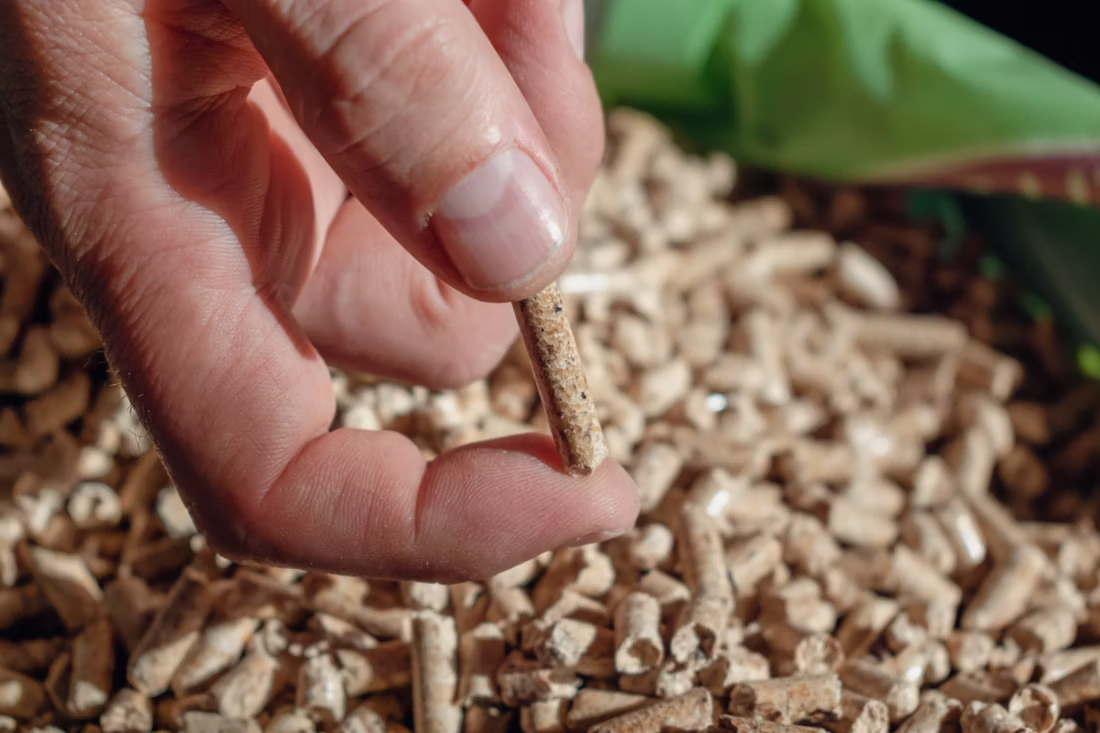
Four fuels. One honest answer for Marshall County.
Three steps. No salesperson until you're ready.
Tell us about your project
Your zip code, your situation, and the fuel you're leaning toward—or let the answers point you to one.
See what's actually available
The brands dealers within 100 miles genuinely carry—real options, never a catalog mirage.
Get your dealer & Project Guide
A trusted local dealer, plus the free Project Guide & Parts List that names every component of the job.
Frequently Asked Questions
Which fireplace fuel makes the most sense for a home in Marshall County?
It depends on how the home is used. In year-round homes around Benton and Calvert City, wood stoves and inserts remain popular thanks to cheap, plentiful local hardwood—oak, hickory, maple, and cherry are all commonly available from area woodlots. Gas (mostly propane in the more rural parts of the county) is the low-maintenance choice for households that want instant heat without splitting and stacking wood, and it's a strong fit for lake homes that sit empty for stretches at a time. Pellet stoves are a solid middle ground—you get wood-style ambiance with easier fuel handling, and regional brands like Lignetics, Hamer Pellet Fuel, and Greenway Renewable Energy keep supply local. Electric fireplaces work well as supplemental heat in bedrooms, sunrooms, or lake cottages where a full venting system isn't practical. Many full-time Marshall County residents end up with a primary wood or pellet appliance and an electric unit in a secondary room.
Do I need a permit to install a fireplace or wood stove in Marshall County?
In most cases, yes. New wood stoves, inserts, gas fireplaces, gas inserts, and pellet stoves typically require a building permit through the local code enforcement office, and any propane line work should be handled by a licensed gas installer as part of the job. Electric fireplaces generally don't need a permit unless the installation involves new wiring for a built-in unit. Most hearth retailers serving Marshall County build permitting into their installation process, so homeowners rarely need to pull the permit themselves—worth confirming with your installer before work starts.
Are there any wood-burning or air quality restrictions in Marshall County?
No—Marshall County doesn't have the winter inversion or non-attainment issues that trigger burn advisories in some Western states. That said, any new wood stove installation should still meet current EPA emissions standards, and a properly sized, well-seasoned-hardwood setup (oak and hickory burn especially clean once dried) will perform better and produce less visible smoke than a poorly matched or oversized unit.
Can one local retailer handle wood, gas, pellet, and electric, or do I need to shop around?
Coverage varies by dealer. Some hearth retailers near Benton carry all four fuel types and can show you working displays side by side, which is useful if you're still deciding between, say, a wood insert and a pellet stove. Others specialize—some are stronger on wood and gas, others focus more on pellet appliances and fuel supply. If you're cross-shopping fuels for a lake home versus a full-time residence, it's worth asking upfront what each dealer stocks and installs rather than assuming every showroom carries everything.
How does fireplace service work for lake homes and seasonal properties around Kentucky Lake and Lake Barkley?
Seasonal and part-time residences need a slightly different service rhythm than full-time homes. If a wood stove or fireplace sits unused for months, it's worth having a chimney inspection before the first fire each season—critters, debris, and moisture can build up in a flue that's gone quiet over the summer. For propane appliances, a pre-season check of the regulator and connections matters more if the tank sits idle for stretches. Scheduling service in late summer or early fall, before the rush of cold-weather calls, is generally easier than trying to book a technician once temperatures drop.
What does fireplace installation typically cost in Marshall County across the different fuel types?
Costs vary by fuel and by how much venting or gas line work is involved. Wood stove or insert installation generally runs $3,800–$8,500, with chimney lining or masonry work pushing toward the higher end. Gas fireplace, insert, or stove installation typically falls between $4,000–$9,500, depending on whether a new propane line or venting run is needed. Pellet stove or insert installs usually land in the $4,200–$7,000 range. Electric fireplaces are the most affordable entry point—often $200–$2,800 for the unit, plus $300–$1,000 in labor unless it's a simple plug-and-play install. See the county + fuel pages above for cost detail tied to specific local retailers.
Does a fireplace add value to my home?
On average, a fireplace adds back to the home about the same amount you spent installing it. Add the monthly savings from heating the rooms you actually use instead of the whole house—often hundreds of dollars a year—and the value case is strong before you even count what a fire does for how your family uses the room.
Can I install a fireplace myself?
If you're putting a fire in your house on purpose, it's best to work with an expert. Unless you're genuinely experienced in framing, gas line, vent pipe, and the national code on clearances to combustibles, have a professional do it—and ideally the same company that sells you the fireplace, so warranty, service, and liability all live under one roof.
Wood, gas, pellet, or electric—how do I choose?
Match the fuel to your life, not the other way around. Wood: lowest fuel cost and total power-outage independence, but you're hauling and stacking. Gas: press a button, set a thermostat, no maintenance to speak of. Pellet: wood economics with automatic feeding, in exchange for weekly cleaning and a need for electricity. Electric: plugs in anywhere with honest supplemental heat. Nobody regrets the fuel that fits how they actually live.
How much should I budget for a fireplace?
For an average home—covering the fireplace, the vent pipe, and basic installation—a budget between $3,900 and $5,500 gives you a lot of options across wood, gas, and pellet. By the time you add finish work, gas line, and electrical, the average complete installation lands between $5,000 and $12,000 all-in. In a remodel or new build, a good rule is to put about 2.5% of the total project cost toward the fireplace.
Stove and Fireplace Dealers in Marshall County
Listings include WhyFire partner dealers, dealers we have verified as authorized for the brands we recommend, and established local businesses that carry hearth products. Every listing shows which one it is. The ones marked Preferred run on WhyFire's software, so they can show you real pricing and book your appointment right here. No manufacturer pays for placement. How we verify dealers →
Hank Bros. True Value
Master Sweeps
Akridge Farm Supply
Russell Electric
Find your next fireplace in Marshall County, Kentucky.
Pick your fuel below to see local installation costs, compare units, and get matched with a trusted local hearth retailer—plus a free Project Guide & Parts List built around your home.
Find Your Fireplace →