
Pellet heat is uncommon in Lyon County—here's where it still fits.
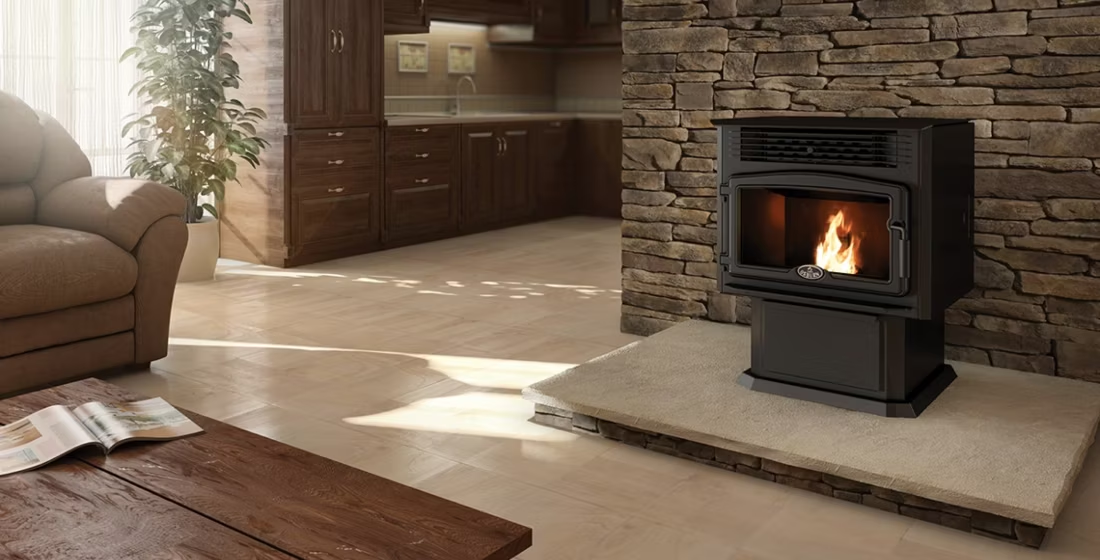
With winters this mild around Lake Barkley and Kentucky Lake, most Lyon County homes run on propane or an electric heat pump. A pellet stove can still make sense for a lake cabin or a supplemental heat source—we'll connect you with a local dealer who can tell you honestly if it's worth it.
Every Project Starts From One of These Five Situations
A mild lake climate that doesn't demand biomass backup.
Lyon County sits in the Land Between the Lakes region of western Kentucky, wedged between Lake Barkley and Kentucky Lake, with a year-round population of around 3,400 that swells with cabin and second-home owners in summer. The climate here is genuinely mild by heating standards—an average winter low near 30°F and about 3,354 heating degree days a year, roughly half what a place like Bismarck, ND or Duluth, MN sees. That's a climate where a heat pump or propane furnace comfortably carries the whole season without much help, which is a big reason pellet stoves never became a common secondary heat source here the way they have in colder counties.
It's not that pellet fuel is unavailable—Lignetics, Hamer Pellet Fuel, and Greenway Renewable Energy all distribute through the region, and hardwoods like oak, hickory, maple, and cherry are abundant locally. It's more that Lyon County's housing stock—a mix of year-round homes and lake cabins around Eddyville and Kuttawa—tends to lean on clean, low-maintenance electric or propane heat, especially for properties that sit empty part of the year and can't be checked on to refill a hopper. Where a pellet stove does get installed, it's usually for a cabin that wants ambiance and backup warmth without the labor of splitting and stacking cordwood.
Three steps. No salesperson until you're ready.
Tell us about your project
Your zip code, your situation, and the fuel you're leaning toward—or let the answers point you to one.
See what's actually available
The brands dealers within 100 miles genuinely carry—real options, never a catalog mirage.
Get your dealer & Project Guide
A trusted local dealer, plus the free Project Guide & Parts List that names every component of the job.
Frequently Asked Questions
Is a pellet stove even a good fit for Lyon County?
For most year-round homes in Lyon County, probably not as a primary heat source. With an average winter low around 30°F and roughly 3,354 heating degree days per year, the heating demand here is modest compared to colder parts of the country, and most homes get by fine on a heat pump or propane furnace without supplemental heat. Where pellet stoves do make sense is in lake cabins around Kentucky Lake or Lake Barkley used seasonally, or in homes wanting a low-maintenance backup heat source that doesn't require the wood handling of a traditional stove. If that's your situation, a local dealer can walk you through whether it's worth the investment for your specific property.
Where can I buy pellet fuel near Eddyville or Kuttawa?
Because pellet stoves are uncommon in Lyon County, you won't find pellets stocked on every corner the way you might in a colder region. Regional brands like Lignetics, Hamer Pellet Fuel, and Greenway Renewable Energy supply the broader western Kentucky market, and most Lyon County pellet stove owners either special-order through a farm supply or hardware store, or make a run to a dealer in a neighboring county that stocks pallets regularly. If you're considering a pellet stove, it's worth confirming a reliable fuel source before you commit—a local dealer can tell you exactly where current owners in the area are sourcing their pellets.
How much does pellet stove installation cost in Lyon County?
Pellet stove installs generally run in the $3,000 to $6,000 range nationally, covering the unit, venting, and hearth pad, and Lyon County installs typically fall in that same band. Because pellet stoves are a niche request here, expect fewer installers to have deep pellet-specific experience compared to propane or electric work—ask any installer you're considering how many pellet units they've actually put in. A gas insert or electric fireplace install is often simpler and cheaper here given how established propane service already is in the county.
Why don't more Lyon County homes burn wood or pellets given all the local hardwood?
It's a fair question—oak, hickory, maple, and cherry are all common in the Land Between the Lakes area, and firewood is easy to come by. But a lot of Lyon County's housing is either newer construction with efficient heat pumps already built in, or seasonal lake property around Kentucky Lake and Lake Barkley where owners want heat that works reliably without anyone tending a fire or refilling a hopper while the house sits empty. Combined with winters mild enough that supplemental heat isn't really necessary, both wood and pellet heat have stayed niche here rather than becoming a standard heating strategy the way they are in colder, more rural counties.
Pellet stove vs. electric heat pump—which makes more sense for my home?
For most Lyon County homes, an electric heat pump is the more practical choice—it heats and cools, requires no fuel deliveries or hopper refills, and is well-suited to the county's mild 3,354 heating-degree-day climate. A pellet stove requires a standing fuel supply, regular ash cleanout, and enough consistent presence in the home to keep the hopper loaded, which works better for a primary residence than a part-time lake cabin. Where a pellet stove earns its place is as backup heat during a power outage isn't an option (pellet stoves need electricity to run the auger and blower, so they're not actually outage-proof either) or simply for the ambiance of a real flame. If backup heat during outages matters most, a propane unit is usually the better answer here.
Do pellet stoves work during a power outage?
No—this trips people up. Pellet stoves rely on an electric auger to feed fuel and a blower to distribute heat, so they shut down when the power goes out, just like a furnace. In a county like Lyon where propane service is well established, a propane stove or fireplace is a more reliable outage backup than pellet. If emergency heat during storms is the main reason you're considering a stove, it's worth discussing propane options with a local dealer instead.
What size pellet stove would I need for a lake cabin in Lyon County?
Given the county's mild winters, most Lyon County cabins don't need a large-capacity unit. A small to mid-size pellet stove (rated for roughly 800-1,500 square feet) is typically plenty for a lake cabin used for weekend warmth or as backup to an existing electric baseboard or wall unit. Oversizing is a common mistake—a stove that's too large for a small cabin will cycle on and off constantly, which wastes fuel and shortens the life of the auger motor. A local dealer can size it correctly based on your cabin's actual square footage and insulation.
Do I need a permit to install a pellet stove in Lyon County?
Yes, generally—new solid-fuel appliance installations, including pellet stoves, typically require a building permit through the Lyon County building department, along with proper venting to code. Because pellet installs are infrequent here, it's worth confirming permitting requirements directly with the county before work begins, and working with an installer who's done it before and knows the process. Most established hearth installers will handle the permit paperwork as part of the job.
Pellet stove vs. propane stove—which is the better choice in Lyon County?
Propane is the more established choice throughout Lyon County, with reliable local supply and installers who work with it regularly. A propane stove or insert lights instantly, can run without electricity on some models, and doesn't require fuel storage the way pellets do. A pellet stove burns cleaner than wood and gives a real flame with hands-off convenience, but it needs a steady pellet supply that isn't always easy to source locally, and it won't run during a power outage. For a primary residence, propane is usually the more practical fit here; for a cabin owner who wants the pellet stove's flame and doesn't mind stocking up on bags in advance, it can still work.
Why is my open fireplace making my house colder?
Open fireplaces suck—literally. As the fire burns, it consumes air your furnace already paid to heat and pulls it out through the chimney, so the house is actually colder after the fire goes out than before you lit it. An insert fixes this: it seals the chimney, puts fixed glass across the front, and turns that hole in your house into a real heat source.
How often does a pellet stove need cleaning?
A clean pellet stove is a happy pellet stove. Plan on cleaning the burn pot about once a week when you're burning regularly—ash and clinkers gum up the air holes just like a pellet barbecue. Most pellet stove problems trace back to skipped cleaning that nobody explained up front. Some designs make it easy with a trapdoor burn pot: pull a lever and the gunk drops into the ash pan.
Can a fireplace actually lower my heating bill?
Yes—by creating a comfort zone. A furnace heats every square foot of the house just to warm the one room you're in; a gas fireplace on low burns roughly a sixth of the gas a typical furnace does. Set the furnace around 55–60 degrees as a baseline, then heat the rooms your family actually uses. Families who heat this way commonly save $20–$60 a month.
Does a fireplace add value to my home?
On average, a fireplace adds back to the home about the same amount you spent installing it. Add the monthly savings from heating the rooms you actually use instead of the whole house—often hundreds of dollars a year—and the value case is strong before you even count what a fire does for how your family uses the room.
Stove and Fireplace Dealers in Lyon County
Pellet Brands Stocked Around Lyon County
Manufacturers will point you to the nearest stocking dealer.
See if a pellet stove is right for your Lyon County home.
Tell us about your home or cabin and we'll give you a straight answer on whether pellet makes sense here, plus a free Project Guide & Parts List with the exact parts—including the vent kit—and a trusted local dealer if it's the right fit.
Find Your Fireplace →