
The easiest fireplace upgrade in Livingston County.
No chimney, no gas line, no venting—just plug it in. For the farmhouses, manufactured homes, and lake cabins scattered across Livingston County's 3,549 residents, electric is often the simplest way to add real heat and ambiance to a room.
Every Project Starts From One of These Five Situations
Zero-clearance heat for a rural power grid.
Livingston County sits at the western edge of Kentucky where the Cumberland and Tennessee Rivers meet the Ohio, a rural stretch of farmland and lake shoreline anchored by Smithland, Salem, Carrsville, and the tourist draw of Grand Rivers. With just 3,549 residents spread across the county, housing stock here runs heavy on older farmhouses and manufactured or mobile homes—common throughout rural western Kentucky, and not always well suited to a masonry chimney or a new gas line run. Climate zone 4A and roughly 4,297 heating degree days mean a real but moderate heating season, with average winter lows around 26°F—cold enough to want supplemental heat in the shoulder months, but nowhere near the extremes of a place like Duluth or International Falls.
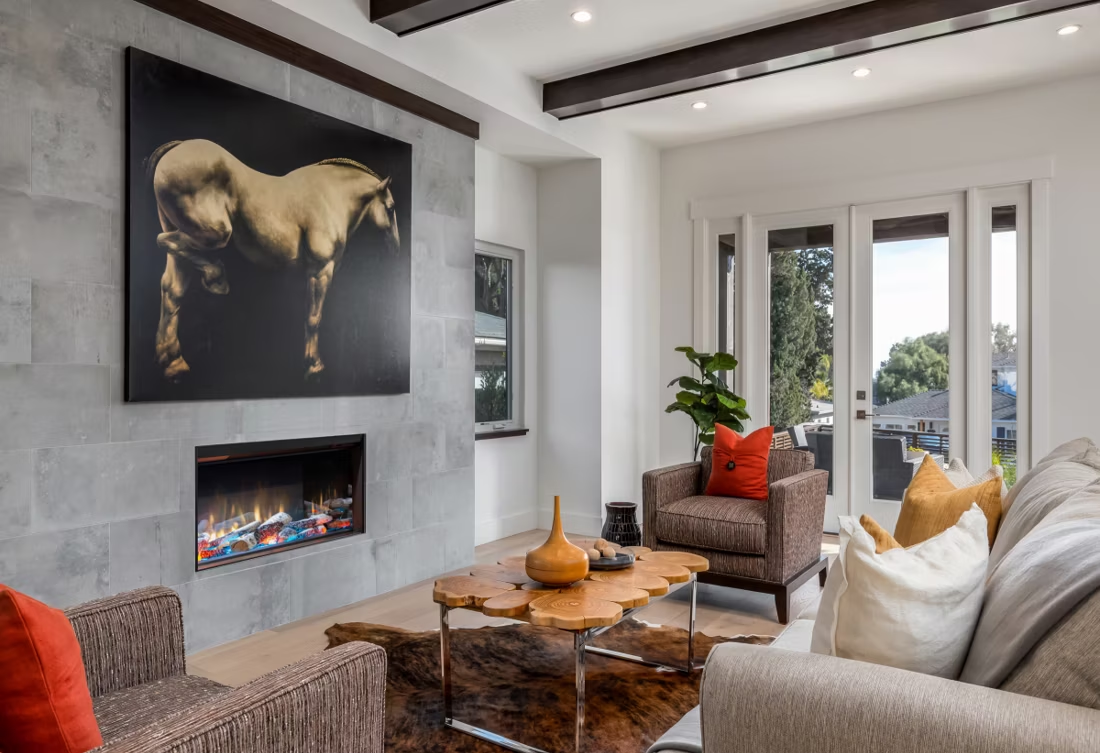
That's exactly the profile where electric fireplaces earn their keep. A plug-in insert or wall-mounted unit needs no venting, no gas hookup, and in most cases no permit—it just needs an outlet, which makes it a practical fit for rentals, manufactured homes, and older farmhouses on Livingston County's rural electric grid served by Jackson Purchase Energy. Plenty of local households still burn oak, hickory, maple, or cherry in a wood stove for real cold-weather backup heat, but for a den, bedroom, or lake house at Grand Rivers where you want instant ambiance without hauling firewood or cleaning ash, electric covers that need without complicating your home's systems.
Three steps. No salesperson until you're ready.
Tell us about your project
Your zip code, your situation, and the fuel you're leaning toward—or let the answers point you to one.
See what's actually available
The brands dealers within 100 miles genuinely carry—real options, never a catalog mirage.
Get your dealer & Project Guide
A trusted local dealer, plus the free Project Guide & Parts List that names every component of the job.
Frequently Asked Questions
How much does an electric fireplace installation cost in Livingston County?
Most electric fireplace projects in Livingston County run $400 to $1,800. A freestanding or mantel-style unit that simply plugs into an existing outlet sits at the low end—often a same-day setup with no electrician needed. A built-in or wall-recessed unit that requires a dedicated 120V or 240V circuit, new wiring, and possibly drywall or trim work runs higher, especially in older farmhouses around Smithland or Salem where panel capacity may need to be checked first. A local dealer can give you a firm number once they know the unit and your home's existing wiring.
Will an electric fireplace actually heat a room, or is it just for looks?
Most electric fireplaces sold today produce real heat—typically 4,000 to 5,000 BTU from a standard 1,500-watt heater, enough to noticeably warm a bedroom, den, or living room in the 300-to-400-square-foot range. Given Livingston County's 4,297 heating degree days and winter lows averaging around 26°F, that's a legitimate supplement to central heat in a single room, not a whole-home solution. Homeowners here often pair one with a wood stove or propane furnace for primary heat and use the electric unit for the rooms they actually live in day to day.
Do I need a permit to install an electric fireplace in Livingston County?
In most cases, no. A plug-in freestanding or mantel unit that uses an existing outlet doesn't typically require a permit anywhere in Livingston County. If you're installing a built-in unit that needs a new dedicated circuit or panel work, that electrical work should be pulled through a licensed electrician and permitted through the county—worth confirming with Livingston County's fiscal court office before work starts, since requirements can vary for rural unincorporated parcels versus town limits in Smithland or Salem.
Will my electric fireplace work during a power outage?
No—unlike a gas unit with battery-backup ignition or a wood stove that needs no electricity at all, an electric fireplace goes dark the moment the power does. That matters in Livingston County, where ice storms and severe weather have knocked out rural co-op service for extended stretches in past winters. If you're relying on heat during outages, plan on a wood stove or propane heater as backup and treat the electric unit as your everyday, low-maintenance option rather than your emergency plan.
What size electric fireplace do I need?
Sizing is more about the room than the county's climate. A 26-to-30-inch insert or wall unit suits a small bedroom or den, while a 40-to-50-inch linear unit can adequately supplement heat in a larger open living space. Because most units top out around 5,000 BTU regardless of width, bigger models mostly buy you a larger flame display, not proportionally more heat—something worth discussing with a local dealer before you size up for a great room in an older Livingston County farmhouse with high ceilings and less insulation.
What's the difference between an electric insert, a built-in, and a freestanding unit?
A freestanding or mantel-style electric fireplace is furniture—it plugs in and sits against a wall, no installation beyond placement. An electric insert is sized to slide into an existing masonry fireplace opening, a common upgrade for older farmhouses around Smithland and Carrsville that have an unused wood-burning fireplace and want heat and ambiance without the chimney maintenance. A built-in unit is recessed into a wall or custom cabinetry during a remodel and typically needs its own wiring. For manufactured homes throughout the county, freestanding or slim wall-mount units are usually the easiest and most flexible option.
Electric vs. gas vs. wood—which fits my Livingston County home?
Wood, burned as oak, hickory, maple, or cherry, remains the go-to for real primary or backup heat in rural Livingston County, especially given how often winter storms interrupt the co-op grid. Gas (mostly propane in this county, since natural gas mains don't reach most rural areas) offers instant heat with battery-backup ignition options that keep working in an outage. Electric is the easiest and cheapest to install of the three, with zero venting and minimal upkeep, but it depends entirely on the grid staying up and is best treated as supplemental or ambiance heat rather than your only source. Many households here end up with two: wood or propane for real heat, electric for the room they actually spend evenings in.
Is an electric fireplace a good option for a rental or manufactured home?
Yes—this is one of the strongest use cases for electric fireplaces in Livingston County. A plug-in freestanding or mantel unit requires no venting, no gas line, and no structural modification, which makes it renter-friendly and a common choice in the manufactured and mobile homes found throughout the county's rural subdivisions. Just confirm the outlet you're using is on a circuit that can handle the additional 1,500-watt draw, particularly in older homes where panel capacity is already tight.
Do I need an electrician for an electric fireplace install?
Not for a basic plug-in freestanding or insert unit—those work with any standard grounded outlet. You'll want a licensed electrician if you're installing a built-in unit that requires a new dedicated circuit, if you're wall-mounting a heavier linear unit and need to verify the wiring behind an older farmhouse wall, or if your home's panel is already at capacity, which is common in some of the older housing stock around Smithland and Salem. A local dealer can tell you upfront whether your chosen unit needs an electrician or just an outlet.
Do electric fireplaces actually produce heat?
Yes—most put out around 4,800–5,000 BTUs from a standard outlet, which comfortably warms a bedroom, office, or den as a comfort-zone heater. What they won't do is carry a whole house the way wood, gas, or pellet can. Think of electric as ambiance-first with honest supplemental heat: flames on with no heat in July, flames plus warmth in January.
Can I put a TV above my fireplace?
Yes—with an asterisk. Fireplaces are hot and TVs don't like heat. Either put a mantel between them to deflect rising warmth, or choose a fireplace with heat-management technology that creates a cool zone on the wall above—the wall stays around 125 degrees, barely warm, while the room still gets full heat. If you like clean lines and don't want a mantel, heat management is the answer.
Can a fireplace actually lower my heating bill?
Yes—by creating a comfort zone. A furnace heats every square foot of the house just to warm the one room you're in; a gas fireplace on low burns roughly a sixth of the gas a typical furnace does. Set the furnace around 55–60 degrees as a baseline, then heat the rooms your family actually uses. Families who heat this way commonly save $20–$60 a month.
How much should I budget for a fireplace?
For an average home—covering the fireplace, the vent pipe, and basic installation—a budget between $3,900 and $5,500 gives you a lot of options across wood, gas, and pellet. By the time you add finish work, gas line, and electrical, the average complete installation lands between $5,000 and $12,000 all-in. In a remodel or new build, a good rule is to put about 2.5% of the total project cost toward the fireplace.
Find your electric fireplace in Livingston County.
Tell us a bit about your home and we'll put together a free Project Guide & Parts List—the exact unit, mounting or insert kit, and circuit requirements for your space—and match you with a trusted local dealer who can install it right.
Find Your Fireplace →