
Find the right heat source for Livingston County winters.
Wood, gas, pellet, and electric fireplace resources for Smithland, Salem, Grand Rivers, and every rural community along the Ohio and Cumberland rivers. Find the right unit and connect with a trusted local hearth retailer.
Every Project Starts From One of These Five Situations
Moderate winters, deep hardwood supply in Livingston County, Kentucky.
Livingston County sits at the confluence of the Ohio and Cumberland rivers in Kentucky's far west, in climate zone 4A with a moderate winter heating season—a fraction of what a place like Fargo, ND sees, but still enough for a real, multi-month heating season with average winter lows around 26°F. The county's forests are dominated by oak, hickory, maple, and cherry—hardwoods that split clean, season well, and burn long and hot, which is a big part of why wood heat has stayed common here even as gas and electric options have expanded. With no formal air quality non-attainment designation, there are no local burning curtailments to plan around, which simplifies wood-burning decisions compared to counties further west.
What you'll find on this hub: hearth retailers, service technicians, and fuel suppliers serving the whole county—from the county seat in Smithland out through Salem, Grand Rivers, and the rural stretches along Land Between the Lakes. Pick your fuel below to drill into local dealers, installation costs, and recommended units. Whether you're heating a farmhouse outside Salem or a lake cabin near Grand Rivers, this is the place to start.
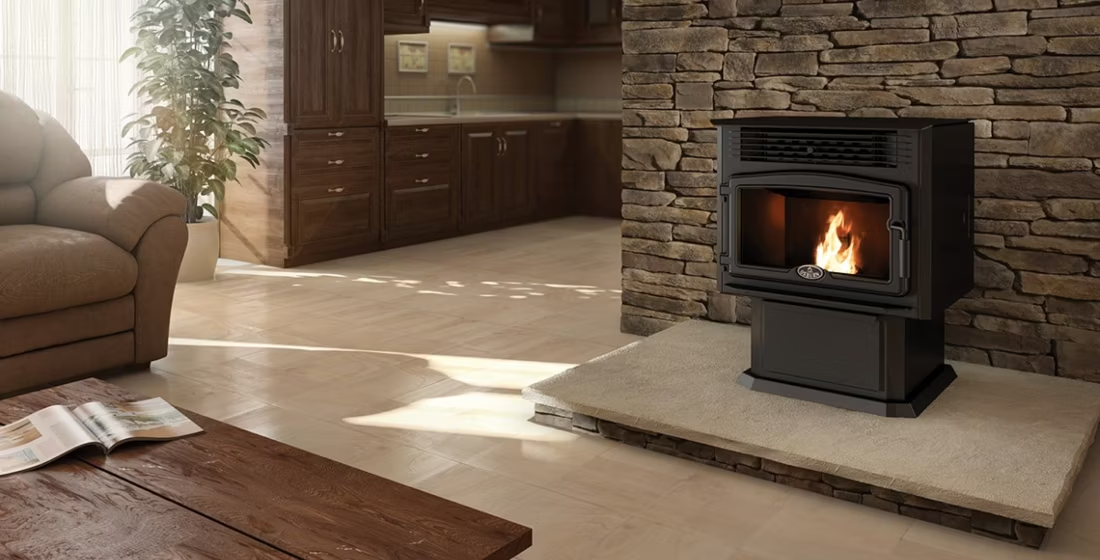
Four fuels. One honest answer for Livingston County.
Three steps. No salesperson until you're ready.
Tell us about your project
Your zip code, your situation, and the fuel you're leaning toward—or let the answers point you to one.
See what's actually available
The brands dealers within 100 miles genuinely carry—real options, never a catalog mirage.
Get your dealer & Project Guide
A trusted local dealer, plus the free Project Guide & Parts List that names every component of the job.
Frequently Asked Questions
Which fuel works best in Livingston County?
With winter lows averaging around 26°F and a moderate winter heating season, Livingston County's heating season is real but moderate compared to colder regions further north—think a lighter version of what homeowners in Duluth, MN deal with all winter. Wood remains a strong choice here because the local hardwood supply—oak, hickory, maple, cherry—burns hot and long, and there's no air quality curtailment to work around. Gas is the low-effort option for homes with propane or natural gas service, offering instant heat without the wood-splitting labor. Pellet stoves work well too, especially with regional brands like Lignetics and Greenway Renewable Energy supplying the area, and they don't require cutting or stacking wood. Electric fireplaces are a good supplemental option for bedrooms or sunrooms but aren't typically relied on as a primary heat source given the length of the local heating season. Many rural Livingston County homes pair wood or pellet as primary heat with gas or electric in secondary spaces.
Do I need a permit to install a fireplace in Livingston County?
In most cases, yes—new wood stoves, wood inserts, gas fireplaces, gas inserts, and pellet stoves typically require a building permit, and gas installations need a separate permit and licensed gas-fitter for the line work. Because Livingston County is largely unincorporated outside of Smithland and Salem, most permitting for rural properties runs through the county building office rather than a city hall. Electric fireplaces generally skip the permit process unless the installation involves new wiring or a dedicated circuit for a built-in unit. Most hearth retailers serving the county handle permitting as part of the installation, so it's worth asking upfront rather than pulling permits yourself.
Are there air quality restrictions on wood burning in Livingston County?
No—Livingston County has no designated air quality non-attainment status and no winter inversion or wildfire smoke concerns that trigger burn curtailments, unlike some western counties. That means wood-burning decisions here come down to appliance efficiency and chimney maintenance rather than working around advisory days. It's still worth choosing an EPA-certified stove or insert for better efficiency and lower particulate output, but there's no local ordinance restricting when you can burn.
Can one local hearth retailer handle all four fuel types?
Many retailers that cover rural western Kentucky counties like Livingston carry at least two or three fuel types—commonly wood and gas, with pellet stoves as a secondary line. Because the county's population is small and spread out, dedicated single-fuel showrooms are less common here than in denser markets; retailers based in nearby Paducah or Marion tend to stock a broader mix to serve the whole region efficiently. If you're comparing fuels before deciding, ask a retailer whether they can show working displays of more than one type—it's the fastest way to see the trade-offs side by side.
How does service work in rural areas of Livingston County?
Because Livingston County's population is under 4,000 and spread across rural stretches near Land Between the Lakes and along the Ohio and Cumberland rivers, most service technicians are based in Paducah or Marion and travel in for scheduled visits. Expect a modest trip fee for rural calls, and plan to book pre-season chimney sweeps or gas inspections in late summer or early fall before the winter rush. For remote properties, it helps to keep spare parts on hand—igniter batteries for gas units, for instance—since same-week emergency service can be harder to arrange during peak cold spells.
What's the typical cost range for fireplace installation across all fuel types in Livingston County?
Costs vary by fuel type and how much existing infrastructure a home already has. Wood stove or insert installation: roughly $4,000–$8,500 for a typical install, more if new chimney chase construction is needed. Gas fireplace, insert, or stove: roughly $4,000–$10,000 depending on whether a new gas line or propane tank setup is required. Pellet stove or insert: roughly $4,000–$7,000 for a standard install. Electric fireplace: $200–$2,800 for the unit itself, with $300–$1,000 in labor for anything beyond a plug-in installation. See the county + fuel pages above for retailer-specific pricing detail.
Does a fireplace add value to my home?
On average, a fireplace adds back to the home about the same amount you spent installing it. Add the monthly savings from heating the rooms you actually use instead of the whole house—often hundreds of dollars a year—and the value case is strong before you even count what a fire does for how your family uses the room.
Can I install a fireplace myself?
If you're putting a fire in your house on purpose, it's best to work with an expert. Unless you're genuinely experienced in framing, gas line, vent pipe, and the national code on clearances to combustibles, have a professional do it—and ideally the same company that sells you the fireplace, so warranty, service, and liability all live under one roof.
Can a fireplace actually lower my heating bill?
Yes—by creating a comfort zone. A furnace heats every square foot of the house just to warm the one room you're in; a gas fireplace on low burns roughly a sixth of the gas a typical furnace does. Set the furnace around 55–60 degrees as a baseline, then heat the rooms your family actually uses. Families who heat this way commonly save $20–$60 a month.
How much should I budget for a fireplace?
For an average home—covering the fireplace, the vent pipe, and basic installation—a budget between $3,900 and $5,500 gives you a lot of options across wood, gas, and pellet. By the time you add finish work, gas line, and electrical, the average complete installation lands between $5,000 and $12,000 all-in. In a remodel or new build, a good rule is to put about 2.5% of the total project cost toward the fireplace.
Stove and Fireplace Dealers in Livingston County
Listings include WhyFire partner dealers, dealers we have verified as authorized for the brands we recommend, and established local businesses that carry hearth products. Every listing shows which one it is. The ones marked Preferred run on WhyFire's software, so they can show you real pricing and book your appointment right here. No manufacturer pays for placement. How we verify dealers →
Hank Bros. True Value
Russell Electric
Master Sweeps
Akridge Farm Supply
Find your fireplace in Livingston County.
Pick your fuel below and I'll match you with a trusted local dealer who can walk your property, size the venting correctly, and send you a free Project Guide & Parts List with the exact parts and their recommendation for your home.
Find Your Fireplace →