
Pellet heat that holds steady through Letcher County winters.
From the valley floor in Whitesburg to the ridgelines toward Pine Mountain, Letcher County sees a winter heating season that runs roughly from November through March and winter lows that average 24°F. I'll match you with a trusted local dealer who can size the right pellet stove or insert for your home and hand you a free Project Guide & Parts List.
Every Project Starts From One of These Five Situations
A modern option in Appalachia's wood-heat country.
Letcher County sits deep in the Cumberland Mountains of eastern Kentucky, where the North Fork of the Kentucky River cuts through narrow hollows between Pine Mountain and Black Mountain. In climate zone 4A, with a winter heating season that runs roughly from November through March and winter lows averaging 24°F, the cold here isn't as severe as places like Duluth, MN or Burlington, VT, but it's persistent enough that heating costs matter to most households through those months. Wood has always been the default fuel in these hills—oak, hickory, maple, and cherry are all common on the ridges—but pellet stoves have found a real foothold as a cleaner, lower-maintenance alternative that still burns a wood product.
There's no non-attainment designation or winter inversion problem in Letcher County, so pellet adoption here isn't driven by air-quality rules the way it is in parts of the West—it's driven by convenience and cost control. Regional suppliers including Lignetics, Hamer Pellet Fuel, and Greenway Renewable Energy keep hardwood pellet supply reasonably accessible for a rural county of about 7,140 people. One honest trade-off worth knowing: pellet stoves need electricity to run the auger and blower, and winter ice storms can knock out power on some of the county's steeper, more remote roads. A battery backup or small generator is worth discussing with your installer if you're relying on a pellet stove as anything more than supplemental heat.
Three steps. No salesperson until you're ready.
Tell us about your project
Your zip code, your situation, and the fuel you're leaning toward—or let the answers point you to one.
See what's actually available
The brands dealers within 100 miles genuinely carry—real options, never a catalog mirage.
Get your dealer & Project Guide
A trusted local dealer, plus the free Project Guide & Parts List that names every component of the job.
Frequently Asked Questions
How much does a pellet stove installation cost in Letcher County?
Costs vary based on the stove or insert you choose, whether you're venting through an existing masonry chimney or running a new through-wall pellet vent, and whether a hearth pad or floor protection is needed for code clearance. Because pellet stoves don't require the same Class A chimney work that wood stoves do, installs are often less involved and less expensive than a comparable wood stove project. A trusted local dealer can give you a firm, itemized quote—including the vent kit—as part of the free Project Guide & Parts List I'll send you after we match you with someone who installs in Letcher County.
What size pellet stove do I need for my Letcher County home?
Sizing depends on square footage, ceiling height, insulation, and whether you want the stove to be your primary heat or a supplemental source. With Letcher County's winter heating season running roughly from November through March and winter lows averaging in the mid-20s, a mid-size pellet stove (rated for 1,200-2,000 sq ft) covers most single-story homes in the hollows and on the flatter stretches near Whitesburg. Homes higher up on the ridges, or older houses with less insulation, often do better sized up a notch. A local dealer will walk your home before recommending a model rather than guessing off square footage alone.
Where can I find a certified pellet stove installer near me?
Look for installers with NFI (National Fireplace Institute) pellet certification, which covers proper venting, clearance, and hopper/auger setup specific to pellet appliances. In a county as spread out as Letcher—from Jenkins and Fleming-Neon on one end to Whitesburg and the areas toward Cornettsville on the other—travel distance matters, so ask any installer whether they regularly service your specific community. I match homeowners with trusted local dealers rather than general handymen, since improper pellet vent sizing is one of the more common comfort complaints installers get called back for.
What's the difference between a pellet stove and a pellet insert?
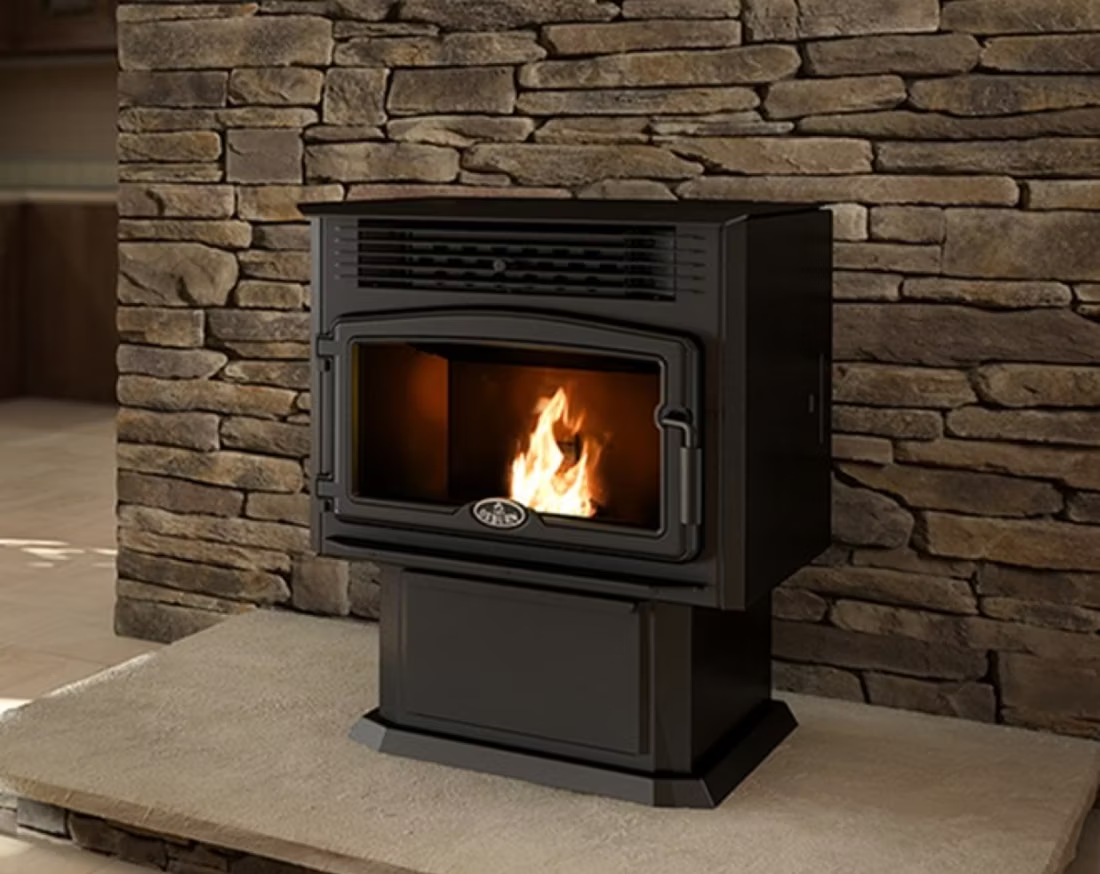
A pellet stove is a freestanding unit that sits on a hearth pad and vents through an exterior wall or existing chimney—it can go almost anywhere in a room with the right clearances. A pellet insert is built to slide into an existing masonry fireplace opening, using the chimney (usually with a liner) as part of the venting path. For Letcher County homes with an older fireplace that's rarely used, an insert is often the more efficient upgrade. For homes without an existing fireplace, a freestanding stove is usually the simpler install.
Do I need a permit to install a pellet stove in Letcher County?
Most pellet stove installations require a building permit through the Letcher County building permit office, since it involves a new vent penetration and sometimes electrical work for the appliance. Your installer typically handles the permit application as part of the job, so you're not left figuring out the paperwork yourself. It's worth confirming permit requirements before work starts, since Kentucky counties vary somewhat in how they handle solid-fuel appliance permitting.
What pellet brands are available in or near Letcher County?
Regional supply in eastern Kentucky includes Lignetics, Hamer Pellet Fuel, and Greenway Renewable Energy, all of which produce hardwood pellets suited to the oak, hickory, and maple that's abundant in this part of the state. Hardwood pellets tend to run a bit higher in ash content than premium softwood pellets from the Pacific Northwest, but they're widely available regionally and easier to source in bulk without long freight distances. Ask your local dealer which brand they stock consistently—supply can shift seasonally in smaller markets like Letcher County.
How much maintenance does a pellet stove need?
Pellet stoves need more routine attention than a gas unit but less than a wood stove: emptying the ash pan every few days during heavy use, cleaning the burn pot and heat exchanger tubes weekly, and a full professional cleaning and venting inspection once a year, usually before the start of the heating season. The auger motor and igniter are the parts most likely to eventually need service. Local dealers who sell pellet stoves in Letcher County typically also handle this annual service.
Where can I buy pellets in Letcher County?
Most homeowners in the area buy hardwood pellets from Lignetics, Hamer Pellet Fuel, or Greenway Renewable Energy through farm supply stores, hardware stores, or the dealer who sold the stove. Buying a full winter's supply early in the fall—rather than a bag or two at a time as cold weather sets in—tends to get you better pricing and avoids the scramble that happens regionally when a cold snap drives up local demand.
Pellet stove vs. wood stove—which is right for my Letcher County home?
Wood stoves work without electricity, which matters on the county's more remote ridge roads where ice storms can knock out power for days, and pair naturally with the oak, hickory, and cherry that's easy to source locally. Pellet stoves are more convenient—load the hopper, set a thermostat, less ash, no cutting or splitting—but they need electricity to run, so they're not a reliable backup during an outage unless paired with a battery backup or generator. For a primary residence with dependable power, pellet is often the easier day-to-day choice. For a home that needs heat no matter what the power grid is doing, wood stays the safer bet.
What's the difference between an insert and a zero-clearance fireplace?
An insert is a fireplace that slides into a pre-existing wood-burning fireplace—if you don't have one, there's nothing to insert it into. A zero-clearance fireplace is built into a framed wall, which makes it the answer for remodels and new construction. Simple test: existing masonry fireplace means insert; blank or framed wall means zero-clearance.
How often does a pellet stove need cleaning?
A clean pellet stove is a happy pellet stove. Plan on cleaning the burn pot about once a week when you're burning regularly—ash and clinkers gum up the air holes just like a pellet barbecue. Most pellet stove problems trace back to skipped cleaning that nobody explained up front. Some designs make it easy with a trapdoor burn pot: pull a lever and the gunk drops into the ash pan.
Can a fireplace actually lower my heating bill?
Yes—by creating a comfort zone. A furnace heats every square foot of the house just to warm the one room you're in; a gas fireplace on low burns roughly a sixth of the gas a typical furnace does. Set the furnace around 55–60 degrees as a baseline, then heat the rooms your family actually uses. Families who heat this way commonly save $20–$60 a month.
What is an in-home preview and do I need one?
It's a visit where a hearth professional measures your space, confirms the model you picked actually works in your home, and walks the specs—framing, gas line, venting, finish work—before anything is ordered. Some details you just can't know until you see the house. Never make a down payment without one; it's the single most-skipped step that burns buyers.
Stove and Fireplace Dealers in Letcher County
Pellet Brands Stocked Around Letcher County
Manufacturers will point you to the nearest stocking dealer.
Find your pellet stove in Letcher County.
Tell me a bit about your home and I'll match you with a trusted local dealer and send over a free Project Guide & Parts List—sized for your space, with the vent kit and parts you'll actually need.
Find Your Fireplace →