
Warm, consistent heat without the woodpile.
For homes tucked into the hollows and river bottoms around Louisa and the Big Sandy, a pellet stove delivers steady, automated heat through Lawrence County's winters—no splitting, no stacking, no creosote. Find the right unit and get matched with a trusted local dealer.
Every Project Starts From One of These Five Situations
Efficient, low-maintenance heat for rural Appalachian living.
Lawrence County sits along the Big Sandy River in eastern Kentucky's hill country, home to roughly 2,700 residents spread across Louisa and the surrounding hollows. At climate zone 4A with a moderate five-month heating season and an average winter low near 26°F, the county sees a real but moderate heating season—colder than the Deep South, but nowhere near the brutal stretches of Fargo, ND, or International Falls, MN, which log nearly double the heating load. Winter here runs steady from roughly November through March, the kind of cold that calls for a heat source you can rely on every day, not just during cold snaps.
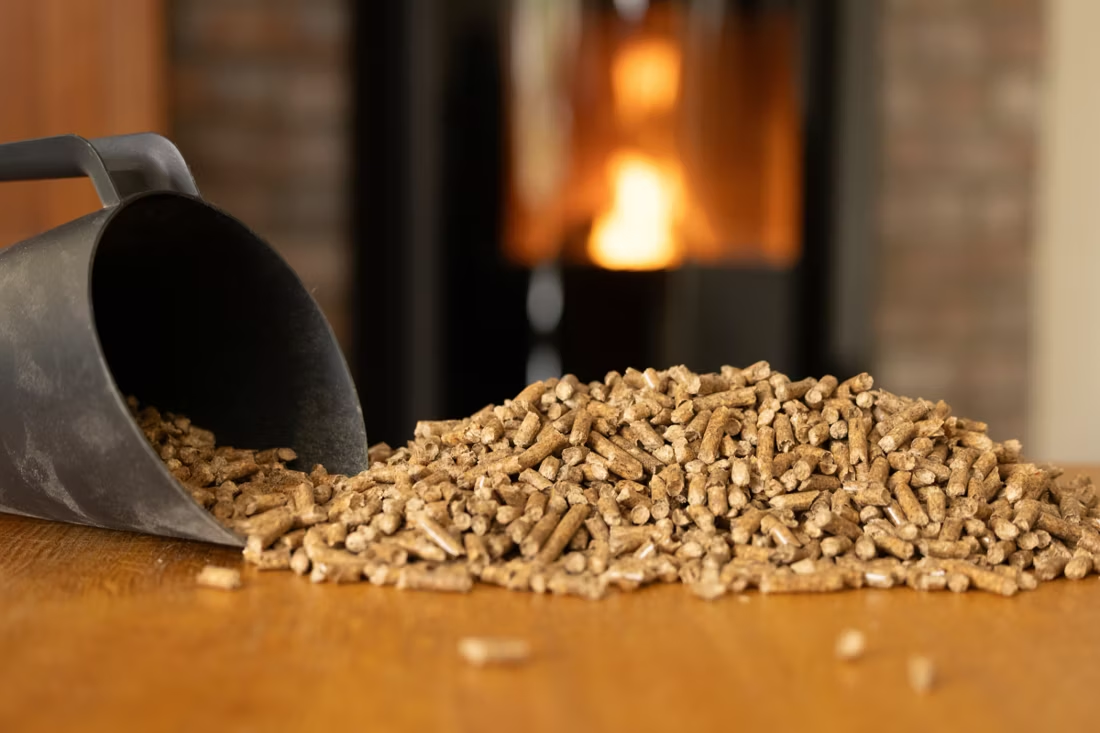
This is oak, hickory, maple, and cherry country, and wood heat has deep roots in Lawrence County—but pellet stoves have earned a strong following for a simple reason: they deliver that same steady radiant heat without the labor of cutting, hauling, and stacking cordwood, and without daily ash and creosote buildup. With no air quality non-attainment issues or winter burn bans in the county, there's no regulatory reason to avoid wood heat here—pellet appeals mostly to homeowners who want automated, thermostat-controlled warmth, easier ash cleanup, and fuel that stacks neatly in bags rather than a woodshed. Regional pellet suppliers including Lignetics, Hamer Pellet Fuel, and Greenway Renewable Energy keep fuel reasonably accessible throughout the county and nearby parts of eastern Kentucky and West Virginia.
Three steps. No salesperson until you're ready.
Tell us about your project
Your zip code, your situation, and the fuel you're leaning toward—or let the answers point you to one.
See what's actually available
The brands dealers within 100 miles genuinely carry—real options, never a catalog mirage.
Get your dealer & Project Guide
A trusted local dealer, plus the free Project Guide & Parts List that names every component of the job.
Frequently Asked Questions
How much does a pellet stove installation cost in Lawrence County?
A typical pellet stove installation runs roughly $3,000 to $6,000 depending on the unit, hopper size, and venting path. Freestanding pellet stoves usually vent through an existing chimney or a new through-wall vent kit, which keeps installation simpler and less expensive than most wood stove chimney work. Pellet inserts that fit into an existing masonry fireplace sit toward the higher end of that range once a vent liner and surround panel are factored in. A local dealer can give you a firm number after seeing your home and existing venting situation.
Will my pellet stove work during a power outage?
This is worth thinking through carefully in Lawrence County's hollows and river valleys, where storms and downed lines can knock out power for hours or longer. Unlike a wood stove, a pellet stove depends on electricity to run its auger and combustion blower—no power means no heat, even with a full hopper. Homeowners who want pellet convenience but also need storm backup often pair the stove with a small battery backup unit or a portable generator sized to handle the stove's low draw (most pellet stoves use well under 500 watts). If reliable off-grid backup heat is the priority, a wood stove or a pellet stove paired with generator backup are both worth discussing with a local dealer.
Where can I buy pellet fuel in Lawrence County?
Regional brands including Lignetics, Hamer Pellet Fuel, and Greenway Renewable Energy are the most commonly stocked options at hearth retailers and farm supply stores serving eastern Kentucky. Hardwood pellets typically run in the neighborhood of $5 to $7 per 40-pound bag, or somewhat less per ton when bought by the pallet, though pricing varies by supplier and season. Buying a season's worth in late summer, before demand picks up, is the usual local strategy for avoiding shortages during a hard winter stretch.
Do I need a permit to install a pellet stove in Lawrence County?
Most jurisdictions require a building permit for any new venting appliance, including pellet stoves, and Lawrence County is no exception—check with the Lawrence County Building Department or Louisa city hall depending on where the home sits before installation. Most local hearth dealers handle the permit paperwork as part of the installation, so this typically isn't something you have to manage yourself. Because pellet stoves vent through a smaller-diameter pipe than wood stoves, clearance and venting requirements are usually more straightforward to meet.
What size pellet stove do I need for my home?
Sizing depends on square footage, ceiling height, insulation, and whether the stove is your primary or supplemental heat source. In Lawrence County's moderate 4A climate, a smaller pellet stove (rated for up to about 1,200 square feet) comfortably heats a main living area in most homes, while larger units (1,500 to 2,000+ square feet) suit whole-home heating in better-insulated construction. Older farmhouses and homes set into the hillsides with less insulation often need to size up a step. A local dealer will walk your home and recommend a specific model rather than relying on square footage alone.
How much maintenance does a pellet stove require?
Pellet stoves need regular but simple upkeep: daily or every-few-days ash removal from the burn pot, a weekly wipe of the glass and hopper, and an annual professional cleaning of the exhaust venting, combustion blower, and auger mechanism. This is considerably less labor than sweeping a wood-burning chimney, since pellet stoves produce far less creosote—but skipping the annual service can lead to auger jams or venting blockages, so it's not a step to skip even though the stove feels low-maintenance day to day.
What's the difference between a pellet stove and a pellet insert?
A pellet stove is a freestanding unit that sits on a hearth pad and vents through a wall or existing chimney—it can go almost anywhere in a room with the right clearances. A pellet insert is built to slide into an existing masonry fireplace opening, using a vent liner run up the old chimney and a surround panel to finish the look. For Lawrence County homes with an existing but rarely used fireplace, an insert is often the more efficient upgrade; for homes without a fireplace, a freestanding stove is usually the simpler installation.
Pellet stove vs. wood stove—which makes more sense for my home?
Wood stoves burn cordwood from local oak, hickory, maple, and cherry, need no electricity to run, and work as reliable backup heat during power outages—a real consideration in Lawrence County's hollows. They do require cutting, splitting, stacking, and regular chimney sweeping. Pellet stoves trade that labor for automated, thermostat-controlled heat and easier cleanup, but depend on electricity and require sourcing bagged fuel rather than cordwood. Households with a woodlot and the time to process firewood often lean wood; households prioritizing convenience, cleaner burning, and easier day-to-day operation often lean pellet. Some homes run both—a wood stove for backup and ambiance, pellet for daily convenience.
What pellet stove brands are commonly available locally?
Local and regional hearth dealers serving Lawrence County commonly carry pellet stove lines such as England's Stove Works, Harman, and Quadra-Fire, alongside pellet fuel from Lignetics, Hamer Pellet Fuel, and Greenway Renewable Energy. England's Stove Works, based in nearby Virginia, has particularly strong distribution throughout Appalachia and is a frequent recommendation for the region's climate and housing stock. A trusted local dealer will know which brands they can service and get parts for quickly, which matters more long-term than the specific brand name on the stove.
Why is a fireplace insert so efficient?
An insert does two things: it seals the chimney completely, so you stop losing air you already paid to heat, and it radiates warmth into the room through the firebox and glass. Most add a heat-exchange fan that pulls cool room air underneath, wraps it around the hot firebox, and pushes it back out warm. Your home is more efficient before you've even lit the first fire.
Why is my open fireplace making my house colder?
Open fireplaces suck—literally. As the fire burns, it consumes air your furnace already paid to heat and pulls it out through the chimney, so the house is actually colder after the fire goes out than before you lit it. An insert fixes this: it seals the chimney, puts fixed glass across the front, and turns that hole in your house into a real heat source.
Can a fireplace actually lower my heating bill?
Yes—by creating a comfort zone. A furnace heats every square foot of the house just to warm the one room you're in; a gas fireplace on low burns roughly a sixth of the gas a typical furnace does. Set the furnace around 55–60 degrees as a baseline, then heat the rooms your family actually uses. Families who heat this way commonly save $20–$60 a month.
What is an in-home preview and do I need one?
It's a visit where a hearth professional measures your space, confirms the model you picked actually works in your home, and walks the specs—framing, gas line, venting, finish work—before anything is ordered. Some details you just can't know until you see the house. Never make a down payment without one; it's the single most-skipped step that burns buyers.
Pellet Brands Stocked Around Lawrence County
Manufacturers will point you to the nearest stocking dealer.
Find your pellet stove in Lawrence County.
Tell us a bit about your home and heating needs, and we'll match you with a trusted local dealer along with a free Project Guide & Parts List—a plan for your pellet stove project in Lawrence County, including the exact parts, vent kit, and recommended installer.
Find Your Fireplace →