
Real ambiance, zero venting, for any home in Kenton County.
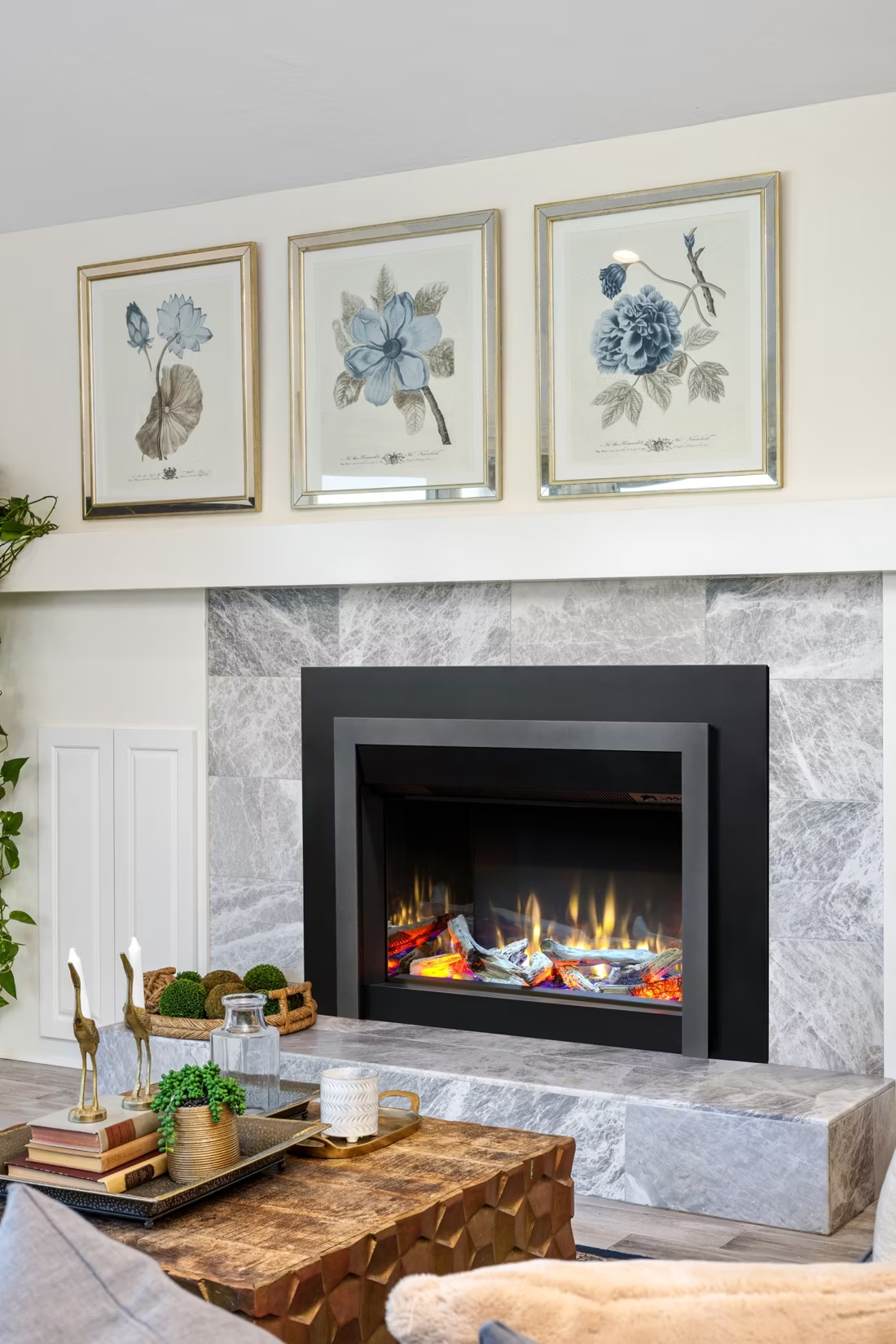
From Covington's 19th-century rowhouses to newer builds in Independence and Taylor Mill, electric fireplaces give Kenton County homeowners real heat and flame effect without a chimney, gas line, or masonry work. Find the right unit and connect with a trusted local dealer.
Every Project Starts From One of These Five Situations
The easiest heat upgrade for Northern Kentucky homes.
Kenton County runs from the dense, historic streets of Covington along the Ohio River—directly across from Cincinnati—out through Erlanger, Edgewood, and Fort Mitchell, to the newer subdivisions around Independence, the county seat, and Taylor Mill. Winters here average a low of 24°F with a real heating season running October through April, though nowhere near as severe as Duluth or Fargo. Duke Energy Kentucky serves electric service across the county, which matters directly for an electric fireplace: unlike gas or wood, running cost tracks straight to your Duke Energy Kentucky rate.
Electric fits a specific gap that's common in Kenton County's mixed housing stock. Covington's historic rowhouses and buildings in districts like Licking Riverside or Mainstrasse often can't accommodate a new flue penetration without triggering historic-district review, and condos in Crestview Hills, Edgewood, or Fort Mitchell simply have no chimney access at all. A plug-in electric insert or a hardwired wall-mount unit solves both problems—no venting, no gas line, and in most cases no structural work, just an outlet or a dedicated circuit run by an electrician. For homeowners on larger lots who prefer real wood heat, cutting permits are available through the Daniel Boone National Forest at $20 per cord during the May-to-October season, and oak, hickory, and cherry are common locally—but for renters, condo owners, and anyone without chimney access, electric is often the only practical option, not just the convenient one.
Three steps. No salesperson until you're ready.
Tell us about your project
Your zip code, your situation, and the fuel you're leaning toward—or let the answers point you to one.
See what's actually available
The brands dealers within 100 miles genuinely carry—real options, never a catalog mirage.
Get your dealer & Project Guide
A trusted local dealer, plus the free Project Guide & Parts List that names every component of the job.
Frequently Asked Questions
How much does an electric fireplace installation cost in Kenton County?
A plug-in electric insert or freestanding unit typically runs $300 to $1,500 installed, since most just need a standard 120V outlet and no permit or electrician. A built-in linear electric fireplace recessed into a wall—common in newer Independence and Taylor Mill construction—runs higher, generally $1,500 to $4,000, once you factor in framing, a dedicated 20-amp circuit, and finish work like tile or a mantel surround. Homes in older Covington rowhouses sometimes add cost if the electrical panel needs upgrading to support a new circuit. A local dealer will give you a firm number after seeing your wall and panel.
Do I need a permit to install an electric fireplace in Kenton County?
In most cases, no—a plug-in electric fireplace or insert doesn't require a permit anywhere in Kenton County. If you're installing a built-in unit that requires a new dedicated electrical circuit, an electrical permit is typically needed, and Kenton County has several incorporated cities (Covington, Erlanger, Independence, Edgewood, Fort Mitchell, and others) that each handle their own permitting rather than routing through the county. Your installer or electrician will know which office to file with based on your address. Historic districts within Covington may also have additional review for exterior or structural changes, though this rarely applies to an interior electric fireplace install.
How much does it cost to run an electric fireplace with Duke Energy Kentucky rates?
Most electric fireplaces draw around 1,500 watts on the heat setting, which at typical Duke Energy Kentucky residential rates works out to roughly $0.15 to $0.25 per hour of heater use. The flame effect alone, without the heater running, uses only a few watts and costs pennies to run all evening. Because electric fireplaces are usually supplemental heat rather than a whole-home solution, most Kenton County homeowners run the heater a few hours a day during the coldest stretches—December through February—rather than around the clock.
What's the difference between an electric insert, a wall-mount, and a mantel package?
An electric insert is sized to slide into an existing masonry fireplace opening—common in older Covington and Ludlow homes with a fireplace that no longer gets used for wood or gas. A wall-mount or built-in linear unit is recessed into a framed wall, which works well in newer construction around Independence or Taylor Mill where there's no existing fireplace. A mantel package pairs a freestanding or insert unit with a surrounding cabinet or mantel shelf, giving you a complete look without any construction—a popular choice for renters and condo owners in Edgewood or Crestview Hills who want something that looks built-in but isn't permanent.
Is an electric fireplace a good fit for a condo or rental in Kenton County?
Yes—it's usually the best fit. Condos and apartments in Crestview Hills, Fort Mitchell, and Erlanger typically have no chimney or flue access, which rules out wood and often gas. A plug-in electric fireplace or a mantel package needs nothing more than a standard outlet, so it can be installed without any lease modifications or landlord approval in most cases, and it moves with you if you relocate. It's the one hearth option in Kenton County that genuinely requires no structural change to the home.
Electric vs. gas—which is right for my Kenton County home?
Gas fireplaces produce real, substantial heat—enough to warm a room or serve as backup heat during a Duke Energy Kentucky outage—but they require a gas line and venting, which adds cost and isn't possible in every home. Electric fireplaces produce a realistic flame effect and modest supplemental warmth (typically enough for a single room), but they need power to run, so they're not a backup heat source when the electricity goes out. For a primary living space in a newer Independence or Taylor Mill home where you want real heat, gas is often the stronger choice. For a bedroom, condo, or historic Covington rowhouse where venting isn't feasible, electric is the practical answer.
Electric vs. wood—which makes more sense in Kenton County?
Wood offers real radiant heat, works without electricity during outages, and pairs well with local oak, hickory, and cherry—plus Daniel Boone National Forest cutting permits at $20 per cord for homeowners with the land and equipment to process their own firewood. Electric offers none of that heat capacity or storm-outage backup, but it installs in an afternoon with no chimney, no ash, and no wood storage—a real advantage for townhomes in Fort Wright or Villa Hills where there's no outdoor space to stack a cord of wood. Most Kenton County homeowners choosing between the two are really choosing between a heating appliance (wood) and an ambiance appliance with light supplemental heat (electric).
Will my electric fireplace work during a power outage?
No—an electric fireplace requires household power to run both the heater and the flame display, so it will not operate during an outage. If backup heat during winter storms is a priority for your Kenton County home, a wood stove or a gas fireplace with a battery-backed ignition system is a better fit for that specific need. Many homeowners use electric for daily ambiance and supplemental warmth and pair it with a separate wood or gas appliance elsewhere in the house for outage-proof heat.
What size or wattage electric fireplace do I need for my home?
Most electric fireplaces top out around 1,500 watts of heat output, which comfortably supplements a single room of 300 to 400 square feet—enough for a living room in a Covington rowhouse or a bedroom addition in Edgewood. Larger linear units don't produce more heat than that ceiling (it's a standard household circuit limit), but they do offer a wider flame display for larger walls in open-concept homes common in newer Independence construction. If you're trying to heat more than one room, plan on either a larger appliance category like gas, or multiple electric units on separate circuits—a local dealer can walk you through the right configuration for your layout.
Can I put a TV above my fireplace?
Yes—with an asterisk. Fireplaces are hot and TVs don't like heat. Either put a mantel between them to deflect rising warmth, or choose a fireplace with heat-management technology that creates a cool zone on the wall above—the wall stays around 125 degrees, barely warm, while the room still gets full heat. If you like clean lines and don't want a mantel, heat management is the answer.
How much does an electric fireplace cost to run?
With the heater on, a typical unit draws about 1,500 watts—at average electric rates that's roughly 20 cents an hour. Run the flame effect alone and it costs pennies; the flames are LED-driven and use about as much power as a light bulb. There's no pilot light, no fuel delivery, and essentially no maintenance.
Does a fireplace add value to my home?
On average, a fireplace adds back to the home about the same amount you spent installing it. Add the monthly savings from heating the rooms you actually use instead of the whole house—often hundreds of dollars a year—and the value case is strong before you even count what a fire does for how your family uses the room.
How much should I budget for a fireplace?
For an average home—covering the fireplace, the vent pipe, and basic installation—a budget between $3,900 and $5,500 gives you a lot of options across wood, gas, and pellet. By the time you add finish work, gas line, and electrical, the average complete installation lands between $5,000 and $12,000 all-in. In a remodel or new build, a good rule is to put about 2.5% of the total project cost toward the fireplace.
Stove and Fireplace Dealers in Kenton County
Listings include WhyFire partner dealers, dealers we have verified as authorized for the brands we recommend, and established local businesses that carry hearth products. Every listing shows which one it is. The ones marked Preferred run on WhyFire's software, so they can show you real pricing and book your appointment right here. No manufacturer pays for placement. How we verify dealers →
Best Cincinnati Chimney
Chimney Top Masonry
Bona Decorative Hardware
Charlie's Chimney Sweeps & Masonry
Top Quality Building Products
Watson's Of Cincinnati
Chimney Care Fireplace & Stove
Reading Rock's Fireside Hearth & Home
Brick Tec Inc.
Find your electric fireplace in Kenton County.
Tell us a bit about your home—condo, rowhouse, or new build—and we'll match you with the right electric fireplace or insert, plus a free Project Guide & Parts List with the exact components and a recommended local Kenton County dealer.
Find Your Fireplace →