
Add Warmth to Any Room in Independence—No Venting Required.
Zone heat and real ambiance for Kenton County homes, without a gas line or chimney. Find the right unit and connect with a trusted local dealer.
Every Project Starts From One of These Five Situations
Simple, flexible heat for Northern Kentucky homes.
Independence sits in Kenton County at the southern edge of the Cincinnati metro, in climate zone 4A with a moderate winter heating season and average winter lows around 23°F. That's a meaningfully milder heating load than northern cold-climate markets like Buffalo, NY or Madison, WI—which means a lot of local homeowners aren't looking for a primary heat source. They're looking for a fireplace that adds warmth to a finished basement, a sunroom, a primary bedroom, or a living room that the central HVAC never quite reaches, without the cost or hassle of extending gas lines or venting through a masonry chimney.
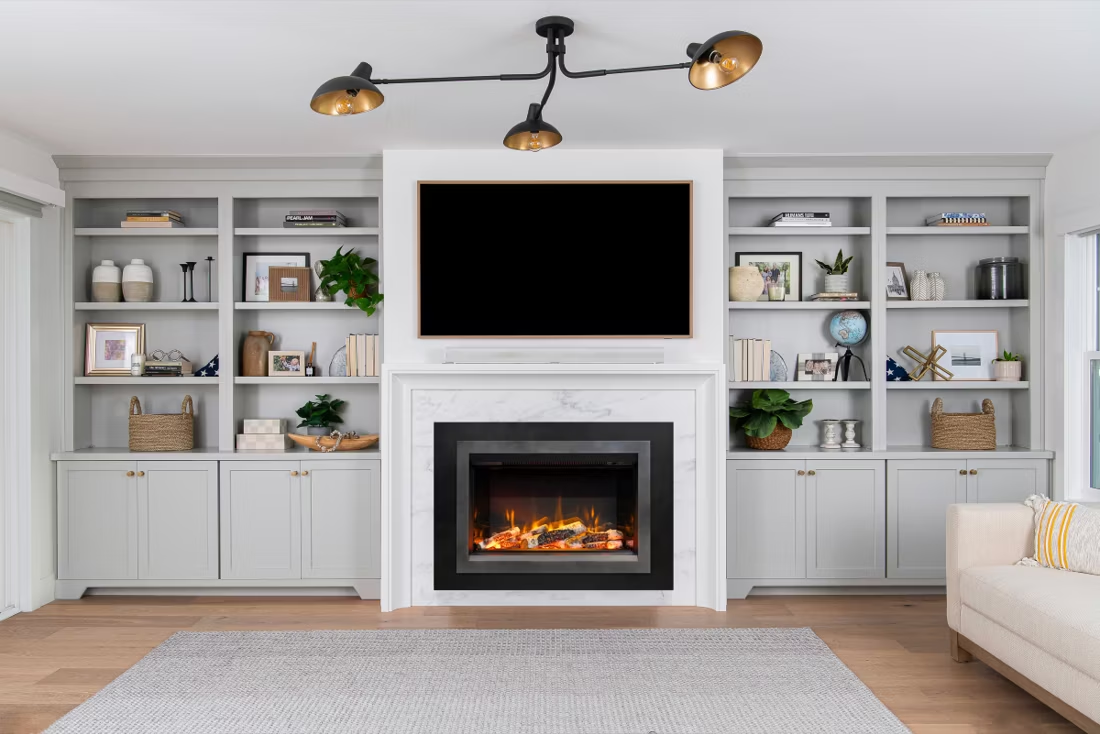
That's where electric fireplaces and inserts do their best work. Most plug into a standard 120-volt outlet, and built-in models typically just need a dedicated 20-amp circuit from an electrician—no combustion, no flue, no annual chimney sweep. Duke Energy Kentucky serves Independence at a residential rate of roughly $0.1344 per kWh, which keeps the cost of running a unit for supplemental zone heat well below what it costs to push the whole-house furnace harder on a cold Kenton County evening.
Three steps. No salesperson until you're ready.
Tell us about your project
Your zip code, your situation, and the fuel you're leaning toward—or let the answers point you to one.
See what's actually available
The brands dealers within 100 miles genuinely carry—real options, never a catalog mirage.
Get your dealer & Project Guide
A trusted local dealer, plus the free Project Guide & Parts List that names every component of the job.
Frequently Asked Questions
How much does an electric fireplace installation cost in Independence?
Plug-in electric inserts and freestanding stoves typically run $300 to $900 installed, since there's no gas line or venting involved—often just a cabinet cutout or existing fireplace opening. Built-in wall units or mantel packages with a dedicated 20-amp circuit run higher, usually $1,000 to $2,500 depending on the surround, trim kit, and whether an electrician needs to run new wiring. Compared to a wood or gas install in the $4,500-plus range, electric is consistently the lowest-cost path to a working fireplace in a Kenton County home.
How much does it cost to run an electric fireplace in Independence?
Most electric fireplaces draw around 1,500 watts on the high heat setting. At Duke Energy Kentucky's residential rate of about $0.1344 per kWh, that works out to roughly 20 cents an hour on full heat, or a few cents an hour on flame-only/no-heat mode for pure ambiance. Running one for a few hours most evenings during a Northern Kentucky winter typically adds $10 to $25 a month to a Duke Energy bill—far less than heating an entire home with electric resistance heat.
Do I need a permit to install an electric fireplace in Independence?
Usually not for a plug-in insert or freestanding unit—since there's no gas line, venting, or structural work, most jurisdictions in Kenton County treat it the same as plugging in a space heater. Built-in units that require a new dedicated circuit typically need an electrical permit, which most licensed installers pull as part of the job. If you're unsure whether your specific project needs a permit, a local hearth or electrical dealer can confirm before work starts.
Is an electric fireplace enough heat for an Independence winter?
For a single room, usually yes. Most electric units put out around 5,000 BTU (roughly 1,500 watts), enough to comfortably heat 400 to 1,000 square feet depending on insulation and ceiling height—plenty for a bedroom, sunroom, or finished basement in a climate zone 4A home. But with average winter lows around 23°F and a moderate winter heating season each year, an electric fireplace isn't sized to replace a furnace as the primary heat source for a whole house. It's best used as targeted zone heat layered on top of central HVAC, or for spaces the ductwork doesn't reach well.
Will my electric fireplace work during a power outage?
No—electric fireplaces require power to run the heater, blower, and flame effect, so they go dark along with everything else during an outage. Ice storms do periodically knock out power across Kenton County in winter, so if backup heat during an outage is a priority, pair your electric unit with a wood stove or vented gas insert elsewhere in the home. Wood in particular has deep roots in this part of Kentucky, with oak, hickory, maple, and cherry all common locally and cutting permits available through the Daniel Boone National Forest for around $20 a cord.
What's the difference between an electric insert, a wall-mounted unit, and a built-in?
An electric insert slides into an existing masonry or factory-built fireplace opening, instantly upgrading an old wood-burning firebox to clean, no-mess heat—a popular option in older Independence homes with an unused fireplace. A wall-mounted electric fireplace hangs like a flat-screen TV and needs only a nearby outlet, making it a fast option for a basement remodel or bedroom. A built-in electric fireplace is framed into a wall or custom cabinetry during a renovation and usually runs off its own dedicated circuit for a more finished, seamless look. All three run on standard household electricity—the choice mostly comes down to whether you're retrofitting an existing fireplace or building something new.
How long do electric fireplaces last, and what maintenance do they need?
A quality electric fireplace typically lasts 10 to 15 years with minimal upkeep—there's no creosote, soot, or combustion byproducts to worry about. Maintenance is mostly dusting the vents, occasionally replacing the LED light strip that creates the flame effect (a $20 to $50 part on most models), and making sure the blower fan stays free of dust buildup. There's no annual chimney sweep or gas line inspection required, which is part of why electric is the lowest-maintenance option of any fireplace fuel type.
Electric vs. gas—which is right for my Independence home?
Gas fireplaces put out more real heat (10,000 to 30,000+ BTU) and can serve as a legitimate backup heat source during a power outage if equipped with a standing pilot, but they require a gas line and professional venting, and installations in Independence typically run $4,500 or more. Electric fireplaces cost a fraction to install, need no venting, and are ideal for ambiance plus light zone heat, but they go out with the power and won't meaningfully offset a whole-house heating bill. For a primary living space that needs real backup heat, gas is usually the better call. For a bedroom, basement, or accent wall where the goal is a good-looking flame and some extra warmth, electric is hard to beat on cost and simplicity.
Where can I buy an electric fireplace in Independence?
Big-box stores sell electric fireplaces, but sizing the right BTU output for your room, matching the trim kit to your space, and wiring in a dedicated circuit correctly is where a local hearth dealer earns their fee—especially for built-in or insert installations that need to fit an exact opening. A trusted local dealer serving Kenton County can walk your space, confirm what will actually fit and function well, and handle any electrical work needed, rather than leaving you to guess from a store aisle.
Does an electric fireplace need a vent or chimney?
No—that's its superpower. An electric fireplace needs a wall and an outlet, period. No vent pipe, no gas line, no clearances to design around, which is why it works in bedrooms, offices, apartments, and walls where venting a gas or wood unit would be impractical or impossible. Installation is typically the simplest and least expensive of any fireplace type.
Can I put a TV above my fireplace?
Yes—with an asterisk. Fireplaces are hot and TVs don't like heat. Either put a mantel between them to deflect rising warmth, or choose a fireplace with heat-management technology that creates a cool zone on the wall above—the wall stays around 125 degrees, barely warm, while the room still gets full heat. If you like clean lines and don't want a mantel, heat management is the answer.
How much should I budget for a fireplace?
For an average home—covering the fireplace, the vent pipe, and basic installation—a budget between $3,900 and $5,500 gives you a lot of options across wood, gas, and pellet. By the time you add finish work, gas line, and electrical, the average complete installation lands between $5,000 and $12,000 all-in. In a remodel or new build, a good rule is to put about 2.5% of the total project cost toward the fireplace.
Can a fireplace actually lower my heating bill?
Yes—by creating a comfort zone. A furnace heats every square foot of the house just to warm the one room you're in; a gas fireplace on low burns roughly a sixth of the gas a typical furnace does. Set the furnace around 55–60 degrees as a baseline, then heat the rooms your family actually uses. Families who heat this way commonly save $20–$60 a month.
Nearby Dealers
Hearth shops serving Independence and the surrounding area. Every listing shows whether it is a WhyFire partner, a dealer we have verified as authorized for the brands we recommend, or a local business carrying hearth products. No manufacturer pays for placement. How we verify dealers →
Best Cincinnati Chimney
Charlie's Chimney Sweeps & Masonry
Chimney Top Masonry
Bona Decorative Hardware
Top Quality Building Products
Watson's Of Cincinnati
Chimney Care Fireplace & Stove
Brick Tec Inc.
Bethel Feed & Supply Inc.
Reading Rock's Fireside Hearth & Home
Electric Service in Independence
An electric fireplace's heater draws about 1,500 watts—pennies per hour at local rates.
Duke Energy Kentucky
Find your electric fireplace in Independence.
Tell us a bit about your home and we'll match you with the right electric fireplace or insert—and connect you with a trusted local dealer who can size it, wire it, and install it correctly.
Find Your Fireplace →