
Steady heat for Henry County's long bluegrass winters.
With a long heating season running November through March and winter lows averaging 20°F, Henry County homes need reliable heat that doesn't depend on splitting wood. Find the right pellet stove or insert and connect with a trusted local dealer.
Every Project Starts From One of These Five Situations
Convenient warmth without the woodpile.
Henry County is a small, rural stretch of north-central Kentucky bluegrass country—about 6,000 residents spread across farmland and small towns like New Castle, Eminence, Campbellsburg, Pleasureville, and Smithfield. Winters here aren't extreme, but they're long and consistent: a heating season stretching from November through March with average lows around 20°F mean most households need a real secondary or supplemental heat source, not just a fireplace for looks. For a lot of Henry County homeowners, especially those on rural acreage without easy access to natural gas lines, pellet stoves fill that gap without the labor of cutting, splitting, and stacking firewood every fall.
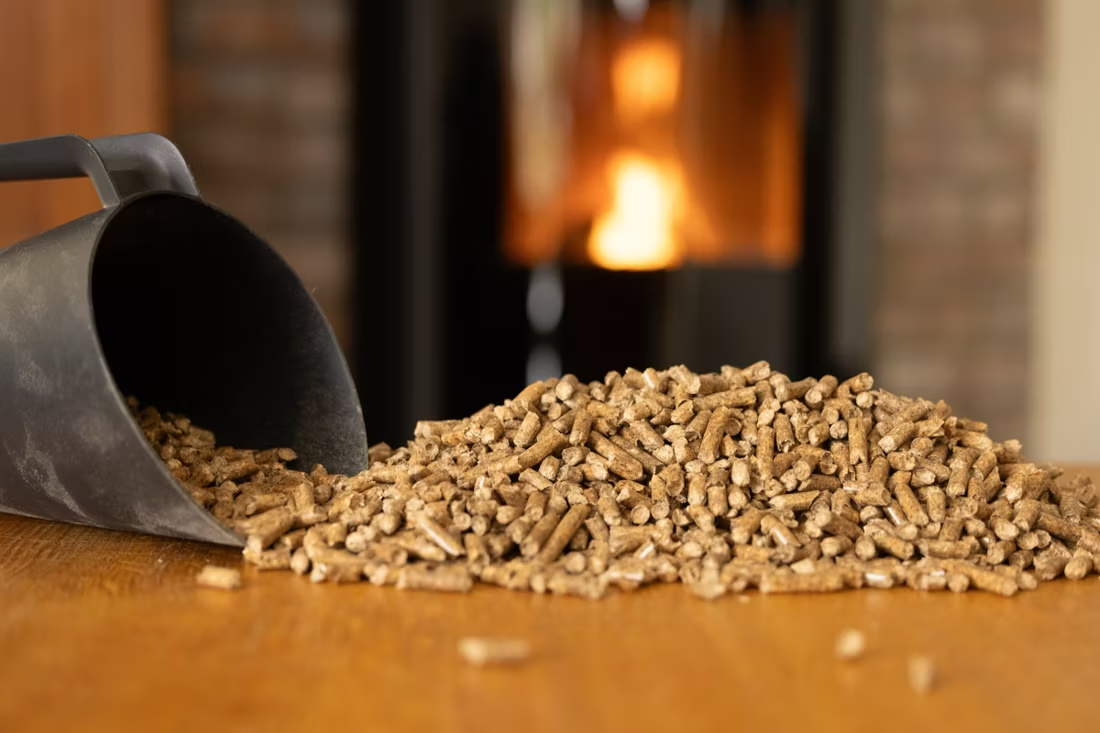
Regional pellet supply is solid here. Lignetics, Hamer Pellet Fuel—a Kentucky-based mill—and Greenway Renewable Energy all distribute into the area, and hardwood pellets made from oak, hickory, maple, and cherry (the same species that dominate local forests) are typically available through farm supply stores and hearth dealers rather than special order. Compared to a wood stove, a pellet unit gives you thermostat-controlled, consistent heat with a hopper you fill every day or two instead of every few hours—a real advantage for households where nobody's home to tend a fire all afternoon. The tradeoff is that pellet stoves need electricity to run the auger and blower, so a battery backup or small generator is worth planning for given Henry County's rural power lines.
Three steps. No salesperson until you're ready.
Tell us about your project
Your zip code, your situation, and the fuel you're leaning toward—or let the answers point you to one.
See what's actually available
The brands dealers within 100 miles genuinely carry—real options, never a catalog mirage.
Get your dealer & Project Guide
A trusted local dealer, plus the free Project Guide & Parts List that names every component of the job.
Frequently Asked Questions
How much does a pellet stove installation cost in Henry County?
Most pellet stove installations in Henry County run somewhere between $3,000 and $6,500, depending on the unit, whether you're venting through an existing chimney or need a new through-wall vent kit, and whether any hearth pad or electrical work is required. A pellet insert going into an existing masonry fireplace tends to land on the lower end since the chimney and hearth are already in place. A freestanding stove in a home without an existing fireplace—common on Henry County's rural properties—usually costs more once you add wall penetration, venting, and a dedicated electrical outlet near the unit. A local dealer will give you a firm number after seeing your home.
What size pellet stove do I need for my home?
Sizing depends on square footage, insulation, and whether the stove is your primary heat or a supplement to central heat or propane. As a rough guide for Henry County's climate—a long heating season running November through March with regular winter lows in the 20s—a small stove (under 1,000 sq ft) suits a single room or a modest farmhouse addition, a medium stove (1,000–1,800 sq ft) covers most main living areas in the county's older farmhouses and newer ranch-style homes, and a large stove (1,800+ sq ft) can carry a well-insulated whole home through the coldest stretches. Older, less-insulated farmhouses common throughout the county often need to size up a notch compared to newer construction. A local dealer will size your space during an in-home consultation, usually at no charge.
Where can I find certified pellet stove installers near me?
Look for installers with NFI (National Fireplace Institute) pellet certification, which covers proper venting, clearances, and electrical hookup specific to pellet appliances—a different skill set than wood stove installation. Because Henry County is rural, with towns spread out along US-421 and US-42 rather than concentrated in one center, expect some dealers based in Louisville, Shelbyville, or Frankfort to serve the county with a travel charge built into the quote. Ask any installer whether they'll handle the electrical outlet placement and vent kit sizing as part of the job—those two items are the most common source of pellet stove installation problems when handled by a general handyman instead of a certified hearth professional.
What's the difference between a pellet stove and a pellet insert?
A pellet stove is a freestanding unit that sits on a hearth pad and vents through an exterior wall or existing chimney—it can go almost anywhere in a room with the right clearances, which makes it a good fit for Henry County homes without a fireplace at all. A pellet insert is built to slide into an existing masonry fireplace opening, using the chimney (with a proper liner) as part of the venting path and converting an old open hearth into an automated, thermostat-controlled heat source. For county homes with an existing fireplace that rarely gets used, an insert is usually the simpler and less invasive upgrade. For homes without one, a freestanding stove is the standard choice.
Do I need a permit to install a pellet stove in Henry County?
Generally yes—new solid-fuel and pellet-burning appliance installations require a building permit, coordinated through the Henry County building department for most of the unincorporated county, or through the relevant city office if you're inside New Castle or one of the other incorporated towns. Most local hearth dealers handle the permit paperwork as part of the installation, so it's rarely something homeowners have to manage themselves. Henry County has no listed air quality restrictions or wood-burning curtailment periods, so there's no seasonal burn ban to plan around here the way there is in some Western states—pellet stoves in Henry County can run whenever the weather calls for it.
What's the best pellet stove for Henry County's climate?
For a moderate-cold climate like Henry County's—winter lows averaging 20°F rather than deep sub-zero stretches—a mid-size pellet stove or insert from a mainstream, well-supported brand is usually the right call rather than the largest unit on the showroom floor. What matters more locally is fuel supply: since Lignetics, Hamer Pellet Fuel, and Greenway Renewable Energy all distribute into the area, choosing a stove that burns standard hardwood pellets (rather than a premium or brand-specific fuel) keeps your options open at the farm supply store or hearth dealer instead of locking you into ordering pellets from farther away. Ask your local dealer which units they stock parts for locally—that matters more for pellet stoves than wood stoves, since the auger, igniter, and blower are mechanical parts that eventually need replacing.
How much maintenance does a pellet stove need?
Pellet stoves need more routine attention than a wood stove but far less than people expect. Plan on emptying the ash pan every few days during regular use, a deeper cleaning of the burn pot and heat exchanger tubes every couple of weeks, and a full professional service once a year—typically before the winter season starts in the fall, ahead of Henry County's long heating stretch that often runs from November through March. Annual service usually includes cleaning the exhaust fan, checking the auger motor, and inspecting the vent kit. Skipping the annual service is the most common reason pellet stoves lose efficiency or shut down mid-winter.
Where can I buy pellets in bulk near Henry County?
Hardwood pellets from Lignetics, Hamer Pellet Fuel, and Greenway Renewable Energy are typically stocked at farm supply and hearth retailers serving the county, and buying by the ton (usually 50 forty-pound bags) rather than by the individual bag is the standard way to save money heading into winter. Many rural Henry County households buy a season's supply—often 2 to 4 tons for a home using a pellet stove as primary heat—in late summer or early fall before demand picks up, since prices and availability can tighten once cold weather sets in. If you'd rather cut and season your own firewood instead of buying pellets, cutting permits through the Daniel Boone National Forest run about $20 per cord during the May-to-October season, though that's a different project than pellet heating.
Pellet stove vs. wood stove—which is right for my Henry County home?
Wood stoves burn cordwood—plentiful in Henry County thanks to abundant local oak, hickory, maple, and cherry, plus Forest Service cutting permits through the Daniel Boone National Forest at roughly $20 per cord—and they keep working during a power outage, which matters on rural lines that can stay down for a while after an ice storm. Pellet stoves trade that off-grid resilience for convenience: load the hopper, set the thermostat, and let the auger do the work, with less ash and a cleaner burn overall, but they need electricity to run. For Henry County homeowners who want low-maintenance, consistent heat and don't mind a battery backup for outages, pellet is usually the better fit. For those who want a heat source that works no matter what the grid is doing, wood remains the more dependable backup.
What's the difference between an insert and a zero-clearance fireplace?
An insert is a fireplace that slides into a pre-existing wood-burning fireplace—if you don't have one, there's nothing to insert it into. A zero-clearance fireplace is built into a framed wall, which makes it the answer for remodels and new construction. Simple test: existing masonry fireplace means insert; blank or framed wall means zero-clearance.
Why is a fireplace insert so efficient?
An insert does two things: it seals the chimney completely, so you stop losing air you already paid to heat, and it radiates warmth into the room through the firebox and glass. Most add a heat-exchange fan that pulls cool room air underneath, wraps it around the hot firebox, and pushes it back out warm. Your home is more efficient before you've even lit the first fire.
Does a fireplace add value to my home?
On average, a fireplace adds back to the home about the same amount you spent installing it. Add the monthly savings from heating the rooms you actually use instead of the whole house—often hundreds of dollars a year—and the value case is strong before you even count what a fire does for how your family uses the room.
Can a fireplace actually lower my heating bill?
Yes—by creating a comfort zone. A furnace heats every square foot of the house just to warm the one room you're in; a gas fireplace on low burns roughly a sixth of the gas a typical furnace does. Set the furnace around 55–60 degrees as a baseline, then heat the rooms your family actually uses. Families who heat this way commonly save $20–$60 a month.
Pellet Brands Stocked Around Henry County
Manufacturers will point you to the nearest stocking dealer.
Find your pellet stove in Henry County.
Tell us a bit about your home and we'll match you with the right pellet stove or insert for Henry County's climate, plus a free Project Guide & Parts List—the exact parts, vent kit included, and our recommended local dealer.
Find Your Fireplace →