
Steady, thermostat-driven heat for Hancock County homes.
Set-it-and-forget-it heat for the Ohio River bottoms and rolling farmland between Hawesville and Lewisport. Find the right pellet stove or insert, and connect with a trusted local dealer.
Every Project Starts From One of These Five Situations
Low-maintenance heat that keeps up with a working county.
Hancock County is small—about 3,223 people spread between the county seat of Hawesville and Lewisport along the Ohio River. Winters here sit in climate zone 4A, with average lows around 26°F and a moderate winter heating load overall. That's a meaningfully milder heating season than places like Duluth, MN or Bismarck, ND—this is a mixed-humid climate, not a brutal-cold one—but the county's shift-work economy, centered around the aluminum operations near Hawesville, means a lot of households want heat that doesn't require constant tending during long or irregular work hours.
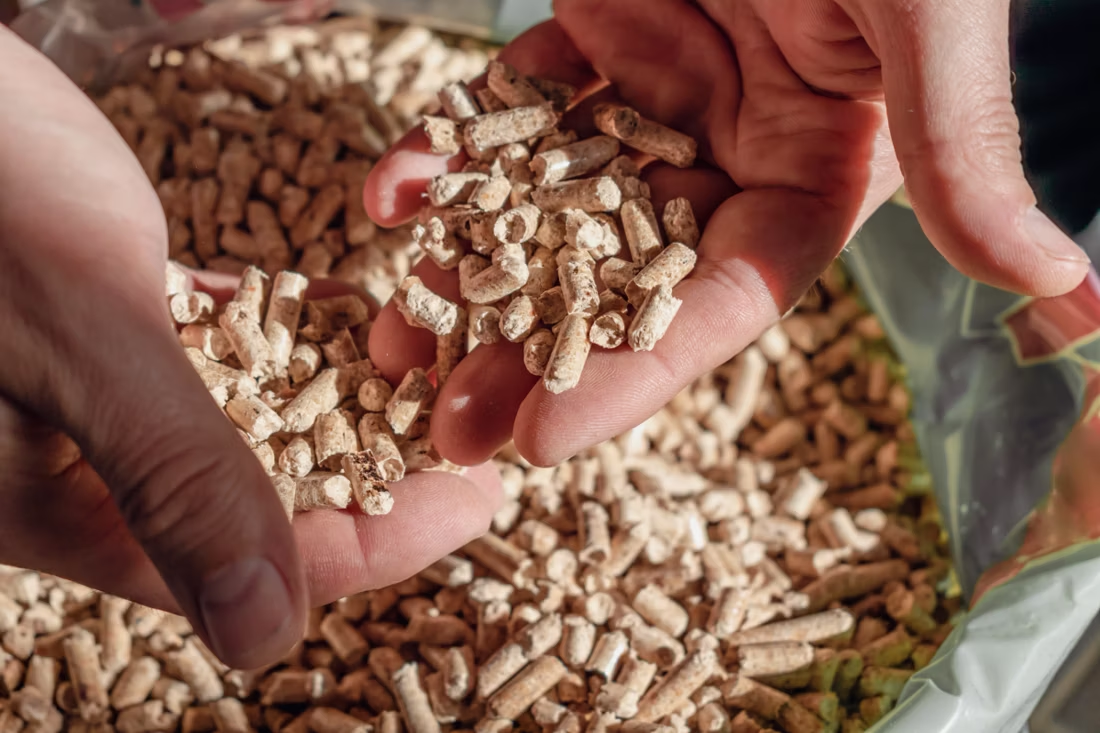
That's where pellet stoves earn their place. Load the hopper, set the thermostat, and walk away—no splitting oak or hickory, no middle-of-the-night reloads. With no air quality restrictions or burn curtailments listed for the county, pellet appliances run without the seasonal red-flag worries some Western counties deal with. Regional supply is solid too: Lignetics, Hamer Pellet Fuel, and Greenway Renewable Energy all distribute into the area, so residents aren't limited to whatever a single big-box store happens to stock—even in a county this size.
Three steps. No salesperson until you're ready.
Tell us about your project
Your zip code, your situation, and the fuel you're leaning toward—or let the answers point you to one.
See what's actually available
The brands dealers within 100 miles genuinely carry—real options, never a catalog mirage.
Get your dealer & Project Guide
A trusted local dealer, plus the free Project Guide & Parts List that names every component of the job.
Frequently Asked Questions
How much does a pellet stove installation cost in Hancock County?
Pellet stove installs typically run $3,000 to $6,000 in this part of Kentucky, depending on whether it's a freestanding stove or an insert going into an existing fireplace, hopper size, and whether a new dedicated electrical outlet is needed for the auger and blower motor. Inserts going into an existing masonry fireplace tend to land on the lower end since venting is simpler than a full through-wall install for a freestanding unit. A local dealer will give you a firm number after seeing the room and the existing chimney or wall setup.
What size pellet stove do I need for my Hancock County home?
With average winter lows around 26°F and a moderate overall winter heating load, Hancock County's heating demand is moderate—closer to a Louisville or Nashville winter than the extreme cold of the upper Midwest. Most homes in the county, whether farmhouses outside Hawesville or houses in Lewisport, do fine with a medium-capacity pellet stove rated for 1,000 to 2,000 square feet as a primary or supplemental heat source. You don't need to size up the way you would in a place with a heating load nearly double this one—oversizing here mostly just means more cycling and wasted pellets.
Where can I buy pellet fuel in Hancock County?
Lignetics, Hamer Pellet Fuel, and Greenway Renewable Energy all supply this region, and your dealer can typically arrange bulk pallet delivery (a ton at a time, usually 50 forty-pound bags) directly to your property. Because Hancock County's population is small, there isn't a dedicated hearth retail strip in town—most residents either order pallets through their installer or make the short drive toward Owensboro for farm supply and hardware stores that stock bagged pellets during the winter.
Do I need a permit to install a pellet stove in Hancock County?
Yes, a building permit is generally required for a new pellet stove or insert installation, since it involves venting through an exterior wall or existing chimney and, in most cases, a dedicated electrical circuit. Your local dealer or installer can typically handle the permit application with the county building office as part of the job. On the air quality side, Hancock County has no listed burn restrictions or curtailment periods, so once installed, a pellet stove can run whenever you want heat.
What's the difference between a pellet stove and a wood stove?
A wood stove burns split cordwood—plenty of it locally, since oak, hickory, maple, and cherry are all common in Hancock County's woodlots—and needs no electricity to run, which matters during ice storms along the Ohio River when power lines go down. A pellet stove burns compressed wood pellets fed automatically by an electric auger, giving you thermostat-level control and far less daily tending, but it stops working the moment the power does unless you add a battery backup. If you want convenience for day-to-day use and can live with a backup wood or generator plan for outages, pellet is the easier appliance to live with.
What's the best pellet stove for Hancock County homes?
Given the county's moderate climate—winter lows averaging around 26°F rather than the deep sub-zero stretches seen in colder parts of the country—most homeowners here don't need the largest hopper or highest BTU output on the market. A mid-size stove with a 40-to-60-pound hopper is usually enough to run 12-24 hours between refills, which suits a household balancing shift schedules at the aluminum plant or a long commute toward Owensboro. Ask your local dealer about hopper capacity and auger reliability specifically—those two things matter more day-to-day than raw heat output in this climate.
How often does a pellet stove need to be cleaned and serviced?
Plan on emptying the ash pan every few days during regular use and doing a deeper clean of the burn pot and glass weekly. Beyond that, an annual professional service—checking the auger motor, exhaust blower, and venting for pellet ash buildup—keeps the stove running efficiently through Hancock County's full heating season, which typically runs from late fall into early spring given the county's moderate overall winter heating load.
How much does pellet fuel cost per ton in Hancock County?
Regional pellet pricing from suppliers like Lignetics and Hamer Pellet Fuel generally runs in the $250 to $320 per ton range in this part of Kentucky, sold by the pallet (roughly a ton, or 50 forty-pound bags). Buying a full pallet ahead of the season is usually cheaper per bag than picking up individual bags as needed, and some local dealers offer a discount for early-season, pre-winter orders.
Pellet vs. wood—which is right for my home?
Wood is the better fit if you want a heat source that works with the power out—a real consideration during Ohio River Valley ice storms—and you have access to the oak, hickory, or cherry that's common on Hancock County properties. Pellet is the better fit if your schedule doesn't leave time for splitting and hauling wood—common for households working shifts at the aluminum operations near Hawesville—and you'd rather set a thermostat and let the hopper feed itself. Plenty of homes in the county end up with both: pellet for daily convenience, a wood stove or fireplace as backup.
How often does a pellet stove need cleaning?
A clean pellet stove is a happy pellet stove. Plan on cleaning the burn pot about once a week when you're burning regularly—ash and clinkers gum up the air holes just like a pellet barbecue. Most pellet stove problems trace back to skipped cleaning that nobody explained up front. Some designs make it easy with a trapdoor burn pot: pull a lever and the gunk drops into the ash pan.
What's the difference between an insert and a zero-clearance fireplace?
An insert is a fireplace that slides into a pre-existing wood-burning fireplace—if you don't have one, there's nothing to insert it into. A zero-clearance fireplace is built into a framed wall, which makes it the answer for remodels and new construction. Simple test: existing masonry fireplace means insert; blank or framed wall means zero-clearance.
Can a fireplace actually lower my heating bill?
Yes—by creating a comfort zone. A furnace heats every square foot of the house just to warm the one room you're in; a gas fireplace on low burns roughly a sixth of the gas a typical furnace does. Set the furnace around 55–60 degrees as a baseline, then heat the rooms your family actually uses. Families who heat this way commonly save $20–$60 a month.
How much should I budget for a fireplace?
For an average home—covering the fireplace, the vent pipe, and basic installation—a budget between $3,900 and $5,500 gives you a lot of options across wood, gas, and pellet. By the time you add finish work, gas line, and electrical, the average complete installation lands between $5,000 and $12,000 all-in. In a remodel or new build, a good rule is to put about 2.5% of the total project cost toward the fireplace.
Pellet Brands Stocked Around Hancock County
Manufacturers will point you to the nearest stocking dealer.
Find your pellet stove in Hancock County.
Tell us a bit about your home and we'll match you with the right pellet stove or insert, plus a free Project Guide & Parts List with the exact venting and parts your installer will need—and connect you with a trusted local dealer.
Find Your Fireplace →