
Find your pellet stove in Grayson County.
Thermostat-controlled heat for Grayson County's 5,010 heating degree days—from Leitchfield to the cabins ringing Rough River Lake. Find the right unit and connect with a trusted local dealer.
Every Project Starts From One of These Five Situations
Convenient heat in Kentucky's hardwood country.
Grayson County sits in west-central Kentucky, climate zone 4A, with about 5,010 heating degree days a year and winter lows averaging around 21°F. It's not the brutal cold of the upper Midwest, but the heating season here runs a solid five to six months, and a lot of that load falls on homes and lake cabins around Rough River Lake and the Nolin River that see heavy use in shoulder seasons when nobody wants to babysit a wood fire.
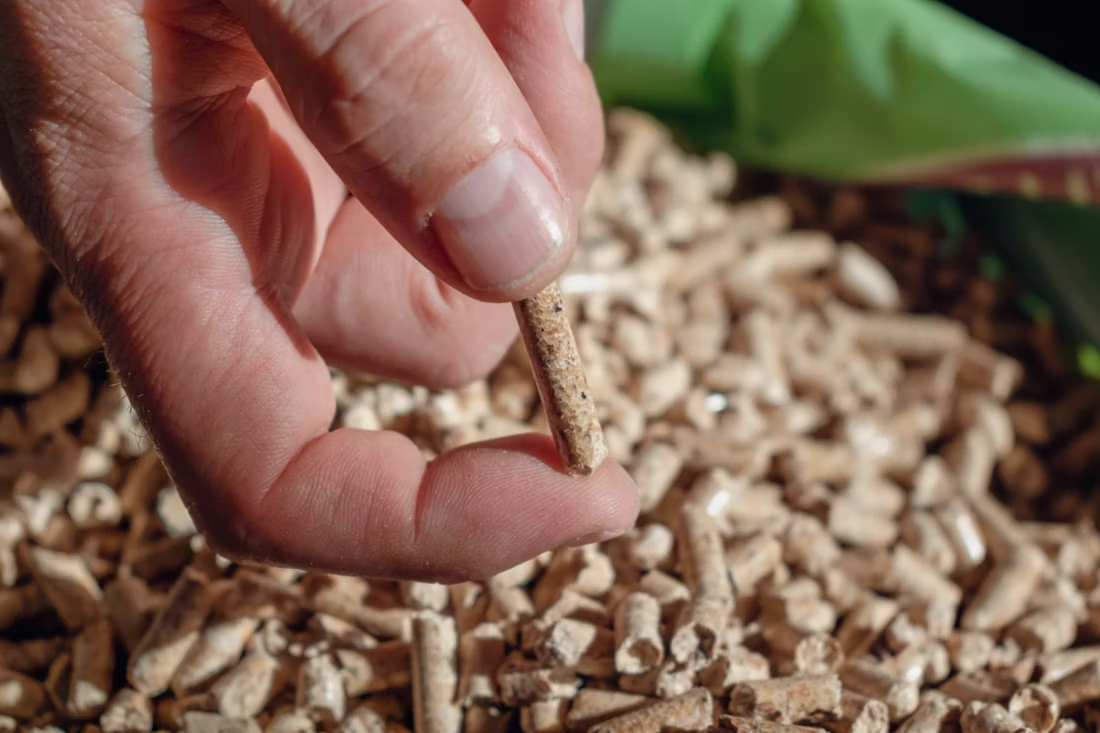
Grayson County's oak, hickory, maple, and cherry forests have supported wood-burning for generations, and plenty of homeowners here still cut and burn their own firewood for free. Pellet stoves fill a different need: set-and-forget heat with a thermostat, none of the splitting and stacking, and a hopper that can run 24-plus hours between refills. Regional suppliers including Lignetics, Hamer Pellet Fuel, and Greenway Renewable Energy keep bagged pellets available locally, which matters in a rural county where a special trip to Elizabethtown or Bowling Green for fuel gets old fast.
Three steps. No salesperson until you're ready.
Tell us about your project
Your zip code, your situation, and the fuel you're leaning toward—or let the answers point you to one.
See what's actually available
The brands dealers within 100 miles genuinely carry—real options, never a catalog mirage.
Get your dealer & Project Guide
A trusted local dealer, plus the free Project Guide & Parts List that names every component of the job.
Frequently Asked Questions
How much does a pellet stove installation cost in Grayson County?
A typical pellet stove or insert installation in Grayson County runs roughly $3,000 to $6,000, depending on the unit, whether you're installing into an existing masonry fireplace as an insert or placing a freestanding stove, and how much wall-vent or hearth-pad work is needed. Pellet stoves vent through a small-diameter PL vent pipe rather than a full masonry chimney, which usually keeps installation simpler and cheaper than a comparable wood stove. Homes without an existing hearth or electrical outlet nearby (pellet stoves need power to run the auger and blower) may see costs toward the higher end once wiring and a hearth pad are added.
What size pellet stove do I need for my home?
Sizing depends on square footage, insulation, and whether the stove is your main heat source or a supplement to central heat. For Grayson County's moderate winters, most in-town homes in Leitchfield do fine with a mid-size unit rated for 1,200 to 2,000 square feet, while larger farmhouses or lake homes around Rough River may want a bigger hopper and higher BTU output to cover open floor plans. Cabins used mainly on weekends often prioritize a bigger hopper over raw output, since nobody wants to refill it every eight hours during a Friday-to-Sunday stay. A local dealer will size this properly during an in-home visit rather than guessing off square footage alone.
Where can I find certified pellet stove installers near me?
Look for installers with NFI (National Fireplace Institute) certification, which covers proper venting, clearances, and electrical hookup for pellet appliances. Grayson County is rural enough that some certified installers are based out of Elizabethtown or Bowling Green and travel into Leitchfield and the surrounding lake communities, so expect a modest trip charge on top of the install quote for addresses further from town. Buying and installing through the same dealer simplifies warranty claims if the auger motor or igniter needs service down the road, which is worth more out here than in a market with five installers on every corner.
Pellet stove or wood stove—which makes more sense in Grayson County?
If you've got access to your own oak, hickory, maple, or cherry—a lot of Grayson County homeowners do, whether from their own land or a neighbor's woodlot—a wood stove burns essentially free fuel and keeps working with no electricity at all, which matters during ice-storm outages. A pellet stove trades that free fuel source for convenience: no splitting or stacking, a thermostat that holds a steady temperature, and a burn that needs almost no tending. The tradeoff is that pellet stoves need continuous electricity to run the auger and combustion blower, so they go dark in a power outage unless paired with a battery backup. For primary residences with reliable power, pellet is often the easier daily-use choice; for backup heat during storms, wood still has the edge.
Do I need a permit to install a pellet stove in Grayson County?
Requirements depend on where you're building. Within Leitchfield city limits, installations typically go through the city's building inspector. In unincorporated Grayson County, building code enforcement is often handled through the Kentucky State Fire Marshal's Office rather than a dedicated county building department, since many rural Kentucky counties don't run their own permitting office. Most local dealers know exactly which office to file with and handle the paperwork as part of the install, so you're not stuck figuring out jurisdiction yourself. The stove itself should carry an EPA certification label, which any reputable local dealer will confirm before installation.
What should I look for in a pellet stove for this climate?
With 5,010 heating degree days and winter lows around 21°F, Grayson County doesn't demand the extreme burn times you'd need in the northern Plains, but a larger hopper is still worth paying for if the stove is running as primary heat through a Kentucky winter. Look for a stove with a self-cleaning burn pot (less daily ash scraping), a reliable auto-ignition system, and a thermostat or remote control rather than a manual feed-rate dial—the automated units hold a much steadier temperature overnight. For lake cabins around Rough River that sit empty during the week, a stove with a programmable thermostat lets you keep the place from freezing without running a full burn the whole time.
Where do I buy pellets in Grayson County, and what do they cost?
Bagged hardwood and softwood pellets from brands like Lignetics, Hamer Pellet Fuel, and Greenway Renewable Energy are available through local hearth and farm-supply retailers serving the Leitchfield area, with prices generally running $250 to $320 per ton depending on brand and whether you buy by the pallet. Buying a full ton pallet ahead of the season is usually cheaper per bag than picking up individual 40-pound bags through the winter, but you'll need a dry, covered storage spot—a garage or shed works, since damp pellets swell and jam the auger. Stocking up in late summer before demand picks up is common practice among regular pellet burners here.
How often does a pellet stove need cleaning or service?
Plan on emptying the ash pan and wiping down the burn pot every few days during regular use, plus a deeper cleaning of the hopper, auger, and exhaust vent every few weeks depending on how many hours you're burning. A full professional service—checking the igniter, gaskets, blower, and vent pipe—is recommended annually, ideally before the fall heating season starts. This is lighter-duty than sweeping a wood-burning chimney, but skipping it still shortens the life of the auger motor and increases the odds of a jam mid-winter.
Pellet stove vs. propane fireplace—which fits my Grayson County home better?
Propane is the common bottled-gas option across rural Grayson County where natural gas lines don't reach, and a propane fireplace or insert gives instant on-off heat at the flip of a switch with no fuel handling beyond scheduling tank deliveries. A pellet stove trades that instant convenience for a lower-cost fuel per BTU in most years, plus the visual and sound of an actual fire, but it needs a steady electrical supply and periodic hopper refills. If you want zero daily involvement and don't mind propane delivery logistics, propane usually wins; if you're comfortable loading a hopper every day or two and want to burn a domestically produced fuel instead of bottled gas, pellet is the better fit. Some Grayson County households run both—propane in the main living space, a pellet stove in a workshop, basement, or lake cabin.
Why is a fireplace insert so efficient?
An insert does two things: it seals the chimney completely, so you stop losing air you already paid to heat, and it radiates warmth into the room through the firebox and glass. Most add a heat-exchange fan that pulls cool room air underneath, wraps it around the hot firebox, and pushes it back out warm. Your home is more efficient before you've even lit the first fire.
How often does a pellet stove need cleaning?
A clean pellet stove is a happy pellet stove. Plan on cleaning the burn pot about once a week when you're burning regularly—ash and clinkers gum up the air holes just like a pellet barbecue. Most pellet stove problems trace back to skipped cleaning that nobody explained up front. Some designs make it easy with a trapdoor burn pot: pull a lever and the gunk drops into the ash pan.
Does a fireplace add value to my home?
On average, a fireplace adds back to the home about the same amount you spent installing it. Add the monthly savings from heating the rooms you actually use instead of the whole house—often hundreds of dollars a year—and the value case is strong before you even count what a fire does for how your family uses the room.
How much should I budget for a fireplace?
For an average home—covering the fireplace, the vent pipe, and basic installation—a budget between $3,900 and $5,500 gives you a lot of options across wood, gas, and pellet. By the time you add finish work, gas line, and electrical, the average complete installation lands between $5,000 and $12,000 all-in. In a remodel or new build, a good rule is to put about 2.5% of the total project cost toward the fireplace.
Pellet Brands Stocked Around Grayson County
Manufacturers will point you to the nearest stocking dealer.
Find your pellet stove in Grayson County.
Tell us about your home and we'll match you with a trusted local dealer and send over your free Project Guide & Parts List—a plan for your pellet project in Grayson County with the exact parts, including the vent kit, and the dealer we recommend for the install.
Find Your Fireplace →