
Add electric warmth to your Elliott County home—no chimney required.
For homes across Elliott County's hollows and ridgelines—from Sandy Hook to Isonville—an electric fireplace adds real zone heat and ambiance without a flue, a gas line, or a wood supply to manage. Find the right unit and get matched with a trusted local dealer.
Every Project Starts From One of These Five Situations
Reliable heat without venting, gas lines, or wood to haul.
Elliott County is small, hilly, and heavily wooded—climate zone 4A, with cold but not extreme winters compared to places like Duluth or Fargo. Most of the county has limited or no natural gas infrastructure, and a lot of the housing stock, including a fair number of manufactured and older frame homes around Sandy Hook and out along the county roads, already runs on electric heat pumps or baseboard as the primary system. An electric fireplace fits naturally into that setup: it plugs into an existing circuit or a simple dedicated line, and it doesn't ask you to cut a hole in the roof or run new gas piping through a hundred-year-old farmhouse.
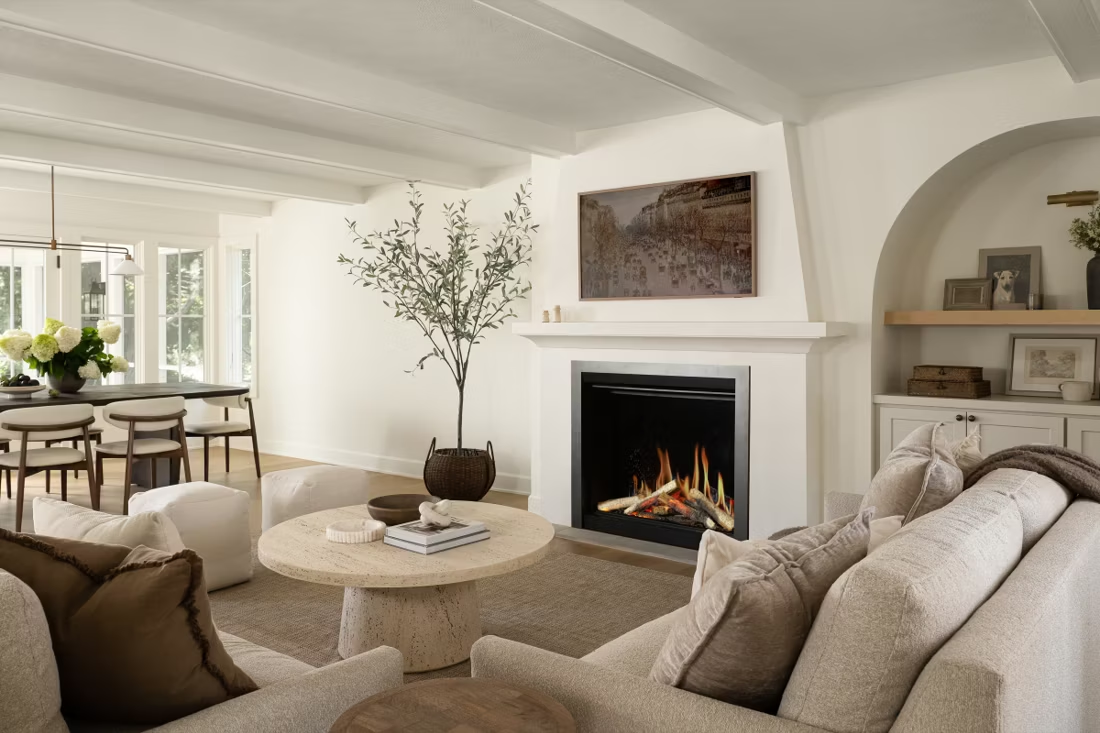
Power in Elliott County comes largely through Licking Valley RECC, the rural electric cooperative serving this stretch of northeastern Kentucky, and most homes are well set up to add a 120V or 240V fireplace insert without major panel work. For households with an old, drafty masonry fireplace that was built for wood but rarely gets used, an electric insert can drop into that existing opening and turn dead space into usable, thermostat-controlled heat. For newer construction or additions with no chimney at all, a wall-mounted or built-in electric unit is often the simplest way to get real heat and the look of a fire into a room.
Three steps. No salesperson until you're ready.
Tell us about your project
Your zip code, your situation, and the fuel you're leaning toward—or let the answers point you to one.
See what's actually available
The brands dealers within 100 miles genuinely carry—real options, never a catalog mirage.
Get your dealer & Project Guide
A trusted local dealer, plus the free Project Guide & Parts List that names every component of the job.
Frequently Asked Questions
How much does an electric fireplace installation cost in Elliott County?
A plug-in electric insert or freestanding unit that uses an existing outlet typically runs $300 to $800 installed, since there's no venting or masonry work involved. A built-in wall unit or a mantel-surround fireplace that needs a dedicated 20-amp circuit run by an electrician usually lands between $1,200 and $3,000, depending on how far the unit is from the panel and whether drywall or trim work is needed. Homes on the far ends of the county—out toward Newfoundland or up the hollows off KY-7—may see a modest travel charge added by installers based in Sandy Hook or nearby West Liberty.
How is an electric fireplace different from a plug-in space heater?
A basic space heater and an electric fireplace insert often use similar 1,500-watt heating elements, but the fireplace is built to look and feel like a real hearth—a flame-effect display, a mantel or surround, and often a built-in thermostat with a remote. Many models are designed to be a permanent fixture in the room rather than something you plug in and unplug seasonally. For Elliott County homeowners weighing the two, the fireplace makes more sense as a long-term zone-heating feature in a living room or den; a space heater is fine as a stopgap but won't give you the same finished look or built-in safety features like tip-over shutoff and cool-touch glass that come standard on most fireplace inserts.
Do I need a permit to install an electric fireplace in Elliott County?
A plug-in unit that uses an existing outlet generally doesn't require a permit—there's no gas line, no venting, and no structural change involved. If your installation calls for a new dedicated circuit, an electrician will typically pull an electrical permit through the county, which is a straightforward inspection covering the wiring rather than the fireplace itself. Unlike wood or gas installs, there's no chimney, flue, or combustion-appliance inspection to schedule, which is one reason electric units are often the fastest option to get up and running in older Elliott County homes.
Can an electric fireplace serve as my main source of heat?
It can supplement your main heat effectively, but it's usually not the best choice as a whole-home primary source in Elliott County's climate zone 4A winters. Most electric fireplaces are rated to heat a single room—roughly 400 to 1,000 square feet depending on wattage—which makes them well suited to zone heating a living room or den while your existing heat pump or baseboard system covers the rest of the house. A lot of homes in the county already run electric heat pumps as primary heat, and adding a fireplace insert to the main living space lets you turn the thermostat down elsewhere and heat just the room you're using.
Can I put an electric insert into my existing wood fireplace?
Yes, and it's a common project in older Elliott County homes with a masonry fireplace that's drafty, rarely used, or that the family doesn't want to keep cutting and hauling oak or hickory for anymore. An electric insert slides into the existing firebox opening, plugs into a nearby outlet (or a new one added behind the surround), and gives you controllable heat and a realistic flame display without any venting changes. It also seals up the old flue opening, which stops the constant cold-air draw that an unused wood fireplace often pulls through the house all winter.
What happens to my electric fireplace during a power outage?
It won't run—electric fireplaces need grid power for both the flame effect and the heater, so during an ice storm or wind event that knocks out Licking Valley RECC service, the unit simply goes dark until power is restored. In a county with as much hilly, wooded terrain as Elliott County, winter outages do happen, sometimes for more than a day. If backup heat during outages matters to your household, many local dealers also carry wood stoves that will keep running with no electricity at all—some homes here keep both: electric for everyday convenience and ambiance, wood as the outage backup.
What size electric fireplace do I need for my room?
Most electric fireplaces are rated by wattage rather than square footage on the box, but a standard 1,500-watt unit will comfortably heat a room up to about 400 to 600 square feet in a typical Elliott County home. A larger den or an open living/kitchen space may call for a bigger insert or a model with a higher BTU heating element, and rooms with cathedral ceilings or a lot of exterior wall—common in older farmhouses around the county—may need supplemental heat from your existing system on the coldest days. A local dealer can walk through your room dimensions and recommend a specific model rather than guessing from a box label.
What's a good electric fireplace choice for Elliott County's winters?
Look for a unit with a built-in thermostat and adjustable heat settings rather than a fixed on/off heater—that lets you dial in modest heat on mild days and full output during the occasional cold snap when temperatures drop into the single digits, which does happen in this part of northeastern Kentucky. Models with a realistic LED flame and multiple brightness or color settings also hold up well for the many evenings you'll run the fireplace for ambiance alone without the heater engaged, which costs pennies compared to full heating mode. A local dealer can match features to how you'll actually use the unit—heat, ambiance, or both.
Electric vs. wood—which is right for my home?
Elliott County is thick with oak, hickory, maple, and cherry, and a lot of families here still burn wood for both heritage and real cost savings, especially with land access for self-cutting. Wood also keeps working with no power—a real advantage in a county that sees its share of winter outages. Electric, on the other hand, means no hauling, no ash, no chimney to sweep, and instant on-off control at the flip of a switch or a remote. For a primary living space where convenience matters and there's no existing chimney, electric is usually the simpler call. For households that want backup heat independent of the grid, wood still has a strong case in this county, and plenty of homes end up with both.
Does an electric fireplace need a vent or chimney?
No—that's its superpower. An electric fireplace needs a wall and an outlet, period. No vent pipe, no gas line, no clearances to design around, which is why it works in bedrooms, offices, apartments, and walls where venting a gas or wood unit would be impractical or impossible. Installation is typically the simplest and least expensive of any fireplace type.
Can I put a TV above my fireplace?
Yes—with an asterisk. Fireplaces are hot and TVs don't like heat. Either put a mantel between them to deflect rising warmth, or choose a fireplace with heat-management technology that creates a cool zone on the wall above—the wall stays around 125 degrees, barely warm, while the room still gets full heat. If you like clean lines and don't want a mantel, heat management is the answer.
What is an in-home preview and do I need one?
It's a visit where a hearth professional measures your space, confirms the model you picked actually works in your home, and walks the specs—framing, gas line, venting, finish work—before anything is ordered. Some details you just can't know until you see the house. Never make a down payment without one; it's the single most-skipped step that burns buyers.
Can I install a fireplace myself?
If you're putting a fire in your house on purpose, it's best to work with an expert. Unless you're genuinely experienced in framing, gas line, vent pipe, and the national code on clearances to combustibles, have a professional do it—and ideally the same company that sells you the fireplace, so warranty, service, and liability all live under one roof.
Find your electric fireplace in Elliott County.
Tell us a bit about your home and we'll match you with a trusted local dealer and send over a free Project Guide & Parts List—the exact parts for your electric fireplace project in Elliott County, plus who to call to get it installed.
Find Your Fireplace →