
Find the right hearth for your Elliott County home.
Wood, gas, pellet, and electric fireplace resources for Sandy Hook and the rural hollows and ridgetops across Elliott County. Find the right unit and connect with a trusted local hearth retailer.
Every Project Starts From One of These Five Situations
Hardwood heating in the Kentucky hills.
Elliott County is one of Kentucky's smallest and most rural counties by population—about 708 people spread across steep ridges and hollows in the eastern part of the state. Climate zone 4A means real winters, though nothing like the deep cold of Burlington, VT or Duluth, MN—lows in the teens and 20s are typical, not the sustained sub-zero stretches those cities see. What Elliott County does have is abundant hardwood: oak, hickory, maple, and cherry are all cut locally, and a lot of households here have burned wood for generations, whether as primary heat or a serious supplement to a propane furnace.
What you'll find on this hub: hearth retailers, service technicians, and fuel suppliers serving Sandy Hook and the unincorporated communities scattered throughout the county—places like Isonville, Newfoundland, and Wrigley. Pick your fuel below to drill into specifics—local dealers, installation costs, recommended units, and the resources that match your project. Given the county's small population, expect fewer dealers than a metro area, with most serving a wide radius out of nearby towns in Morgan, Carter, or Lawrence County as well.
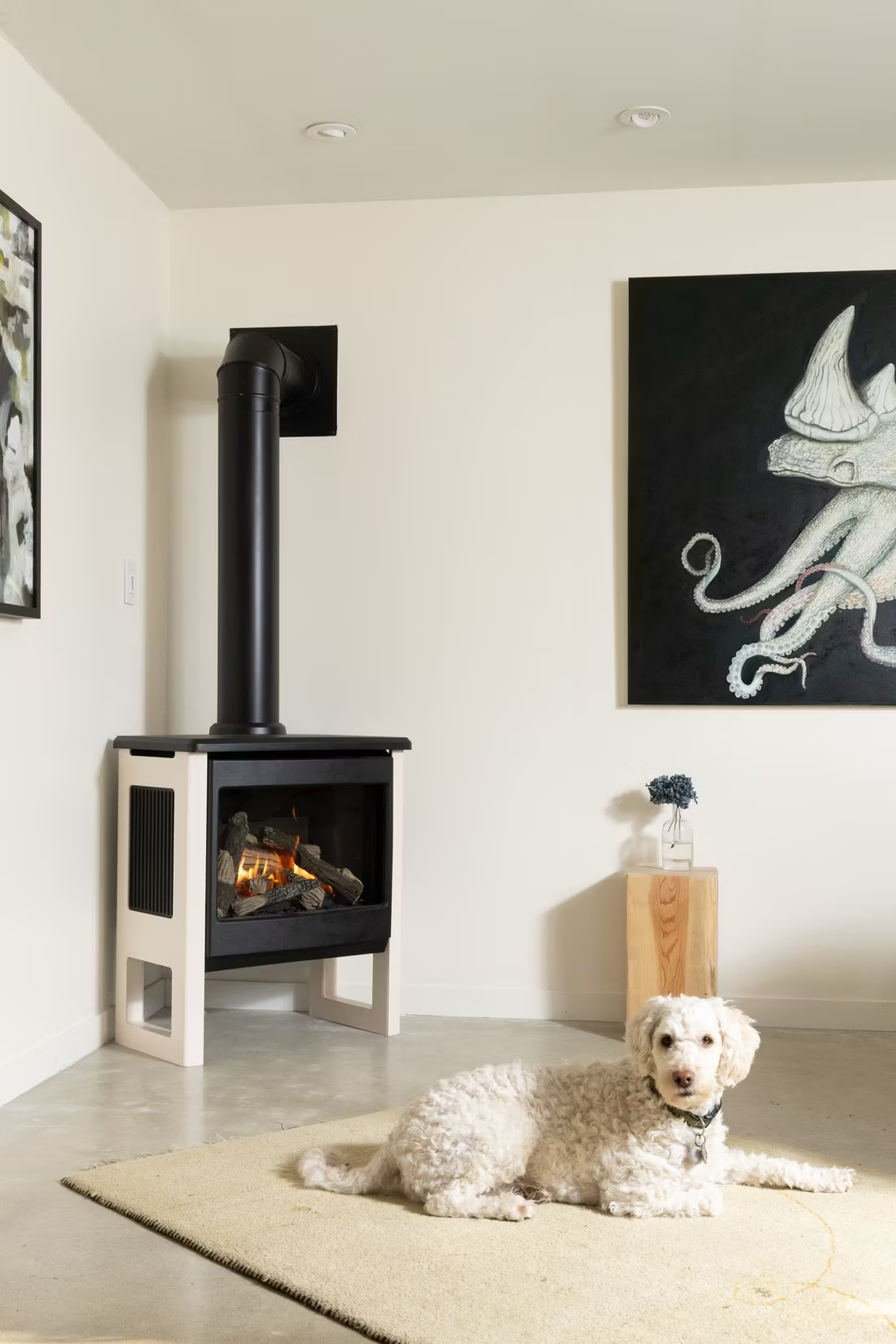
Four fuels. One honest answer for Elliott County.
Three steps. No salesperson until you're ready.
Tell us about your project
Your zip code, your situation, and the fuel you're leaning toward—or let the answers point you to one.
See what's actually available
The brands dealers within 100 miles genuinely carry—real options, never a catalog mirage.
Get your dealer & Project Guide
A trusted local dealer, plus the free Project Guide & Parts List that names every component of the job.
Frequently Asked Questions
Which fuel works best for a home in Elliott County?
It depends on your home and how hands-on you want to be. Wood is the traditional choice here—with oak, hickory, and cherry cut locally, a lot of Elliott County homes run a wood stove as primary heat or a heavy-duty backup, especially useful given how rural power lines can be during ice storms. Gas (mostly propane, since natural gas service is limited in a county this rural) is the low-labor choice—set a thermostat and walk away, no wood-splitting required. Pellet stoves split the difference: consistent heat without cutting your own wood, though you'll want a reliable source of bagged pellets since there isn't a big local retail presence. Electric fireplaces work well as supplemental heat in a single room or for ambiance, but in a 4A climate zone they're not typically anyone's whole-house heating plan. Many households here run two fuels—wood or pellet as the workhorse, propane or electric to fill gaps.
Do I need a building permit to install a wood stove in Elliott County?
Yes, in most cases. Wood stoves, inserts, and other solid-fuel appliances typically require a building permit and must meet current EPA emissions standards for new installations. Given how rural much of Elliott County is, permitting and inspection can go through the county's building authority or, depending on your location, a regional code enforcement office—it's worth confirming with your installer before work starts, since jurisdiction can be less centralized than in a bigger county. Gas installations (propane, in most of the county) also typically require a separate gas-line permit and licensed installer for the connection. Most hearth retailers who serve Elliott County are used to navigating this and will handle the permitting as part of the job.
Is wood burning restricted in Elliott County for air quality reasons?
No—Elliott County doesn't have the kind of terrain or population density that produces winter inversion problems, and there are no local air quality advisories tied to wood smoke here. That's a real point in favor of wood heat for this area compared to somewhere like a basin town out west. That said, any new wood stove installation still needs to meet current EPA 2020 NSPS emissions standards, and a well-seasoned load of local oak or hickory burns cleaner and more efficiently than green wood regardless of any regulation—it's just better heat.
Where do I find pellets, propane, or firewood in a county this small?
Bagged pellets from brands like Lignetics, Hamer Pellet Fuel, and Greenway Renewable Energy are typically available through farm supply stores and hardware stores in the region—since Elliott County itself has limited retail, many residents stock up when they're in a larger nearby town like Grayson or West Liberty. Propane comes from regional suppliers who deliver on a route basis; if you heat primarily with propane, it's worth setting up a scheduled delivery or auto-fill so you're not caught short during a cold stretch. Firewood is the one fuel most Elliott County households can source themselves, given the amount of oak, hickory, maple, and cherry on private land—but if you're buying it, ask whether it's seasoned; green wood burns dirty and inefficiently.
How does hearth service work when the nearest dealer might be 30+ miles away?
Most technicians who service Elliott County are based in neighboring counties—Morgan, Carter, or Lawrence—and cover a wide radius rather than staffing a shop locally. Expect to schedule a service visit rather than a same-day walk-in, and factor in a possible travel fee for the drive. The upside of a rural county like this is that technicians are used to spread-out routes, so a Sandy Hook or Isonville address isn't unusual for them. Booking your annual chimney sweep or gas inspection in late summer or early fall, before the cold-weather rush, generally gets you a faster appointment than waiting until the first cold snap.
What does fireplace installation typically cost across fuel types in Elliott County?
Costs run in line with regional Kentucky pricing, with rural travel sometimes adding a bit to labor. Wood stove or insert installation: roughly $3,500–$8,000 depending on chimney work required. Gas (propane) fireplace, insert, or stove: roughly $3,500–$9,000, with cost driven mostly by whether an existing propane line and tank setup are already in place. Pellet stove or insert: roughly $3,500–$6,500 for a typical install. Electric fireplace: $200–$2,500 for the unit itself, with $300–$1,000 in labor for anything beyond a plug-and-play wall unit. For a specific number, a local dealer needs to see your chimney, existing fuel lines, and the room you're heating—see the county + fuel pages above for more detail.
Can a fireplace actually lower my heating bill?
Yes—by creating a comfort zone. A furnace heats every square foot of the house just to warm the one room you're in; a gas fireplace on low burns roughly a sixth of the gas a typical furnace does. Set the furnace around 55–60 degrees as a baseline, then heat the rooms your family actually uses. Families who heat this way commonly save $20–$60 a month.
What is an in-home preview and do I need one?
It's a visit where a hearth professional measures your space, confirms the model you picked actually works in your home, and walks the specs—framing, gas line, venting, finish work—before anything is ordered. Some details you just can't know until you see the house. Never make a down payment without one; it's the single most-skipped step that burns buyers.
Can I install a fireplace myself?
If you're putting a fire in your house on purpose, it's best to work with an expert. Unless you're genuinely experienced in framing, gas line, vent pipe, and the national code on clearances to combustibles, have a professional do it—and ideally the same company that sells you the fireplace, so warranty, service, and liability all live under one roof.
Does a fireplace add value to my home?
On average, a fireplace adds back to the home about the same amount you spent installing it. Add the monthly savings from heating the rooms you actually use instead of the whole house—often hundreds of dollars a year—and the value case is strong before you even count what a fire does for how your family uses the room.
Stove and Fireplace Dealers in Elliott County
Listings include WhyFire partner dealers, dealers we have verified as authorized for the brands we recommend, and established local businesses that carry hearth products. Every listing shows which one it is. The ones marked Preferred run on WhyFire's software, so they can show you real pricing and book your appointment right here. No manufacturer pays for placement. How we verify dealers →
Gibbs True Value Hardwares
B & W TV & Appliance Co.
Sootshaker Chimney Sweep
Kenny Queen Hardware
Find your fireplace in Elliott County.
Pick your fuel below to see recommended units, installation costs, and get matched with a trusted local dealer—plus a free Project Guide & Parts List for your specific project.
Find Your Fireplace →