
Find a pellet stove built for Edmonson County winters.
Steady, thermostat-controlled heat for the hollows and hardwood ridges around Brownsville and Mammoth Cave—without the splitting, stacking, and hauling that wood heat demands. Find the right unit and get matched with a trusted local dealer.
Every Project Starts From One of These Five Situations
Hardwood country heat, without the woodpile.
Edmonson County sits in Kentucky's climate zone 4A—a mixed-humid climate with cold, damp stretches through the winter and no shortage of oak, hickory, maple, and cherry blanketing the ridges around Mammoth Cave National Park and Nolin Lake. It's a small, rural county, and a lot of homes here already burn wood because the fuel is local and cheap. But pellet stoves have carved out a real place alongside that tradition, especially for homeowners who want consistent, hands-off heat—a thermostat-controlled appliance instead of a fire that needs tending every few hours.
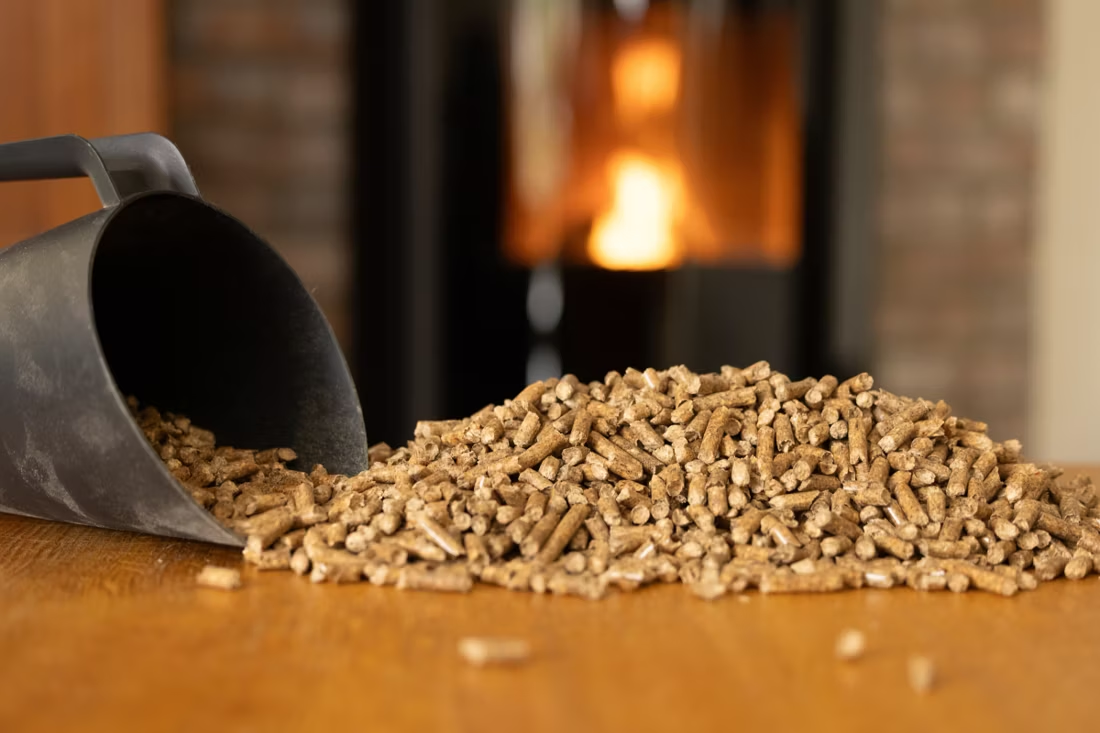
Edmonson County has no air quality non-attainment issues and no winter burn curtailment periods, so pellet stoves here aren't filling a regulatory gap the way they do in parts of the West—they're a straightforward, practical choice. Regional suppliers including Lignetics, Hamer Pellet Fuel, and Greenway Renewable Energy keep pellets accessible without long-haul shipping, which matters in a county this size and this rural. A pellet stove or insert gives Brownsville-area homes, cabins near Nolin Lake, and older farmhouses around Mammoth Cave a clean, efficient heat source that runs for a day or more on a single hopper load.
Three steps. No salesperson until you're ready.
Tell us about your project
Your zip code, your situation, and the fuel you're leaning toward—or let the answers point you to one.
See what's actually available
The brands dealers within 100 miles genuinely carry—real options, never a catalog mirage.
Get your dealer & Project Guide
A trusted local dealer, plus the free Project Guide & Parts List that names every component of the job.
Frequently Asked Questions
How much does a pellet stove installation cost in Edmonson County?
Costs vary based on whether you're installing a freestanding stove or a pellet insert into an existing fireplace, and whether venting has to run through an exterior wall or up an existing chimney. As a general range, expect the unit itself to run $2,000 to $4,000, with total installed cost (venting, hearth pad if needed, electrical for the hopper motor and blower) landing somewhere between $3,000 and $6,000 for most Edmonson County homes. Rural properties around Nolin Lake or the Mammoth Cave area may see a small travel charge added if the dealer is based in Bowling Green or another nearby town.
What size pellet stove do I need for my home?
Sizing depends on square footage, ceiling height, and how drafty the home is. A lot of housing stock in Edmonson County is older farmhouse construction with less insulation than newer builds, so it's common to size slightly larger than a square-footage chart alone would suggest. Small units (up to 1,000 sq ft) suit a single room or a weekend cabin near Nolin Lake; medium units (1,000–1,800 sq ft) cover most main living areas; larger units can handle a whole small home if it's reasonably tight. A local dealer will walk the space and size it properly rather than guessing from a chart.
Where can I find certified pellet stove installers near Edmonson County?
Look for NFI (National Fireplace Institute)-certified installers, which is the standard credential for hearth appliance installation. Given the county's small population, most homeowners end up working with a dealer based in a nearby larger town—commonly Bowling Green—that services Edmonson County as part of its regular route. Ask specifically whether the installer has handled pellet venting (which differs from wood-stove chimney venting) since not every wood-stove installer is equally comfortable running PL vent pipe through a wall.
What's the difference between a pellet stove and a pellet insert?
A pellet stove is a freestanding appliance that sits on a hearth pad and vents through a wall or existing chimney—it can go almost anywhere with the right clearances. A pellet insert is built to slide into an existing masonry fireplace opening, using the existing chimney chase (with a proper liner) for venting. For older Edmonson County homes with an existing wood fireplace that's rarely used, an insert is often the simpler retrofit. Homes without an existing fireplace opening are better suited to a freestanding stove.
Do I need a permit to install a pellet stove in Edmonson County?
Most new solid-fuel appliance installations require a building permit through the local building department, and pellet stoves are no exception even though they're generally treated more leniently than wood stoves during any regional air quality concerns—Edmonson County currently has none. Your installer will typically handle the permit application as part of the job. It's worth confirming with your dealer before work starts, since permit requirements can differ slightly for a freestanding stove versus an insert going into an existing chimney.
What's the best pellet stove for Edmonson County's climate?
For a mixed-humid climate like Edmonson County's, mid-size non-catalytic pellet stoves from established manufacturers handle the swing between mild fall days and hard winter cold snaps without much fuss. Since regional pellet supply comes through brands like Lignetics, Hamer Pellet Fuel, and Greenway Renewable Energy, it's worth confirming with your dealer that whatever stove you choose burns cleanly with the pellet grades those suppliers stock locally—not every stove performs the same across pellet brands. A local dealer can also advise on hopper capacity if you want to go a day or more between refills during the coldest stretches.
How much maintenance does a pellet stove need?
Pellet stoves need more routine attention than a gas unit but far less than a wood stove and chimney. Plan on emptying the ash pan every few days during regular use, a deeper cleaning of the burn pot and heat exchanger tubes every couple of weeks, and an annual professional service to check the auger, blower motors, and venting. Homes that run the stove as a primary heat source through an Edmonson County winter will do this cleaning more often than homes using it just for supplemental warmth in the evenings.
Where can I buy pellets locally in Edmonson County?
Regional pellet brands including Lignetics, Hamer Pellet Fuel, and Greenway Renewable Energy are the names most commonly carried by hearth dealers and farm supply stores serving this part of Kentucky. Pricing fluctuates with the season and how far you are from a distribution point, but a general range to expect is roughly $250 to $320 per ton, often sold by the pallet (40 to 50 bags). Buying ahead of the coldest months, rather than waiting until a cold snap hits, tends to get better availability in a rural county this size.
Pellet stove vs. wood stove—which is right for my home?
Wood is abundant in Edmonson County—oak, hickory, maple, and cherry are all common locally, and plenty of homeowners already have a source of cordwood through property or neighbors. A wood stove burns that supply directly, works without electricity, and costs less to feed if you're cutting your own. A pellet stove trades that self-sufficiency for convenience: load the hopper, set the thermostat, and walk away for a day. It does need electricity to run the auger and blower, so it's not a power-outage backup unless it's paired with a battery backup system. For a lot of Edmonson County homeowners without the time or interest in splitting wood, but who still want a real hearth appliance and not just a furnace upgrade, pellet is the practical middle ground.
Why is a fireplace insert so efficient?
An insert does two things: it seals the chimney completely, so you stop losing air you already paid to heat, and it radiates warmth into the room through the firebox and glass. Most add a heat-exchange fan that pulls cool room air underneath, wraps it around the hot firebox, and pushes it back out warm. Your home is more efficient before you've even lit the first fire.
Are pellet stoves loud?
They make some noise—there are two fans running plus an auger motor that turns as it feeds pellets. But there's a real range: premium models are engineered quiet, and the best offer a whisper-quiet mode you can comfortably watch TV next to. If noise matters in your room, ask to hear a stove running before you buy—it's a five-minute test that saves years of annoyance.
How much should I budget for a fireplace?
For an average home—covering the fireplace, the vent pipe, and basic installation—a budget between $3,900 and $5,500 gives you a lot of options across wood, gas, and pellet. By the time you add finish work, gas line, and electrical, the average complete installation lands between $5,000 and $12,000 all-in. In a remodel or new build, a good rule is to put about 2.5% of the total project cost toward the fireplace.
Does a fireplace add value to my home?
On average, a fireplace adds back to the home about the same amount you spent installing it. Add the monthly savings from heating the rooms you actually use instead of the whole house—often hundreds of dollars a year—and the value case is strong before you even count what a fire does for how your family uses the room.
Pellet Brands Stocked Around Edmonson County
Manufacturers will point you to the nearest stocking dealer.
Find your pellet stove in Edmonson County.
Tell us a bit about your home and we'll put together a free Project Guide & Parts List—the exact parts, including the vent kit, plus a recommended local dealer who can get it installed right.
Find Your Fireplace →