
Find a pellet stove built for Cumberland County winters.
Steady, thermostat-controlled heat for the hardwood hills around Burkesville and the Cumberland River—matched with a real local dealer who can size it, vent it, and install it right.
Every Project Starts From One of These Five Situations
Set it, forget it—heat that works for a spread-out rural county.
Cumberland County is a small, rural community of under 1,500 people tucked into the oak and hickory hills along the Cumberland River in south-central Kentucky. Winters here are moderate by national standards—an average low around 24°F and a winter heating load well below what a home in Minneapolis or Madison, Wisconsin has to work through each season. That milder climate zone 4A profile means a pellet stove doesn't need to be an extreme cold-climate workhorse; it needs to be efficient, low-maintenance, and easy to run without babysitting a fire every few hours.
With no dedicated air quality restrictions or burn-ban districts in the county, pellet heat here is mostly a lifestyle choice rather than a regulatory one—homeowners choose it over cordwood for the convenience: load a hopper, set a thermostat, and let the auger do the rest. Local supply runs through regional hardwood pellet producers like Lignetics, Hamer Pellet Fuel, and Greenway Renewable Energy, all of which mill pellets from Kentucky hardwood—the same oak, hickory, maple, and cherry that fills the woodlots around Cumberland County. Because the county's population is small, there isn't a big-box hearth store nearby; most residents rely on regional dealers who cover several counties, which makes picking a shop with real service capacity, not just a sales counter, especially important.
Three steps. No salesperson until you're ready.
Tell us about your project
Your zip code, your situation, and the fuel you're leaning toward—or let the answers point you to one.
See what's actually available
The brands dealers within 100 miles genuinely carry—real options, never a catalog mirage.
Get your dealer & Project Guide
A trusted local dealer, plus the free Project Guide & Parts List that names every component of the job.
Frequently Asked Questions
How much does a pellet stove installation cost in Cumberland County?
Most pellet stove and insert installations in this part of Kentucky run in the $2,500 to $5,500 range, depending on whether the unit is a freestanding stove venting through an exterior wall or an insert going into an existing masonry fireplace. Inserts that reuse an existing chimney with a stainless liner tend to land on the lower end; new freestanding stoves requiring fresh wall penetration and venting, plus a hearth pad for clearance, run higher. Because dealers serving Cumberland County often cover multiple counties, ask upfront whether a trip charge applies for a rural Burkesville-area address.
What size pellet stove do I need for my home?
Sizing comes down to square footage, ceiling height, and how drafty the home is—a common issue in older farmhouses around Cumberland County. Small pellet stoves (rated for roughly 1,000 sq ft or less) suit a single large room or a small cabin; medium units (1,000-1,800 sq ft) cover most main living areas in a typical rural home; larger units handle an open floor plan or a whole small house used as primary heat. Given the county's moderate 24°F average winter low, most homes here don't need the largest cold-climate-rated stoves that a Buffalo or Duluth home would require—a mid-size unit is usually enough, but a local dealer should confirm with an in-home look before you buy.
Where can I find a certified pellet stove installer near me?
Look for an installer with NFI (National Fireplace Institute) certification, which covers pellet-burning appliance training specifically. Because Cumberland County's population is small, dealers with certified technicians typically operate out of larger towns in south-central Kentucky and travel into the county for installs—expect that to be built into your quote. Confirm the dealer stocks parts and service for the brand they're selling; a stove that can't get warranty service without a long drive is a real headache two winters in.
What's the difference between a pellet stove and a pellet insert?
A pellet stove is a freestanding unit that sits on a hearth pad and vents through an exterior wall or existing chimney—it can go almost anywhere in a room with the right clearances. A pellet insert is built to slide into an existing masonry fireplace opening, turning a rarely-used wood fireplace into an efficient, thermostat-driven heat source while keeping the original mantel and surround. For Cumberland County homes with an existing fireplace that mostly sits cold, an insert is often the more practical upgrade; homes without one are better suited to a freestanding stove.
Do I need a permit to install a pellet stove in Cumberland County?
Most jurisdictions in Kentucky require a building permit for a new solid-fuel appliance installation, including pellet stoves, and Cumberland County is no exception. Your installer should confirm the specific requirement with the county building office and typically handles the paperwork as part of the job. Since Cumberland County has no air quality non-attainment designation or seasonal burn restrictions, there's nothing like a curtailment period to plan around—you're free to run the stove whenever the weather calls for it.
What's the best pellet stove for Cumberland County's climate?
With average winter lows around 24°F and a winter heating load well below colder northern states, Cumberland County sits in a moderate climate zone—you don't need the largest hopper capacity or the most aggressive BTU output on the market. A mid-size unit with a 40-60 lb hopper is usually plenty to get through an overnight burn without needing an extreme cold-climate model. Look for pellets from Lignetics, Hamer Pellet Fuel, or Greenway Renewable Energy locally—all are regionally milled from Kentucky hardwood and tend to burn cleaner with less ash than lower-grade imported pellets, which matters for auger and burn-pot maintenance over a season.
Where can I buy pellet fuel in Cumberland County?
Hardwood pellets from regional producers like Lignetics, Hamer Pellet Fuel, and Greenway Renewable Energy are the most common brands sold across south-central Kentucky, typically through farm supply stores, hardware stores, and hearth dealers rather than a dedicated pellet retailer in the county itself. Given Cumberland County's small population, buying a season's supply (roughly 2-3 tons for an average home) in one trip or arranging delivery from a regional supplier is usually more practical than making repeated small purchases through the winter.
How much maintenance does a pellet stove need?
Pellet stoves need more routine attention than a gas unit but less than a wood stove. Plan on daily or every-few-day ash removal from the burn pot depending on use, a weekly hopper and auger check, and a full teardown cleaning of the exhaust vent, combustion blower, and heat exchanger tubes once a season—typically before the stove sees heavy use going into a Kentucky winter. Skipping the vent cleaning is the most common cause of poor burns and stove shutdowns, so it's worth having a local dealer walk you through it the first year.
Pellet vs. wood—which is right for my Cumberland County home?
With oak, hickory, maple, and cherry filling the woodlots around the county, self-cut or locally bought firewood is cheap and plentiful, and a wood stove works without electricity—a real advantage during a rural power outage. Pellet stoves trade that off for convenience: no splitting, stacking, or tending a fire, more consistent heat output, and less mess, but they need electricity to run the auger and blower, so they go dark in an outage unless paired with a battery backup. For Cumberland County homeowners who want low-maintenance daily heat and don't mind relying on purchased fuel, pellet is usually the better fit; for those who already process their own hardwood and want emergency-ready heat, wood often wins.
What's the difference between an insert and a zero-clearance fireplace?
An insert is a fireplace that slides into a pre-existing wood-burning fireplace—if you don't have one, there's nothing to insert it into. A zero-clearance fireplace is built into a framed wall, which makes it the answer for remodels and new construction. Simple test: existing masonry fireplace means insert; blank or framed wall means zero-clearance.
How often does a pellet stove need cleaning?
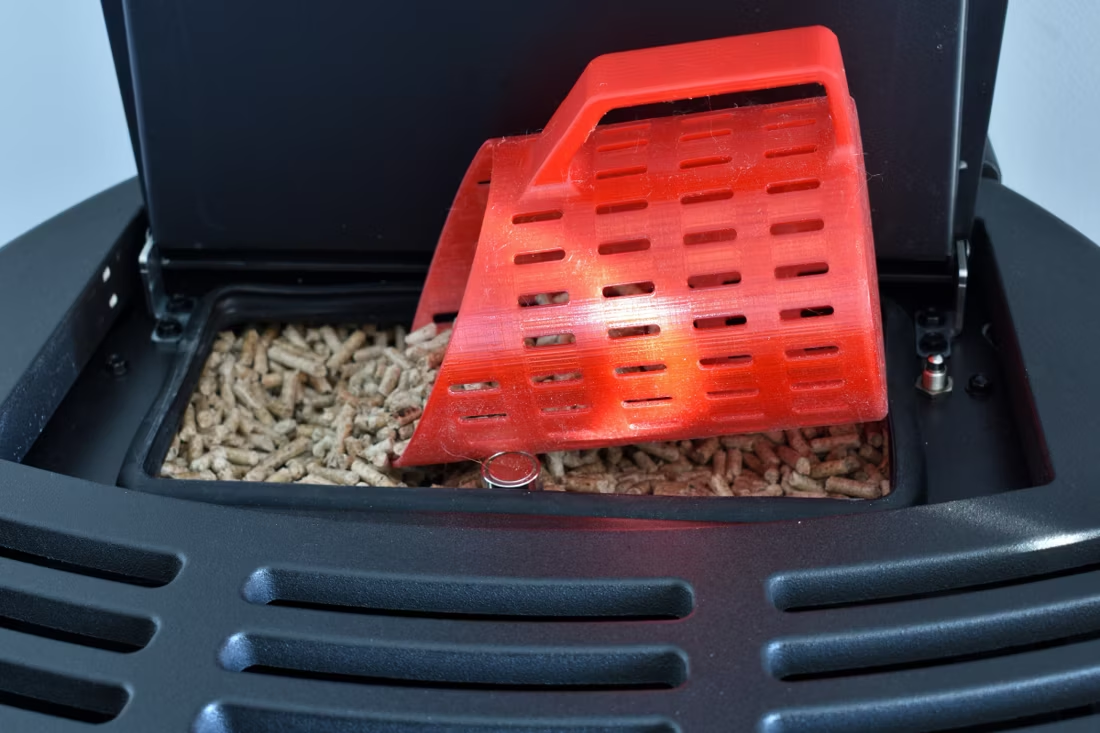
A clean pellet stove is a happy pellet stove. Plan on cleaning the burn pot about once a week when you're burning regularly—ash and clinkers gum up the air holes just like a pellet barbecue. Most pellet stove problems trace back to skipped cleaning that nobody explained up front. Some designs make it easy with a trapdoor burn pot: pull a lever and the gunk drops into the ash pan.
Does a fireplace add value to my home?
On average, a fireplace adds back to the home about the same amount you spent installing it. Add the monthly savings from heating the rooms you actually use instead of the whole house—often hundreds of dollars a year—and the value case is strong before you even count what a fire does for how your family uses the room.
What is an in-home preview and do I need one?
It's a visit where a hearth professional measures your space, confirms the model you picked actually works in your home, and walks the specs—framing, gas line, venting, finish work—before anything is ordered. Some details you just can't know until you see the house. Never make a down payment without one; it's the single most-skipped step that burns buyers.
Pellet Brands Stocked Around Cumberland County
Manufacturers will point you to the nearest stocking dealer.
Find your pellet stove in Cumberland County.
Tell us a bit about your home and we'll match you with a trusted local dealer serving Cumberland County, plus a free Project Guide & Parts List with the exact parts—including the vent kit—for your pellet stove project.
Find Your Fireplace →