
Pellet Heat Isn't Common Here—But It Has Its Place.
Bowling Green's mild winters and wide natural gas coverage mean pellet stoves play a narrow role here—supplemental heat, backup during outages, or ambiance in a specific room. If that's what you're after, I'll connect you with a local dealer who actually stocks and installs them.
Every Project Starts From One of These Five Situations
Pellet stoves are the exception, not the rule, in Bowling Green.
Bowling Green sits at 529 feet in south-central Kentucky, in climate zone 4A, with an average winter low around 28°F and a winter heating season that's less than half as demanding as a place like Madison, WI or Duluth, MN. With winters this moderate and natural gas service widely available through the city, most Warren County homes lean on gas furnaces, heat pumps, and gas fireplaces rather than pellet appliances for day-to-day heat. That's why pellet fuel is flagged not-applicable for this market: the demand base that supports pellet stoves in colder, more rural wood-pellet regions just isn't the norm here.
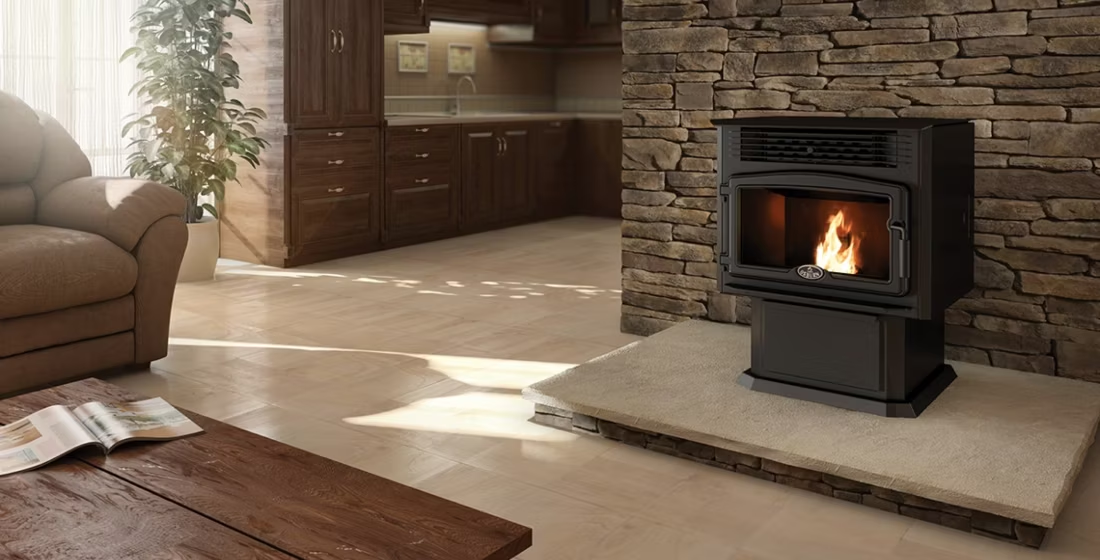
That doesn't mean pellet stoves have no place in Bowling Green. A smaller group of homeowners still install one—for the glass-front fire without wood splitting and stacking, as backup heat that doesn't rely on a gas line during an ice storm, or in a workshop, rental unit, or cabin where a self-feeding hopper beats tending a wood stove by hand. Regional pellet suppliers including Lignetics, Hamer Pellet Fuel, and Greenway Renewable Energy do serve this part of Kentucky, so sourcing bags of hardwood pellets isn't the obstacle—it's simply a niche appliance choice in a market where gas and electric do most of the work.
Three steps. No salesperson until you're ready.
Tell us about your project
Your zip code, your situation, and the fuel you're leaning toward—or let the answers point you to one.
See what's actually available
The brands dealers within 100 miles genuinely carry—real options, never a catalog mirage.
Get your dealer & Project Guide
A trusted local dealer, plus the free Project Guide & Parts List that names every component of the job.
Frequently Asked Questions
Does a pellet stove even make sense in Bowling Green's climate?
For most homes, no—not as a primary heat source. With average winter lows around 28°F and a heating season that's short and moderate, Bowling Green's winters are much milder than places like Fargo, ND or Burlington, VT, where pellet stoves carry real load all winter. Where a pellet stove does make sense here is as zone heat for a specific room, as backup during an ice storm when the electric grid or gas line is interrupted, or simply because a homeowner wants the low-maintenance, glass-front fire a pellet unit offers without wood handling.
If pellet fuel relevance is rated 'not applicable' here, can I still buy pellets locally?
Yes. The not-applicable rating reflects how few homes in Bowling Green actually heat with pellet appliances, not whether pellets are sold here. Regional brands like Lignetics, Hamer Pellet Fuel, and Greenway Renewable Energy distribute into this part of Kentucky, and farm supply or hardware stores in Warren County typically carry bagged hardwood pellets. If you install a pellet stove, keeping fuel on hand generally isn't a problem—it's just a smaller category than gas logs or heat pumps in this market.
What does a pellet stove installation actually involve?
A pellet stove needs a hearth pad for clearance, a vent run (usually a simple through-wall direct vent rather than a full masonry chimney), and—unlike a wood stove—a standard electrical outlet nearby to power the auger and combustion blower. In Bowling Green, that electrical requirement is worth planning for if you're putting the stove somewhere without an existing outlet. A local dealer will walk the room, confirm venting clearances, and handle any required permitting with the local building department as part of the install.
What does a pellet stove installation cost in Bowling Green?
Cost depends heavily on the stove model, whether a new electrical outlet is needed, and how the vent run is routed through the wall. Because pellet installs are less common here than gas conversions, pricing isn't as standardized locally—the best way to get a real number is an in-home look from a dealer who actually installs these units regularly. That's exactly what the free Project Guide & Parts List is built to deliver: a firm parts list and a dealer-backed estimate for your specific room.
Will a pellet stove keep working if the power goes out?
Not without help. Pellet stoves depend on electricity to run the auger that feeds fuel and the blower that distributes heat—cut the power and the stove stops, unlike a wood stove which keeps burning regardless. If backup heat during ice-storm outages is part of your reason for considering pellet, ask your local dealer about battery backup options or pairing the stove with a small generator. Electric service in Bowling Green comes through the City of Bowling Green's own utility, and outages here tend to follow ice and severe thunderstorm events rather than extended winter storms.
What size pellet stove do I need for a Bowling Green home?
Given the area's moderate winter heating load, most Bowling Green installs are sized for supplemental or zone heat rather than whole-home output. A small to mid-size pellet stove is typically enough to comfortably heat a living room, den, or open-concept main floor, especially in homes that already have gas or electric heat pump service covering the rest of the house. A local dealer can size the unit to your actual square footage and layout during a walkthrough.
Where can I buy pellet fuel near Bowling Green?
Regional brands including Lignetics, Hamer Pellet Fuel, and Greenway Renewable Energy supply pellets into this part of south-central Kentucky, and local farm supply and hardware retailers in Warren County typically stock bagged hardwood pellets seasonally. Because pellet stoves are less common here than in the Upper Midwest, it's worth confirming with a local dealer which brands they see move fastest locally so you're not hunting for fuel mid-winter.
Pellet vs. gas—which makes more sense for my Bowling Green home?
For most homes here, gas wins. Natural gas service is widely available in Bowling Green, gas fireplace installs are common and well-supported by local dealers, and gas delivers instant, thermostat-controlled heat without fuel storage. Pellet makes more sense in specific situations: a room without gas access, a desire for a real visible flame with wood-stove ambiance, or a homeowner who specifically wants a non-gas backup heat source. If you're simply looking for reliable, low-hassle heat, start by asking a local dealer about gas options before deciding pellet is the right fit.
Pellet vs. electric—which is better for supplemental heat here?
Electric heat—through the City of Bowling Green's utility at roughly $0.1148 per kWh—is simple, requires no fuel storage, and is the default supplemental option in most local homes via heat pumps or electric fireplace inserts. A pellet stove costs more upfront to install and requires you to manage a fuel supply, but it produces a real flame and can output more heat per hour than a typical electric insert. If ambiance and stronger zone heat matter more to you than simplicity, pellet is worth a look; if convenience and lowest hassle matter most, electric is usually the easier call in a mild climate like Bowling Green's.
How often does a pellet stove need cleaning?
A clean pellet stove is a happy pellet stove. Plan on cleaning the burn pot about once a week when you're burning regularly—ash and clinkers gum up the air holes just like a pellet barbecue. Most pellet stove problems trace back to skipped cleaning that nobody explained up front. Some designs make it easy with a trapdoor burn pot: pull a lever and the gunk drops into the ash pan.
Why is my open fireplace making my house colder?
Open fireplaces suck—literally. As the fire burns, it consumes air your furnace already paid to heat and pulls it out through the chimney, so the house is actually colder after the fire goes out than before you lit it. An insert fixes this: it seals the chimney, puts fixed glass across the front, and turns that hole in your house into a real heat source.
Can a fireplace actually lower my heating bill?
Yes—by creating a comfort zone. A furnace heats every square foot of the house just to warm the one room you're in; a gas fireplace on low burns roughly a sixth of the gas a typical furnace does. Set the furnace around 55–60 degrees as a baseline, then heat the rooms your family actually uses. Families who heat this way commonly save $20–$60 a month.
Does a fireplace add value to my home?
On average, a fireplace adds back to the home about the same amount you spent installing it. Add the monthly savings from heating the rooms you actually use instead of the whole house—often hundreds of dollars a year—and the value case is strong before you even count what a fire does for how your family uses the room.
Nearby Dealers
Hearth shops serving Bowling Green and the surrounding area. Every listing shows whether it is a WhyFire partner, a dealer we have verified as authorized for the brands we recommend, or a local business carrying hearth products. No manufacturer pays for placement. How we verify dealers →
Mr. Fireplace
31W-Bowling Green
Allen County Farmer's Service
Pellet Brands Stocked Around Bowling Green
Manufacturers will point you to the nearest stocking dealer.
Find your pellet stove in Bowling Green.
Tell me a bit about your home and how you'd use a pellet stove, and I'll match you with a local Warren County dealer plus a free Project Guide & Parts List—the exact parts, vent kit included, for your project.
Find Your Fireplace →