
Clean, plug-in heat at the geographic center of America.
From Smith Center to Lebanon—home to the geographic center of the contiguous United States—electric fireplaces bring instant, no-venting heat to farmhouses, ranch homes, and in-town properties across Smith County. Find the right unit and connect with a trusted local dealer.
Every Project Starts From One of These Five Situations
Heat that doesn't need a gas line or a chimney.
Smith County is home to just under 2,400 people spread across small communities—Smith Center, Lebanon, Kensington, Gaylord, Athol, and Cedar—and a lot of open farmland in between. Winters here are genuinely cold: average lows around 16°F, roughly 5,645 heating degree days a year, placing the county in climate zone 5A alongside cities like Bismarck, ND and Madison, WI. Many of the older farmhouses and ranch homes scattered across the county were built decades before central heat zoning was standard, and running new gas line or masonry chimney work into a back bedroom or sunroom isn't always practical or affordable.
That's where electric fireplaces fit in. A plug-in unit or a built-in electric insert needs no chimney, no gas line, and in most cases no new venting at all—just a standard or dedicated circuit. For Smith County homeowners heating a single room, converting an unused fireplace opening, or adding warmth to a mobile home or rental property, electric is often the simplest and least invasive option. It won't replace a propane furnace or a wood stove burning local oak, hickory, or osage orange as the county's primary heat source through a 16-degree January night—but as supplemental, zone, or ambiance heat, it's hard to beat for ease of installation.
Three steps. No salesperson until you're ready.
Tell us about your project
Your zip code, your situation, and the fuel you're leaning toward—or let the answers point you to one.
See what's actually available
The brands dealers within 100 miles genuinely carry—real options, never a catalog mirage.
Get your dealer & Project Guide
A trusted local dealer, plus the free Project Guide & Parts List that names every component of the job.
Frequently Asked Questions
How much does an electric fireplace installation cost in Smith County?
Plug-in electric fireplaces and stoves that use a standard household outlet typically run $150 to $600 for the unit itself, with no installation labor required beyond setting it in place. Built-in electric inserts or wall-mounted units that need a dedicated 20-amp circuit run higher—usually $800 to $2,500 including a licensed electrician's time to run new wiring, particularly in older Smith County farmhouses where panel capacity or wiring runs need updating. Recessed or fully built-in models that require carpentry work to frame an opening add to that range. Local dealers can give a firm quote after seeing your electrical panel and the room you're heating.
Do I need a permit to install an electric fireplace in Smith County?
A plug-in unit that just needs a standard outlet doesn't require a permit—it's no different than plugging in a space heater. If you're installing a built-in unit that requires a new dedicated circuit or panel work, that electrical work typically needs a permit and should be done by a licensed electrician, since Smith County inspects new circuit work for code compliance. Most electricians who handle these installs pull the permit as part of the job, so it's rarely something the homeowner has to manage directly.
Will an electric fireplace heat my whole house?
No—electric fireplaces are built for zone heating, not whole-home heating. Most units put out around 1,500 watts (roughly 5,000 BTU), enough to noticeably warm a single room in the 250 to 400 square foot range, but not enough to carry a Smith County farmhouse through a stretch of 16-degree nights on its own. They work well as a supplement to a propane furnace or a wood stove, or as the sole heat source for a small addition, sunroom, or bedroom that's otherwise hard to heat evenly.
Electric vs. wood—which makes more sense for my home?
It depends on what you're solving for. Wood—and Smith County has good access to oak, hickory, and osage orange—puts out real heat and keeps working when the power's out, which matters here given how ice storms can take down rural electric lines for stretches at a time. Electric fireplaces offer zero maintenance, no ash, no wood handling, and instant on-off convenience, but they go dark the moment the co-op's lines do. A lot of county homeowners run both: wood or propane as the backbone heat source, electric in a room where running a flue or gas line isn't practical.
What's the difference between a plug-in electric fireplace, an insert, and a wall-mounted unit?
A plug-in electric fireplace is a freestanding, furniture-style unit you set against a wall and plug into a standard outlet—no installation beyond placement. An electric insert is built to slide into an existing masonry fireplace opening, letting you convert an old wood-burning fireplace into a clean electric heat source without touching the chimney. A wall-mounted or built-in unit is recessed into the wall for a flush, modern look, and usually needs a dedicated circuit run by an electrician. For Smith County homes with an existing fireplace opening that's gone unused for years, an insert is often the most straightforward upgrade.
Will my electric fireplace still work if the power goes out?
No—electric fireplaces run entirely on grid power, so they shut down the moment the power does. That's worth planning around in Smith County, where winter ice storms can knock out rural electric cooperative lines for hours or, in bad cases, days. If backup heat during outages matters to your household, pair an electric unit with a wood stove or a propane appliance that doesn't depend on electricity, rather than relying on electric as your only heat source in a back bedroom or addition.
What kind of homes in Smith County typically get electric fireplaces?
We see them most often in three situations: older farmhouses and ranch homes around Smith Center, Lebanon, Kensington, and Gaylord where running gas line or new masonry into a specific room isn't cost-effective; mobile and manufactured homes where a vented appliance isn't a good fit; and rental properties, where landlords want ambiance and supplemental heat without the maintenance and inspection requirements of a wood or gas unit. It's also a common choice for finishing out a sunroom or converting an old, unused wood fireplace opening into something that works without chimney repair.
How much does it cost to run an electric fireplace?
At a typical 1,500-watt setting, running an electric fireplace costs a few cents to around 20-25 cents an hour depending on your rate through Prairie Land Electric Cooperative or whichever rural co-op serves your part of the county—most units also let you run the flame effect with the heater off, which uses only a few watts. For occasional evening use in a living room or bedroom, that's a modest add to a monthly bill; running one as a near-constant supplemental heat source through a cold Smith County winter adds up more meaningfully, which is why most homeowners use them to take the edge off a room rather than as their main heat source.
Electric vs. pellet stove—which is right for my home?
Pellet stoves, using bagged pellets from suppliers like Lignetics or Indeck Energy Services, put out real, substantial heat—enough to serve as a primary or near-primary heat source through a Smith County winter—but they need a vent through an exterior wall or roof, a hopper to load, and, like electric units, electricity to run the auger and blower. Electric fireplaces are simpler still: no venting, no fuel to buy or store, and instant on-off operation, but with a fraction of the heat output. If you want meaningful whole-room heat with minimal daily effort, look at pellet. If you want a low-commitment, no-venting way to add warmth and ambiance to a single room, electric is the easier install.
Can I put a TV above my fireplace?
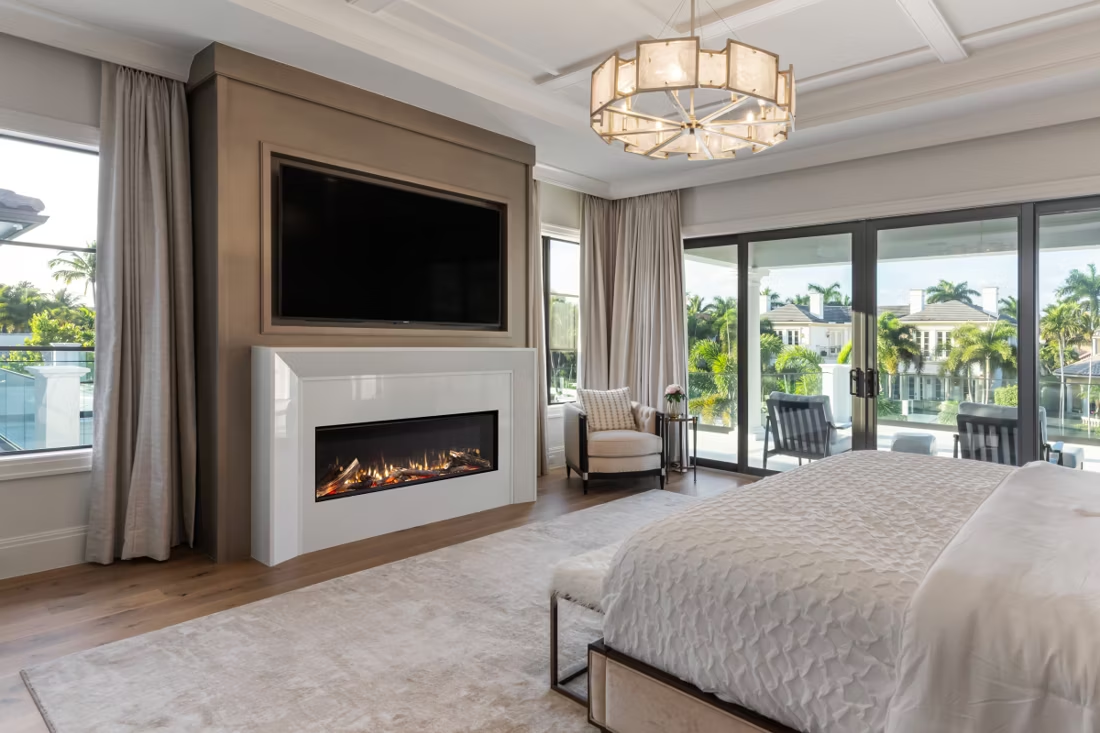
Yes—with an asterisk. Fireplaces are hot and TVs don't like heat. Either put a mantel between them to deflect rising warmth, or choose a fireplace with heat-management technology that creates a cool zone on the wall above—the wall stays around 125 degrees, barely warm, while the room still gets full heat. If you like clean lines and don't want a mantel, heat management is the answer.
Does an electric fireplace need a vent or chimney?
No—that's its superpower. An electric fireplace needs a wall and an outlet, period. No vent pipe, no gas line, no clearances to design around, which is why it works in bedrooms, offices, apartments, and walls where venting a gas or wood unit would be impractical or impossible. Installation is typically the simplest and least expensive of any fireplace type.
Does a fireplace add value to my home?
On average, a fireplace adds back to the home about the same amount you spent installing it. Add the monthly savings from heating the rooms you actually use instead of the whole house—often hundreds of dollars a year—and the value case is strong before you even count what a fire does for how your family uses the room.
What is an in-home preview and do I need one?
It's a visit where a hearth professional measures your space, confirms the model you picked actually works in your home, and walks the specs—framing, gas line, venting, finish work—before anything is ordered. Some details you just can't know until you see the house. Never make a down payment without one; it's the single most-skipped step that burns buyers.
Find your electric fireplace in Smith County.
Tell us a bit about your home—and whether you're heating a single room or converting an old fireplace opening—and we'll match you with the right electric fireplace or insert, plus a free Project Guide & Parts List with the exact parts for your Smith County installation and a recommended local dealer.
Find Your Fireplace →