
Find the right fireplace for your Smith County home.
Wood, gas, pellet, and electric fireplace resources for Smith Center, Lebanon, Kensington, Gaylord, and every rural community across Smith County. Find the right unit for your house and connect with a trusted local hearth retailer.
Every Project Starts From One of These Five Situations
Wood-burning heritage on the north-central Kansas plains.
Smith County sits in north-central Kansas near the geographic center of the contiguous United States—a marker just outside Lebanon commemorates it. With a population of roughly 2,376 spread across wide-open farm and ranch land, this is climate zone 5A country: winter lows average 16°F, and the county logs a solid five-month heating season—a real winter, though nowhere near the brutal, multi-month freeze of Bismarck, ND. Firewood here means oak and hickory from the creek bottoms, plus osage orange (locally called hedge), a dense wood originally planted as windbreak fencerows across the plains that burns hotter and longer than almost anything else you can put in a stove.
What you'll find on this hub: hearth retailers, service technicians, and fuel suppliers covering Smith Center, Lebanon, Kensington, Gaylord, and the smaller unincorporated communities scattered across the county's roughly 900 square miles. Because Smith County's population is small and spread thin, many of the dealers and technicians who serve local homes are based in nearby regional hubs and drive in for installs and service calls—that's normal for this part of Kansas, not a red flag. Pick your fuel below to see local dealers, installation costs, and recommended units for your specific project.
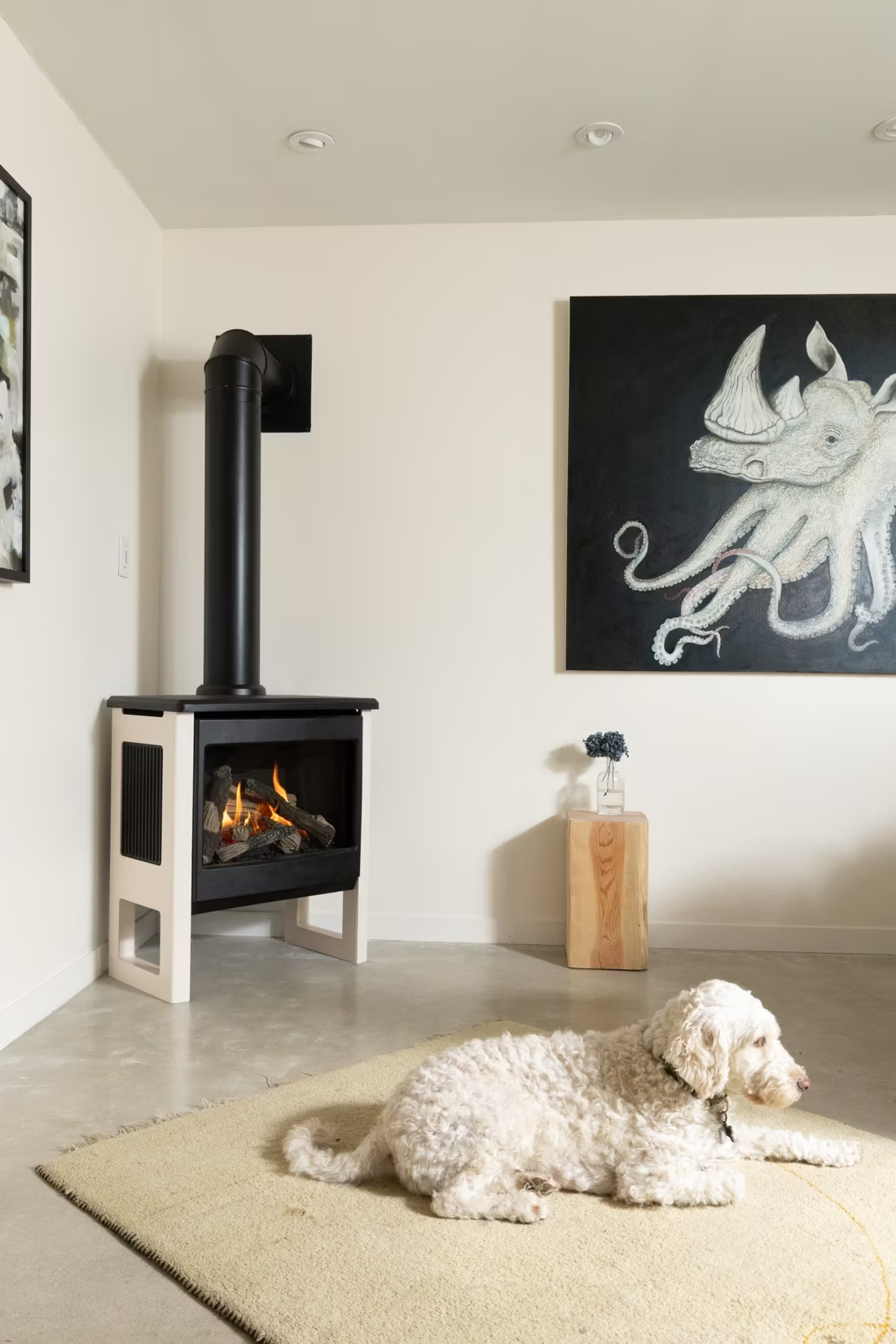
Four fuels. One honest answer for Smith County.
Three steps. No salesperson until you're ready.
Tell us about your project
Your zip code, your situation, and the fuel you're leaning toward—or let the answers point you to one.
See what's actually available
The brands dealers within 100 miles genuinely carry—real options, never a catalog mirage.
Get your dealer & Project Guide
A trusted local dealer, plus the free Project Guide & Parts List that names every component of the job.
Frequently Asked Questions
Which fuel works best in Smith County?
It depends on the home and how you use it. Wood remains a strong choice in rural Smith County—oak and hickory from local timber, plus osage orange (hedge), which burns dense and hot enough to carry an overnight fire through a 16°F night without much trouble. Gas, almost always propane out here since natural gas mains don't reach most of the county, is the convenience choice—no wood-splitting, no ash, heat on demand. Pellet stoves are a solid middle ground if you want wood-style ambiance without the woodpile—regional dealers carry Lignetics and Indeck Energy Services pellets. Electric fireplaces work well as supplemental heat in a bedroom or den but won't carry a Smith County farmhouse through a January cold snap on their own. Many households here run two fuels—wood or propane as the primary source, with a pellet or electric unit for zone heating in one room.
Do I need a permit to install a fireplace in Smith County?
In most cases, yes, though enforcement and process vary more in a rural county like this than in a city. New wood stoves, wood inserts, gas appliances, and pellet stoves typically require a building permit through the Smith County building department, and any new gas line work should go through a licensed propane installer or gas-fitter. If you're inside Smith Center city limits, check with the city office first—city permitting can differ slightly from county rules. Electric fireplaces usually skip the permit unless you're hardwiring a built-in unit into a new circuit. Most hearth retailers who work this county regularly have already been through the local permitting process and can walk you through it rather than leaving you to figure it out solo.
Are there air quality restrictions on wood burning in Smith County?
No—Smith County doesn't have the kind of winter inversion or non-attainment issues you'd see in a basin or bowl-shaped valley, and there's no local ordinance restricting wood burning days here. That said, installing a new EPA 2020 NSPS-certified wood stove is still the right call: it burns 60-80% less wood than an old pre-2010 stove for the same heat output, which matters when you're feeding a fire through a five-month Kansas winter, and it produces far less visible smoke for your neighbors on a still, cold morning.
Can one local hearth retailer handle all four fuel types?
Some can, but with a population under 2,400 spread across the county, Smith County itself doesn't support a large number of dedicated hearth showrooms. Most homeowners here end up working with a multi-fuel dealer based in a nearby regional town who travels in for the consultation, sizing, and install—which is completely normal for this part of north-central Kansas. These regional dealers typically stock or can order wood, propane, pellet, and electric units, and can walk you through the trade-offs for your specific house rather than pushing whatever happens to be on their showroom floor.
How does service work in rural areas of Smith County?
Expect your technician to be driving in from outside the county—chimney sweeps, propane techs, and pellet stove service people who cover Smith County typically also serve several neighboring counties on a rotating schedule. Book your annual service in late summer or early fall (August–September) rather than waiting for the first cold snap in November, since rural routes fill up fast once temperatures drop and everyone wants service at once. A small trip fee for farm and ranch addresses well outside Smith Center or Lebanon is common and worth asking about upfront.
What's the typical cost range for fireplace installation across all fuel types in Smith County?
Costs run similar to other rural north-central Kansas counties, sometimes with a modest travel premium added for the distance a dealer has to cover. Wood stove or insert: roughly $4,000–$8,500 installed, more if new chimney or hearth work is needed. Propane fireplace, insert, or stove: roughly $4,000–$10,000 depending on whether an existing propane tank and line are already in place. Pellet stove or insert: roughly $4,000–$7,000 installed. Electric fireplace: $200–$3,000 for the unit itself, plus $400–$1,200 in labor for anything beyond a simple plug-in install. Ask any dealer quoting your project whether their price includes the drive time—it's a fair question in a county this size.
Can I install a fireplace myself?
If you're putting a fire in your house on purpose, it's best to work with an expert. Unless you're genuinely experienced in framing, gas line, vent pipe, and the national code on clearances to combustibles, have a professional do it—and ideally the same company that sells you the fireplace, so warranty, service, and liability all live under one roof.
Can a fireplace actually lower my heating bill?
Yes—by creating a comfort zone. A furnace heats every square foot of the house just to warm the one room you're in; a gas fireplace on low burns roughly a sixth of the gas a typical furnace does. Set the furnace around 55–60 degrees as a baseline, then heat the rooms your family actually uses. Families who heat this way commonly save $20–$60 a month.
Does a fireplace add value to my home?
On average, a fireplace adds back to the home about the same amount you spent installing it. Add the monthly savings from heating the rooms you actually use instead of the whole house—often hundreds of dollars a year—and the value case is strong before you even count what a fire does for how your family uses the room.
Should the dealer who sells my fireplace also install it?
Ideally, yes. A fireplace project involves vent pipe, gas line, electrical, and often tile or stone. Hire three or four separate trades and you own the liability and the game of telephone between them. One company selling and installing means one accountable party, start to finish—ask about factory training, on-time completion records, and what happens if an inspection fails.
Stove and Fireplace Dealers in Smith County
Listings include WhyFire partner dealers, dealers we have verified as authorized for the brands we recommend, and established local businesses that carry hearth products. Every listing shows which one it is. The ones marked Preferred run on WhyFire's software, so they can show you real pricing and book your appointment right here. No manufacturer pays for placement. How we verify dealers →
Alan Witte Sales
Builders Warehouse Inc
Heartland Building Center
Fireplace Stone And Patio - Kearney
Get matched with a Smith County hearth dealer.
Tell us about your project and we'll match you with a trusted local dealer and send a free Project Guide & Parts List—the exact parts, vent kit, and recommended installer for your Smith County home.
Find Your Fireplace →