
Pellet stoves are rare on Sherman County's High Plains—but not impossible.
Sherman County runs on propane and open plains, not cordwood—so pellet stoves are a niche choice here, not the default. If one still makes sense for your home, shop, or outbuilding, we'll match you with a dealer who actually covers Goodland and the surrounding High Plains.
Every Project Starts From One of These Five Situations
A county built on propane, not cordwood.
Sherman County sits in the far northwest corner of Kansas, anchored by Goodland at roughly 3,650 feet on the shortgrass High Plains. Outside of shelterbelts, farmstead windbreaks, and the scattered draws along the Smoky Hill headwaters, there's very little standing timber—the oak, hickory, and osage orange found here were mostly planted as fencerows and windbreaks rather than harvested from working forest. With 5,794 heating degree days and winter lows averaging 17°F, the season is long and genuinely cold—closer in degree-day totals to Buffalo, New York than to the wood-pellet-heavy Rockies or Upper Midwest—but the county never developed the wood-burning culture that usually creates local pellet stove demand.
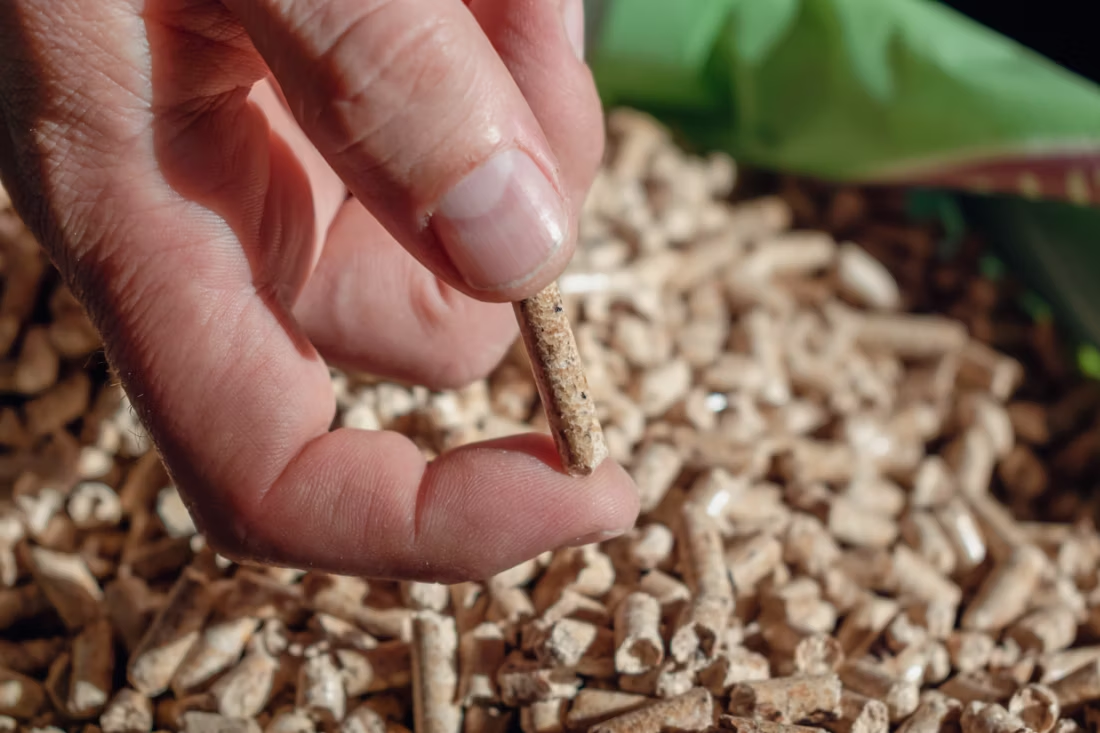
That's why pellet fuel relevance here reads as not-applicable rather than standard: there's no dedicated hearth retailer in Goodland, and pellets themselves—including regional brands like Lignetics and Indeck Energy Services—mostly move through the area as trucked-in bagged fuel for the handful of households, shops, and outbuildings that already run a stove, rather than as a widely stocked local product. Propane and natural gas, both standard fuels here, cover the bulk of Sherman County's heating, and the rural electric cooperative keeps most homes running day to day. Pellet stoves haven't disappeared entirely—a small number of rural acreages, garages, and supplemental-heat setups use them—but this isn't a market with a big-box pellet aisle or a dealer on every corner. Find My Fireplace can still match you with the nearest trusted dealer willing to serve the county.
Three steps. No salesperson until you're ready.
Tell us about your project
Your zip code, your situation, and the fuel you're leaning toward—or let the answers point you to one.
See what's actually available
The brands dealers within 100 miles genuinely carry—real options, never a catalog mirage.
Get your dealer & Project Guide
A trusted local dealer, plus the free Project Guide & Parts List that names every component of the job.
Frequently Asked Questions
How much does a pellet stove installation cost in Sherman County?
There isn't a deep local pricing history for pellet installs here the way there is for propane furnaces, since so few Sherman County homes run one. Regionally, a pellet stove installation—unit, hearth pad, and vent kit—typically lands somewhere between $3,000 and $6,000 depending on the model and whether venting has to run through an exterior wall or existing chase. Because dealers usually travel in from Colby, the Denver-metro supply chain, or Colorado border towns, expect the quote to include a trip charge that a denser market wouldn't. Getting matched with a dealer who already services this part of the High Plains is the fastest way to a real number.
Are pellet stoves even sold or installed in Sherman County?
Not by a dedicated local hearth store—Goodland doesn't have one, and neither do the neighboring county seats. Homeowners who want a pellet stove in Sherman County typically work with a dealer based in Colby, tied into the Denver/Front Range supply chain, or just across the Colorado line near Burlington or Wray. Those dealers do install in Sherman County; they just don't keep a storefront here. That's exactly the gap Find My Fireplace is built to close—we match you with whichever of those dealers actually covers your address.
Lignetics and Indeck Energy Services are listed as regional pellet brands—so why is pellet fuel considered rare here?
Those brands supply bagged pellet fuel into the western Kansas and eastern Colorado corridor, and you can generally find bags at farm supply and feed stores in Goodland or Colby. But brand availability on the fuel side doesn't translate into stove sales—Sherman County's population, just over 4,000, and its propane-first heating culture mean there's never been enough local demand to support a dedicated pellet stove retailer. The fuel exists in the supply chain; the appliance market around it just stayed small.
Will a pellet stove keep working if the power goes out during a Sherman County blizzard?
No, not on its own. Pellet stoves rely on an electric auger to feed fuel and a blower to distribute heat, so a grid outage shuts the stove down along with everything else—unless you've added a battery backup or a generator hookup. On the High Plains, where ground blizzards and ice storms can knock out rural electric cooperative lines for hours at a time, that's a real consideration. It's one more reason propane heaters and wood-burning appliances, which can run without power, tend to be the backup-heat choice of preference in this part of Kansas, while pellet stoves get used more for daily supplemental heat when the grid is up.
What size pellet stove makes sense for a Sherman County home, shop, or garage?
Sizing follows square footage and insulation the way it does anywhere, but two local factors matter more here than in a milder climate: the 5,794 heating degree day season and the near-constant plains wind, which drives infiltration heat loss even in a well-built home. A small stove, up to about 1,000 square feet, suits a single room, a well-insulated shop, or a hunting cabin; a medium stove, 1,000 to 2,000 square feet, covers most farmhouse living areas; larger stoves are usually reserved for whole-home supplemental heat in bigger, older farmhouses. For outbuildings and machine shops—a common pellet stove use case on Sherman County acreages—err on the larger side given the wind exposure.
Do I need a permit to install a pellet stove in Sherman County?
Solid-fuel appliances, including pellet stoves, typically require a building permit through the Sherman County zoning and codes office, and the unit itself should carry EPA certification. There's no air quality non-attainment designation or winter inversion issue in Sherman County the way there is in some Western states, so you won't run into seasonal burn curtailment periods here—one less thing to plan around compared to some mountain and West Coast markets. Your installer can confirm current permit requirements before work starts.
Where can I buy pellets near Sherman County?
Bagged pellets from brands like Lignetics are generally available through farm and ranch supply stores in Goodland and Colby, and some households buy by the pallet, roughly fifty forty-pound bags or about a ton, to cover a full winter. Because everything gets trucked in rather than milled nearby, expect pricing to run somewhat above what you'd see in a pellet-producing region like the Pacific Northwest, and to shift with diesel and freight costs year to year. Buying early in the fall, before demand and shipping tighten up, is the usual local advice.
Pellet stove vs. propane heater—which makes more sense for my Sherman County home?
Propane is the default here for a reason: it's a standard, well-supported fuel across the county, tanks get filled on a regular route by regional suppliers, and many propane furnaces and stoves can run without electricity. Pellet stoves offer a real flame and decent efficiency, but they need mains power to run the auger and blower, and dealer support is thinner since there's no local retailer. For most primary-heat decisions in Sherman County, propane wins on infrastructure. Pellet tends to make more sense as a supplemental unit in a specific room, shop, or outbuilding where the owner wants the ambiance and doesn't need it to double as storm backup.
Is a pellet stove a good fit for a rural acreage or outbuilding in Sherman County?
It can be, and it's actually the most common real-world use case we hear about for pellet stoves in this part of Kansas—heating a detached shop, a machine shed office, or a guest cabin where running a full propane line isn't practical. A mid-size pellet stove with a straightforward vent-kit installation can take the edge off a High Plains winter in a space like that without the cordwood supply problem you'd run into in a county this short on timber. Just plan for reliable power at that structure, since the stove depends on it.
Why is a fireplace insert so efficient?
An insert does two things: it seals the chimney completely, so you stop losing air you already paid to heat, and it radiates warmth into the room through the firebox and glass. Most add a heat-exchange fan that pulls cool room air underneath, wraps it around the hot firebox, and pushes it back out warm. Your home is more efficient before you've even lit the first fire.
What's the difference between an insert and a zero-clearance fireplace?
An insert is a fireplace that slides into a pre-existing wood-burning fireplace—if you don't have one, there's nothing to insert it into. A zero-clearance fireplace is built into a framed wall, which makes it the answer for remodels and new construction. Simple test: existing masonry fireplace means insert; blank or framed wall means zero-clearance.
Does a fireplace add value to my home?
On average, a fireplace adds back to the home about the same amount you spent installing it. Add the monthly savings from heating the rooms you actually use instead of the whole house—often hundreds of dollars a year—and the value case is strong before you even count what a fire does for how your family uses the room.
Can a fireplace actually lower my heating bill?
Yes—by creating a comfort zone. A furnace heats every square foot of the house just to warm the one room you're in; a gas fireplace on low burns roughly a sixth of the gas a typical furnace does. Set the furnace around 55–60 degrees as a baseline, then heat the rooms your family actually uses. Families who heat this way commonly save $20–$60 a month.
Stove and Fireplace Dealers in Sherman County
Pellet Brands Stocked Around Sherman County
Manufacturers will point you to the nearest stocking dealer.
Find your pellet stove in Sherman County.
Tell us about your home, shop, or outbuilding in Sherman County and we'll match you with the nearest trusted pellet stove dealer who actually services this part of the High Plains—plus a free Project Guide & Parts List with the exact parts, including the vent kit, for your project.
Find Your Fireplace →