
Find the right pellet stove for your Saline County home.
Consistent, thermostat-controlled heat for Salina and the rest of Saline County—sized for our winters and matched with a local dealer who installs it right.
Every Project Starts From One of These Five Situations
Steady heat without babysitting a firebox.
Saline County sits in the middle of the Smoky Hills region of central Kansas, with a moderate winter heating season and average winter lows near 18°F—cold enough to matter, but nowhere near the extremes of a place like Fargo or Bismarck. That's exactly the range where a pellet stove tends to shine: it delivers steady, thermostatically controlled heat through the shoulder-season cold snaps and the occasional Arctic blast that pushes down from the Plains, without requiring a woodpile or daily tending. Salina homes, along with those in Brookville, Smolan, and the rural county outside city limits, use pellet units both as primary heat in smaller, well-insulated spaces and as reliable supplemental heat in larger farmhouses.
Kansas has no statewide air quality non-attainment concerns affecting home heating appliances, and Saline County doesn't carry the burn-restriction or curtailment rules you see in western states—so a pellet stove here is a heating-efficiency and convenience choice more than a compliance one. Regional pellet supply runs through brands like Lignetics and Indeck Energy Services, both of which distribute into the central Kansas market, so fuel availability isn't the challenge it can be in more remote counties. The bigger local variable is wind: Saline County sees sustained prairie wind that can affect exterior venting placement, which is one more reason to have a local installer size and place the vent correctly rather than guess from a manual.
Three steps. No salesperson until you're ready.
Tell us about your project
Your zip code, your situation, and the fuel you're leaning toward—or let the answers point you to one.
See what's actually available
The brands dealers within 100 miles genuinely carry—real options, never a catalog mirage.
Get your dealer & Project Guide
A trusted local dealer, plus the free Project Guide & Parts List that names every component of the job.
Frequently Asked Questions
How much does a pellet stove installation cost in Saline County?
A typical pellet stove or insert installation in Saline County runs in the range most Midwest installers quote for a straightforward setup—factoring in the unit itself, venting through an exterior wall or existing chimney, and electrical work for the hopper auger and blower. Costs run higher if you're converting a large masonry fireplace to a pellet insert with a full liner, or if the electrical panel needs upgrading to support the unit. Homes in Salina proper are usually the most straightforward install; rural properties outside town may see a modest travel charge added by the installer.
How does a pellet stove handle Saline County's wind?
Pellet stoves vent through a small-diameter PL-vent pipe, typically through an exterior wall, and that vent termination needs to be placed with local wind patterns in mind—sustained prairie wind common across Saline County can affect draft and, in some cases, cause nuisance shutdowns if the termination is poorly located relative to prevailing gusts. A local installer who's placed vents on other homes in the Smoky Hills area will know how to position the termination to avoid this, which is one of the clearer arguments for hiring someone local rather than doing a DIY install from a big-box kit.
What size pellet stove do I need for my Saline County home?
Sizing depends on square footage, insulation, and whether you want the unit as primary or supplemental heat. As a rough guide for our climate zone (4A, a moderate winter heating season): smaller units handle a single large room or a well-sealed ranch home; mid-size units handle most main living areas in a typical Salina-area home; larger units can carry a full, moderately insulated farmhouse through the coldest nights of a Kansas winter. Older farmhouses outside city limits, which tend to have less insulation and more square footage, often need to size up compared to a newer in-town home of the same footprint. A local dealer will size this correctly during an in-home visit rather than relying on a rule of thumb.
What's the difference between a pellet stove and a pellet insert?
A pellet stove is a freestanding unit that sits on its own hearth pad and vents through a wall or existing chimney—it can go almost anywhere in a room with the right clearances. A pellet insert is built to slide into an existing masonry fireplace opening, turning an old wood-burning fireplace into a sealed, efficient pellet-fueled heat source using the existing chimney as the vent path. For Saline County homes with an older brick fireplace that's rarely used, an insert is often the more efficient upgrade; homes without an existing fireplace opening are better suited to a freestanding stove.
Do I need a permit to install a pellet stove in Saline County?
Most pellet stove installations require a building permit, and if new electrical circuitry is needed for the hopper motor and blower, an electrical permit as well. Local installers in the Salina area typically handle the permitting process as part of the installation, so it's rarely something the homeowner has to manage directly. Because pellet appliances run on standard household electricity rather than requiring a masonry chimney, the permitting process is generally simpler and faster than a new wood-burning fireplace installation.
What's the best pellet stove for Saline County's climate?
For a climate like ours—cold but not extreme, with a moderate winter heating season and average winter lows around 18°F—a mid-efficiency pellet stove with a reliable auger feed system is usually sufficient without needing the most aggressive cold-climate models built for places like Duluth or International Falls. Look for a model with a large hopper capacity if you want longer unattended run times overnight, since Saline County's cold snaps tend to arrive suddenly with a cold front rather than settling in for months at a time. A local dealer can match hopper size and BTU output to your specific home and heating goals.
Will my pellet stove work during a power outage?
No—unlike a wood stove, a pellet stove depends on electricity to run the auger that feeds pellets and the blower that distributes heat, so it will not operate during a power outage unless you have a backup power source like a generator or battery inverter. This is worth considering in Saline County, where ice storms and severe thunderstorms occasionally knock out power for extended periods. Some homeowners pair a pellet stove for everyday convenience with a smaller wood-burning option, or invest in a battery backup system, specifically to cover outage scenarios.
Where can I get pellets locally in Saline County?
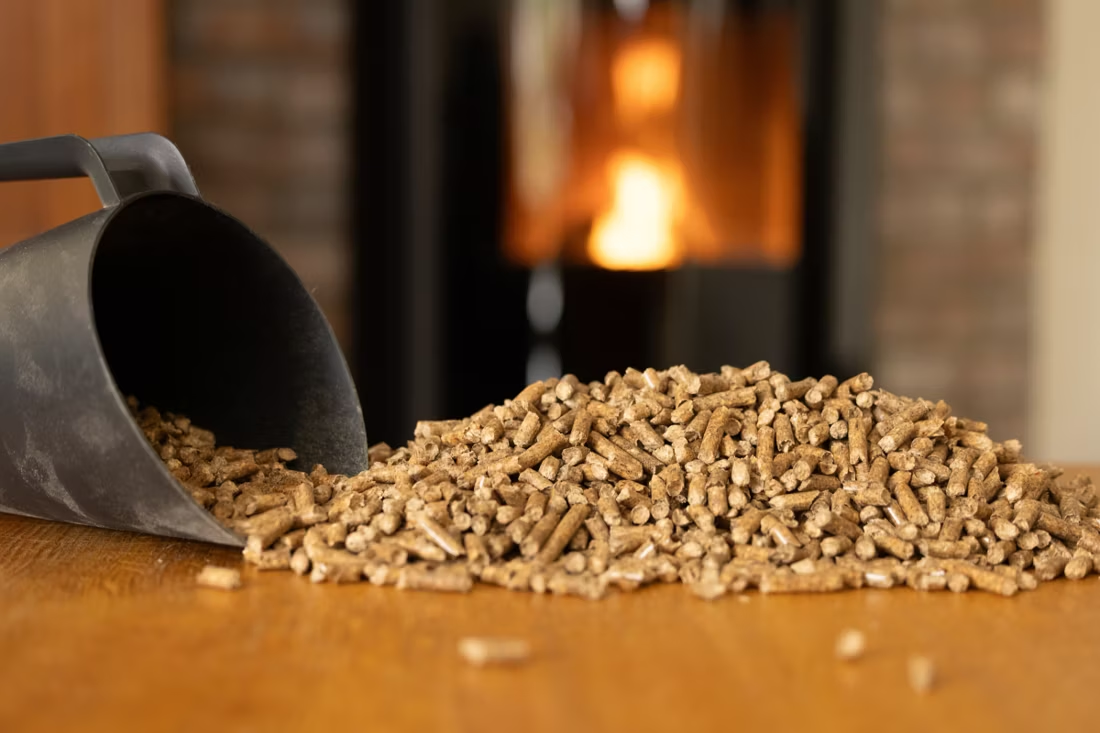
Regional brands like Lignetics and Indeck Energy Services distribute into the central Kansas market and are commonly stocked by hearth retailers and farm supply stores serving the Salina area. Pellets are typically sold by the 40-pound bag or by the ton, and buying in bulk before the heating season starts (rather than restocking mid-winter) usually gets a better price and avoids the risk of a supplier running low during a cold stretch. Your local dealer can point you toward the closest reliable pellet source when you have your unit installed.
Pellet stove vs. wood stove—which is right for my Saline County home?
Wood stoves burn cordwood—oak, hickory, and osage orange are all common locally and burn hot and long—work without electricity, and are the better choice if backup heat during power outages matters to you. Pellet stoves are more convenient day to day: load the hopper, set the thermostat, and let the auger do the work, with less ash and more consistent heat output, but they require electricity to run. For a Saline County home used as a primary residence with reliable grid power, pellet is often the easier long-term choice. For rural properties concerned about ice-storm outages, wood—or a combination of both—is worth serious consideration. Either fuel is available through local dealers in the area.
Why is my open fireplace making my house colder?
Open fireplaces suck—literally. As the fire burns, it consumes air your furnace already paid to heat and pulls it out through the chimney, so the house is actually colder after the fire goes out than before you lit it. An insert fixes this: it seals the chimney, puts fixed glass across the front, and turns that hole in your house into a real heat source.
What's the difference between an insert and a zero-clearance fireplace?
An insert is a fireplace that slides into a pre-existing wood-burning fireplace—if you don't have one, there's nothing to insert it into. A zero-clearance fireplace is built into a framed wall, which makes it the answer for remodels and new construction. Simple test: existing masonry fireplace means insert; blank or framed wall means zero-clearance.
Can a fireplace actually lower my heating bill?
Yes—by creating a comfort zone. A furnace heats every square foot of the house just to warm the one room you're in; a gas fireplace on low burns roughly a sixth of the gas a typical furnace does. Set the furnace around 55–60 degrees as a baseline, then heat the rooms your family actually uses. Families who heat this way commonly save $20–$60 a month.
How much should I budget for a fireplace?
For an average home—covering the fireplace, the vent pipe, and basic installation—a budget between $3,900 and $5,500 gives you a lot of options across wood, gas, and pellet. By the time you add finish work, gas line, and electrical, the average complete installation lands between $5,000 and $12,000 all-in. In a remodel or new build, a good rule is to put about 2.5% of the total project cost toward the fireplace.
Stove and Fireplace Dealers in Saline County
Pellet Brands Stocked Around Saline County
Manufacturers will point you to the nearest stocking dealer.
Get matched with a Saline County pellet stove dealer.
Tell us about your home and heating goals, and we'll send you a free Project Guide & Parts List—including the exact vent kit and parts your pellet stove project needs—along with our recommended local dealer.
Find Your Fireplace →