
Steady pellet heat for Flint Hills winters.
Thermostat-controlled warmth for Manhattan, Fort Riley, and the rest of Riley County—no splitting osage orange, no hauling cordwood. Find the right unit and connect with a trusted local dealer.
Every Project Starts From One of These Five Situations
Set-it-and-forget-it warmth for a working county.
Riley County sits in the Flint Hills of northeast Kansas, home to Manhattan, Kansas State University, and the sprawling Fort Riley Army post. At climate zone 4A with a moderate winter heating load and winter lows averaging 19°F, the cold season here is real but nowhere near the depths of Fargo, ND or Bismarck, ND—it's the kind of steady, mid-continental winter that rewards a heat source you can dial in and walk away from. Oak, hickory, and osage orange grow throughout the county and remain the go-to species for anyone burning cordwood, but osage orange in particular is notoriously dense and difficult to split by hand, which is one reason a growing number of Riley County homeowners skip the woodpile entirely.
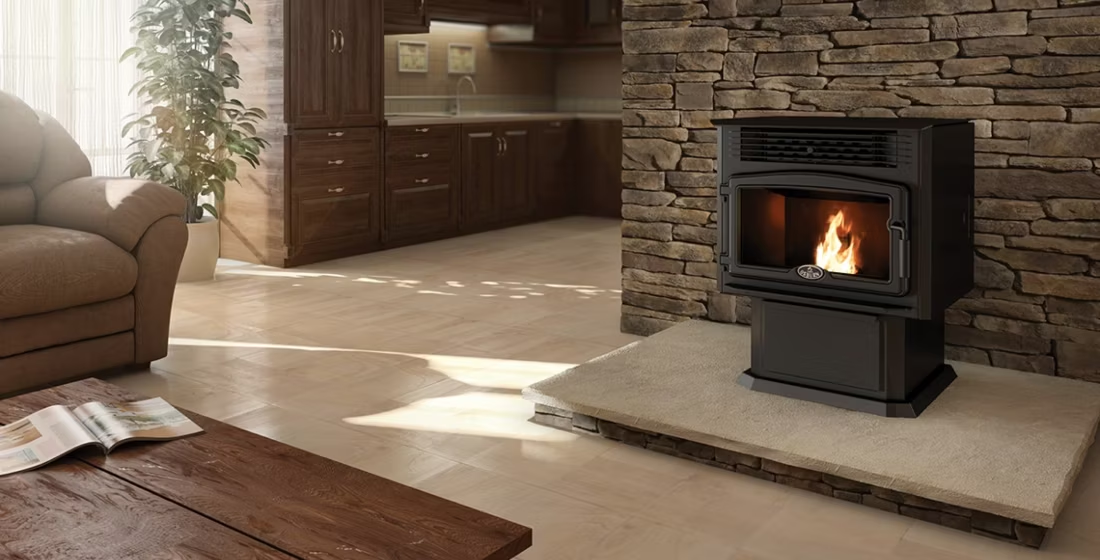
With no air quality non-attainment issues or burn-day restrictions in Riley County, pellet stoves here aren't a regulatory workaround—they're a convenience upgrade. A hopper full of pellets from a regional brand like Lignetics or Indeck Energy Services can run a stove for 24 hours or more on a thermostat, without the daily loading, ash hauling, or creosote buildup that comes with cordwood. That matters in a county with heavy renter and military turnover tied to Fort Riley and K-State student housing, where low-maintenance, clean-burning heat is often the deciding factor over the ritual of a wood fire.
Three steps. No salesperson until you're ready.
Tell us about your project
Your zip code, your situation, and the fuel you're leaning toward—or let the answers point you to one.
See what's actually available
The brands dealers within 100 miles genuinely carry—real options, never a catalog mirage.
Get your dealer & Project Guide
A trusted local dealer, plus the free Project Guide & Parts List that names every component of the job.
Frequently Asked Questions
How much does a pellet stove installation cost in Riley County?
Most pellet stove installations run in the range of $3,000 to $6,000 in a typical Riley County home, with the total depending on the stove itself, whether you're venting through an exterior wall or an existing chimney, and whether a hearth pad is needed for code clearance. A pellet insert going into an existing masonry fireplace is usually on the lower end since it reuses the chimney chase; a freestanding stove in a home without one runs higher once wall penetration and venting are factored in. A local dealer will give you a firm number after seeing your home.
Pellet stove vs. wood stove—which makes more sense in Riley County?
Wood is the traditional choice here, and oak and hickory both burn hot and long once seasoned—but osage orange, while it burns excellent and hot, is genuinely hard to split by hand, which pushes some homeowners toward pellets instead. A pellet stove trades the physical labor of cutting, splitting, and stacking for a bag of fuel and a thermostat, at the cost of needing electricity to run the auger and blower. For a Manhattan or Fort Riley household without a woodlot or the time to process cordwood, pellets are often the lower-friction option. For rural households already set up to cut wood on their own land, wood stays cost-competitive.
Where can I buy wood pellets in Riley County?
Regional brands like Lignetics and Indeck Energy Services are widely carried by hearth dealers and farm supply stores serving Manhattan and the surrounding county, typically sold by the ton or by the 40-pound bag. Because demand spikes hard in late fall, it pays to buy your season's supply—usually 2 to 3 tons for a primary-heat home—before the first cold snap rather than restocking bag by bag through winter. Local dealers can point you to the most reliable in-stock supply for your specific stove's pellet requirements (some models are pickier about ash content than others).
Will my pellet stove work if the power goes out?
Not without a backup power source. Pellet stoves rely on an electric auger to feed fuel and a blower to distribute heat, so a power outage shuts the unit down completely—unlike a wood stove, which keeps burning with no electricity at all. Riley County sees occasional ice storms and severe thunderstorms that knock out power for hours or longer, so if backup heat during an outage matters to you, either pair your pellet stove with a small battery backup/inverter setup or keep a wood-burning option as a secondary heat source. Ask your local dealer which pellet stove models have the lowest power draw if outages are a real concern for your property.
What size pellet stove do I need for my home?
Sizing depends on square footage, insulation, and whether the stove is your primary or supplemental heat source. As a general guide for Riley County's zone 4A winters: smaller units (up to 1,000 sq ft) suit a single room, den, or K-State-area rental unit; mid-size stoves (1,000–2,000 sq ft) handle most Manhattan and Ogden homes as primary heat; larger units (2,000+ sq ft) can carry a well-insulated whole house through the coldest stretches, which locally run into the teens and occasionally single digits. An undersized stove will run flat-out and still fall short on the coldest nights; an oversized one will short-cycle. A local dealer will size your home for free during an in-home visit.
Do I need a permit to install a pellet stove in Riley County?
Most new pellet stove installations require a building permit through your local building department, whether that's the City of Manhattan or Riley County depending on where you live. The permit process verifies proper clearances, venting, and hearth pad requirements for your specific model. Most hearth dealers who sell and install pellet stoves handle the permit paperwork as part of the job, so it's rarely something homeowners have to navigate on their own.
How much maintenance does a pellet stove need?
Pellet stoves need more routine attention than a gas unit but far less than a wood stove. Expect to empty the ash pan every few days during regular use, clean the burn pot and glass weekly, and vacuum the hopper and exhaust passages periodically through the season. Most manufacturers also recommend a full professional cleaning and inspection once a year, ideally before the fall heating season starts. Skipping this can lead to feed jams or reduced efficiency, but it's a manageable routine compared to cordwood chimney sweeping.
Pellet stove vs. gas fireplace—which is right for my home?
Gas fireplaces offer instant on-off operation and, with the right ignition system, can run during a power outage without any backup power of their own. Pellet stoves require electricity but burn a renewable, often lower-cost fuel and give more of a real-flame, wood-fire look and radiant heat feel than most gas units. For a Fort Riley household weighing convenience against fuel cost, or a Manhattan homeowner who wants the ambiance of a wood fire without the labor, a pellet stove often splits the difference well. Where reliable backup heat during outages is the top priority, gas usually wins.
Are pellet stoves a good fit for rental properties or homes near Fort Riley?
Yes—pellet stoves are a common fit for the rental and military-turnover housing that's common around Fort Riley and near Kansas State University, precisely because they don't require a woodpile, splitting, or ongoing outdoor storage. A tenant or PCS-cycle homeowner can load a hopper with bagged Lignetics or Indeck Energy Services pellets stored in a garage or shed rather than managing a stacked cord of oak or osage orange outside. That said, any pellet stove installation still needs to be sized and vented correctly for the specific unit, so it's worth having a local dealer assess the property before installation rather than assuming a one-size-fits-all approach.
What's the difference between an insert and a zero-clearance fireplace?
An insert is a fireplace that slides into a pre-existing wood-burning fireplace—if you don't have one, there's nothing to insert it into. A zero-clearance fireplace is built into a framed wall, which makes it the answer for remodels and new construction. Simple test: existing masonry fireplace means insert; blank or framed wall means zero-clearance.
Why is my open fireplace making my house colder?
Open fireplaces suck—literally. As the fire burns, it consumes air your furnace already paid to heat and pulls it out through the chimney, so the house is actually colder after the fire goes out than before you lit it. An insert fixes this: it seals the chimney, puts fixed glass across the front, and turns that hole in your house into a real heat source.
Can a fireplace actually lower my heating bill?
Yes—by creating a comfort zone. A furnace heats every square foot of the house just to warm the one room you're in; a gas fireplace on low burns roughly a sixth of the gas a typical furnace does. Set the furnace around 55–60 degrees as a baseline, then heat the rooms your family actually uses. Families who heat this way commonly save $20–$60 a month.
Should the dealer who sells my fireplace also install it?
Ideally, yes. A fireplace project involves vent pipe, gas line, electrical, and often tile or stone. Hire three or four separate trades and you own the liability and the game of telephone between them. One company selling and installing means one accountable party, start to finish—ask about factory training, on-time completion records, and what happens if an inspection fails.
Stove and Fireplace Dealers in Riley County
Pellet Brands Stocked Around Riley County
Manufacturers will point you to the nearest stocking dealer.
Find your pellet stove in Riley County.
Tell us a bit about your home and we'll match you with the right pellet stove or insert, plus a free Project Guide & Parts List—the exact parts, vent kit, and a recommended local dealer for your Riley County installation.
Find Your Fireplace →