
Steady, thermostat-style heat for Rice County's farmhouses and shops.
Rice County runs on oak, hickory, and osage orange for firewood, but a lot of homeowners around Lyons, Sterling, and Little River want the convenience of a stove that holds a set temperature without daily splitting and stacking. I'll match you with a trusted local dealer who knows what's actually available and installable in your part of the county.
Every Project Starts From One of These Five Situations
Consistent heat without splitting cords of oak.
At roughly 7,750 people spread across flat, wide-open farmland, Rice County isn't a place with much wood-smoke air quality debate—there are no non-attainment concerns or curtailment days here. With a moderate winter heating season and average winter lows around 20°F, the cold is real but not extreme; it's a milder heating load than you'd see in Bismarck, ND or Fargo, ND, where the winter heating load runs nearly double this. Still, a proper cold snap in Rice County can drop well below zero for a stretch, and plenty of farmhouses, shops, and outbuildings around Lyons, Sterling, Little River, Bushton, Chase, and Geneseo need a heat source that doesn't depend on someone getting outside to feed a fire in a January wind.
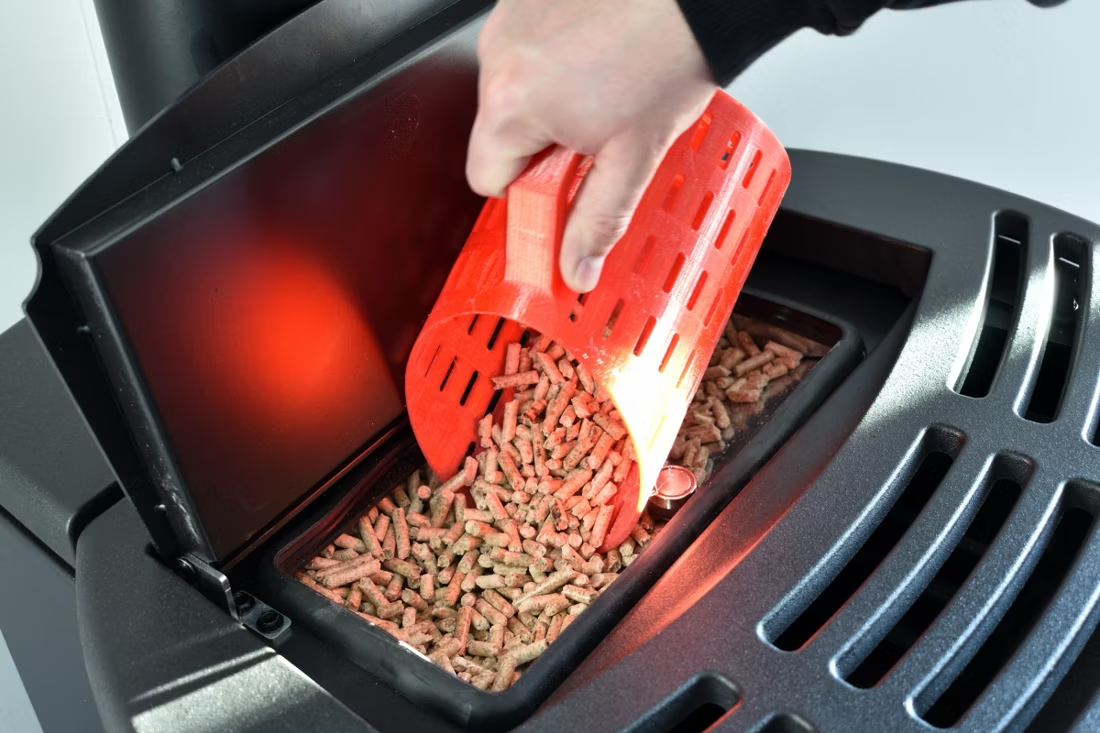
That's the appeal of pellet: load the hopper, set the thermostat, and get consistent output for a day or more without tending it. Regional pellet supply runs through brands like Lignetics and Indeck Energy Services, sold through farm and hardware stores as well as hearth dealers across central Kansas. Because pellet appliances run on electricity for the auger and blower, it's worth pairing one with a battery backup or small generator here—rural electric co-op lines across the county can go down in an ice storm, and a pellet stove without power is just a hopper full of fuel sitting idle.
Three steps. No salesperson until you're ready.
Tell us about your project
Your zip code, your situation, and the fuel you're leaning toward—or let the answers point you to one.
See what's actually available
The brands dealers within 100 miles genuinely carry—real options, never a catalog mirage.
Get your dealer & Project Guide
A trusted local dealer, plus the free Project Guide & Parts List that names every component of the job.
Frequently Asked Questions
How much does a pellet stove installation cost in Rice County?
Most pellet stove and insert installations run somewhere between $3,000 and $6,000, depending on the unit and whether you're dropping an insert into an existing masonry fireplace or installing a freestanding stove that needs a new wall-through vent. Farmhouses around Lyons or Sterling with an existing fireplace opening tend to land on the lower end; a new install in a shop or detached building without any existing venting will run higher once the vent kit and electrical work are added. A local dealer will give you a firm number after seeing the space.
Rice County has plenty of oak and hickory—why would I choose pellet over wood?
Oak, hickory, and osage orange are genuinely good firewood, and a lot of county households already burn wood as a backup or primary heat source. Pellet stoves appeal to a different priority: consistent, hands-off heat. You load a hopper instead of splitting and stacking cords, the burn rate holds steady on a thermostat setting instead of needing you to adjust dampers, and there's no chimney creosote to manage. For someone who wants supplemental heat in a farmhouse living room or a detached shop without the daily labor of a wood stove, pellet is usually the easier fit—the tradeoff is that it needs electricity to run.
Do I need a permit to install a pellet stove in Rice County?
Yes, most new installations require a building permit through Rice County's building/zoning office in Lyons, and if you're inside city limits in Sterling or Little River, check whether the town has its own permitting requirement layered on top of the county's. Most established hearth dealers handle the permit paperwork as part of the installation, which is one advantage of going through a full-service local installer rather than a DIY setup—they know what the inspector will want to see on the vent termination and clearances.
Where can I buy pellets locally in Rice County?
Lignetics and Indeck Energy Services are the two regional brands most commonly stocked at farm supply stores and hearth dealers serving central Kansas, and either is a solid, widely available choice. Pricing runs roughly $220 to $280 per ton depending on the season and whether you buy early or wait until cold weather drives up demand. Buying a season's supply—typically 2 to 3 tons for a stove used as supplemental heat, more for primary heat—in late summer or early fall before the rush is the most reliable way to avoid running short mid-winter.
What happens to my pellet stove during a power outage?
It stops running. Pellet stoves rely on electricity for the auger that feeds fuel and the blower that moves heat into the room, so an outage—which happens on rural Rice County electric co-op lines during ice storms or high wind events—shuts the unit down entirely. If backup heat during an outage matters to you, a small battery backup unit or generator sized for the stove's draw is worth budgeting for, or consider a wood stove as a secondary, no-power fallback given how much local oak and hickory is available in the county.
What size pellet stove do I need for a Rice County farmhouse?
With average winter lows around 20°F and a moderate winter heating season, most main living areas in the county are well served by a mid-size pellet stove rated for 1,200–2,000 square feet, assuming typical insulation. Older farmhouses with less insulation or larger open floor plans may need to size up, while a stove intended for a workshop or detached building should be sized to that specific space rather than the whole property. A dealer visit beats guessing off a box label, especially for older construction where heat loss is harder to estimate from square footage alone.
How much maintenance does a pellet stove actually need?
Plan on emptying the ash pan every few days to weekly depending on use, a deeper cleaning of the burn pot and heat exchanger tubes every couple of weeks during heavy heating months, and a full professional service annually—typically before the season starts in fall. It's a lighter maintenance load than a wood stove and chimney sweep, but pellet appliances still need the auger, igniter, and blower checked periodically to keep burn efficiency up and avoid the black glass or feed jams that come with neglected units.
Does a pellet stove need a full chimney like a wood stove?
No. Most pellet stoves vent through a smaller-diameter pipe that can run straight out through an exterior wall, which is one reason they're a good option for shops, additions, or homes without an existing masonry chimney. If you do have an existing fireplace and chimney, a pellet insert can use that opening with a liner sized for the appliance. Either way, the vent kit is sized specifically to the stove model, which is why getting the right kit through your installer matters more than trying to piece one together yourself.
Pellet vs. propane—which makes more sense for heating in Rice County?
Propane is the default for whole-house heat across most of rural Rice County since natural gas mains don't reach every farmhouse and outbuilding. A pellet stove isn't usually meant to replace a propane furnace outright, but it's a strong supplemental option for the main living area—it can meaningfully cut propane usage during the coldest stretches of the season, and pellet fuel costs are generally more stable than propane, which can spike with regional demand in a hard winter. Many county households run both: propane as the whole-house backbone, pellet for the room they live in most.
Why is my open fireplace making my house colder?
Open fireplaces suck—literally. As the fire burns, it consumes air your furnace already paid to heat and pulls it out through the chimney, so the house is actually colder after the fire goes out than before you lit it. An insert fixes this: it seals the chimney, puts fixed glass across the front, and turns that hole in your house into a real heat source.
What's the difference between an insert and a zero-clearance fireplace?
An insert is a fireplace that slides into a pre-existing wood-burning fireplace—if you don't have one, there's nothing to insert it into. A zero-clearance fireplace is built into a framed wall, which makes it the answer for remodels and new construction. Simple test: existing masonry fireplace means insert; blank or framed wall means zero-clearance.
How much should I budget for a fireplace?
For an average home—covering the fireplace, the vent pipe, and basic installation—a budget between $3,900 and $5,500 gives you a lot of options across wood, gas, and pellet. By the time you add finish work, gas line, and electrical, the average complete installation lands between $5,000 and $12,000 all-in. In a remodel or new build, a good rule is to put about 2.5% of the total project cost toward the fireplace.
What is an in-home preview and do I need one?
It's a visit where a hearth professional measures your space, confirms the model you picked actually works in your home, and walks the specs—framing, gas line, venting, finish work—before anything is ordered. Some details you just can't know until you see the house. Never make a down payment without one; it's the single most-skipped step that burns buyers.
Pellet Brands Stocked Around Rice County
Manufacturers will point you to the nearest stocking dealer.
Get your free Rice County pellet stove Project Guide & Parts List.
Tell me about your home or shop and how you plan to use the stove, and I'll match you with a trusted local Rice County dealer and send a free Project Guide & Parts List—the exact parts, including the vent kit, for your pellet heat project.
Find Your Fireplace →