
Reliable gas heat for Rawlins County's high plains winters.
Instant, wind-proof warmth for the wheat and cattle country around Atwood, Herndon, and McDonald. Find the right gas fireplace, insert, or stove, and get matched with a trusted local dealer.
Every Project Starts From One of These Five Situations
Instant heat that shrugs off the plains wind.
Rawlins County sits on the far northwest edge of Kansas, hard against the Nebraska and Colorado lines—roughly 1,058 square miles of wheat fields, cattle pasture, and section-line roads holding just over 1,500 people. There's almost nothing to break the wind here, and in climate zone 5A that matters: a 20 mph north wind on top of a January cold front can make a drafty farmhouse feel far colder than the thermometer says. With homes spread out along county roads between Atwood, Herndon, McDonald, Ludell, and Blakeman, a lot of families want heat they can flip on the instant a blizzard rolls in, without hauling wood across an icy yard first.
Most of Rawlins County runs on propane—tanks set behind farmhouses and ranch homes are simply the norm out here, with natural gas mains generally limited to the built-up core of Atwood where service exists. Either fuel works fine in a modern direct-vent gas fireplace or insert; your installer sets the orifice and regulator to match whichever you've got. Gas also sidesteps the wood-hauling that's part of daily life for a lot of county households already burning oak, hickory, or dense, slow-splitting osage orange in a wood stove elsewhere on the property—gas in the main living room, wood or pellet heat as backup out in the shop or a second structure is a common setup here.
Three steps. No salesperson until you're ready.
Tell us about your project
Your zip code, your situation, and the fuel you're leaning toward—or let the answers point you to one.
See what's actually available
The brands dealers within 100 miles genuinely carry—real options, never a catalog mirage.
Get your dealer & Project Guide
A trusted local dealer, plus the free Project Guide & Parts List that names every component of the job.
Frequently Asked Questions
How much does a gas fireplace installation cost in Rawlins County?
A gas fireplace or insert installation in Rawlins County typically runs $3,500 to $9,500, depending on the unit, the venting path, and whether you're running new gas line or hooking into an existing propane tank or natural gas service. A direct-vent insert going into an existing masonry fireplace with fuel already run to that spot lands on the lower end. New construction or a fireplace going into a wall with no existing gas line—including a fresh propane tank set—pushes toward the higher end. Given how spread out homes are across the county, expect a modest travel charge built into quotes for anything well outside Atwood.
Can I convert my existing wood fireplace to gas?
Yes, and it's a straightforward project for local installers. A gas insert slides into your existing masonry opening and uses a stainless liner run up the same chimney, so you keep the look of the original fireplace while gaining instant on-off heat. Many older farmhouses in Rawlins County have solid brick or stone fireplaces built decades ago for burning local oak or hickory—those openings convert well. The main variable is fuel supply: homes on propane need the insert configured for propane orifices rather than natural gas, so tell your installer which fuel you're on before they order the unit.
Do I need natural gas, or is propane the standard here?
Propane is the standard fuel for most of Rawlins County. Outside the built-up part of Atwood, natural gas mains generally don't reach the farms and ranch homes strung along the county roads, so a propane tank—either one you already have for a furnace or water heater, or a new tank set by a regional propane supplier—is how most gas fireplace installations here are fueled. If your home sits within Atwood's serviced area and already has natural gas appliances, adding a fireplace on that line is usually the simpler and cheaper path. Either way, the fireplace itself is nearly identical; only the gas orifice and regulator differ.
Will my gas fireplace work if the power goes out?
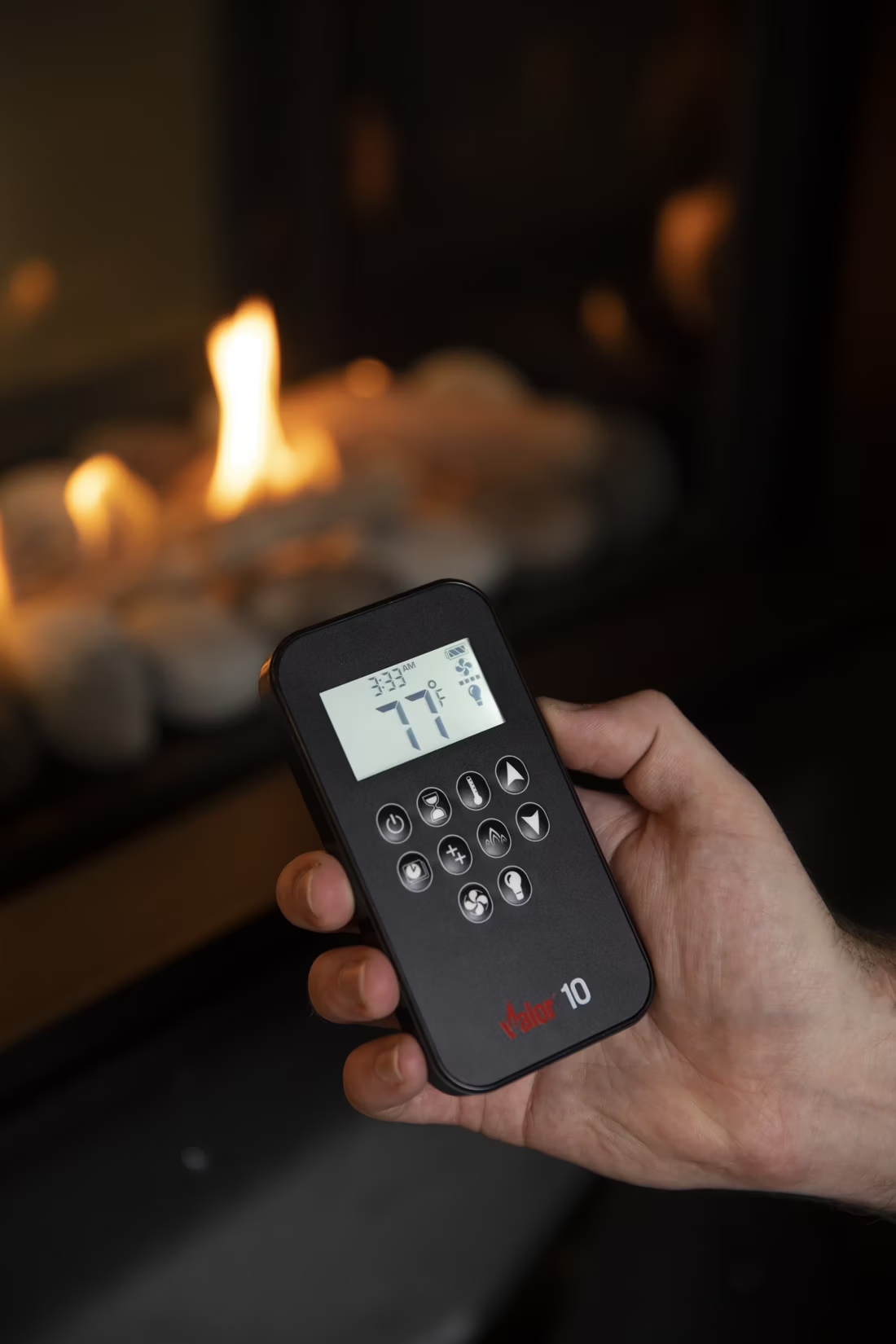
Most will, and that matters here—an exposed High Plains county like Rawlins sees its share of ice storms and high-wind events that can knock out rural electric service for hours or longer. Gas fireplaces with IPI (intermittent pilot ignition) include a battery backup, usually a set of AA batteries inside the unit, that keeps the fireplace lighting on demand even with the power down. Valor fireplaces handle this differently: their pilot assembly generates its own electricity through a thermocouple, so there are no batteries to remember at all. If backup heat during a power outage is a priority for your farmhouse or ranch home, ask your local dealer which ignition system a given model uses.
What's the difference between a gas fireplace, gas insert, and gas stove?
A gas fireplace is a fully framed-in, built-in unit—the right choice for new construction or a room without an existing chimney. A gas insert is built to slide into an existing masonry fireplace opening, turning a wood-burning hearth into a sealed, high-efficiency gas unit that vents through the same chimney. A gas stove is a freestanding cabinet-style unit that sits on the floor, similar in footprint to a wood stove but running on gas. For Rawlins County's older farmhouses with existing brick fireplaces, an insert is usually the simplest upgrade; for a new build or an addition, a built-in fireplace or a freestanding stove both work depending on the room's layout.
Do I need a permit to install a gas fireplace in Rawlins County?
Permits for gas line and building work in Rawlins County are handled through the Rawlins County Courthouse in Atwood, which covers zoning and permitting for the county—there's no separate dedicated building department in a county this size. The gas connection itself, whether tied into a natural gas line or a propane tank, needs to be run by a licensed gas-fitter or propane technician, and most hearth dealers coordinate that piece as part of the installation rather than leaving it to the homeowner.
What's the difference between vented and vent-free gas fireplaces?
Vented gas fireplaces—direct-vent or B-vent—pull combustion air from outside and exhaust it back outside through a sealed pipe, keeping combustion byproducts out of the living space entirely. Vent-free (ventless) units burn directly into the room, which makes installation simpler in a home without an existing chimney, but they release some water vapor and trace combustion gases indoors and require careful room-size matching and an oxygen depletion sensor. Kansas permits vent-free units, and they show up in older Rawlins County homes where running venting to an exterior wall is impractical. That said, direct-vent units are the more common recommendation for full-time heat and better indoor air quality—worth discussing with a local dealer against your specific room and floor plan.
How often should my gas fireplace be serviced?
Plan on an annual inspection, ideally before the heart of winter sets in. A technician checks the burner, pilot assembly, gas connections, and venting, and cleans the glass and interior—a much lighter job than sweeping a wood chimney, but still important, especially for units that see heavy winter use as supplemental heat during a cold snap. Local hearth dealers and propane service companies serving Rawlins County typically handle this, and it's a good idea to have it done at the same time as your annual propane tank check if you're on tank service.
Gas vs. wood—which makes more sense for my Rawlins County home?
There's no air quality restriction or burn ban concern in Rawlins County, so both fuels are wide open here—this is really a question of convenience versus tradition. Wood, especially dense local species like osage orange or hickory, throws serious heat and keeps working with no power at all, which matters on a farm during a bad ice storm. Gas gives you instant, consistent heat with no hauling, splitting, or ash cleanup, and it's simpler to run in a main living room used every day. Plenty of households out here split the difference: gas in the house for daily comfort, a wood stove in the shop or a second building for backup and for burning up shelterbelt trimmings. A local dealer can walk through both options for your specific setup.
Is my gas fireplace wasting gas?
If it was installed more than 15 years ago, probably. Older gas fireplaces keep a standing pilot light burning all the time, and that little flame can cost a couple hundred dollars a year. Newer models use pilot-on-demand ignition—the pilot lights only when you use the fireplace and goes out when you turn it off.
What's the difference between radiant and convective fireplace heat?
Most fireplaces are a thin metal box—they heat fine, but you rely on the fan to move the warmth into the room. Radiant models use a thick cast-ceramic firebox, about an inch and a quarter thick, that soaks up the fire's heat and radiates roughly 25–30% more warmth into the room with no fan running. If you watch TV in the same room or want heat in a power outage, radiant is worth asking about.
What is an in-home preview and do I need one?
It's a visit where a hearth professional measures your space, confirms the model you picked actually works in your home, and walks the specs—framing, gas line, venting, finish work—before anything is ordered. Some details you just can't know until you see the house. Never make a down payment without one; it's the single most-skipped step that burns buyers.
Does a fireplace add value to my home?
On average, a fireplace adds back to the home about the same amount you spent installing it. Add the monthly savings from heating the rooms you actually use instead of the whole house—often hundreds of dollars a year—and the value case is strong before you even count what a fire does for how your family uses the room.
Find your gas fireplace in Rawlins County.
Tell us a bit about your home and we'll put together a free Project Guide & Parts List—the right gas fireplace, insert, or stove for your Rawlins County home, the vent kit and parts you'll need, and a trusted local dealer to install it.
Find Your Fireplace →