
Reliable heat for every farmhouse and homestead in Rawlins County.
Wood, gas, pellet, and electric fireplace resources for Atwood and the small towns and rural sections that make up Rawlins County. Find the right unit and connect with a trusted local hearth retailer.
Every Project Starts From One of These Five Situations
High plains heating in far northwest Kansas.
Rawlins County sits on the high plains of northwest Kansas, hard against the Nebraska and Colorado borders, with a population of just over 1,500 spread across roughly 1,100 square miles of wheat and cattle country. Climate zone 5A means winters here run cold and windy—closer to the exposure of Fargo, ND than to anything milder further south—with the open plains offering little wind break for farmhouses and outbuildings. Oak, hickory, and osage orange grow along the creek bottoms and shelterbelts, and osage orange in particular is a longtime favorite among local wood burners for its dense, long-burning coals.
What you'll find on this hub: hearth retailers, service technicians, and fuel suppliers serving the towns and rural addresses across Rawlins County—Atwood, McDonald, Ludell, Herndon, and the farms and ranches between them. Pick your fuel below to see local dealers, installation costs, recommended units, and the resources that fit your project, whether you're heating a century-old farmhouse or a newer build on the section-line roads.
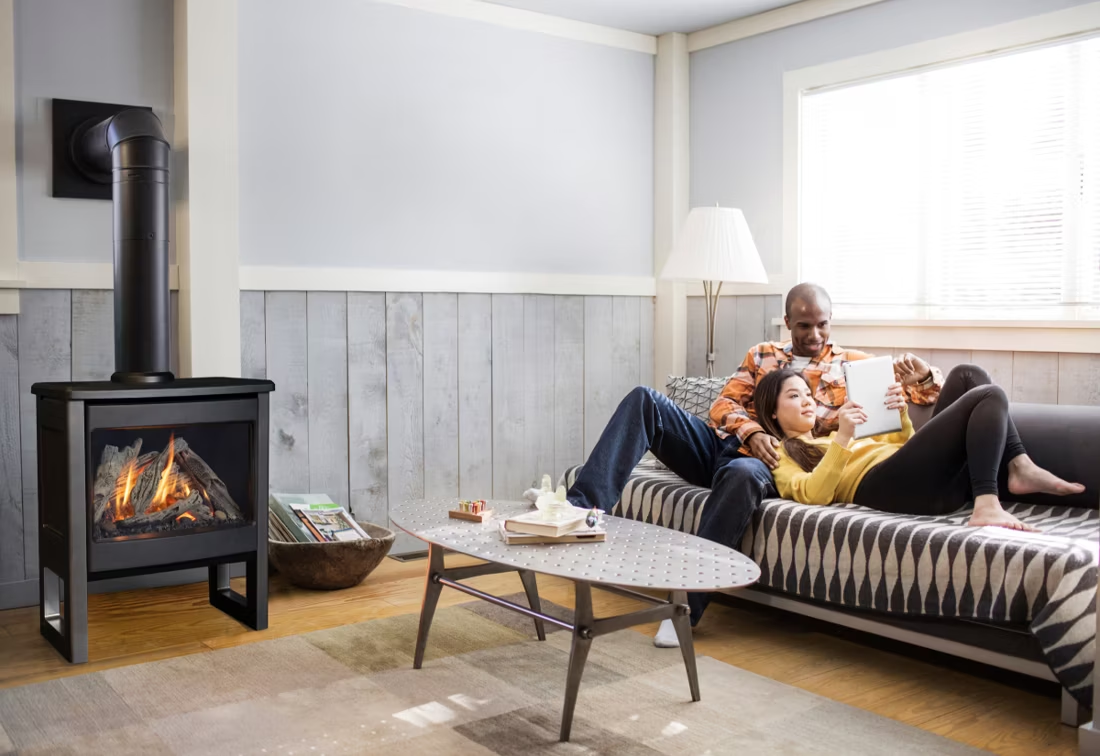
Four fuels. One honest answer for Rawlins County.
Three steps. No salesperson until you're ready.
Tell us about your project
Your zip code, your situation, and the fuel you're leaning toward—or let the answers point you to one.
See what's actually available
The brands dealers within 100 miles genuinely carry—real options, never a catalog mirage.
Get your dealer & Project Guide
A trusted local dealer, plus the free Project Guide & Parts List that names every component of the job.
Frequently Asked Questions
Which fuel works best in Rawlins County?
It depends on the home and the budget. Wood remains a practical choice for many Rawlins County farmhouses—osage orange and hickory from local shelterbelts burn hot and long, and a wood stove keeps a home warm even when winter storms knock out rural power lines, which happens more often out here than in town. Gas is the low-maintenance option where propane service is already run to the property; no wood-splitting, no ash to haul. Pellet stoves are a solid middle ground, though rural residents should plan ahead on fuel—Lignetics and Indeck Energy Services pellets are typically ordered by the pallet or picked up in nearby larger towns rather than found on every store shelf in Atwood. Electric fireplaces work well as supplemental heat in a bedroom or den but shouldn't be counted on as the sole heat source during a hard plains winter. Many Rawlins County households run wood or propane as primary heat with electric as backup for shoulder-season comfort.
Do I need a permit to install a fireplace in Rawlins County?
Requirements are lighter here than in more populated Kansas counties, but you should still check before you install. Rawlins County does not have a countywide building code enforcement office comparable to larger jurisdictions, so many installations on rural properties proceed without a formal permit—though any new gas line work should still go through a licensed propane or gas fitter for safety, and homeowners insurance carriers often want documentation of a code-compliant installation regardless of whether the county requires a permit. If you're inside Atwood city limits, check with the city clerk's office, since municipal requirements can differ from unincorporated county land. A local hearth retailer who's installed in the area before can tell you what's actually expected for your specific address.
Are there air quality restrictions on wood burning in Rawlins County?
No. Rawlins County has no air quality non-attainment designations, no winter burn bans, and no wood-smoke curtailment programs—the wide-open plains geography here doesn't trap smoke the way a mountain basin or urban valley can. That means wood stoves and inserts can run without the seasonal restrictions homeowners face in places like the Klamath Basin. The main practical consideration for local wood burners is fuel supply rather than air quality: osage orange and hickory need to season for a full year or more before they burn clean and efficient, so most experienced burners here keep at least one year's wood ahead in the stack.
Can one local hearth retailer handle all four fuel types?
In a county this size, most homeowners end up working with either a general Atwood-area retailer that carries two or three fuel types, or a farm-and-home store that stocks pellet fuel and basic stove parts alongside its other inventory. Full-line dealers carrying wood, gas, pellet, and electric displays side by side are more common in larger northwest Kansas towns like Colby or Goodland, roughly 30-45 minutes away, so it's worth calling ahead to confirm exactly which fuels a given retailer stocks and installs before you drive out. If you're cross-shopping fuels, ask whether the retailer can special-order the unit you want even if it's not on their showroom floor—this is common practice for lower-volume rural dealers.
How does service work in rural areas of Rawlins County?
Most chimney sweeps and gas techs serving Rawlins County are based out of Colby, Goodland, or other nearby northwest Kansas towns and travel in for service calls, since the county's own population doesn't support a full-time hearth service business locally. Expect to schedule a bit further ahead than you would in a city, and a modest trip fee is common for service calls out to farms and ranches well off the highway. Pre-season scheduling in late summer or early fall—before the first hard freeze—tends to get you on the calendar faster than waiting for a mid-winter breakdown. For osage orange or hickory burners, an annual chimney inspection matters even more given how dense and creosote-prone some hardwood smoke can be if the wood wasn't fully seasoned.
What's the typical cost range for fireplace installation across all fuel types in Rawlins County?
Costs in Rawlins County tend to run at or below statewide Kansas averages, given lower local labor rates and simpler rural permitting. Wood stove or insert installation: roughly $3,500-$7,500 for a typical single-story farmhouse install, more if new chimney or flue work is needed. Gas fireplace, insert, or stove: about $4,000-$9,000 depending on whether propane line extension is required, since natural gas mains don't reach most of the county. Pellet stove or insert: around $4,000-$6,500 for a standard install, plus factoring in the cost of hauling pellets from a farm-and-home supplier or a larger town. Electric fireplace: $200-$2,500 for the unit itself, with $300-$1,000 in labor for anything beyond a simple plug-in unit. A local dealer can give you a firm number once they've seen your specific chimney, electrical panel, or propane setup.
Can I install a fireplace myself?
If you're putting a fire in your house on purpose, it's best to work with an expert. Unless you're genuinely experienced in framing, gas line, vent pipe, and the national code on clearances to combustibles, have a professional do it—and ideally the same company that sells you the fireplace, so warranty, service, and liability all live under one roof.
Does a fireplace add value to my home?
On average, a fireplace adds back to the home about the same amount you spent installing it. Add the monthly savings from heating the rooms you actually use instead of the whole house—often hundreds of dollars a year—and the value case is strong before you even count what a fire does for how your family uses the room.
What is an in-home preview and do I need one?
It's a visit where a hearth professional measures your space, confirms the model you picked actually works in your home, and walks the specs—framing, gas line, venting, finish work—before anything is ordered. Some details you just can't know until you see the house. Never make a down payment without one; it's the single most-skipped step that burns buyers.
Can a fireplace actually lower my heating bill?
Yes—by creating a comfort zone. A furnace heats every square foot of the house just to warm the one room you're in; a gas fireplace on low burns roughly a sixth of the gas a typical furnace does. Set the furnace around 55–60 degrees as a baseline, then heat the rooms your family actually uses. Families who heat this way commonly save $20–$60 a month.
Stove and Fireplace Dealers in Rawlins County
Listings include WhyFire partner dealers, dealers we have verified as authorized for the brands we recommend, and established local businesses that carry hearth products. Every listing shows which one it is. The ones marked Preferred run on WhyFire's software, so they can show you real pricing and book your appointment right here. No manufacturer pays for placement. How we verify dealers →
Bird's Alternatives
Plains Heating & Air Conditioning
Air Concepts
Find your fireplace project in Rawlins County.
Tell us about your project and we'll match you with a trusted local dealer and send you a free Project Guide & Parts List—the exact parts, including the vent kit, and the retailer we recommend for your home.
Find Your Fireplace →