
Turn your Prairie Village fireplace into instant, on-demand heat.
From the open masonry hearths of Prairie Village's postwar colonials to new-construction great rooms, gas delivers heat at the flip of a switch. We'll match you with a trusted local dealer who knows what's installable in your home.
Every Project Starts From One of These Five Situations
A postwar suburb built for fireplaces—now built for gas.
Prairie Village was laid out in the late 1940s and 1950s as one of the country's first planned suburbs, and a huge share of its brick ranches and colonials still have the original open masonry fireplace tucked into the living room. With winters comparable to a moderately cold Midwest city and an average winter low around 22°F, those fireplaces get real use—this isn't a decorative-only climate like the Gulf Coast, but it's a step milder than places like Fargo or Bismarck, so most homeowners here want reliable supplemental heat, not a primary furnace replacement.
Natural gas service reaches nearly every block in Prairie Village, and with electric rates from Evergy Metro and the City of Kansas City, KS running in the 13-15 cent per kWh range, a gas insert or fireplace is often the more economical choice for zone heating a family room than running electric baseboard or space heaters through a Kansas winter. Johnson County has no wood-smoke air quality restrictions, so the appeal of gas here is less about regulation and more about convenience—instant flame, no ash, and the ability to retrofit an existing 1950s chimney without tearing out brickwork.
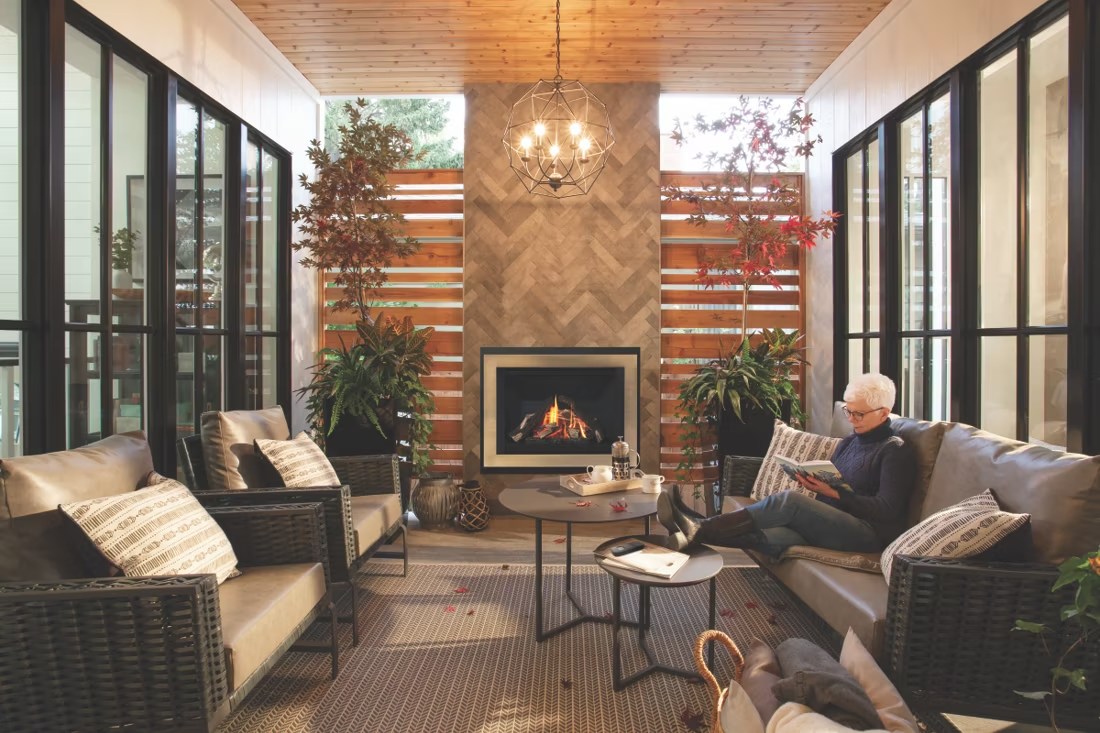
Three steps. No salesperson until you're ready.
Tell us about your project
Your zip code, your situation, and the fuel you're leaning toward—or let the answers point you to one.
See what's actually available
The brands dealers within 100 miles genuinely carry—real options, never a catalog mirage.
Get your dealer & Project Guide
A trusted local dealer, plus the free Project Guide & Parts List that names every component of the job.
Frequently Asked Questions
How much does a gas fireplace installation cost in Prairie Village?
Most gas fireplace and insert projects in Prairie Village run $4,000 to $9,500, with the spread driven by whether the home already has a gas line nearby and whether you're converting an existing masonry fireplace or building new. Converting one of the neighborhood's original 1950s brick fireplaces into a direct-vent gas insert—running a liner up the existing flue—tends to land on the lower half of that range if a gas appliance is already present in the house. New construction or a fireplace added where none existed, requiring fresh gas line runs and framing, sits toward the higher end. A local dealer will give you a firm number after seeing the chimney and gas meter location in person.
Can I convert my original brick fireplace to gas?
Yes, and it's one of the most common calls local hearth dealers get in Johnson County—a huge share of Prairie Village's postwar housing stock came with a masonry fireplace, and many of those flues are now decades past their last real cleaning. A gas insert with a stainless steel liner run through the existing chimney is the standard fix: it keeps the original brick surround, adds a sealed glass front, and turns an inefficient open hearth into a real heat source. Expect to be in the $4,500 to $8,500 range depending on the insert and whether the gas line needs to be extended from the meter.
Do I need natural gas, or should I use propane?
Natural gas reaches the vast majority of homes in Prairie Village, so if your house already has gas for the furnace, water heater, or range, adding a fireplace is a straightforward tap-in for your installer. Propane is uncommon here and really only comes up for homeowners who want a fireplace in a detached structure without an easy gas line run, or as a deliberate backup fuel source. Most gas fireplace models can be configured for either, but for the typical Prairie Village home, natural gas is the simpler and cheaper path.
Will my gas fireplace still work if the power goes out?
Most modern gas fireplaces will, which matters here—Johnson County sees the occasional ice storm that knocks out Evergy Metro service for a day or more. Units with IPI (intermittent pilot ignition) run on a small battery backup that kicks in automatically when the power drops, so the fireplace still lights on demand. Valor's lineup goes a step further: their pilot assembly generates its own electricity through the thermocouple, so there's no battery to remember to replace. Worth asking your local dealer about ignition type if outage backup is a priority for your household.
What's the difference between a gas fireplace, gas insert, and gas stove?
A gas fireplace is a fully built-in unit framed into a wall—the right call for new construction or a room without an existing hearth. A gas insert is built to slide into an existing masonry opening, which is exactly the situation in most of Prairie Village's original brick homes, using the existing chimney as the vent path. A gas stove is a freestanding cast-iron or steel unit that sits on the floor, useful in a basement or addition where there's no chimney to work with. For the typical 1950s Prairie Village living room, an insert is almost always the fit.
Do I need a permit to install a gas fireplace in Prairie Village?
Yes. The City of Prairie Village Building Department requires a building permit for new gas fireplace or insert installations, and the gas line work itself must be done by a licensed gas-fitter under Johnson County code. Most established hearth dealers in the KC metro handle the permitting and inspection scheduling as part of the install price, so you're not coordinating separate trades yourself—worth confirming that's included before you sign a proposal.
Vented vs. vent-free gas fireplaces—which does Kansas allow?
Both are legal in Kansas, but they work very differently. Vented (direct-vent) units draw combustion air from outside and exhaust it back outside through sealed venting—they're the standard choice and the one most local dealers install by default. Vent-free units burn directly into the room air and are restricted by room-size and ventilation rules, since they release some water vapor and combustion byproducts indoors. For Prairie Village's older, well-insulated brick homes with tighter building envelopes, direct-vent is generally the safer and more comfortable choice, though a local dealer can walk through vent-free options if a specific room has no viable vent path.
How often should a gas fireplace be serviced?
Plan on an annual inspection, ideally in early fall before the unit gets regular winter use. A technician checks the burner, pilot assembly, venting, and gas connections, and cleans the glass and interior—a much lighter job than wood chimney sweeping but just as important for safe operation. Local gas appliance service providers in the KC metro typically charge $125 to $225 for this visit.
Gas vs. wood vs. pellet—what makes sense for a Prairie Village home?
Wood is still cut and burned across the KC metro—oak, hickory, and osage orange are the common local species, and osage orange in particular burns hot and long, which some longtime Kansas homeowners prefer. But wood means hauling, ash, and chimney maintenance. Pellet stoves, using brands like Lignetics that are widely stocked in this region, offer a cleaner middle ground with less mess, though they need electricity to run the auger and hopper, which is a real consideration during Johnson County ice-storm outages. Gas skips all of that: flip a switch, get heat, no fuel storage. For most Prairie Village households converting an existing 1950s fireplace for everyday family-room use, gas is the fit; wood tends to stick around as a backup or nostalgia choice.
What's the difference between an insert and a zero-clearance fireplace?
An insert is a fireplace that slides into a pre-existing wood-burning fireplace—if you don't have one, there's nothing to insert it into. A zero-clearance fireplace is built into a framed wall, which makes it the answer for remodels and new construction. Simple test: existing masonry fireplace means insert; blank or framed wall means zero-clearance.
What's the difference between radiant and convective fireplace heat?
Most fireplaces are a thin metal box—they heat fine, but you rely on the fan to move the warmth into the room. Radiant models use a thick cast-ceramic firebox, about an inch and a quarter thick, that soaks up the fire's heat and radiates roughly 25–30% more warmth into the room with no fan running. If you watch TV in the same room or want heat in a power outage, radiant is worth asking about.
Does a fireplace add value to my home?
On average, a fireplace adds back to the home about the same amount you spent installing it. Add the monthly savings from heating the rooms you actually use instead of the whole house—often hundreds of dollars a year—and the value case is strong before you even count what a fire does for how your family uses the room.
Can I install a fireplace myself?
If you're putting a fire in your house on purpose, it's best to work with an expert. Unless you're genuinely experienced in framing, gas line, vent pipe, and the national code on clearances to combustibles, have a professional do it—and ideally the same company that sells you the fireplace, so warranty, service, and liability all live under one roof.
Nearby Dealers
Hearth shops serving Prairie Village and the surrounding area. Every listing shows whether it is a WhyFire partner, a dealer we have verified as authorized for the brands we recommend, or a local business carrying hearth products. No manufacturer pays for placement. How we verify dealers →
The Hayes Co.
Midwest Fireplace
Complete Home Concepts - Riverside
Jay Henges Enterprises
Find your gas fireplace in Prairie Village.
Tell us a bit about your home and we'll match you with a trusted local dealer and send over your free Project Guide & Parts List—the exact parts, vent kit, and recommended installer for your Prairie Village gas fireplace project.
Find Your Fireplace →