
Find the Right Fireplace for Your Johnson County Home.
Natural gas reaches nearly every subdivision in Johnson County, which is why gas and electric fireplaces dominate here—from Overland Park to Olathe to Gardner. Find the right unit and connect with a trusted local hearth retailer.
Every Project Starts From One of These Five Situations
Natural gas heating across suburban Johnson County, Kansas.
Johnson County anchors the Kansas side of the Kansas City metro, home to roughly 600,000 people across Overland Park, Olathe, Shawnee, Lenexa, Leawood, Prairie Village, Gardner, Spring Hill, De Soto, Merriam, and Mission. Winters here sit in Climate Zone 4A—a solid winter heating season with average lows near 21°F. That's a genuine Midwest winter, but nothing like Madison, Wisconsin's much longer, colder heating season or a Minneapolis cold front. Natural gas service from Kansas Gas Service and Spire covers nearly every subdivision in the county, and that infrastructure, more than the climate itself, is what shapes the local hearth market. Gas fireplaces, inserts, and stoves are the default upgrade in Johnson County living rooms; electric units fill in bedrooms, basements, and finished lower levels where running a vent isn't practical.
Wood and pellet appliances are uncommon here—not because of any air-quality ban (Johnson County has none on the books) but because of suburban lot sizes, HOA architectural covenants in newer Overland Park and Lenexa developments, and the simple fact that gas already reaches most houses. Oak, hickory, and osage orange grow throughout the county and turn up in backyard fire pits and the occasional rural wood stove near Spring Hill or De Soto, but they're not how most households heat their homes. What you'll find on this hub: hearth retailers, service technicians, and fuel suppliers covering every city in the county. Start with gas or electric below, where the real local market is—the wood and pellet pages are still there for the exceptions.
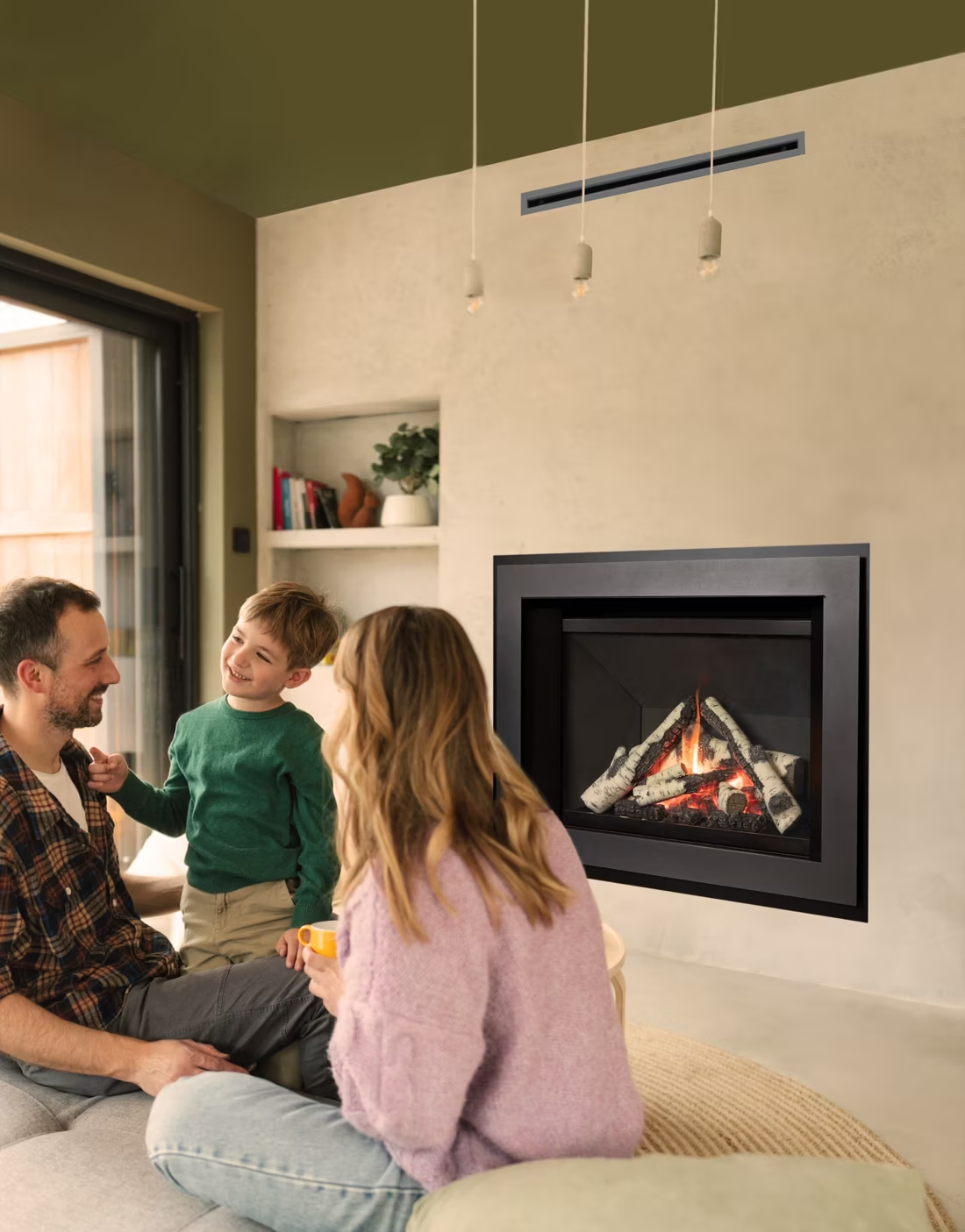
Four fuels. One honest answer for Johnson County.
Three steps. No salesperson until you're ready.
Tell us about your project
Your zip code, your situation, and the fuel you're leaning toward—or let the answers point you to one.
See what's actually available
The brands dealers within 100 miles genuinely carry—real options, never a catalog mirage.
Get your dealer & Project Guide
A trusted local dealer, plus the free Project Guide & Parts List that names every component of the job.
Frequently Asked Questions
Which fuel works best in Johnson County?
For most Johnson County homes, gas is the practical answer. Kansas Gas Service and Spire run natural gas to nearly every subdivision from Overland Park to Olathe, so a gas fireplace, insert, or stove usually means tapping an existing line rather than building new fuel infrastructure. Electric fireplaces are the second most common choice—no venting, no gas line, good for bedrooms, basements, and condos where a licensed gas-fitter isn't practical. Wood-burning appliances are the exception here rather than the rule; with average winter lows around 21°F and gas already available almost everywhere, most homeowners don't need a wood stove to get through the season, though a few rural properties toward Gardner and Spring Hill still burn oak and hickory. Pellet stoves are rarer still—Lignetics and Indeck Energy Services pellets are available in the area, but few local dealers stock pellet hearth appliances given how small the demand is.
Do I need a permit to install a fireplace in Johnson County?
Yes, in most cases—but where you apply depends on which city you live in. Johnson County is a patchwork of incorporated cities, and each one runs its own building department: Overland Park's Planning & Development Services, Olathe's Development Services, Shawnee's Planning and Building Safety, Lenexa's Development Services, and so on down the list. Gas fireplace, insert, and stove installs typically require both a building permit and a separate gas-line permit pulled by a licensed gas-fitter. Electric fireplace installs usually don't need a permit unless it's a built-in unit involving new wiring or a dedicated circuit. Most local retailers handle the permitting paperwork as part of installation, so you're not filing directly with Overland Park or Olathe yourself.
Are there air quality restrictions on wood burning in Johnson County?
No—Johnson County doesn't have a wood-smoke non-attainment designation or a burn-curtailment program the way some western counties do. The real constraint on wood heat here is practical, not regulatory: dense suburban lots, HOA architectural covenants in many newer Overland Park and Lenexa developments, and near-universal natural gas access mean most households simply don't need or choose a wood stove. The Kansas City metro does occasionally issue summer ozone action day advisories, but those target vehicle emissions and industrial sources, not winter wood burning.
Can one local hearth retailer handle all four fuel types?
Most Johnson County retailers focus on gas and electric, since that's what the majority of customers are buying—natural gas fireplace and insert lines make up most of a typical showroom, with electric units for rooms that can't be vented. A handful of dealers also carry pellet stoves in limited quantities, supplied through Lignetics and Indeck Energy Services, but true wood-burning stoves and inserts are a small enough category that many retailers don't keep a working display model on the floor. If you're set on a wood-burning appliance, expect a smaller pool of dealers and possibly a special order rather than something you can walk in and see.
How does service work across a county this size?
Johnson County covers a lot of ground—Overland Park, Olathe, Shawnee, Lenexa, Leawood, Prairie Village, Gardner, Spring Hill, De Soto, Merriam, and Mission, plus unincorporated pockets in between. Gas fireplace service techs and electric installers typically cover the whole metro without much of a travel surcharge, since it's all suburban and well-connected by highway. Chimney sweeps are less common here simply because there are fewer wood-burning households to serve, so if you do have a wood stove or fireplace, plan to book service further in advance during the fall rush than you might for a gas tune-up.
What's the typical cost range for fireplace installation across fuel types in Johnson County?
Gas fireplace, insert, or stove installation typically runs $4,000–$9,500, depending on whether you're tapping an existing gas line or running new pipe from the meter. Electric fireplace installation is the most affordable option—$200–$2,500 for the unit itself, with $300–$1,000 in labor for anything beyond a plug-and-play wall mount. Wood stove and insert installs are rarer in this market but generally run $4,500–$9,000 when a dealer does take one on, largely because most existing Johnson County homes weren't built with a masonry chimney to retrofit. Pellet stove installs follow a similar range but are uncommon enough that pricing varies more by dealer than by any standard local benchmark.
Wood, gas, pellet, or electric—how do I choose?
Match the fuel to your life, not the other way around. Wood: lowest fuel cost and total power-outage independence, but you're hauling and stacking. Gas: press a button, set a thermostat, no maintenance to speak of. Pellet: wood economics with automatic feeding, in exchange for weekly cleaning and a need for electricity. Electric: plugs in anywhere with honest supplemental heat. Nobody regrets the fuel that fits how they actually live.
What is an in-home preview and do I need one?
It's a visit where a hearth professional measures your space, confirms the model you picked actually works in your home, and walks the specs—framing, gas line, venting, finish work—before anything is ordered. Some details you just can't know until you see the house. Never make a down payment without one; it's the single most-skipped step that burns buyers.
Does a fireplace add value to my home?
On average, a fireplace adds back to the home about the same amount you spent installing it. Add the monthly savings from heating the rooms you actually use instead of the whole house—often hundreds of dollars a year—and the value case is strong before you even count what a fire does for how your family uses the room.
Can a fireplace actually lower my heating bill?
Yes—by creating a comfort zone. A furnace heats every square foot of the house just to warm the one room you're in; a gas fireplace on low burns roughly a sixth of the gas a typical furnace does. Set the furnace around 55–60 degrees as a baseline, then heat the rooms your family actually uses. Families who heat this way commonly save $20–$60 a month.
Stove and Fireplace Dealers in Johnson County
Listings include WhyFire partner dealers, dealers we have verified as authorized for the brands we recommend, and established local businesses that carry hearth products. Every listing shows which one it is. The ones marked Preferred run on WhyFire's software, so they can show you real pricing and book your appointment right here. No manufacturer pays for placement. How we verify dealers →
Midwest Fireplace
Jay Henges Enterprises
The Hayes Co.
Complete Home Concepts - Riverside
Find your fireplace in Johnson County.
Tell us about your home and we'll match you with a trusted local Johnson County dealer and send you a free Project Guide & Parts List—the exact parts, including the vent kit, for your specific gas or electric project.
Find Your Fireplace →