
Instant heat, zero venting, any room in Pottawatomie County.
From Wamego to Westmoreland to Onaga, electric units drop into additions, finished basements, and manufactured homes without a chimney, a gas line, or a permit headache. Find the right unit and connect with a trusted local dealer.
Every Project Starts From One of These Five Situations
Real flame look, no chimney required.
Pottawatomie County sits in the Flint Hills of northeast Kansas, from the tallgrass ridges around Westmoreland to the Kansas River valley at Wamego and St. George. Winters here run cold but not brutal—an average low of 18°F, roughly 5,203 heating degree days, and a climate zone 4A that means real cold spells but rarely the sustained sub-zero stretches you'd see in a place like Bismarck, ND. That makes electric fireplaces a genuinely practical fit for the county, not a novelty: they're built for supplemental warmth in a specific room, not for carrying a whole farmhouse through January.
A lot of the housing stock in this county—manufactured homes outside Onaga and Havensville, additions and finished basements around Wamego and St. Marys—isn't set up for a masonry chimney or a new gas line, and running either one adds real cost. An electric insert or wall-mount unit sidesteps that entirely: plug it in or wire it to a dedicated circuit and you're done. Grid power in the towns generally comes through Evergy, with rural electric cooperatives covering the farm-heavy stretches outside city limits; either way, the fuel logistics are simpler than the wood most local families still cut from their own oak, hickory, and osage orange stands, or the propane trucked in for rural gas fireplaces.
Three steps. No salesperson until you're ready.
Tell us about your project
Your zip code, your situation, and the fuel you're leaning toward—or let the answers point you to one.
See what's actually available
The brands dealers within 100 miles genuinely carry—real options, never a catalog mirage.
Get your dealer & Project Guide
A trusted local dealer, plus the free Project Guide & Parts List that names every component of the job.
Frequently Asked Questions
How much does an electric fireplace installation cost in Pottawatomie County?
Most electric fireplace projects in Pottawatomie County run $300 to $1,500. A plug-in insert or mantel unit that uses a standard outlet sits at the low end—you're really just paying for the unit and a straightforward mount or frame-in. Built-in units that need a dedicated 240V circuit, especially larger models for a great room in a newer Wamego build, run toward the higher end once an electrician runs new wiring. Compare that to the venting and chimney work a wood or gas project requires in this county, and electric is consistently the least expensive path to added heat and ambiance.
What size electric fireplace do I need for my room?
Electric units are rated more for ambiance and zone heat than whole-home output, so sizing is mostly about the room and the look you want. A 30-to-40-inch insert or wall-mount handles a bedroom or den; a 50-to-60-inch unit suits an open living area in a newer home near Wamego or St. George. Most models put out roughly 4,000-5,000 BTU of supplemental heat regardless of size—plenty to take the edge off a Pottawatomie County cold front in one room, but not a substitute for your furnace on the coldest nights of the year.
Do I need a licensed electrician for the installation?
For a plug-in unit, no—it's a standard 120V outlet like any appliance. For a built-in insert or a unit that needs a new dedicated circuit, yes, and it's worth using a licensed electrician rather than a general handyman. If the project involves new wiring, a permit typically runs through the Pottawatomie County Building Department for work outside city limits, or the relevant city office in Wamego or Westmoreland. The local dealers who sell these units usually coordinate the electrical work directly, which keeps you from having to manage two separate contractors.
What's the difference between an electric insert, a wall-mount, and a freestanding electric stove?
An electric insert is built to slide into an existing masonry fireplace opening, which makes it a popular upgrade for older farmhouses around Onaga and Havensville that have a fireplace they no longer burn wood in. A wall-mount unit hangs flat against a wall like a large TV, common in newer construction and additions near Wamego. A freestanding electric stove sits on the floor and can go almost anywhere with an outlet nearby, which makes it a flexible option for manufactured homes or a finished basement where there's no existing fireplace opening to work with.
Do I need a permit to install an electric fireplace in Pottawatomie County?
In most cases, no. A plug-in electric fireplace that uses an existing outlet doesn't require a permit anywhere in the county. If the installation calls for a new dedicated circuit or panel work—common for larger built-in units—that electrical work does need a permit, either through the Pottawatomie County Building Department for rural properties or the applicable city office for installs inside Wamego, Westmoreland, or St. Marys. Unlike wood stoves, there's no EPA emissions certification to worry about, and there are no air quality curtailment periods in this county that would ever restrict when you can run it.
Is electric heat enough for a Pottawatomie County winter?
As supplemental heat, yes—as your only heat source, generally no. With roughly 5,203 heating degree days and average winter lows near 18°F, the county gets cold enough that a single 1,500-watt electric fireplace won't keep a whole house comfortable through a February cold front. Where electric shines is zone heating: warming the room you're actually using so you can turn the thermostat down elsewhere, or adding real ambiance to a basement or addition where running gas or a chimney isn't practical. For primary heat during outages, wood remains the fallback for a lot of rural households in the county—electric units simply won't run without grid power.
How much does an electric fireplace add to my power bill?
Running an electric fireplace on its heater setting typically costs somewhere between 15 and 30 cents an hour at typical Evergy residential rates, depending on the unit's wattage and your specific rate schedule. Most owners run the heater only in the room they're occupying and switch to flame-only mode (which uses just a few watts, mostly for the LED effect) once the room's warm—that keeps the added cost modest even through a full Pottawatomie County winter.
How much maintenance does an electric fireplace need?
Very little. There's no chimney to sweep, no creosote to worry about, and no annual gas line inspection. Maintenance is mostly dusting the unit, occasionally cleaning the glass front, and replacing the LED light strip every several years once it dims. That low-maintenance profile is one of the main reasons electric units have caught on for finished basements and additions around the county, where nobody wants to add a wood-cleaning or chimney-sweep chore to the household routine.
Electric vs. wood—which makes sense for my Pottawatomie County home?
Wood remains a strong choice for rural households in this county with access to their own oak, hickory, or osage orange wood lots, and it's the only option that keeps producing heat during a power outage—a real consideration on the Flint Hills' open, wind-exposed farmland. Electric wins on convenience: no wood handling, no chimney, no permits for a plug-in unit, and instant on-off operation for a room like a bedroom or den. A lot of local homes end up with both—wood or a wood insert as the serious cold-weather backup, electric for ambiance and easy supplemental heat in a room where running a chimney or gas line doesn't make sense.
Can I put a TV above my fireplace?
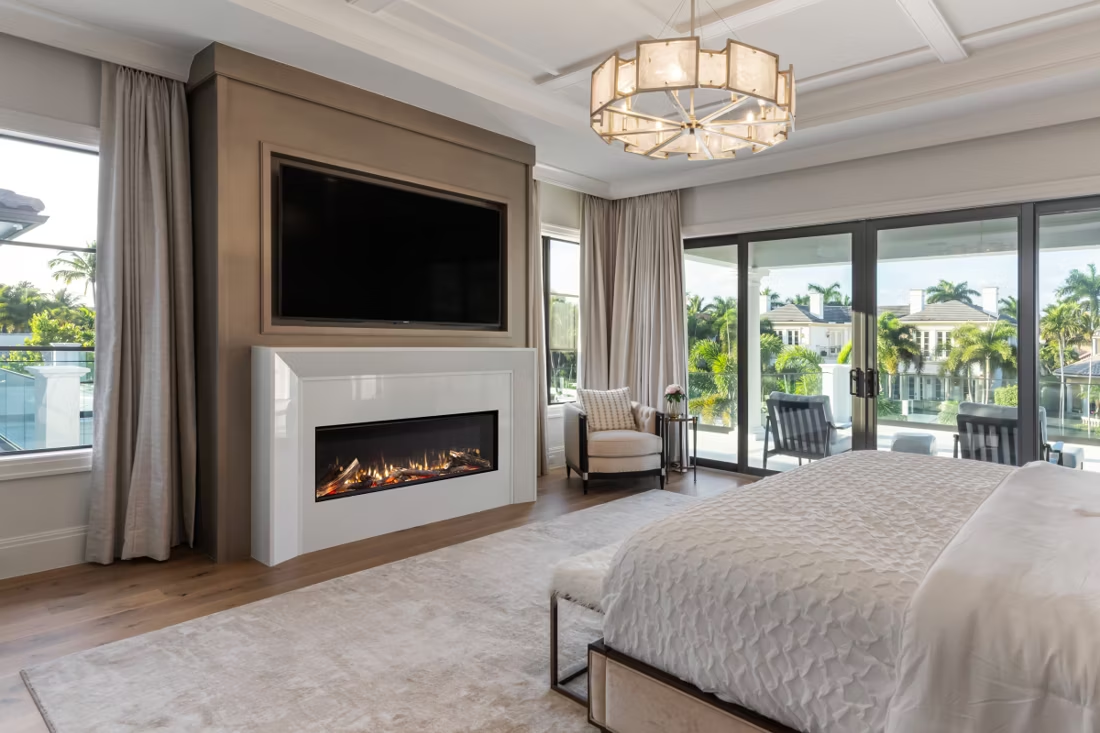
Yes—with an asterisk. Fireplaces are hot and TVs don't like heat. Either put a mantel between them to deflect rising warmth, or choose a fireplace with heat-management technology that creates a cool zone on the wall above—the wall stays around 125 degrees, barely warm, while the room still gets full heat. If you like clean lines and don't want a mantel, heat management is the answer.
What fireplace styles should I know before shopping?
Four cover most of the market: screen-front traditional (mesh front, open feel, fits craftsman homes), traditional door set (the classic look you grew up with), modern linear (wide, low, the statement piece for entertaining), and clean face contemporary (no trim—your tile or stone runs right to the fire's edge). Walk in knowing those four terms and you're ahead of most buyers.
How much should I budget for a fireplace?
For an average home—covering the fireplace, the vent pipe, and basic installation—a budget between $3,900 and $5,500 gives you a lot of options across wood, gas, and pellet. By the time you add finish work, gas line, and electrical, the average complete installation lands between $5,000 and $12,000 all-in. In a remodel or new build, a good rule is to put about 2.5% of the total project cost toward the fireplace.
Can I install a fireplace myself?
If you're putting a fire in your house on purpose, it's best to work with an expert. Unless you're genuinely experienced in framing, gas line, vent pipe, and the national code on clearances to combustibles, have a professional do it—and ideally the same company that sells you the fireplace, so warranty, service, and liability all live under one roof.
Find your electric fireplace in Pottawatomie County.
Tell us a bit about your home and we'll put together a free Project Guide & Parts List for your electric fireplace project—the exact unit, mounting or circuit needs, and a trusted local dealer to install it.
Find Your Fireplace →