
Instant warmth, zero venting, right here in Phillips County.
Zone heat for Phillips County's long, cold plains winters—from Phillipsburg to the farms and section roads beyond. No chimney, no gas line, no venting. Just plug in and connect with a trusted local dealer for the install.
Every Project Starts From One of These Five Situations
Plug-in heat built for a county that runs on self-reliance.
Phillips County sits on the high plains of northwestern Kansas, home to about 3,666 people spread across Phillipsburg and the farm ground around it. Winters here run long—climate zone 5A, a heating season on par with places like North Platte, Nebraska, and an average winter low around 16°F—cold enough that most homes lean on a furnace or propane system for the bulk of the season, the way farmhouses across the region always have. Wood heat still has a place too: oak, hickory, and the tough, rot-resistant osage orange that grows in the county's shelterbelts have kept stoves burning here for generations.
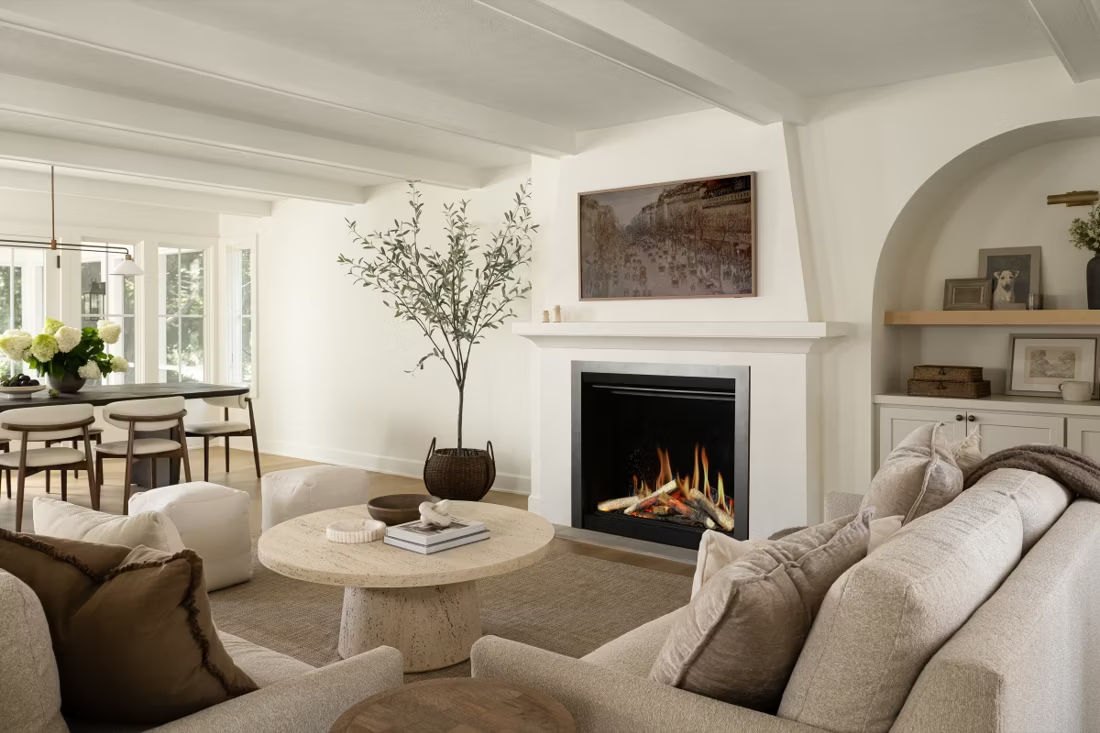
What's changed is where electric fits in. With no natural gas line running to most of the county's rural properties and propane doing the heavy lifting, an electric fireplace or insert has become the practical answer for the rooms the main furnace doesn't reach well—a finished basement, a sunroom addition, a bedroom in an older farmhouse with an underpowered zone. There's no chimney to build, no gas line to run, and in most cases no county permit beyond what's needed for a new electrical circuit. For manufactured and older homes common throughout Phillips County, that simplicity is the whole appeal.
Three steps. No salesperson until you're ready.
Tell us about your project
Your zip code, your situation, and the fuel you're leaning toward—or let the answers point you to one.
See what's actually available
The brands dealers within 100 miles genuinely carry—real options, never a catalog mirage.
Get your dealer & Project Guide
A trusted local dealer, plus the free Project Guide & Parts List that names every component of the job.
Frequently Asked Questions
How much does it cost to install an electric fireplace in Phillips County?
Costs run a wide range depending on the unit. A plug-in wall-mounted electric fireplace that uses an existing standard outlet typically runs $400 to $900 installed, including mounting. A built-in electric fireplace or insert that needs a dedicated 20-amp circuit—common in Phillips County's older farmhouses where panel capacity is limited—runs closer to $1,200 to $2,500 once an electrician runs new wiring. Recessed or wall-set units in new construction or additions land in the same range. Because there's no venting or chimney work involved, electric is consistently the least expensive fireplace fuel to install in the county.
Will an electric fireplace actually heat a room in a Phillips County winter?
It will heat one room well, not a whole farmhouse. Most electric fireplace inserts draw about 1,500 watts and produce roughly 5,000 BTU of heat—enough to comfortably warm a bedroom, sunroom, or finished basement space of a few hundred square feet, especially with the door closed. At 16°F average lows and a long, hard winter heating season, that's a real assist on a cold Phillips County night, but it's supplemental heat, not a substitute for the propane furnace or wood stove carrying the rest of the house.
Do I need a permit to install an electric fireplace in Phillips County?
In most cases, no—a plug-in unit on an existing circuit doesn't require a permit. If your installer needs to add a new dedicated circuit or subpanel, that electrical work should be pulled and inspected, which in Phillips County typically means checking with the county clerk's office in Phillipsburg, since the county doesn't run a separate hearth-specific permitting department the way larger Kansas counties do. A licensed electrician handling the circuit work will usually know exactly what's required and can pull it for you.
Electric vs. wood—which makes more sense for my Phillips County home?
Wood—burned in oak, hickory, or the osage orange common to shelterbelts across the county—keeps a home warm even when the power's out, which matters here given how ice storms on the high plains can knock out rural electric co-op lines for days. Electric fireplaces are far simpler to install and run, with no ash, no chimney, and no wood to split and stack, but they go dark the moment the grid does. Many Phillips County homeowners end up with both: wood or propane for primary heat and outage backup, electric for the easy zone heat in a room that just needs a little extra warmth.
What does it cost to run an electric fireplace day to day?
At typical rural electric cooperative rates in this part of Kansas—roughly 12 to 15 cents per kilowatt-hour—a standard 1,500-watt electric fireplace costs about 18 to 22 cents an hour to run. Used for a few hours a night in a single room through a Phillips County winter, that's a modest add to the electric bill compared to running the whole-house furnace longer or harder to compensate for a cold room.
What's the difference between an electric insert, wall-mount, and freestanding unit?
An electric insert is built to slot into an existing masonry fireplace opening, giving an unused fireplace real heat output again. A wall-mount unit hangs on the wall like a flat-screen TV and works well in additions or rooms without a fireplace at all. A freestanding electric stove sits on the floor and mimics the look of a wood stove without any venting. For Phillips County's mix of older farmhouses with existing fireplaces and newer additions without one, all three show up regularly—the right choice depends mostly on what the room already has to work with.
What's the best electric fireplace for a Phillips County winter?
Look for a unit with a true thermostat rather than just high/low settings—that keeps the heat steady through the kind of long, cold stretches Phillips County sees most winters instead of cycling on full blast. Models with a supplemental fan-forced heater in addition to the flame effect give you real BTU output on the coldest nights, while the flame-only setting is useful for ambiance during milder shoulder-season weather. A local dealer can match wattage and heater type to the specific room you're trying to warm.
How does electric compare to a pellet stove for supplemental heat?
Pellet stoves, using bagged fuel from suppliers like Lignetics or Indeck Energy Services, put out significantly more heat than an electric fireplace and can handle a larger area—but they need a hopper refilled, a vent to the outside, and, like electric units, they need power to run their auger and blower. An electric fireplace needs neither venting nor fuel storage, which makes it the simpler option for a single room, while a pellet stove makes more sense if you're trying to meaningfully offset a propane bill across a larger part of the house.
Where can I find a local dealer to install an electric fireplace in Phillips County?
Because the wiring requirements vary so much between a simple plug-in unit and a built-in model needing a new circuit, it's worth working with a dealer who can assess your home's electrical panel and room layout in person rather than guessing from a big-box store. Find My Fireplace matches Phillips County homeowners with a trusted local dealer and sends over a free Project Guide & Parts List—the specific unit, mounting or insert hardware, and any electrical work your home will need, mapped out before you buy anything.
Can I put a TV above my fireplace?
Yes—with an asterisk. Fireplaces are hot and TVs don't like heat. Either put a mantel between them to deflect rising warmth, or choose a fireplace with heat-management technology that creates a cool zone on the wall above—the wall stays around 125 degrees, barely warm, while the room still gets full heat. If you like clean lines and don't want a mantel, heat management is the answer.
Do electric fireplaces actually produce heat?
Yes—most put out around 4,800–5,000 BTUs from a standard outlet, which comfortably warms a bedroom, office, or den as a comfort-zone heater. What they won't do is carry a whole house the way wood, gas, or pellet can. Think of electric as ambiance-first with honest supplemental heat: flames on with no heat in July, flames plus warmth in January.
Can a fireplace actually lower my heating bill?
Yes—by creating a comfort zone. A furnace heats every square foot of the house just to warm the one room you're in; a gas fireplace on low burns roughly a sixth of the gas a typical furnace does. Set the furnace around 55–60 degrees as a baseline, then heat the rooms your family actually uses. Families who heat this way commonly save $20–$60 a month.
What is an in-home preview and do I need one?
It's a visit where a hearth professional measures your space, confirms the model you picked actually works in your home, and walks the specs—framing, gas line, venting, finish work—before anything is ordered. Some details you just can't know until you see the house. Never make a down payment without one; it's the single most-skipped step that burns buyers.
Find your electric fireplace in Phillips County.
Tell us about your home and we'll match you with a trusted local Phillips County dealer and send over your free Project Guide & Parts List—the exact unit, mounting hardware, and any wiring your room needs.
Find Your Fireplace →