
Electric fireplace warmth for any room in Olathe.
No chimney, no gas line, no venting—just plug in or wire up and go. Find the right electric unit for your Olathe home and connect with a trusted local dealer.
Every Project Starts From One of These Five Situations
Electric heat that just works in Johnson County.
Olathe sits at about 1,032 feet in climate zone 4A, with an average winter low near 20°F and a moderate overall heating need for the year—a real but moderate heating season, noticeably milder than Midwest cold hubs like Minneapolis or Fargo. Most Olathe homes already lean on a central furnace for whole-house heat, which means the fireplace conversation here is usually about zone heat, ambiance, and finishing off a room—not survival heat for sub-zero nights.
Olathe is one of the fastest-growing suburbs in the Kansas City metro, and its housing stock reflects that: newer subdivisions, HOA covenants, and homes rarely built with a masonry chimney to convert. Wood and pellet appliances are essentially absent here—there's no local cutting-permit infrastructure and no air-quality driver pushing solid-fuel adoption the way you'd see in a forested mountain town. Electric fireplaces fill that gap cleanly: no venting, no gas line, no combustion byproducts, and often the only hearth option HOAs will approve without a variance. Power comes from Evergy Metro, Evergy Kansas Central, or in a few pockets the City of Kansas City, KS utility, with residential rates running roughly $0.131 to $0.154 per kWh—inexpensive enough that running a 1,500-watt insert a few hours a night costs pennies, not dollars.
Three steps. No salesperson until you're ready.
Tell us about your project
Your zip code, your situation, and the fuel you're leaning toward—or let the answers point you to one.
See what's actually available
The brands dealers within 100 miles genuinely carry—real options, never a catalog mirage.
Get your dealer & Project Guide
A trusted local dealer, plus the free Project Guide & Parts List that names every component of the job.
Frequently Asked Questions
How much does an electric fireplace installation cost in Olathe?
On the low end, a plug-in freestanding electric fireplace or a simple wall-mount unit that uses an existing outlet can be installed for $300 to $600, since there's no wiring, venting, or framing involved. A built-in electric fireplace or insert that requires a dedicated 120-volt or 240-volt circuit, wall framing, and trim work typically runs $1,000 to $1,800 once a licensed electrician is involved. Because there's no chimney, gas line, or Class A venting to account for, electric installs in Olathe land well below what gas or wood projects cost in the same home.
Do I need a permit to install an electric fireplace in Olathe?
If you're plugging a freestanding or wall-mount unit into an existing standard outlet, no permit is needed—it's treated like any other appliance. If your installer is running a new dedicated circuit for a built-in unit, that electrical work requires a permit through the City of Olathe's building permit office and must be pulled by a licensed electrician. Most hearth retailers who sell built-in electric units either employ licensed electricians or coordinate directly with one, so you're not left tracking down the permit yourself.
Will an electric fireplace actually heat a room, or is it just for looks?
Most electric inserts and built-ins include a 1,500-watt heater rated to comfortably heat 400 to 1,000 square feet, depending on ceiling height and insulation. Given Olathe's moderate winters—average lows around 20°F rather than the deep sub-zero stretches you'd see farther north—a well-placed electric unit works genuinely well as supplemental heat for a bonus room, finished basement, or bedroom, letting you turn the furnace down and heat just the room you're using. It's not designed to replace your central heat on the coldest January nights, but for zone heating it earns its keep.
Why don't more homes in Olathe use wood or pellet stoves?
A few things line up against solid fuel here. Olathe's newer subdivisions are largely built on HOA covenants that restrict exterior chimneys and solid-fuel appliances, and the housing stock itself was rarely built with a masonry fireplace to convert. Johnson County also isn't served by the kind of public-land cutting permit system you'd find in a forested state, so self-sourced firewood isn't the built-in habit it is elsewhere. Between the covenant restrictions and the lack of existing infrastructure, gas and electric have become the default hearth choices in this part of the Kansas City metro.
What's the difference between an electric insert and a full electric fireplace?
An electric insert is designed to slide into an existing fireplace opening or a factory-built mantel surround, giving an existing space a heat source and a realistic flame effect without any structural change. A full electric fireplace (sometimes called a built-in or linear unit) is meant to be framed into a wall from scratch, similar to how a gas fireplace would be installed, and is common in newer Olathe construction or remodels where there's no existing fireplace opening to work with. For homes with an old, unused masonry fireplace, an insert is usually the simpler and cheaper path.
How much does it cost to run an electric fireplace with my Evergy rate?
Rates vary slightly depending on whether you're served by Evergy Metro, Evergy Kansas Central, or the City of Kansas City, KS utility, with residential rates in the area running roughly $0.131 to $0.154 per kWh. A typical 1,500-watt electric fireplace running on its heater setting for three hours a night costs somewhere between 6 and 7 cents per hour, or about 20 cents a night—a few dollars a month even with regular use. Running it on flame-only mode without the heater draws a fraction of that, since the LED flame effect uses very little power.
Can I install an electric fireplace in an apartment or rental in Olathe?
Yes—this is one of the most common reasons renters in Olathe's growing apartment and townhome market choose electric. A freestanding or wall-mount plug-in unit requires no modification to the property, no landlord approval for gas or venting work, and can move with you when your lease ends. It's the only fireplace category that genuinely works for rental housing, since wood and gas both require permanent structural or utility changes a landlord would need to sign off on.
Electric vs. gas fireplace—which is right for my Olathe home?
Gas fireplaces are common in Olathe and deliver real, substantial heat output along with the look of an actual flame, but they require a gas line, venting, and a more involved installation running $4,000 or more depending on the unit. Electric fireplaces cost a fraction of that to install, need no venting or gas connection, and are easier to add to a basement, bedroom, or rental where running new gas line isn't practical. If you want a genuine secondary heat source for a room with easy access to a gas line, gas is worth considering. If you want low-cost, low-hassle ambiance and modest zone heat, electric is usually the better fit for an Olathe home.
How do I choose the right size electric fireplace for my Olathe home?
Start with the room, not the wall. A 30- to 40-inch insert or wall-mount unit suits a bedroom or home office in the 200- to 400-square-foot range, while a 50- to 60-inch linear unit is better for an open-concept living room or finished basement rec room. If you want the heater function to matter (not just the flame visual), confirm the unit's wattage is rated for your actual square footage—most local retailers will walk through your floor plan and recommend a size during a quick consultation rather than having you guess from a box label.
Can I put a TV above my fireplace?
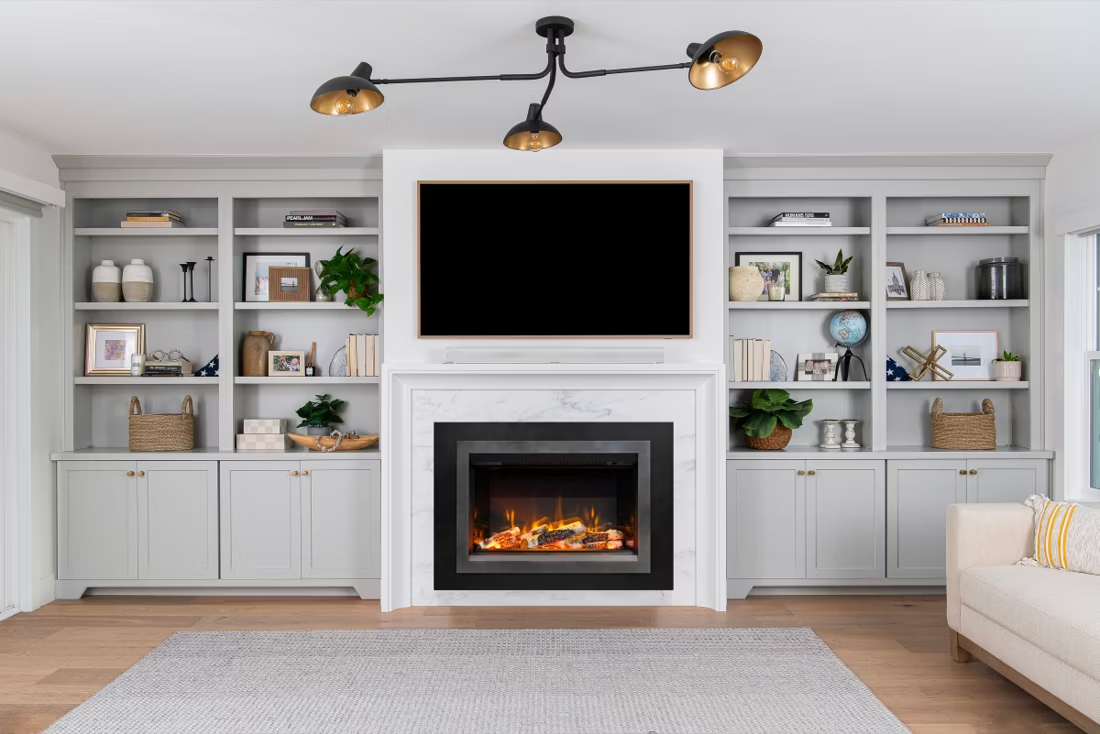
Yes—with an asterisk. Fireplaces are hot and TVs don't like heat. Either put a mantel between them to deflect rising warmth, or choose a fireplace with heat-management technology that creates a cool zone on the wall above—the wall stays around 125 degrees, barely warm, while the room still gets full heat. If you like clean lines and don't want a mantel, heat management is the answer.
Does an electric fireplace need a vent or chimney?
No—that's its superpower. An electric fireplace needs a wall and an outlet, period. No vent pipe, no gas line, no clearances to design around, which is why it works in bedrooms, offices, apartments, and walls where venting a gas or wood unit would be impractical or impossible. Installation is typically the simplest and least expensive of any fireplace type.
Can I install a fireplace myself?
If you're putting a fire in your house on purpose, it's best to work with an expert. Unless you're genuinely experienced in framing, gas line, vent pipe, and the national code on clearances to combustibles, have a professional do it—and ideally the same company that sells you the fireplace, so warranty, service, and liability all live under one roof.
Does a fireplace add value to my home?
On average, a fireplace adds back to the home about the same amount you spent installing it. Add the monthly savings from heating the rooms you actually use instead of the whole house—often hundreds of dollars a year—and the value case is strong before you even count what a fire does for how your family uses the room.
Nearby Dealers
Hearth shops serving Olathe and the surrounding area. Every listing shows whether it is a WhyFire partner, a dealer we have verified as authorized for the brands we recommend, or a local business carrying hearth products. No manufacturer pays for placement. How we verify dealers →
Midwest Fireplace
Jay Henges Enterprises
The Hayes Co.
Complete Home Concepts - Riverside
Electric Service in Olathe
An electric fireplace's heater draws about 1,500 watts—pennies per hour at local rates.
Evergy Metro
Evergy Kansas Central, Inc
City Of Kansas City - (Ks)
Find your electric fireplace in Olathe.
Tell us a bit about your home and we'll match you with the right electric fireplace or insert, plus a free Project Guide & Parts List and a trusted local Olathe dealer to install it.
Find Your Fireplace →