
Find the right pellet stove for Ness County's high-plains winters.
Consistent, thermostat-controlled heat for the wind-driven cold of western Kansas—from Ness City to Bazine and Ransom. We'll match you with a local dealer who can get one installed right.
Every Project Starts From One of These Five Situations
Steady heat for wide-open, wind-exposed country.
Ness County sits in Climate Zone 5A on the western Kansas plains, where population is sparse—just over 2,000 people spread across roughly 1,100 square miles—and the wind rarely stops. Winters here bring long stretches of cold reinforced by that wind, closer in feel to Bismarck ND or Fargo ND than to anywhere in the eastern part of the state, even without the same snow totals. Homes in Ness City, Bazine, and Ransom tend to be older farmhouses or ranch-style builds with plenty of exterior wall exposed to that wind, which makes a steady, thermostat-driven heat source genuinely useful rather than a novelty.
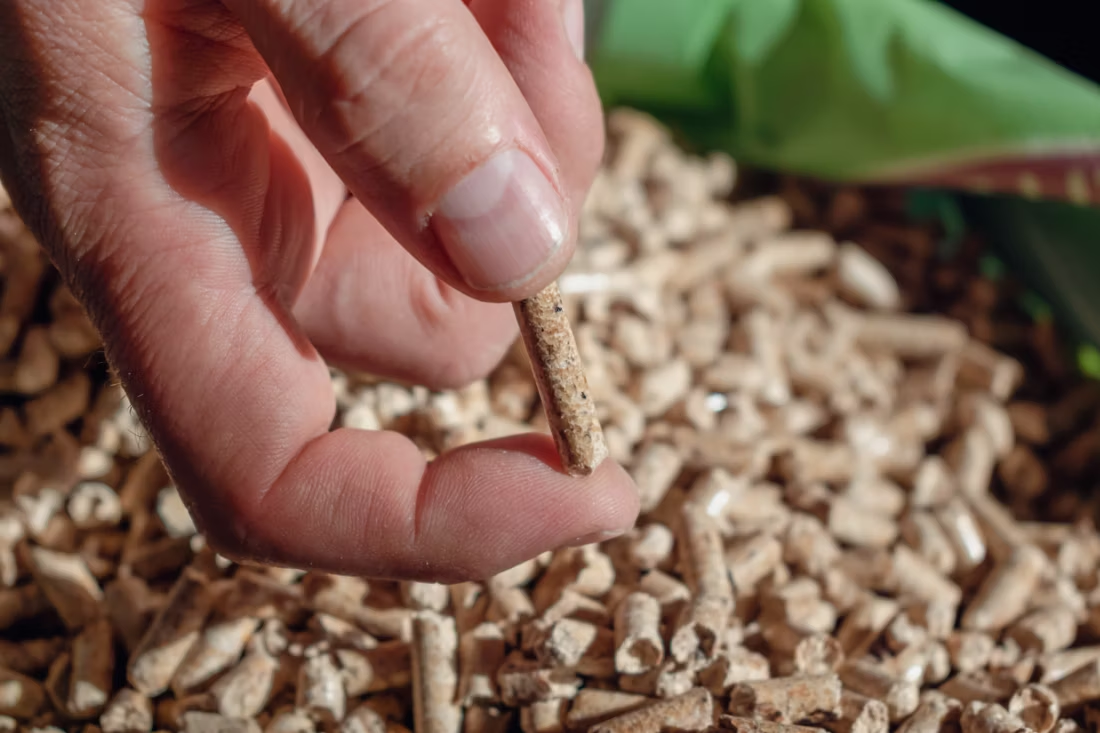
Ness County doesn't face the wildfire smoke or winter-inversion air quality restrictions that limit burning in some parts of the country—there are no listed air quality concerns here, so pellet stoves are simply a heating choice, not a compliance workaround. Local oak, hickory, and osage orange are common in the area's wood stoves, but pellet appliances run on bagged fuel from brands like Lignetics and Indeck Energy Services, which are distributed through the regional supply chain that serves this part of Kansas. A local dealer can tell you which brands are actually stocked and deliverable to Ness County on a predictable basis, since availability out here matters more than it does in a bigger market.
Three steps. No salesperson until you're ready.
Tell us about your project
Your zip code, your situation, and the fuel you're leaning toward—or let the answers point you to one.
See what's actually available
The brands dealers within 100 miles genuinely carry—real options, never a catalog mirage.
Get your dealer & Project Guide
A trusted local dealer, plus the free Project Guide & Parts List that names every component of the job.
Frequently Asked Questions
How much does a pellet stove installation cost in Ness County?
Pellet stove and insert installations across this part of Kansas typically run in the same range seen throughout the region—plan on a few thousand dollars for the unit and installation, with the final number depending on whether it's a freestanding stove or an insert going into an existing fireplace, and whether new venting needs to be run. Because Ness County is rural, expect a modest travel charge if your installer is based out of a larger nearby town—ask about that up front when you get a quote. A local dealer will give you a firm number after seeing your home and current chimney or wall setup.
Will a pellet stove keep up with Ness County's wind-driven cold?
Yes, for most homes, though sizing matters more here than in calmer climates. Wind infiltration through older farmhouse construction in and around Ness City and Bazine pulls heat out faster than square footage alone would suggest, so a stove sized purely on room dimensions can come up short on the coldest, windiest nights. A local dealer who's installed units in this part of the county will typically size up slightly and pay close attention to where the stove sits relative to drafty exterior walls and doors.
Do pellet stoves work if the power goes out?
No—this is the main tradeoff to understand before buying. Pellet stoves rely on an electric auger to feed fuel and a blower to distribute heat, so they shut down without power. Rural Ness County can see extended outages during ice storms or high-wind events, so if backup heat during an outage matters to your household, ask your local dealer about battery backup options for the stove's control board, or consider pairing a pellet stove with a wood-burning unit for true grid-independent heat.
Where do I buy pellets in or near Ness County?
Bagged pellets from brands like Lignetics and Indeck Energy Services move through farm supply and hardware retailers across western Kansas, and your local dealer can point you to the closest reliable source once you've settled on a stove. Because Ness County is thinly populated, it's worth asking about seasonal stocking—some rural retailers order pellets in bulk ahead of winter rather than carrying them year-round, so planning your fuel purchase early in the fall avoids a scramble in January.
What size pellet stove do I need for a Ness County home?
Sizing depends on square footage, insulation, and how exposed the home is to wind—a real factor on the open plains around Ness City and Ransom. A small stove suits a single room or a well-sealed addition; a medium stove handles most farmhouse living areas; larger stoves are worth considering for older homes with limited insulation and more exterior wall exposure. A local dealer will walk your space and give you a specific recommendation rather than a generic square-footage chart.
Do I need a permit to install a pellet stove in Ness County?
Requirements vary by whether you're inside city limits (Ness City, Bazine, Ransom) or in unincorporated Ness County, so check with the relevant local building authority before installation. In practice, most local hearth dealers handle the permitting conversation as part of the installation process, which is one of the advantages of working with an established installer rather than a DIY approach—they already know what the local jurisdiction requires.
How often does a pellet stove need maintenance?
Plan on emptying the ash pan every few days during regular use and a deeper cleaning of the burn pot, hopper, and venting once a month during heating season. An annual professional inspection and cleaning before the start of winter is worth the cost, particularly given how much daily runtime a pellet stove sees in a cold, windy climate like Ness County's. Skipping maintenance is the most common reason pellet stoves start jamming or losing heat output partway through the season.
Pellet stove vs. wood stove—which makes more sense in Ness County?
Wood stoves burn local oak, hickory, and osage orange—all common species in this part of Kansas—and keep working with no electricity, which matters given the rural power reliability question. Pellet stoves are more convenient day-to-day: load the hopper, set the thermostat, and get consistent heat without splitting or stacking wood, but they go dark in an outage. For a primary heat source on an exposed rural property, many Ness County homeowners lean wood or a combination of both; for a secondary or convenience-focused setup in town, pellet often wins. A local dealer can walk through both options against your specific situation.
Are pellet stoves efficient enough to matter on a Ness County heating bill?
Yes—modern pellet stoves commonly run in the 70-83% efficiency range, and the thermostat control means they're not overheating a room and wasting fuel the way an unregulated wood fire can. For a drafty older Ness County farmhouse, using a pellet stove to zone-heat the main living space while turning down central heat elsewhere in the house is a common and effective way to bring down winter propane or electric bills. A local dealer can help estimate expected pellet consumption based on your home's size and insulation.
Why is a fireplace insert so efficient?
An insert does two things: it seals the chimney completely, so you stop losing air you already paid to heat, and it radiates warmth into the room through the firebox and glass. Most add a heat-exchange fan that pulls cool room air underneath, wraps it around the hot firebox, and pushes it back out warm. Your home is more efficient before you've even lit the first fire.
Why is my open fireplace making my house colder?
Open fireplaces suck—literally. As the fire burns, it consumes air your furnace already paid to heat and pulls it out through the chimney, so the house is actually colder after the fire goes out than before you lit it. An insert fixes this: it seals the chimney, puts fixed glass across the front, and turns that hole in your house into a real heat source.
How much should I budget for a fireplace?
For an average home—covering the fireplace, the vent pipe, and basic installation—a budget between $3,900 and $5,500 gives you a lot of options across wood, gas, and pellet. By the time you add finish work, gas line, and electrical, the average complete installation lands between $5,000 and $12,000 all-in. In a remodel or new build, a good rule is to put about 2.5% of the total project cost toward the fireplace.
Does a fireplace add value to my home?
On average, a fireplace adds back to the home about the same amount you spent installing it. Add the monthly savings from heating the rooms you actually use instead of the whole house—often hundreds of dollars a year—and the value case is strong before you even count what a fire does for how your family uses the room.
Pellet Brands Stocked Around Ness County
Manufacturers will point you to the nearest stocking dealer.
Get your Ness County pellet stove Project Guide & Parts List.
Tell us about your home and we'll match you with a trusted local dealer and send a free plan for your pellet project—exact parts, vent kit included, and their recommendation for your space.
Find Your Fireplace →