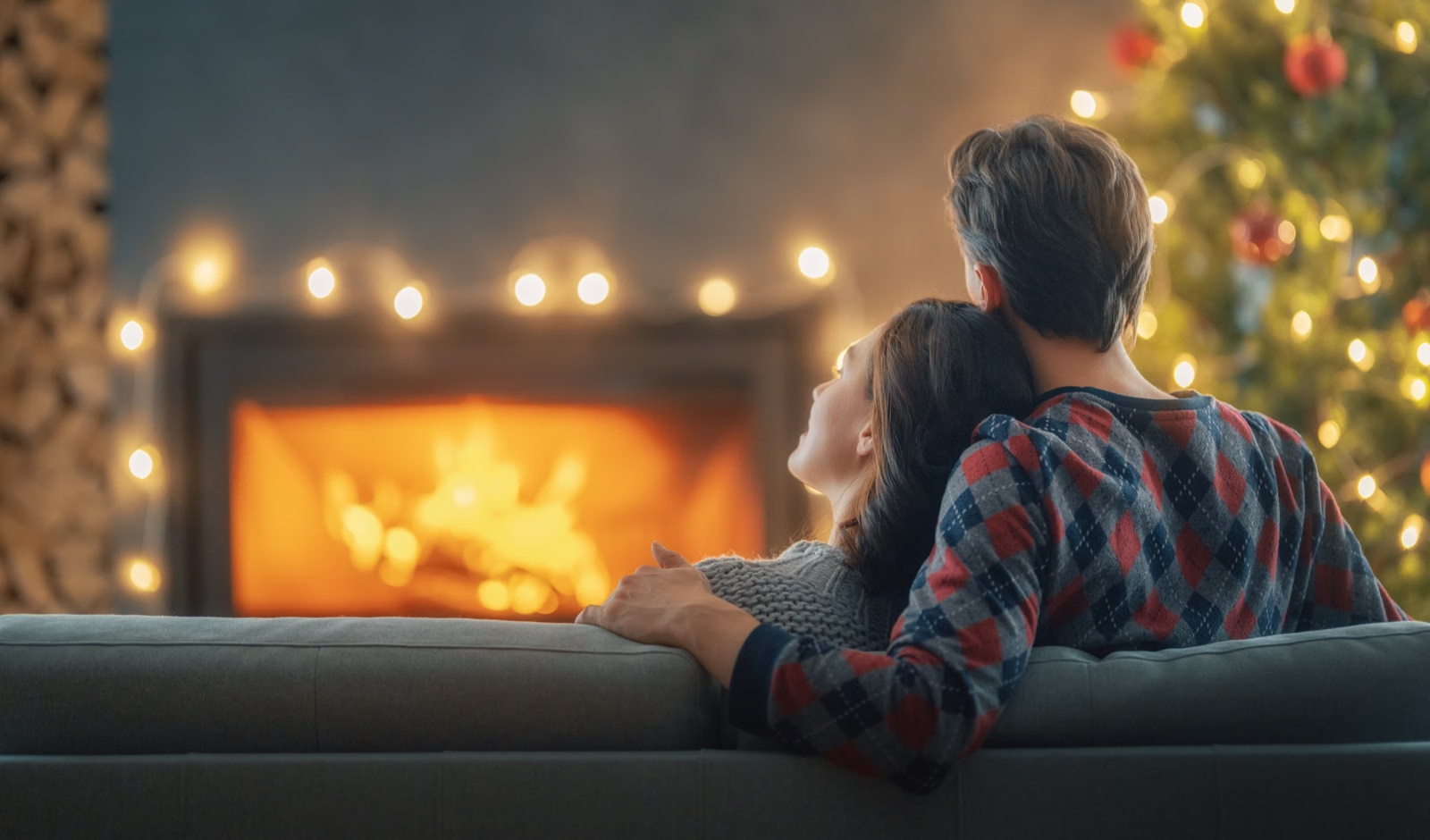
Keep Your Family Warm and Safe—No Matter What
From oak and hickory to dense, hot-burning osage orange, Mulvane has good firewood close at hand. Find the right stove or insert and connect with a trusted local dealer.
Every Project Starts From One of These Five Situations
Real cold, real cordwood, minimal red tape.
Mulvane sits on the Sedgwick–Sumner county line just south of Wichita, on flat prairie ground at about 1,227 feet. Winters here average a low around 21°F with a moderate winter heating season—a real Kansas winter, but nowhere near the punishment a place like Minneapolis or Fargo sees. What Mulvane does share with the northern Plains is exposure: open, wind-scoured country and the ice storms that periodically knock out power across Sedgwick County. That combination is exactly why a lot of local homeowners keep a wood stove or insert running, even in homes with modern central heat.
Firewood is genuinely local here. Oak and hickory from area tree services and farm ground are the workhorse species, and osage orange—the hedge trees planted across Kansas for generations as windbreaks and fence lines—is a favorite for anyone who wants serious BTU output from a small firebox. Sedgwick County has no air-quality non-attainment designation and no winter burn restrictions, so the permitting process here is about code compliance and clearances, not smoke advisories. That makes wood heat in Mulvane relatively straightforward: pick the right unit for your space, get it installed to code, and you have dependable heat whether or not the grid stays up.
Three steps. No salesperson until you're ready.
Tell us about your project
Your zip code, your situation, and the fuel you're leaning toward—or let the answers point you to one.
See what's actually available
The brands dealers within 100 miles genuinely carry—real options, never a catalog mirage.
Get your dealer & Project Guide
A trusted local dealer, plus the free Project Guide & Parts List that names every component of the job.
Frequently Asked Questions
How much does a wood stove installation cost in Mulvane?
Most wood stove and insert installations in the Mulvane area run roughly $3,500 to $8,000, with the spread driven by the unit itself, whether you're inserting into an existing masonry fireplace or starting from scratch, and whether new Class A chimney pipe is needed. A straightforward insert into a working masonry fireplace with an existing flue tends to land on the lower end. New freestanding stove installs that require full chimney runs and a new hearth pad push toward the higher end. A local dealer will give you a firm number after walking your specific setup.
What size wood stove do I need for my home?
With Mulvane's winters averaging around 21°F and a moderate winter heating season, most homes here don't need the largest catalytic stoves built for sub-zero northern climates—a mid-size stove is often plenty, even for primary heat in a well-built house. Small stoves suit a single room or a smaller ranch home, mid-size units (rated for roughly 1,200–2,000 sq ft) cover most Mulvane homes, and larger stoves make sense mainly for open-concept or poorly insulated older farmhouses. A local dealer will size the unit to your actual square footage and insulation rather than a generic chart.
Where can I find certified wood stove installers near Mulvane?
Look for NFI (National Fireplace Institute) or CSIA (Chimney Safety Institute of America) certification—both indicate the installer has been trained specifically on clearances, venting, and wood-burning appliance codes rather than general carpentry. In a smaller market like Mulvane, the hearth dealers serving Sedgwick and Sumner counties typically handle both the sale and the installation, which keeps warranty coverage and code sign-off under one roof. Skipping a certified installer for a wood-burning unit is where clearance mistakes and improperly sized flues tend to happen.
Wood stove or wood insert—which fits my house?
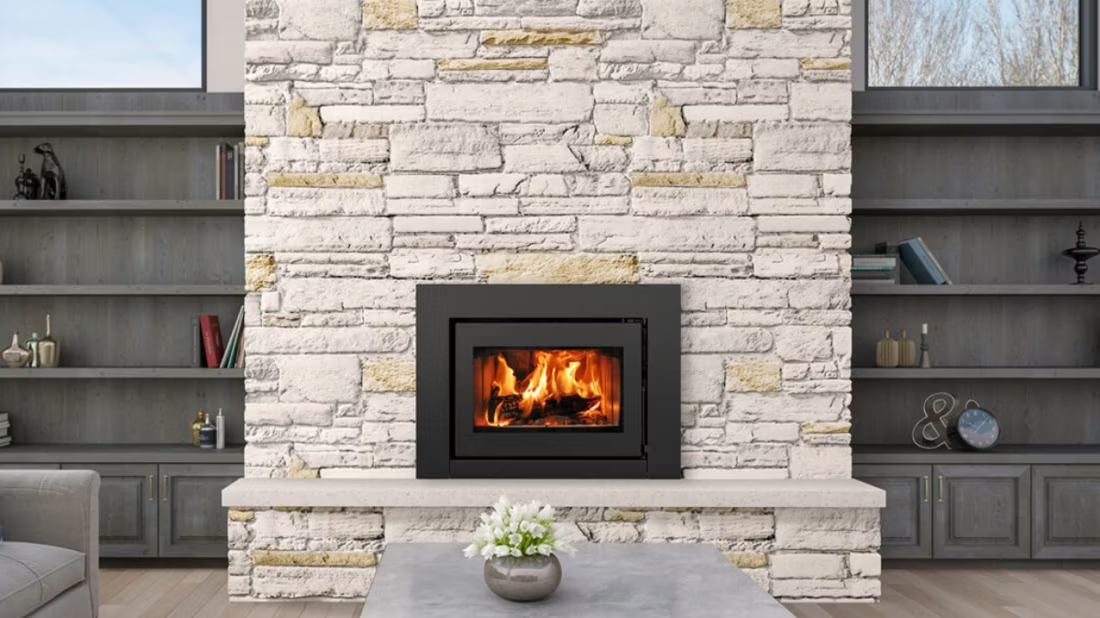
A wood insert slides into an existing masonry fireplace and uses your current chimney, which makes it the natural choice for Mulvane's older brick-fireplace homes that want real heat output instead of a decorative, heat-losing open hearth. A freestanding wood stove sits on its own hearth pad and needs a full chimney system, which makes more sense in newer construction, additions, or homes without an existing fireplace at all. If you've already got a masonry fireplace that barely takes the chill off a room, an insert is usually the more cost-effective upgrade.
Do I need a permit to install a wood stove in Mulvane?
Yes—a new wood-burning installation needs a building permit, and which office you file with depends on which side of town you're on, since Mulvane straddles the Sedgwick and Sumner county line. Homes inside city limits generally go through the City of Mulvane building department, while homes on unincorporated county ground file with Sedgwick or Sumner County directly. The stove itself needs to meet current EPA emissions standards. There's no regional air-quality non-attainment designation here, so unlike some parts of the country, you won't run into seasonal burn curtailment—the permit process is strictly about safe installation, not smoke advisories.
What's the best wood stove for a Mulvane winter?
Given Mulvane's relatively moderate cold—nowhere near what a Fargo or Duluth homeowner deals with—a solid non-catalytic stove from a brand like Pacific Energy, Osburn, or Lopi is usually plenty, and it's simpler to run than a catalytic unit built for 20-hour burns at sub-zero temperatures. If you're planning to lean on the stove during ice-storm power outages, prioritize a model with a large firebox and good overnight coal retention over sheer output—most homes here need steady heat through a cold night, not extreme BTU.
How often should my chimney be inspected in Mulvane?
An annual inspection before burning season starts, typically in late summer or early fall, is the standard recommendation from the CSIA—and it holds true here whether you're burning dense osage orange or standard oak and hickory. Osage orange in particular burns extremely hot and can accelerate creosote buildup in an undersized or poorly drafting flue if it's not well seasoned, so if that's your primary wood, don't stretch the inspection interval. A local chimney sweep can do a full Level 1 inspection and cleaning in under an hour for most homes.
Where does firewood in Mulvane actually come from?
Unlike mountain or forest regions, there's no national forest land or public cutting-permit system near Mulvane—this is farm and prairie country. Most local firewood comes from tree removal services, storm cleanup, and farmers clearing old hedge rows of osage orange, which was planted across Kansas by the mile as windbreaks decades ago and is now a favorite for its extremely high heat output. Oak and hickory round out the mix. Expect to pay roughly $180 to $275 per cord from area sellers, with well-seasoned hardwood at the higher end of that range.
Wood stove vs. pellet stove—which makes more sense in Mulvane?
Wood stoves keep working when the power doesn't—a real consideration in Sedgwick County, where ice storms occasionally take down Evergy or Sedgwick County Electric Cooperative lines for a day or more. Pellet stoves, which run on bags of compressed wood pellets from regional suppliers like Lignetics, are more convenient to load and burn cleaner, but the auger and blower need electricity, so they go dark in an outage unless you add battery backup. For Mulvane homeowners who want heat guaranteed during a winter storm, wood is the more resilient choice; for those who mainly want easy daily supplemental heat and have reliable power, pellet is worth a look too.
What's the difference between an insert and a zero-clearance fireplace?
An insert is a fireplace that slides into a pre-existing wood-burning fireplace—if you don't have one, there's nothing to insert it into. A zero-clearance fireplace is built into a framed wall, which makes it the answer for remodels and new construction. Simple test: existing masonry fireplace means insert; blank or framed wall means zero-clearance.
Why is a fireplace insert so efficient?
An insert does two things: it seals the chimney completely, so you stop losing air you already paid to heat, and it radiates warmth into the room through the firebox and glass. Most add a heat-exchange fan that pulls cool room air underneath, wraps it around the hot firebox, and pushes it back out warm. Your home is more efficient before you've even lit the first fire.
What is an in-home preview and do I need one?
It's a visit where a hearth professional measures your space, confirms the model you picked actually works in your home, and walks the specs—framing, gas line, venting, finish work—before anything is ordered. Some details you just can't know until you see the house. Never make a down payment without one; it's the single most-skipped step that burns buyers.
Can I install a fireplace myself?
If you're putting a fire in your house on purpose, it's best to work with an expert. Unless you're genuinely experienced in framing, gas line, vent pipe, and the national code on clearances to combustibles, have a professional do it—and ideally the same company that sells you the fireplace, so warranty, service, and liability all live under one roof.
Nearby Dealers
Hearth shops serving Mulvane and the surrounding area. Every listing shows whether it is a WhyFire partner, a dealer we have verified as authorized for the brands we recommend, or a local business carrying hearth products. No manufacturer pays for placement. How we verify dealers →
Fireplace Stone & Patio
Dod Installations
All Things Bbq
Bocote Showroom
Fisher Lumber- Wichita
K&M Wholesale Supply
Find your wood fireplace in Mulvane.
Tell us a bit about your home and we'll match you with a trusted local dealer and send over a free Project Guide & Parts List—the exact stove or insert, venting, and parts recommended for your Mulvane project.
Find Your Fireplace →