
Instant Heat, Zero Ash, All Season Long.
Clean-burning, thermostat-controlled heat for Lenexa's growing subdivisions—find the right gas fireplace or insert and get matched with a trusted local dealer.
Every Project Starts From One of These Five Situations
Built for a fast-growing Johnson County suburb.
Lenexa sits at 870 feet in Johnson County, part of the Kansas City metro, with a moderate amount of winter heating need and winter lows averaging around 20°F—a real but moderate cold, nothing like Fargo or Minneapolis territory. Most of the city's housing stock dates from the 1980s onward, with newer master-planned developments still filling in around zip codes like 66227 and 66250. That building pattern matters: Lenexa homeowners are far more likely to have a gas line already run to the house than a wood-burning setup with a masonry chimney.
Kansas Gas Service provides natural gas to most established Lenexa neighborhoods, making a direct-vent gas fireplace or insert one of the simplest upgrades a homeowner can make—flip a switch, get heat, no ash and no chimney to sweep. Evergy Metro handles electric service, which comes into play for fireplaces with electronic ignition or blower fans. Because wood stove installs are genuinely uncommon in Lenexa's suburban lots and HOA-governed subdivisions, gas has become the default choice for homeowners who want supplemental heat, zone heating for a finished basement, or a fireplace that looks great without the upkeep.
Three steps. No salesperson until you're ready.
Tell us about your project
Your zip code, your situation, and the fuel you're leaning toward—or let the answers point you to one.
See what's actually available
The brands dealers within 100 miles genuinely carry—real options, never a catalog mirage.
Get your dealer & Project Guide
A trusted local dealer, plus the free Project Guide & Parts List that names every component of the job.
Frequently Asked Questions
How much does a gas fireplace installation cost in Lenexa?
A typical gas fireplace or insert installation in Lenexa runs about $4,000 to $10,000, depending on the unit, the venting path, and whether new gas line work is needed. Homes with an existing gas line nearby—common in Lenexa's 1990s and 2000s-built subdivisions—land on the lower end. Installations that require running gas line from the meter to a new location, or converting an existing wood-burning masonry fireplace, push toward the higher end. Local dealers will confirm exact pricing after seeing your home and your current gas service.
Can I convert my existing wood-burning fireplace to gas?
Yes, and it's a common request among Lenexa homeowners in older ranch and split-level homes that came with a builder-grade wood-burning fireplace. A gas insert typically drops into the existing masonry opening with a stainless liner run up the chimney, and the project usually costs $3,500 to $8,500 depending on the insert and whether Kansas Gas Service already has a line near the fireplace. It's a faster path to real heat than most homeowners expect, and it keeps the existing mantel and surround intact.
Do I need natural gas, or can I use propane?
Kansas Gas Service covers the great majority of established Lenexa neighborhoods, so if your home already has gas appliances—a furnace, water heater, or range—adding a fireplace usually just means tapping into that existing service. Some of the newest developments on the city's edges, particularly parts of 66227 and 66250, may not have gas mains fully built out yet; in those cases propane with a small tank is a straightforward alternative. Most gas fireplace models can be set up for either fuel, and your installer will fit the correct orifice for whichever you have.
Will my gas fireplace still work if the power goes out?
Most modern gas fireplaces will, with the right ignition system. Units with intermittent pilot ignition (IPI) run on a small battery backup that kicks in automatically when Evergy Metro power drops, so the fireplace still lights on demand. Some manufacturers, like Valor, go a step further with pilot systems that generate their own electricity from the flame itself, meaning no batteries to maintain at all. For Lenexa's occasional ice storms and thunderstorm-related outages, that battery-free approach is worth asking your dealer about.
What's the difference between a gas fireplace, gas insert, and gas stove?
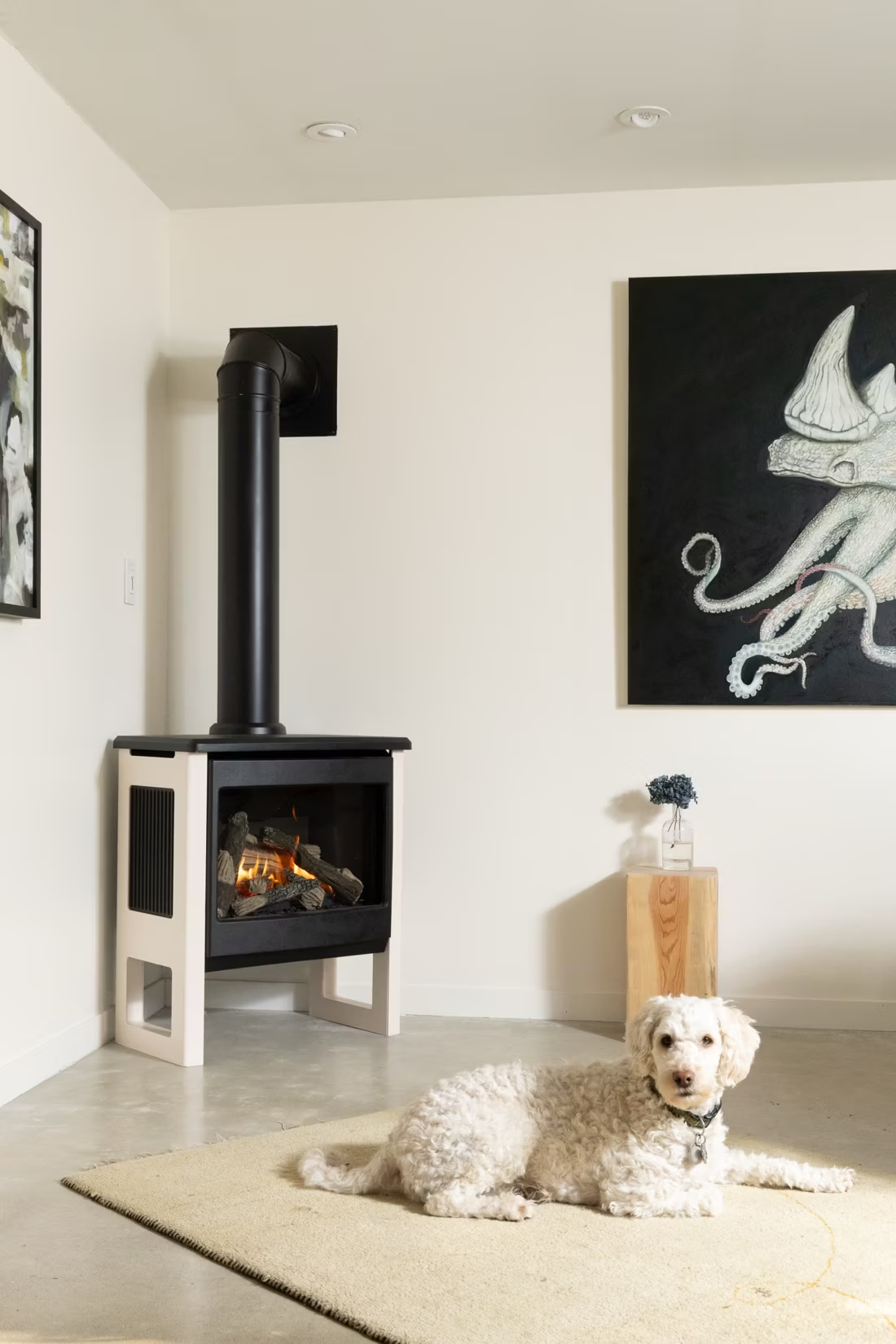
A gas fireplace is a built-in unit framed into a wall, typically chosen for new construction or a full remodel—common in Lenexa's newer two-story builds. A gas insert slides into an existing masonry fireplace opening and uses the existing chimney as a vent chase, which is the more common project in older Lenexa ranch homes. A gas stove is a freestanding cast-iron or steel unit that sits on the floor, often used in basements or additions where there's no existing fireplace at all. Your local dealer can walk your specific room to recommend the right fit.
Do I need a permit to install a gas fireplace in Lenexa?
Yes—the City of Lenexa Development Services Building Safety Division requires a building permit for new gas fireplace installations, and any new gas line work must be done by a licensed gas fitter and inspected separately. Most established hearth dealers in the Lenexa/Overland Park area handle the permit application and inspection scheduling as part of the install, so you're not coordinating multiple trades and city inspectors on your own.
Vented vs. vent-free gas fireplaces—what's the difference, and which is allowed in Lenexa?
Vented (direct-vent) gas fireplaces draw combustion air from outside and exhaust exhaust gases back outside through sealed venting—the standard, code-approved choice everywhere including Lenexa. Vent-free units burn without any external venting and release some combustion byproducts into the room; Kansas doesn't broadly restrict them the way California or Colorado do, but they still require correct room-sizing and oxygen-depletion sensors to run safely. For most Lenexa living rooms and finished basements, a direct-vent unit is the more common recommendation—better performance, no indoor air quality trade-offs.
How often should a gas fireplace be serviced?
Plan on an annual inspection, ideally in early fall before the unit sees regular winter use. A technician checks the burner, pilot assembly, venting, and gas connections, and cleans the glass and interior—a much lighter job than a wood chimney sweep but still important for safety and efficiency. In the Lenexa area, a standard annual gas fireplace inspection typically runs $125 to $200.
Gas vs. wood—which makes more sense for a Lenexa home?
For most Lenexa homeowners, gas wins by a wide margin. Wood-burning setups are genuinely uncommon here—Lenexa's suburban lot sizes, HOA guidelines in many newer subdivisions, and the lack of easy access to cut firewood (compared to rural Johnson County properties) mean wood stoves are more the exception than the rule, even though oak, hickory, and osage orange all grow locally. Gas, by contrast, plugs straight into the Kansas Gas Service infrastructure that's already run through most neighborhoods, delivers instant heat with no ash or creosote, and fits the clean, low-maintenance expectations of newer construction. If you have an older wood-burning fireplace already, converting it to gas is usually the more practical upgrade than starting a wood-burning habit from scratch.
Is my gas fireplace wasting gas?
If it was installed more than 15 years ago, probably. Older gas fireplaces keep a standing pilot light burning all the time, and that little flame can cost a couple hundred dollars a year. Newer models use pilot-on-demand ignition—the pilot lights only when you use the fireplace and goes out when you turn it off.
What's the difference between an insert and a zero-clearance fireplace?
An insert is a fireplace that slides into a pre-existing wood-burning fireplace—if you don't have one, there's nothing to insert it into. A zero-clearance fireplace is built into a framed wall, which makes it the answer for remodels and new construction. Simple test: existing masonry fireplace means insert; blank or framed wall means zero-clearance.
Can a fireplace actually lower my heating bill?
Yes—by creating a comfort zone. A furnace heats every square foot of the house just to warm the one room you're in; a gas fireplace on low burns roughly a sixth of the gas a typical furnace does. Set the furnace around 55–60 degrees as a baseline, then heat the rooms your family actually uses. Families who heat this way commonly save $20–$60 a month.
How much should I budget for a fireplace?
For an average home—covering the fireplace, the vent pipe, and basic installation—a budget between $3,900 and $5,500 gives you a lot of options across wood, gas, and pellet. By the time you add finish work, gas line, and electrical, the average complete installation lands between $5,000 and $12,000 all-in. In a remodel or new build, a good rule is to put about 2.5% of the total project cost toward the fireplace.
Nearby Dealers
Hearth shops serving Lenexa and the surrounding area. Every listing shows whether it is a WhyFire partner, a dealer we have verified as authorized for the brands we recommend, or a local business carrying hearth products. No manufacturer pays for placement. How we verify dealers →
Midwest Fireplace
Jay Henges Enterprises
The Hayes Co.
Complete Home Concepts - Riverside
Find your gas fireplace in Lenexa.
Tell us about your home and we'll put together a free Project Guide & Parts List—the right gas fireplace or insert, the vent kit it needs, and a trusted local Lenexa-area dealer to install it.
Find Your Fireplace →