
Keep Your Family Warm and Safe—No Matter What
From the bluffs above the Missouri River to the farmland around Tonganoxie and Basehor, wood heat has a long history here. Get matched with a trusted local dealer who can size, permit, and install it right.
Every Project Starts From One of These Five Situations
Solid oak, hickory, and osage orange country.
Leavenworth County sits in climate zone 4A with roughly 4,862 heating degree days a year and average winter lows around 21°F—meaningfully colder than a coastal 4A zone, closer to what a place like Madison, WI experiences over a full season, though without Madison's extreme lows. That's enough sustained cold that a well-run wood stove earns its keep, especially in older farmhouses around Tonganoxie and Basehor where drafty construction makes radiant heat feel a lot more comfortable than forced air alone.
The county's hardwood mix is about as good as wood-burning gets: oak and hickory both burn dense and long, and osage orange (locally common along fence rows and windbreaks) burns hot enough that most stove manuals actually warn against overloading with it. There are no air quality non-attainment concerns or wintertime burn bans here, which means Leavenworth County homeowners can run a wood stove on a normal schedule without watching for curtailment notices the way some western states require. A properly sized stove or insert also means real backup heat if an ice storm knocks out power along the Kansas River valley.
Three steps. No salesperson until you're ready.
Tell us about your project
Your zip code, your situation, and the fuel you're leaning toward—or let the answers point you to one.
See what's actually available
The brands dealers within 100 miles genuinely carry—real options, never a catalog mirage.
Get your dealer & Project Guide
A trusted local dealer, plus the free Project Guide & Parts List that names every component of the job.
Frequently Asked Questions
How much does a wood stove installation cost in Leavenworth County?
Installations in Leavenworth County typically run in the same range seen across the broader Kansas City metro—expect somewhere between $4,000 and $9,000 depending on whether you're inserting into an existing masonry fireplace or running new Class A chimney pipe through a wall or roof for a freestanding stove. Rural properties around Tonganoxie or Easton with longer driveways or older wiring for hearth-pad electrical work sometimes land toward the higher end simply due to travel and prep time. A local dealer will give you a firm number after walking the space.
What size wood stove do I need for my home?
With Leavenworth County's roughly 4,862 heating degree days, most homes fall into a small-to-medium stove range rather than needing the largest catalytic units built for places like Bozeman or Duluth. A tight, well-insulated ranch home under 1,500 square feet can often get by with a smaller stove; older two-story farmhouses common around Basehor and Lansing, with higher ceilings and less insulation, usually need a medium unit to actually reach the far rooms. Local dealers size this for free during an in-home visit, and it's worth doing since an oversized stove smolders and glazes the flue while an undersized one just can't keep up on a January cold front.
Where can I find certified wood stove installers near me?
Look for installers carrying NFI (National Fireplace Institute) or CSIA (Chimney Safety Institute of America) certification—both indicate real training in clearances, venting, and code compliance for wood-burning appliances. Reputable hearth dealers covering Leavenworth County typically employ certified techs and handle both the stove sale and the install as one job, which keeps warranty coverage clean. We match homeowners with trusted local dealers rather than pointing them to a big-box counter, since improper venting on a wood stove is a real fire risk that a generalist contractor may not catch.
What's the difference between a wood stove and a wood insert?
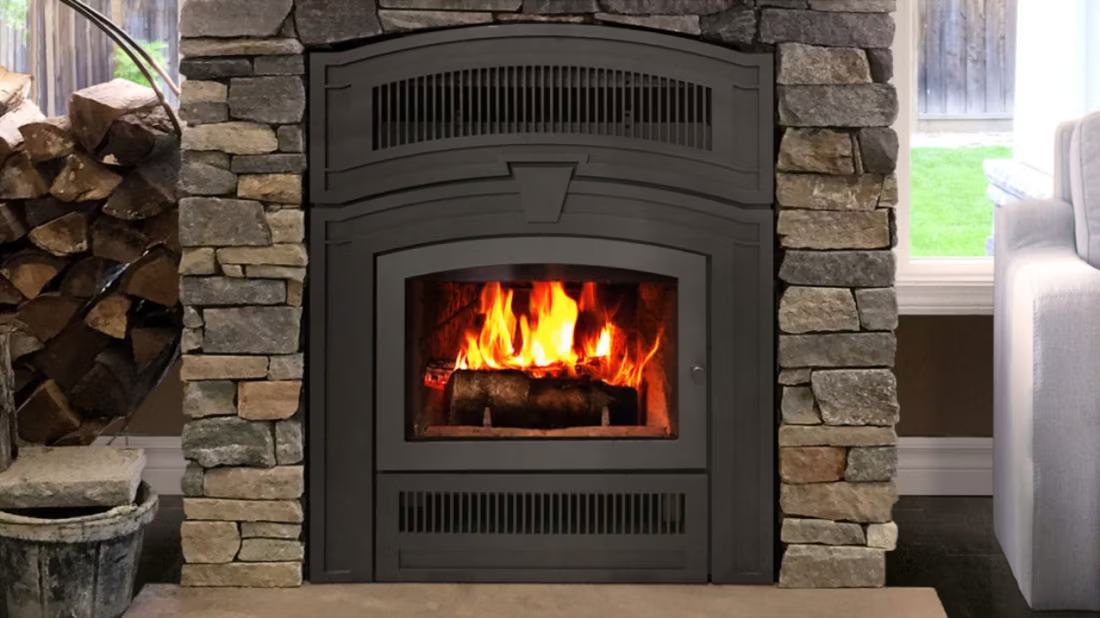
A wood stove is a freestanding unit on its own hearth pad, vented through new or existing chimney pipe—it can go almost anywhere clearances allow. A wood insert slides into an existing masonry fireplace opening and uses that chimney (typically with a stainless liner) to vent, converting an old open hearth into a much more efficient heat source. Plenty of homes in Leavenworth's older neighborhoods and around Tonganoxie already have a masonry fireplace that's more decorative than functional—an insert is usually the more cost-effective upgrade in those cases, since you're not paying to build new venting from scratch.
Do I need a permit to install a wood stove in Leavenworth County?
Most new wood stove installations require a building permit, and the unit itself needs to meet current EPA emissions standards. Within the city of Leavenworth, permits run through the city building department; for unincorporated parts of the county—including much of the land around Basehor, Easton, and Lansing—permits go through the Leavenworth County building department. Most hearth dealers handle this paperwork as part of the install price, so you're generally not filing anything yourself. There are no local air-quality burn restrictions here, so once the stove is permitted and installed, you can run it on your own schedule.
What's the best wood stove for Leavenworth County's climate?
At roughly 4,862 heating degree days and average winter lows near 21°F, Leavenworth County doesn't demand the extreme-cold catalytic stoves built for northern Minnesota or Montana, but a mid-size non-catalytic stove from a brand like Pacific Energy or Lopi handles the coldest stretches comfortably while burning local oak and hickory efficiently. If you want longer overnight burn times without reloading—useful during a multi-day cold front—a catalytic option from Blaze King is worth a look even though it's more stove than most homes here strictly need. Osage orange burns hot enough that any dealer worth using will tell you to mix it with oak rather than loading a full box of it.
How often should my chimney be inspected and cleaned?
The CSIA recommends an annual inspection for any wood-burning appliance, and Leavenworth County is no exception—plan on a sweep and inspection each late summer or early fall before the season's first fire. Homes burning oak and hickory as a primary heat source, rather than occasional supplemental warmth, often need a mid-winter check too, since dense hardwood can still build creosote if the stove is run too cool or the wood wasn't fully seasoned. A local chimney sweep will also check the liner condition on older masonry fireplaces around Leavenworth's historic districts, where flues are sometimes decades old.
Where can I get firewood in Leavenworth County?
Oak, hickory, and osage orange are all common locally, and several small-scale firewood sellers around Tonganoxie and the rural county sell by the cord (a stacked 4x4x8 pile), typically delivered. Osage orange in particular is often available cheap or free from landowners clearing fence-row windbreaks, since it's a labor-intensive wood to split but burns extremely hot once seasoned. If you're buying, ask how long the wood has been seasoned—hardwood like oak needs 6-12 months minimum to season properly, and unseasoned wood is the top cause of poor stove performance and creosote buildup.
Wood stove vs. pellet stove—which is right for me?
Wood stoves burn cordwood, work without electricity (a real advantage if an ice storm takes down power lines in rural Leavenworth County), and pair naturally with the abundant local oak, hickory, and osage orange supply. Pellet stoves burn bagged pellets—regional brands like Lignetics and Indeck Energy Services are both reasonably available in the area—and offer easier day-to-day operation with a thermostat and auto-feed hopper, but they need electricity to run the auger and blower, so they won't help during an outage. For rural properties where backup heat matters, wood tends to be the better fit; for in-town homes prioritizing convenience over self-sufficiency, pellet is worth a serious look.
Why is my open fireplace making my house colder?
Open fireplaces suck—literally. As the fire burns, it consumes air your furnace already paid to heat and pulls it out through the chimney, so the house is actually colder after the fire goes out than before you lit it. An insert fixes this: it seals the chimney, puts fixed glass across the front, and turns that hole in your house into a real heat source.
Why won't my new wood stove get going like my old one?
New wood stoves are 70%+ efficient, so far less heat goes up the flue—which also means less draft to get a fire established. The rule: build a genuinely hot fire for about 45 minutes before you choke it down. Skip that and you get smoke in the room, creosote in the chimney, and a fire that never takes off. Most performance complaints trace straight back to this.
Does a fireplace add value to my home?
On average, a fireplace adds back to the home about the same amount you spent installing it. Add the monthly savings from heating the rooms you actually use instead of the whole house—often hundreds of dollars a year—and the value case is strong before you even count what a fire does for how your family uses the room.
How much should I budget for a fireplace?
For an average home—covering the fireplace, the vent pipe, and basic installation—a budget between $3,900 and $5,500 gives you a lot of options across wood, gas, and pellet. By the time you add finish work, gas line, and electrical, the average complete installation lands between $5,000 and $12,000 all-in. In a remodel or new build, a good rule is to put about 2.5% of the total project cost toward the fireplace.
Get matched with a wood fireplace dealer in Leavenworth County.
Tell us about your home and heating goals, and we'll match you with a trusted local dealer and send over a free Project Guide & Parts List—the exact parts, vent kit included, for your wood project in Leavenworth County.
Find Your Fireplace →