
Consistent Heat, Without the Wood Pile.
Thermostat-controlled warmth for Wyandotte County winters, without splitting osage orange or feeding a fire by hand. Find the right pellet stove or insert and connect with a trusted local dealer.
Every Project Starts From One of These Five Situations
Set-it heat for Missouri River winters.
Kansas City, Kansas sits at the confluence of the Kansas and Missouri Rivers at about 948 feet elevation, in a climate zone 4A pattern of real winter cold without the extremes of the upper Midwest. With a solid, multi-month heating season and average winter lows near 22°F, furnaces and supplemental heat both get real use here—nothing like Minneapolis or Fargo's punishing stretches, but enough cold snaps and ice storms each January to make a reliable secondary heat source worth having.
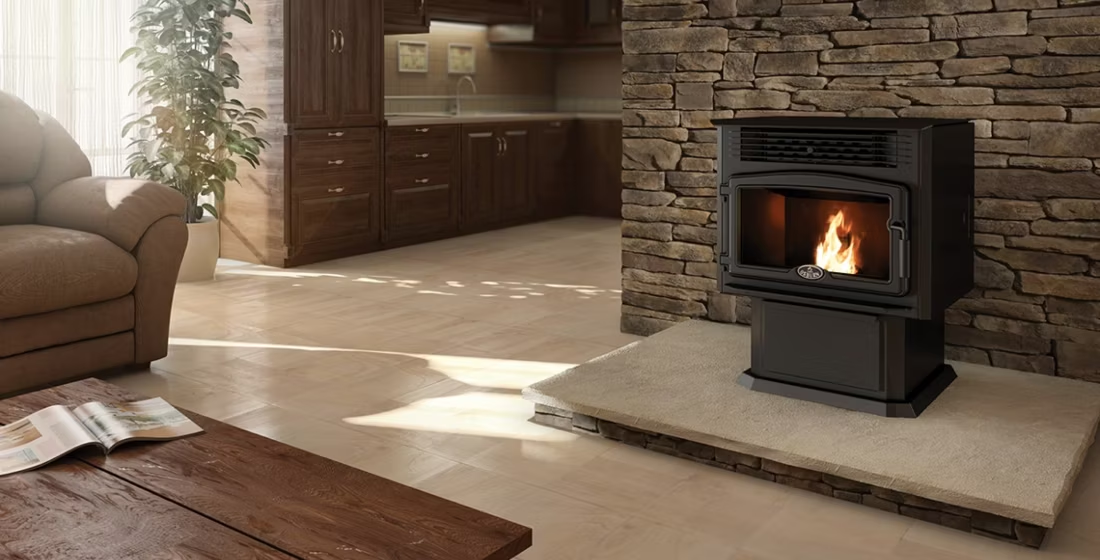
Wyandotte County has plenty of homes with a wood-burning heritage—oak, hickory, and famously hard-splitting osage orange grow throughout the area—but not every homeowner wants to buck and stack cordwood every fall. A pellet stove gives you that same radiant, wood-fired heat with a hopper you fill every day or two instead. Regional pellet brands like Lignetics and Indeck Energy Services keep fuel reasonably available through the Kansas City metro, and with no air-quality non-attainment designation in Wyandotte County, there are no local burn-ban restrictions to plan around the way there are in some Western cities.
Three steps. No salesperson until you're ready.
Tell us about your project
Your zip code, your situation, and the fuel you're leaning toward—or let the answers point you to one.
See what's actually available
The brands dealers within 100 miles genuinely carry—real options, never a catalog mirage.
Get your dealer & Project Guide
A trusted local dealer, plus the free Project Guide & Parts List that names every component of the job.
Frequently Asked Questions
How much does a pellet stove installation cost in Kansas City?
Most pellet stove installations in the Kansas City, KS area run $3,000 to $6,000, including the unit, PL-vent through an exterior wall, and a basic hearth pad. Because pellet stoves vent horizontally rather than requiring a full masonry chimney, installs here tend to land toward the lower end of hearth-appliance pricing—especially in the ranch and bungalow-style homes common throughout Wyandotte County. Pellet inserts going into an existing fireplace opening, with a liner run up the flue, typically add $500 to $1,500 over a freestanding stove install.
What size pellet stove do I need for my Kansas City home?
With Kansas City, KS having a solid, multi-month heating season and winter lows around 22°F, most homes here do fine with a mid-size pellet stove in the 40,000 to 50,000 BTU range for a single large room or open living area, and don't typically need the largest whole-home units sold for places like Minneapolis or Duluth. Older, less-insulated housing stock in the urban core of Wyandotte County may need slightly more capacity than a newer, tighter-built home of the same square footage. A local dealer will size the unit based on your floor plan and insulation rather than square footage alone.
Do I need a permit to install a pellet stove in Kansas City, KS?
Yes—pellet stove installations require a mechanical or building permit through the Unified Government of Wyandotte County/Kansas City, Kansas, which covers construction permitting for the consolidated city-county. The permit process checks clearances to combustibles, the wall or roof penetration for the PL-vent, and hearth pad requirements. Most local hearth dealers pull this permit as part of the installation and schedule the required inspection, so homeowners rarely have to deal with the UG's permitting office directly.
Where does pellet fuel come from in the Kansas City area, and how much does it cost?
Wood pellets sold in the Kansas City metro are typically bagged product from regional producers like Lignetics or Indeck Energy Services, distributed through hearth shops, farm supply stores, and big-box retailers. Expect to pay roughly $230 to $290 per ton, usually sold in 40-pound bags stacked on pallets. A typical Wyandotte County home burning a pellet stove as a primary heat source through a full winter uses 2 to 3 tons; used for supplemental heat in the coldest months, 1 ton often covers a season. Bags store fine in a dry garage or basement—the main enemy is moisture, not cold.
Will my pellet stove still work if the power goes out?
Not without help. Pellet stoves rely on an electric auger to feed fuel and a blower to distribute heat, so a standard unit shuts down in a power outage—unlike a wood stove, which keeps burning regardless. This is worth planning around in a Kansas City winter, where ice storms occasionally knock out power for the Board of Public Utilities' Wyandotte County service area for a day or more. Many pellet stove owners here run a small battery backup or inverter generator to keep the stove operating through a short outage; ask your local dealer about the wattage draw for the specific model you're considering.
How much maintenance does a pellet stove need?
Pellet stoves need more frequent light maintenance than a wood stove but far less heavy cleaning. Plan on emptying the ash pan every few days during regular use, wiping the glass weekly, and vacuuming the burn pot and hopper area every couple of weeks. Once a year, have a technician clean the exhaust venting and inspect the auger motor, igniter, and gaskets—this is a lighter job than a wood chimney sweep since there's no creosote buildup, and most local hearth shops offer it as an annual service package.
Pellet stove vs. wood stove—which makes more sense in Kansas City?
Wood is genuinely abundant here—oak, hickory, and osage orange are all common locally, and with no air-quality non-attainment status in Wyandotte County there's no burn-ban risk to factor in. A wood stove also keeps working through a power outage, which a pellet stove can't do without backup power. Pellet stoves win on convenience: no splitting osage orange (notoriously dense and hard to buck by hand), more consistent heat output, easier loading, and a thermostat you can set and leave. For a Kansas City homeowner who wants wood-fired warmth without the labor of processing firewood, pellet is usually the better fit; for anyone prioritizing outage-proof heat, wood or a hybrid setup makes more sense.
How does pellet stove venting work compared to a wood-burning chimney?
Pellet stoves vent through a smaller-diameter PL-vent pipe that can run horizontally through an exterior wall, rather than requiring a full vertical masonry chimney the way a wood stove typically does. This is a real advantage in Kansas City's older ranch and bungalow housing stock, where adding a tall Class A chimney can be expensive or structurally awkward. Because the vent run is shorter and simpler, pellet installs are often faster and less invasive than a comparable wood stove install—one more reason pellet install costs tend to land lower.
Are there any rebates or tax credits for a pellet stove in Kansas City?
Yes—biomass stoves, including qualifying pellet stoves rated at 75% efficiency or higher, are eligible for the federal 25(C) energy efficiency tax credit, currently 30% of the equipment and installation cost up to an annual cap, through the Inflation Reduction Act. Kansas doesn't currently run a separate state rebate program for pellet appliances the way some states do, so the federal credit is the main incentive available to Wyandotte County homeowners. Save your dealer invoice and the manufacturer's efficiency certification statement—you'll need both when filing.
How often does a pellet stove need cleaning?
A clean pellet stove is a happy pellet stove. Plan on cleaning the burn pot about once a week when you're burning regularly—ash and clinkers gum up the air holes just like a pellet barbecue. Most pellet stove problems trace back to skipped cleaning that nobody explained up front. Some designs make it easy with a trapdoor burn pot: pull a lever and the gunk drops into the ash pan.
Why is my open fireplace making my house colder?
Open fireplaces suck—literally. As the fire burns, it consumes air your furnace already paid to heat and pulls it out through the chimney, so the house is actually colder after the fire goes out than before you lit it. An insert fixes this: it seals the chimney, puts fixed glass across the front, and turns that hole in your house into a real heat source.
Can I install a fireplace myself?
If you're putting a fire in your house on purpose, it's best to work with an expert. Unless you're genuinely experienced in framing, gas line, vent pipe, and the national code on clearances to combustibles, have a professional do it—and ideally the same company that sells you the fireplace, so warranty, service, and liability all live under one roof.
Can a fireplace actually lower my heating bill?
Yes—by creating a comfort zone. A furnace heats every square foot of the house just to warm the one room you're in; a gas fireplace on low burns roughly a sixth of the gas a typical furnace does. Set the furnace around 55–60 degrees as a baseline, then heat the rooms your family actually uses. Families who heat this way commonly save $20–$60 a month.
Nearby Dealers
Hearth shops serving Kansas City and the surrounding area. Every listing shows whether it is a WhyFire partner, a dealer we have verified as authorized for the brands we recommend, or a local business carrying hearth products. No manufacturer pays for placement. How we verify dealers →
Complete Home Concepts - Riverside
The Hayes Co.
Midwest Fireplace
Jay Henges Enterprises
Pellet Brands Stocked Around Kansas City
Manufacturers will point you to the nearest stocking dealer.
Find your pellet stove in Kansas City.
Tell us a bit about your home and we'll match you with a trusted local Kansas City dealer and send over a free Project Guide & Parts List—the exact stove, vent kit, and install plan for your space.
Find Your Fireplace →