
Find out if a pellet stove fits your Holcomb home.
Pellet stoves are uncommon on the flat, wind-swept farmland around Holcomb, but for a workshop, a detached garage, or a homeowner who wants automated heat without a chimney, they can still make sense. We'll help you figure out if one is right for you.
Every Project Starts From One of These Five Situations
A prairie farm town built on natural gas and electric heat.
Holcomb sits at 2,886 feet on the high plains of Finney County, a few miles from Garden City, in flat, largely treeless farm and feedlot country. Winters bring an average low around 17°F and a heating season comparable in length and intensity to much of central Kansas—a real Kansas winter, but nothing like the deep-freeze extremes of places like Bismarck or Fargo. Oak, hickory, and osage orange grow in scattered windbreaks and river-bottom groves that farmers planted decades ago, but there's no working forest industry here, and that matters: it's part of why this region never developed a biomass heating culture the way wooded parts of the country did.
Instead, homes in and around Holcomb run on natural gas piped through local providers and electricity from Pioneer Electric Cooperative, Wheatland Electric Cooperative, and Midwest Energy—reliable, already-installed infrastructure that's hard for a pellet stove to compete with on convenience. There's also no dedicated hearth retailer in a town of under 2,500 people; anyone wanting a pellet stove here is typically working with a dealer out of Garden City or Dodge City. That said, national pellet suppliers like Lignetics and Indeck Energy Services do move product through the region, so fuel supply isn't the barrier—demand and dealer access are. A pellet stove can still be a smart, targeted choice for a shop, a bonus room, or a homeowner who wants set-it-and-forget-it heat, and we can help you find the local pro to do it right.
Three steps. No salesperson until you're ready.
Tell us about your project
Your zip code, your situation, and the fuel you're leaning toward—or let the answers point you to one.
See what's actually available
The brands dealers within 100 miles genuinely carry—real options, never a catalog mirage.
Get your dealer & Project Guide
A trusted local dealer, plus the free Project Guide & Parts List that names every component of the job.
Frequently Asked Questions
How much does a pellet stove installation cost near Holcomb?
Since there's no hearth retailer based in Holcomb itself, most quotes will come from a dealer in Garden City or Dodge City. Nationally, a straightforward pellet stove installation—unit, wall-thimble vent kit, and hearth pad—typically runs $3,000 to $6,000. Costs move toward the higher end if you need a new 120V outlet run for the unit, additional hearth pad work for clearance-to-combustible requirements, or if the stove is going into a detached shop or garage where wiring has to be extended. A local installer will give you a firm number after seeing the space.
Are pellet stoves actually common in Holcomb, KS?
Honestly, no—they're a niche choice out here. Most Finney County homes already have natural gas or electric heat in place, propane and electricity are both reasonably priced through Wheatland Electric and Midwest Energy, and the flat, farmed landscape around Holcomb never built up the wood-pellet culture you see in more forested parts of the country. When homeowners in this area do install a pellet stove, it's usually for a specific reason: heating a detached workshop or garage that isn't on the main HVAC system, adding a secondary heat source without running new gas line, or wanting the low-maintenance, thermostatically controlled burn a pellet stove offers over a wood stove.
Where can I actually buy pellet fuel around Holcomb?
Pellets aren't stocked on every shelf in a town this size, but they're not hard to get either. Regional producers like Lignetics and Indeck Energy Services supply farm and home stores throughout western Kansas, and larger retailers in Garden City typically carry bagged pellets by the ton during heating season, especially if you order ahead. Plan on buying in bulk (a ton or more at a time) each fall, since availability can thin out mid-winter in smaller markets like this one.
Do I need a permit to install a pellet stove in Finney County?
Yes, typically—a building permit through the Finney County Building Department (or the City of Holcomb, depending on where the property sits) covers the appliance installation, wall-thimble venting, and hearth clearance requirements. Because Holcomb has no local air quality restrictions to navigate—this area isn't a non-attainment zone—the permitting process is mostly about structural and fire-safety compliance rather than emissions rules. Whoever installs your unit should pull the permit as part of the job.
What size pellet stove do I need for a Holcomb home?
Most homes in and around Holcomb are single-story ranch or farmhouse-style construction, commonly 1,500 to 2,500 square feet. A medium-output pellet stove (rated for roughly 1,500–2,000 sq ft) covers a main living area comfortably as supplemental heat. For a detached shop or garage—one of the more common uses for a pellet stove out here—sizing depends heavily on insulation and how well the space seals against the wind, so it's worth having a local installer walk the space before you buy.
Pellet vs. gas—which makes more sense for a Holcomb home?
For most primary heating needs, gas wins here. Natural gas and propane are already the backbone of home heating across Finney County, the fuel is widely available, and a gas fireplace or furnace requires far less hands-on maintenance than a pellet stove—no hopper to fill, no ash to empty. Pellet makes more sense as a targeted, secondary solution: heating a space that isn't on your existing gas line, or adding visual ambiance with automated convenience in a room where running new gas piping isn't practical. Few homeowners here choose pellet as their sole heat source.
Will a pellet stove keep working if the power goes out?
No—and this is worth knowing before you buy. Pellet stoves need continuous electricity to run the auger that feeds fuel and the blower that distributes heat, so an outage from Pioneer Electric, Wheatland Electric, or Midwest Energy's lines means the stove goes cold along with everything else. High plains ice storms and high-wind events do cause outages in this region. If backup heat during an outage is your priority, pair the stove with a small battery backup or generator rated for the unit's draw, or consider that a vented propane heater with a standing pilot may serve that specific need better.
Pellet stove or pellet insert—which fits a Holcomb home?
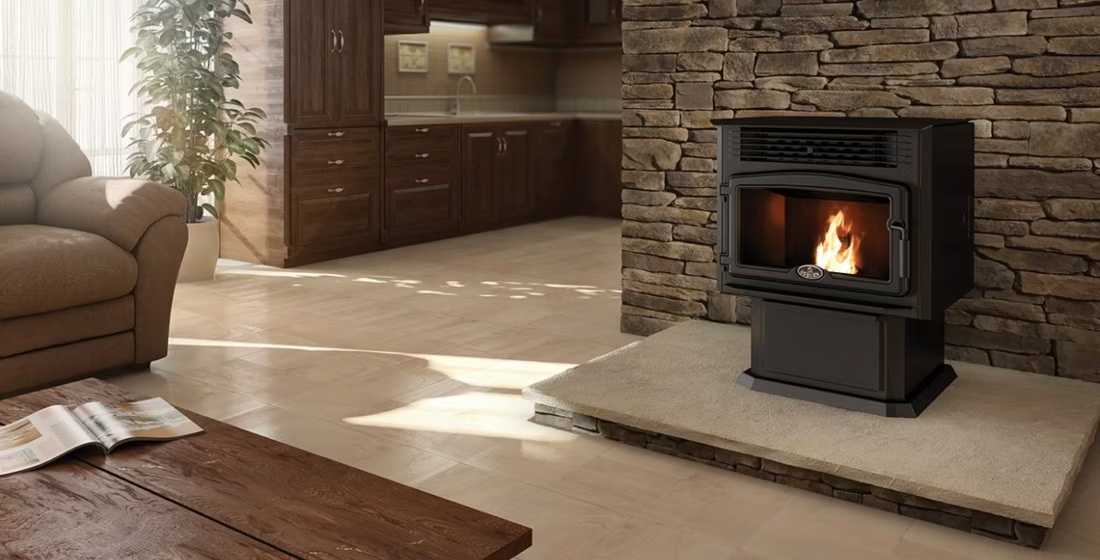
Almost certainly a freestanding stove. Pellet inserts are built to slide into an existing masonry fireplace, and most homes in this area—ranch-style construction on farm and feedlot land—were never built with one. A freestanding pellet stove vents through an exterior wall with a simple thimble kit, which is usually the more practical option here whether it's going into a living room, a mudroom, or a detached shop.
Does the dust and wind out here affect pellet stove maintenance?
It can, more than in a lot of other places. Fine dust from surrounding farmland and feedlot operations settles everywhere, and a pellet stove's combustion blower and air intake are no exception—expect to clean the burn pot and check the blower more often than the manual's baseline schedule suggests, especially during harvest season and windy stretches. Plan on a full annual service before heating season, and don't skip the mid-winter ash and glass cleaning if you're running the stove daily.
Why is my open fireplace making my house colder?
Open fireplaces suck—literally. As the fire burns, it consumes air your furnace already paid to heat and pulls it out through the chimney, so the house is actually colder after the fire goes out than before you lit it. An insert fixes this: it seals the chimney, puts fixed glass across the front, and turns that hole in your house into a real heat source.
Why is a fireplace insert so efficient?
An insert does two things: it seals the chimney completely, so you stop losing air you already paid to heat, and it radiates warmth into the room through the firebox and glass. Most add a heat-exchange fan that pulls cool room air underneath, wraps it around the hot firebox, and pushes it back out warm. Your home is more efficient before you've even lit the first fire.
How much should I budget for a fireplace?
For an average home—covering the fireplace, the vent pipe, and basic installation—a budget between $3,900 and $5,500 gives you a lot of options across wood, gas, and pellet. By the time you add finish work, gas line, and electrical, the average complete installation lands between $5,000 and $12,000 all-in. In a remodel or new build, a good rule is to put about 2.5% of the total project cost toward the fireplace.
Does a fireplace add value to my home?
On average, a fireplace adds back to the home about the same amount you spent installing it. Add the monthly savings from heating the rooms you actually use instead of the whole house—often hundreds of dollars a year—and the value case is strong before you even count what a fire does for how your family uses the room.
Nearby Dealers
Hearth shops serving Holcomb and the surrounding area. Every listing shows whether it is a WhyFire partner, a dealer we have verified as authorized for the brands we recommend, or a local business carrying hearth products. No manufacturer pays for placement. How we verify dealers →
Premier Homes
Builders FirstSource-Garden City, Ks
Pellet Brands Stocked Around Holcomb
Manufacturers will point you to the nearest stocking dealer.
Find out if a pellet stove is right for your Holcomb home.
Tell us about your space—house, shop, or garage—and we'll help you figure out if a pellet stove is the right call. If it is, we'll match you with a trusted dealer serving Finney County and send over a free Project Guide & Parts List with the exact vent kit and parts your project needs.
Find Your Fireplace →