
Pellet Stoves Are Uncommon in Hodgeman County—But Not Unheard Of.
With just over 1,000 residents spread across wheat and cattle country around Jetmore, Hodgeman County doesn't have the retail base to support a pellet supply chain the way bigger Kansas towns do. That doesn't mean pellet heat is off the table—it means the right setup and the right dealer matter more here, not less.
Every Project Starts From One of These Five Situations
A small market, a big supply chain gap.
Hodgeman County is high plains wheat and cattle country in west-central Kansas, with a population of roughly 1,029 spread across the whole county and centered on Jetmore. Climate zone 4A means real winter—cold fronts, biting wind chill, and the occasional ice storm—but the county's low density means there's no dedicated hearth shop stocking bagged pellets on a shelf. Retailers need enough repeat customers to justify carrying and restocking a fuel that has to be delivered by the ton, and a county this size rarely clears that bar. That's why pellet fuel shows up as a niche option rather than a standard one on the local heating landscape, even though gas (mostly propane out here) and electric heat are both common and well-supported.
It's also worth noting that even wood heat is uncommon in Hodgeman County, despite locally available species like oak, hickory, and osage orange (the hedge rows planted generations ago as windbreaks along the flat, largely treeless prairie). When timber itself isn't abundant, a bagged, manufactured fuel like pellets has an even steeper climb to become mainstream. Homeowners who do go the pellet route here are usually doing it deliberately—a farmstead wanting a clean supplemental heat source in one room, a hunting cabin, or someone who prefers the lower ash and steadier burn of a pellet appliance over managing hedge wood. It works, but it takes planning: buying pellets by the pallet from suppliers like Lignetics or Indeck Energy Services and stocking up for the season, rather than counting on a local restock.
Three steps. No salesperson until you're ready.
Tell us about your project
Your zip code, your situation, and the fuel you're leaning toward—or let the answers point you to one.
See what's actually available
The brands dealers within 100 miles genuinely carry—real options, never a catalog mirage.
Get your dealer & Project Guide
A trusted local dealer, plus the free Project Guide & Parts List that names every component of the job.
Frequently Asked Questions
Are pellet stoves actually available in Hodgeman County?
They're available, but they're not the default. With a county population around 1,029, there isn't a dedicated hearth retailer stocking pellet stoves or bagged fuel locally—the market is simply too small. Most Hodgeman County homes heat with propane or electric, and homeowners who want solid-fuel heat more often turn to locally cut oak, hickory, or hedge (osage orange) than to bagged pellets. A pellet installation here is very doable, but it usually means working with a dealer based out of a larger nearby town and planning your fuel supply in advance rather than picking pellets up at a local store.
Where can I actually buy pellets near Hodgeman County?
Regional brands like Lignetics and Indeck Energy Services are the names most likely to show up if you order pellets for delivery to this part of Kansas, but you shouldn't expect to find them on a shelf in Jetmore. Most Hodgeman County pellet stove owners either have fuel delivered by the pallet or make a supply run to a farm store or hearth retailer in a larger town like Dodge City or Garden City and haul back enough to last the winter. Because restocking isn't guaranteed locally, buying ahead—a full season's supply in September or October—is the practical approach here.
What does a pellet stove installation cost in Hodgeman County?
There isn't a standard local price sheet because so few installs happen here—this isn't a market with several competing hearth shops quoting jobs every week. Expect your quote to reflect both the unit and dealer travel, since the installer handling your project will likely be based out of a larger town rather than Jetmore itself. The core cost drivers are the same as anywhere: the stove or insert itself, venting through an exterior wall or existing chimney, and any electrical work needed for the auger and blower. A trusted dealer can walk you through an honest number for your specific home rather than a generic range that doesn't reflect western Kansas realities.
What's the difference between a pellet stove and a wood stove for a home like mine?
A wood stove burns cordwood you cut or buy—in Hodgeman County that typically means oak, hickory, or dense, high-BTU osage orange (hedge) from old windbreak rows. A pellet stove burns compressed wood pellets fed automatically by an electric auger, which means more consistent heat and less daily tending, but it also means the appliance won't run without power. Given that solid-fuel heating of any kind is uncommon in this county, the choice often comes down to what you already have access to: if you or a neighbor has hedge or oak to cut, wood may be simpler; if you'd rather order fuel once a season and not touch a chainsaw, pellet is the lower-maintenance path.
Do I need a permit to install a pellet stove in Hodgeman County?
Most new solid-fuel appliance installations require a building permit, and in Hodgeman County that process runs through the county offices in Jetmore, the county seat. Because pellet installs are infrequent here, it's worth confirming venting and clearance requirements directly with the county before work begins rather than assuming a big-city standard applies. A dealer experienced with rural Kansas installs will typically manage this coordination as part of the job.
Will my pellet stove still work if the power goes out?
No—pellet stoves depend on an electric auger to feed fuel and a blower to distribute heat, so a power outage stops the appliance. That matters in Hodgeman County, where winter ice storms and high plains wind events can knock out rural electric service for stretches at a time. If backup heat during outages is a priority, pair a pellet stove with a generator, or consider that propane and electric—the two standard fuel sources in this county—each have their own outage tradeoffs worth discussing with a local dealer before you commit.
What's the best heating setup for Hodgeman County's climate?
Climate zone 4A here means genuinely cold winters with a lot of open-plains wind exposure, and most homes rely on propane or electric as primary heat since natural gas mains, wood supply, and pellet retail are all limited in a county this small and rural. A pellet stove can work well as supplemental zone heat in a single room—a farmhouse living area or a workshop—layered on top of your primary propane or electric system, rather than replacing it outright. That combination gives you efficient spot heat without betting your whole winter on a fuel with no local backup supply.
Should I just burn local wood instead of pellets?
It's a fair question, since even wood heat is a niche choice in Hodgeman County rather than a mainstream one—the western Kansas prairie doesn't have the timber stands you'd find further east, and most trees here are planted windbreaks like osage orange (hedge) rather than forest. If you have access to hedge, oak, or hickory and don't mind cutting and hauling it, wood can be the more self-sufficient option. If you'd rather order fuel once and not manage a woodpile, pellets—sourced from a regional supplier like Lignetics or Indeck Energy Services—are the lower-effort path, provided you plan the delivery ahead of the season.
Pellet vs. propane—which makes more sense for a Hodgeman County home?
Propane is the standard heating fuel across most of Hodgeman County, with established delivery routes and tanks already in place at most rural properties—it's the safer default for whole-home heat. Pellet stoves offer efficient, contained supplemental heat for one room and burn cleaner than an open wood fire, but they need reliable electricity and a fuel supply you have to plan for in advance since there's no local pellet retailer. For most homes here, propane (or electric) as primary heat with a pellet stove as a supplemental option in a favorite room is a more realistic setup than pellet as your only heat source.
How often does a pellet stove need cleaning?
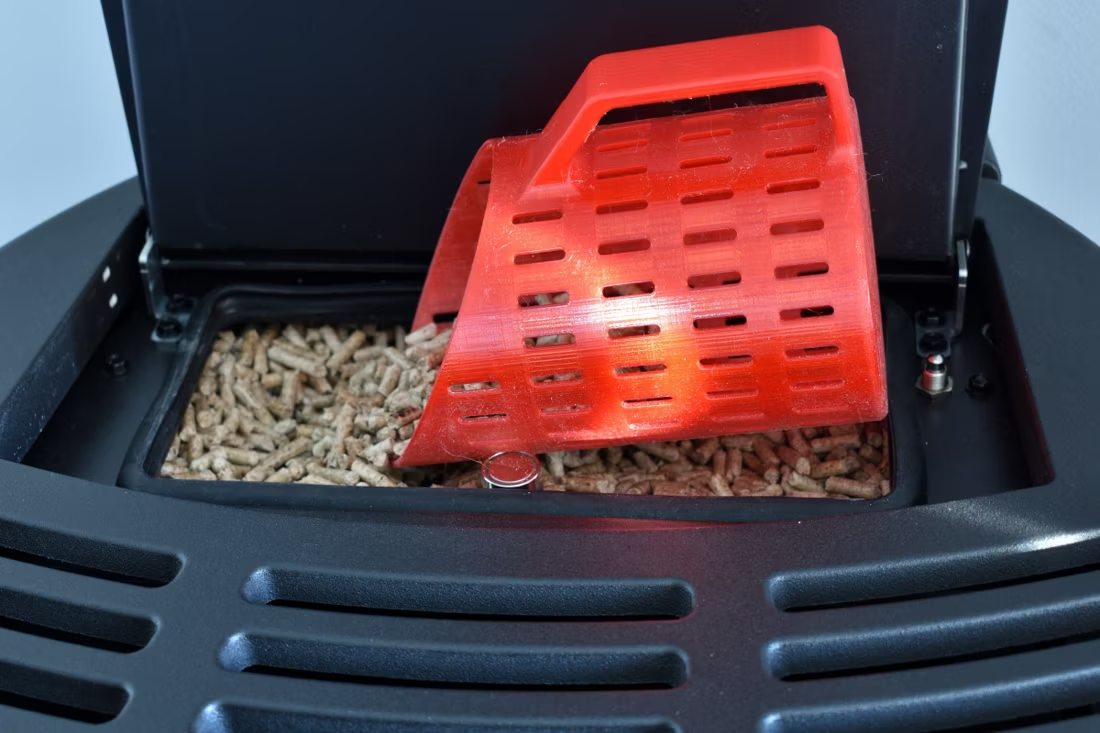
A clean pellet stove is a happy pellet stove. Plan on cleaning the burn pot about once a week when you're burning regularly—ash and clinkers gum up the air holes just like a pellet barbecue. Most pellet stove problems trace back to skipped cleaning that nobody explained up front. Some designs make it easy with a trapdoor burn pot: pull a lever and the gunk drops into the ash pan.
Why is a fireplace insert so efficient?
An insert does two things: it seals the chimney completely, so you stop losing air you already paid to heat, and it radiates warmth into the room through the firebox and glass. Most add a heat-exchange fan that pulls cool room air underneath, wraps it around the hot firebox, and pushes it back out warm. Your home is more efficient before you've even lit the first fire.
Can I install a fireplace myself?
If you're putting a fire in your house on purpose, it's best to work with an expert. Unless you're genuinely experienced in framing, gas line, vent pipe, and the national code on clearances to combustibles, have a professional do it—and ideally the same company that sells you the fireplace, so warranty, service, and liability all live under one roof.
Can a fireplace actually lower my heating bill?
Yes—by creating a comfort zone. A furnace heats every square foot of the house just to warm the one room you're in; a gas fireplace on low burns roughly a sixth of the gas a typical furnace does. Set the furnace around 55–60 degrees as a baseline, then heat the rooms your family actually uses. Families who heat this way commonly save $20–$60 a month.
Pellet Brands Stocked Around Hodgeman County
Manufacturers will point you to the nearest stocking dealer.
See if pellet heat fits your Hodgeman County home.
Given how thin the local pellet market is here, it pays to get this right before you buy anything. Tell us about your home and we'll put together a free Project Guide & Parts List—the exact parts, including the vent kit, and a trusted local dealer who can actually install and support a pellet stove in Hodgeman County.
Find Your Fireplace →