
Electric heat that plugs in—no chimney required.
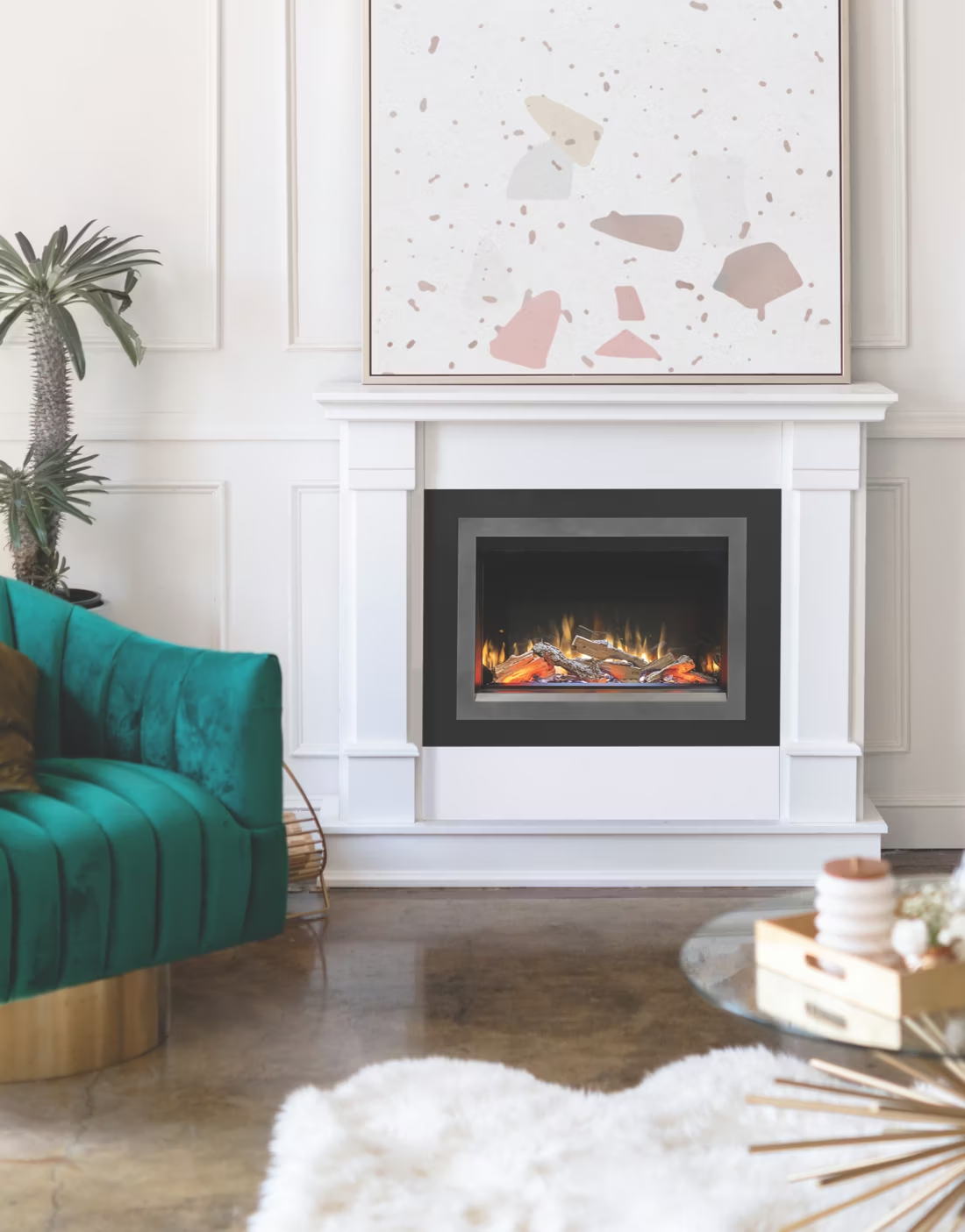
For Grant County homes around Ulysses and the surrounding wheat and cattle country, an electric fireplace adds zone heat and ambiance without venting, gas lines, or a masonry chimney. We match you with a local dealer who knows what actually works out here.
Every Project Starts From One of These Five Situations
A simple upgrade for High Plains homes.
Grant County sits on the flat, wind-exposed plains of southwest Kansas, with Ulysses as the county seat and a population under 6,000 spread across irrigated cropland and cattle operations. Climate zone 4A here brings a real but not brutal winter—average lows around 16°F and a winter heating load a good bit lighter than what Duluth or Bismarck deal with. Natural gas and propane remain the standard primary heat sources for most Grant County homes, which is exactly the kind of setup where an electric fireplace earns its keep: not as the furnace's replacement, but as fast, no-fuss zone heat for a bedroom, sunroom, or converted garage.
Grant County's housing stock includes a meaningful share of manufactured and modular homes, and electric units are a natural fit there—no floor clearance rules, no venting penetration through a metal roof, and none of the combustion-air concerns that come with a wood or gas appliance. True wood-burning setups are genuinely rare in this part of Kansas; the oak, hickory, and osage orange found locally are largely legacy shelterbelt trees planted as windbreaks, not a working fuel supply, so most homeowners looking for supplemental heat skip wood and pellet altogether and go straight to gas or electric. Victory Electric Cooperative serves most of the county, and for a built-in unit, a quick call to them or a licensed electrician about panel capacity is usually the only utility question that comes up.
Three steps. No salesperson until you're ready.
Tell us about your project
Your zip code, your situation, and the fuel you're leaning toward—or let the answers point you to one.
See what's actually available
The brands dealers within 100 miles genuinely carry—real options, never a catalog mirage.
Get your dealer & Project Guide
A trusted local dealer, plus the free Project Guide & Parts List that names every component of the job.
Frequently Asked Questions
How much does an electric fireplace installation cost in Grant County?
Plug-in units that slide into an existing opening or stand freestanding typically run $500 to $1,200 installed, since there's no venting or gas line to run. Built-in wall or linear units, which usually call for a dedicated 120V or 240V circuit and some minor framing or drywall work, run closer to $1,200 to $2,500 depending on the model and whether an electrician needs to extend a circuit from your panel. Because Grant County homes are spread out, expect installers based in Garden City or Dodge City to factor some drive time into the quote for outlying farms.
Do electric fireplaces actually put out enough heat for Grant County winters?
Most electric fireplaces are rated for around 5,000 BTU, enough to comfortably heat a single room of 300 to 400 square feet—which is exactly how they're meant to be used here. With average winter lows around 16°F and gas or propane handling the whole-house load, an electric unit is a supplemental heater for the room you're actually sitting in, not a replacement for your furnace. On the coldest days, expect it to noticeably cut your furnace's cycling in that room rather than carry the house on its own.
Are electric fireplaces a good fit for manufactured or mobile homes in the county?
Yes, and it's one of the more common installs local dealers see in Grant County given the share of manufactured housing here. Electric units don't require the floor protection, wall clearances, or roof penetration that a wood or gas appliance needs, which sidesteps a lot of the complications that come with retrofitting a manufactured home. Most models simply need a standard outlet or a dedicated circuit, both of which a local electrician can add without disturbing the home's structure.
Do I need a permit to install an electric fireplace in Grant County?
A basic plug-in unit generally doesn't require a building permit since there's no venting or gas work involved. A built-in unit that requires a new dedicated circuit typically does need an electrical permit, handled through the Grant County building and zoning office or your electrician on your behalf. If the install also involves a panel upgrade to support the new circuit, Victory Electric Cooperative may need to be looped in on the service side—your electrician can confirm whether that applies to your home.
What's the difference between an electric fireplace, insert, and stove?
An electric fireplace is typically a wall-mounted or built-in unit designed to look like a modern linear fireplace. An electric insert is sized to slide into an existing fireplace opening, which is a common route for Grant County homes with an old wood-burning firebox that's no longer used. An electric stove is a freestanding unit styled like a traditional wood stove, useful when you want the look of a stove without any venting. All three plug into standard household power, which is the main appeal for a fast, low-cost upgrade.
What does it cost to run an electric fireplace day to day?
Most electric fireplaces draw around 1,500 watts on the heat setting, which works out to roughly 15 cents an hour at typical Victory Electric Cooperative residential rates—a few dollars for an evening's use. Because you can run the flame effect alone without heat, many Grant County homeowners use theirs for ambiance on mild evenings and only switch on the heater during genuinely cold stretches, which keeps the operating cost modest compared to running a whole-house furnace longer.
Will my electric fireplace work if the power goes out?
No—electric fireplaces require power to run both the heater and the flame effect, so they won't provide backup heat during an outage. That's an important distinction for rural Grant County properties on the outskirts of Victory Electric Cooperative's lines, where winter storms can occasionally knock out power for a stretch. If backup heat during outages matters for your property, a propane or natural gas unit is worth considering alongside or instead of an electric one.
What brands of electric fireplaces are available through local dealers?
Dealers serving Grant County typically carry mainstream electric fireplace lines like Dimplex, Napoleon, and Touchstone, which cover everything from compact inserts to larger linear wall units. Availability varies by dealer, and since these are lighter, easier-to-ship products than gas or wood appliances, most dealers in the Garden City and Dodge City area can special-order a specific model if it's not in showroom stock. A local dealer visit is the fastest way to see actual flame effects and finishes in person before buying.
Electric or gas—which makes more sense for a Grant County home?
Gas—whether natural gas or propane, both standard fuel sources in this part of Kansas—delivers more heat output and, with the right ignition system, can keep running during a power outage. Electric wins on installation simplicity: no gas line, no venting, and a much lower up-front cost, which makes it the better choice for ambiance, a quick room-specific heat boost, or a manufactured home where venting a gas unit is impractical. Many Grant County households end up with gas as the primary heat source in the main living area and an electric unit in a bedroom or bonus room where a full gas install isn't worth the expense.
Can I put a TV above my fireplace?
Yes—with an asterisk. Fireplaces are hot and TVs don't like heat. Either put a mantel between them to deflect rising warmth, or choose a fireplace with heat-management technology that creates a cool zone on the wall above—the wall stays around 125 degrees, barely warm, while the room still gets full heat. If you like clean lines and don't want a mantel, heat management is the answer.
Do electric fireplaces actually produce heat?
Yes—most put out around 4,800–5,000 BTUs from a standard outlet, which comfortably warms a bedroom, office, or den as a comfort-zone heater. What they won't do is carry a whole house the way wood, gas, or pellet can. Think of electric as ambiance-first with honest supplemental heat: flames on with no heat in July, flames plus warmth in January.
Can I install a fireplace myself?
If you're putting a fire in your house on purpose, it's best to work with an expert. Unless you're genuinely experienced in framing, gas line, vent pipe, and the national code on clearances to combustibles, have a professional do it—and ideally the same company that sells you the fireplace, so warranty, service, and liability all live under one roof.
Can a fireplace actually lower my heating bill?
Yes—by creating a comfort zone. A furnace heats every square foot of the house just to warm the one room you're in; a gas fireplace on low burns roughly a sixth of the gas a typical furnace does. Set the furnace around 55–60 degrees as a baseline, then heat the rooms your family actually uses. Families who heat this way commonly save $20–$60 a month.
Stove and Fireplace Dealers in Grant County
Find your electric fireplace in Grant County.
Tell us about your home and we'll match you with a trusted local dealer and send over a free Project Guide & Parts List—the exact parts and recommended installer for your electric fireplace project in Grant County.
Find Your Fireplace →