
Find your fireplace in Grant County.
Resources for the whole county, from Ulysses out to Manter and Hickok—matched to what actually works on the southwest Kansas plains, not a national catalog of options that don't fit here.
Every Project Starts From One of These Five Situations
Southwest Kansas wind, 5,263 heating degree days, and a county sitting on one of the country's largest gas fields.
Grant County sits on the flat, largely treeless High Plains of southwest Kansas at roughly 3,000 feet, with Ulysses as the county seat and Manter and Hickok as its smaller communities. Winter lows average around 16°F and the county racks up about 5,263 heating degree days a year—a lighter load than the Dakotas but with almost nothing to break the wind, so the cold here is felt more through exposure than raw temperature. The bigger story locally is what's under the ground: Grant County sits within the Hugoton Gas Field, one of the largest natural gas fields in North America, which means natural gas service here is long-established and infrastructure is mature rather than an afterthought.
That geology shapes the hearth landscape more than the climate does. Wood stoves and wood-burning fireplaces are genuinely uncommon in Grant County—the shelterbelts and hedgerows planted across the plains include osage orange, oak, and hickory, and osage orange in particular burns hot enough to be prized firewood, but there's no working forest supply or wood-heat culture the way there is in timbered regions, so most retailers here don't stock wood units. Pellet stoves are similarly rare; pellets from brands like Lignetics and Indeck Energy Services would have to be trucked in, and demand hasn't been strong enough to build out local stove dealers or service. Gas and electric are the two fuels that actually make sense for most Grant County homes, and this hub rolls up retailers, technicians, and suppliers for both, plus honest options if you're one of the few pursuing wood or pellet anyway.
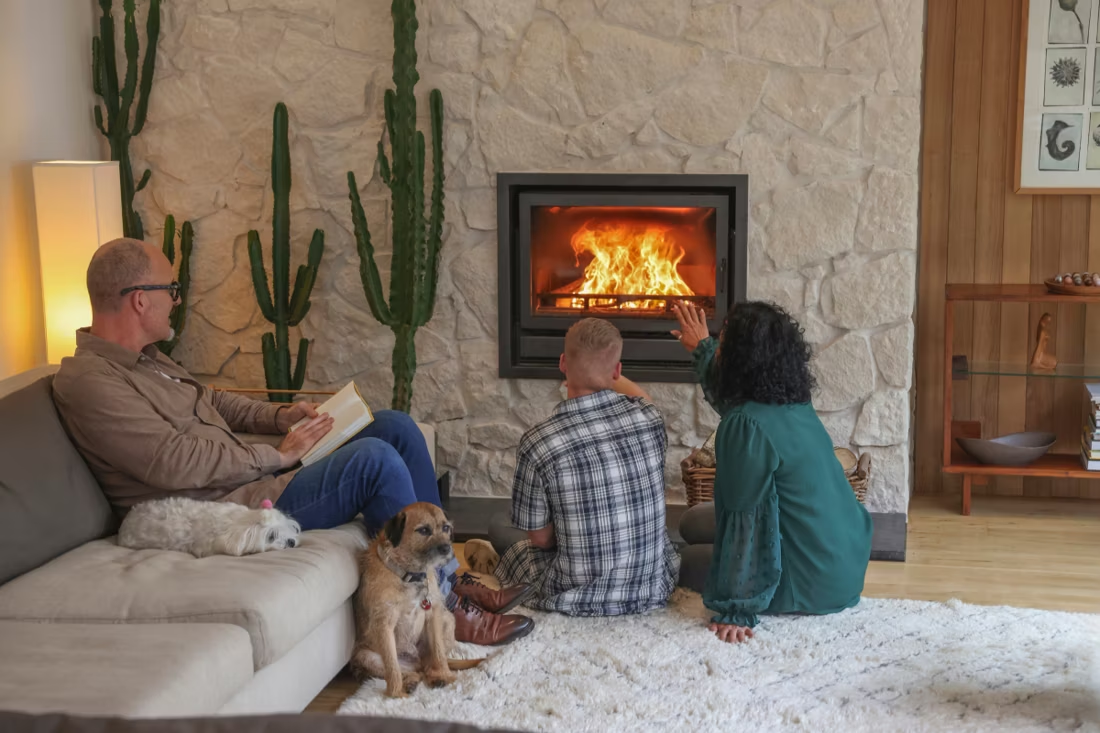
Four fuels. One honest answer for Grant County.
Three steps. No salesperson until you're ready.
Tell us about your project
Your zip code, your situation, and the fuel you're leaning toward—or let the answers point you to one.
See what's actually available
The brands dealers within 100 miles genuinely carry—real options, never a catalog mirage.
Get your dealer & Project Guide
A trusted local dealer, plus the free Project Guide & Parts List that names every component of the job.
Frequently Asked Questions
Which fireplace fuel actually makes sense in Grant County?
For most Grant County homes it comes down to gas or electric. Natural gas service here is unusually well-established because the county sits inside the Hugoton Gas Field, one of the largest gas fields in North America, so gas fireplaces, inserts, and log sets are straightforward to install and reliably fueled. Electric fireplaces work well as a supplemental heat source or for rooms without existing gas lines, though at 5,263 heating degree days they're not meant to carry a home through the coldest stretches alone. Wood and pellet stoves are the exceptions here—this is treeless High Plains country, not timber country, and while osage orange from local shelterbelts is genuinely excellent firewood, there's no working supply chain or local dealer base built around it the way there is in forested regions.
Do I need a permit to install a gas fireplace in Grant County?
Yes. Gas fireplace and insert installations typically require a permit through the county building department in Ulysses, and any new or modified gas line needs to be run by a licensed gas fitter regardless of how established the local gas supply is. Electric fireplace installs usually skip the permit process unless you're adding a new dedicated circuit for a built-in unit, in which case an electrician pulls that permit separately. Most retailers we match Grant County homeowners with handle this paperwork as part of the installation, so it's rarely something you're navigating alone.
Osage orange is supposed to be great firewood—why aren't wood stoves more common here?
Osage orange really is one of the hottest-burning firewoods available, and it does grow in shelterbelts and hedgerows across Grant County alongside oak and hickory—but those were planted as windbreaks for wheat and cattle operations, not as a managed timber supply. There's no cutting-permit system or regional firewood market the way there is in forested counties, so sourcing enough wood to heat a home through an entire winter here means relying on scattered private trees rather than a dependable supply. Because of that, most local hearth retailers don't stock wood stoves, and the few installed in the county tend to be secondary units for ambiance or occasional use rather than a home's primary heat source.
Are pellet stoves a realistic option in Grant County?
They're uncommon, and it's worth being upfront about why. Pellets from regional brands like Lignetics or Indeck Energy Services aren't produced anywhere near southwest Kansas, so they'd need to be trucked or shipped in, which raises both cost and the risk of running out mid-winter if a delivery is delayed. That logistics gap means local retailers rarely stock pellet stoves or keep parts on hand for service. If you're set on one—say, for a vacation property or a specific aesthetic—it's doable, but plan on sourcing fuel further in advance than you would in a state with local pellet mills, and confirm a dealer can actually service the unit before you buy.
Does sitting on the Hugoton Gas Field make gas fireplaces cheaper or easier here?
It makes them easier, more than it makes them cheaper. Grant County's position within the Hugoton Field means natural gas distribution infrastructure has been in the ground for decades, so extending a line to a new fireplace location or tapping an existing one is generally a simpler job than in areas where gas service is patchy or newly built out. Fireplace unit and installation pricing itself tracks with national ranges rather than local gas abundance, but the reliability of supply and the maturity of local gas-fitting expertise are real advantages if you're deciding between gas and electric for a primary hearth.
What does a fireplace installation typically cost in Grant County?
Gas fireplace, insert, or log-set installations generally run $4,000–$9,000 depending on whether an existing gas line is being tapped or a new run is needed across the house. Electric fireplaces are the more affordable route in most cases—$200–$3,000 for the unit itself, plus $400–$1,200 in labor if you're adding a dedicated circuit or a built-in surround rather than a plug-and-play placement. Because wood and pellet units are special-order here, expect their installed cost to run higher than national averages once shipping and limited local service availability are factored in—worth discussing directly with a retailer before committing to either fuel.
Can I install a fireplace myself?
If you're putting a fire in your house on purpose, it's best to work with an expert. Unless you're genuinely experienced in framing, gas line, vent pipe, and the national code on clearances to combustibles, have a professional do it—and ideally the same company that sells you the fireplace, so warranty, service, and liability all live under one roof.
I know I want a fireplace—where do I actually start?
Do two things today: snap a photo of the wall or fireplace you want to transform, and take a tape measure to the space—width, height, depth. Those two artifacts answer most of a hearth professional's first questions. Then settle fuel (wood, gas, pellet, or electric) and set a realistic budget: $3,900–$5,500 covers fireplace, vent, and basic install for most homes.
What is an in-home preview and do I need one?
It's a visit where a hearth professional measures your space, confirms the model you picked actually works in your home, and walks the specs—framing, gas line, venting, finish work—before anything is ordered. Some details you just can't know until you see the house. Never make a down payment without one; it's the single most-skipped step that burns buyers.
Can a fireplace actually lower my heating bill?
Yes—by creating a comfort zone. A furnace heats every square foot of the house just to warm the one room you're in; a gas fireplace on low burns roughly a sixth of the gas a typical furnace does. Set the furnace around 55–60 degrees as a baseline, then heat the rooms your family actually uses. Families who heat this way commonly save $20–$60 a month.
Stove and Fireplace Dealers in Grant County
Listings include WhyFire partner dealers, dealers we have verified as authorized for the brands we recommend, and established local businesses that carry hearth products. Every listing shows which one it is. The ones marked Preferred run on WhyFire's software, so they can show you real pricing and book your appointment right here. No manufacturer pays for placement. How we verify dealers →
Premier Homes
Builders FirstSource-Garden City, Ks
Get matched with a local Grant County dealer.
Tell us about your home and we'll put together a free Project Guide & Parts List—the right unit for southwest Kansas conditions, the vent or wiring it needs, and the local dealer we recommend for your project.
Find Your Fireplace →