
Instant heat for Graham County's plains winters.
Graham County has a heating season about as demanding as Fargo, North Dakota's, with winter lows near 16°F and high plains wind that cuts through drafty farmhouses fast. From Hill City to Morland, Penokee, and Bogue, find the right gas fireplace or insert and get matched with a vetted local dealer.
Every Project Starts From One of These Five Situations
Reliable heat when the plains wind won't quit.
Graham County sits on the high plains of northwest Kansas, home to about 1,820 residents spread across Hill City, Morland, Penokee, and Bogue. Winters here run cold and windy—a heating season about as demanding as Fargo, North Dakota's, average lows around 16°F, and the kind of open-country wind that strips heat out of older farmhouses faster than the thermometer suggests. It's a climate closer to Fargo, North Dakota than to most of the rest of Kansas in terms of how hard a home has to work to stay warm through January and February.
Wood heat has deep roots here—oak, hickory, and osage orange (hedge) grow throughout the county and have fueled farmhouse stoves for generations. But gas has become the practical choice for a lot of Graham County households, especially for daily living-room heat. Municipal natural gas service is limited outside Hill City, so most rural homes and outlying towns rely on propane, delivered and stored in a tank on the property. Either way, a direct-vent gas fireplace or insert gives you heat at the flip of a switch, backup warmth during the ice storms that periodically knock out power on the plains, and none of the wood-splitting that a harsh, wind-driven winter otherwise demands.
Three steps. No salesperson until you're ready.
Tell us about your project
Your zip code, your situation, and the fuel you're leaning toward—or let the answers point you to one.
See what's actually available
The brands dealers within 100 miles genuinely carry—real options, never a catalog mirage.
Get your dealer & Project Guide
A trusted local dealer, plus the free Project Guide & Parts List that names every component of the job.
Frequently Asked Questions
How much does a gas fireplace installation cost in Graham County?
A gas fireplace or insert installation in Graham County typically runs $3,500 to $9,500, depending on the unit, whether you're on propane or in the limited natural gas service area near Hill City, and how much gas line work is needed. Homes already set up with a propane tank and gas appliances tend to land on the lower end. New propane tank installation, longer gas line runs out to a detached living space, or full masonry-to-gas insert conversions push costs toward the higher end. Because Graham County is sparsely populated, expect your installer to build a modest travel charge into the estimate if you're out past Morland, Penokee, or Bogue.
Can I convert my existing wood fireplace to gas?
Yes. Many older farmhouses across Graham County still have masonry fireplaces originally built for oak, hickory, or osage orange firewood, and a gas insert is a common upgrade—it slides into the existing opening, uses a stainless liner run through your current chimney, and hooks to either a propane tank or, in Hill City, natural gas service where available. The conversion typically runs $4,000 to $8,500 depending on the insert and whether new gas line work is required, and it eliminates the ash and wood-splitting that came with keeping the original fireplace running.
Do I need natural gas, or should I plan on propane?
Most of Graham County will be planning on propane. Municipal natural gas service is limited to parts of Hill City; homes in Morland, Penokee, Bogue, and the surrounding farm country run on propane, either from an existing tank or a new one set by a regional propane supplier. Nearly every gas fireplace and insert on the market can be configured for propane just as easily as natural gas—your installer sets the correct orifice and regulator for whichever fuel you're on.
Will my gas fireplace work during a power outage?
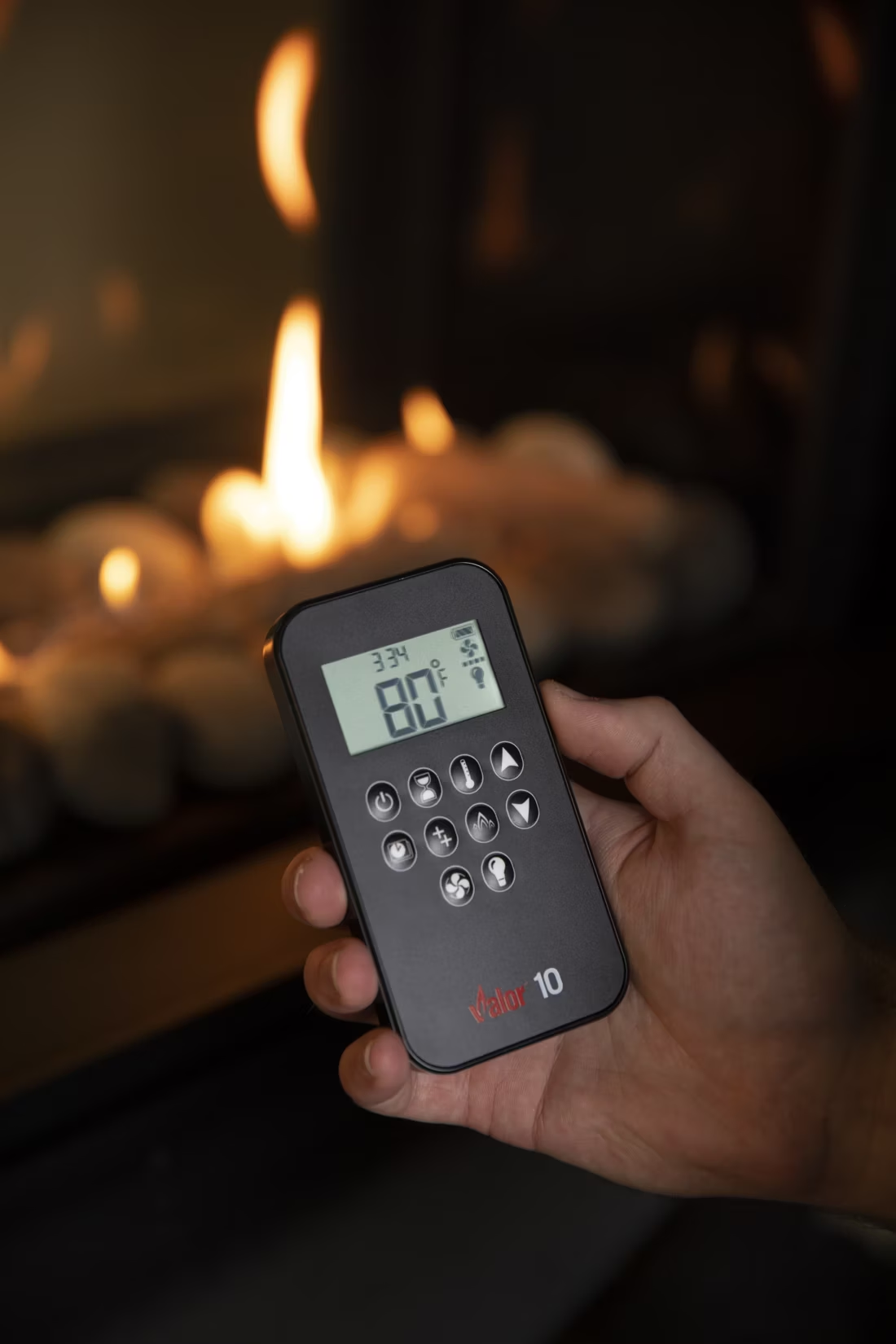
Most modern gas fireplaces will, which matters in a county where ice storms and high wind periodically take down rural power lines for a day or more. Units with intermittent pilot ignition (IPI) run on battery backup—keep fresh AAs in the unit and it'll light on demand with no power at all. Valor fireplaces take a different approach: the pilot's thermocouple generates its own electricity, so there's no battery to remember. For a Graham County home relying on a single rural power line, that kind of self-powered ignition is worth asking your local dealer about.
What's the difference between a gas fireplace, gas insert, and gas stove?
A gas fireplace is a built-in unit framed into a wall—the right call for new construction or a remodel that doesn't have an existing chimney. A gas insert drops into an existing masonry fireplace opening and uses that chimney (lined) for venting—the common choice for Graham County's older farmhouses. A gas stove is a freestanding unit that sits on the floor like a wood stove but burns propane or natural gas, useful in a room without any existing fireplace or chimney at all. For most homes here with an existing hearth, an insert is the simplest and most cost-effective path.
Do I need a permit to install a gas fireplace in Graham County?
Yes—gas line work requires permitting and a licensed gas-fitter regardless of whether you're inside Hill City limits or in unincorporated Graham County. Permits for gas fireplace and line installations go through the Graham County building office, and most local hearth dealers handle that paperwork as part of the install so you're not coordinating it yourself. Rural installs also typically involve coordinating with a propane supplier on tank placement and lines, which a full-service installer will manage alongside the fireplace work.
Should I choose a vented or vent-free gas fireplace?
Graham County has no air quality restrictions or non-attainment concerns, so either option is legal here, but vented (direct-vent) units are still the better recommendation for most homes. Direct-vent fireplaces draw combustion air from outside and exhaust it back outside through a sealed pipe, so they don't affect indoor air quality—important in tightly built farmhouses where a vent-free unit's moisture and combustion byproducts have nowhere to go. Vent-free units can work for occasional supplemental heat in a well-ventilated space, but for daily-use heat in a Graham County home, vented is the safer, more universally recommended choice.
How often should my gas fireplace be serviced?
An annual inspection is standard for any gas-burning appliance, checking the burner, pilot, gas connections, and venting, along with a cleaning of the glass and interior. Because Graham County is rural and certified hearth technicians are more concentrated in larger nearby towns like Hays, it's worth scheduling your annual service in late summer before the winter rush, rather than waiting until the first cold snap when appointment slots fill up fast.
Gas vs. wood—which is right for my home?
Wood has a long history in Graham County—oak, hickory, and osage orange are all locally available and burn hot, and a wood stove keeps working with zero electricity, which matters when a plains ice storm takes down the power line. Gas trades that self-sufficiency for convenience: instant on-off heat, no splitting or hauling wood, and a cleaner look with no ash or soot. For a lot of Graham County households, the practical answer is both—gas for the daily heat in the main living space, wood as backup and for the farmhouses where a wood stove has always been part of the setup.
Why is my open fireplace making my house colder?
Open fireplaces suck—literally. As the fire burns, it consumes air your furnace already paid to heat and pulls it out through the chimney, so the house is actually colder after the fire goes out than before you lit it. An insert fixes this: it seals the chimney, puts fixed glass across the front, and turns that hole in your house into a real heat source.
What's the difference between an insert and a zero-clearance fireplace?
An insert is a fireplace that slides into a pre-existing wood-burning fireplace—if you don't have one, there's nothing to insert it into. A zero-clearance fireplace is built into a framed wall, which makes it the answer for remodels and new construction. Simple test: existing masonry fireplace means insert; blank or framed wall means zero-clearance.
What is an in-home preview and do I need one?
It's a visit where a hearth professional measures your space, confirms the model you picked actually works in your home, and walks the specs—framing, gas line, venting, finish work—before anything is ordered. Some details you just can't know until you see the house. Never make a down payment without one; it's the single most-skipped step that burns buyers.
How much should I budget for a fireplace?
For an average home—covering the fireplace, the vent pipe, and basic installation—a budget between $3,900 and $5,500 gives you a lot of options across wood, gas, and pellet. By the time you add finish work, gas line, and electrical, the average complete installation lands between $5,000 and $12,000 all-in. In a remodel or new build, a good rule is to put about 2.5% of the total project cost toward the fireplace.
Find your gas fireplace in Graham County.
Tell us about your home and heating goals, and we'll match you with a trusted local dealer serving Graham County, plus a free Project Guide & Parts List—the exact parts, including the vent kit, for your gas fireplace project.
Find Your Fireplace →