
Every fuel type, every town in Graham County.
Wood, gas, pellet, and electric fireplace resources for the whole county—from in-town Hill City to farmsteads out toward Morland, Penokee, and Bogue. Pick a fuel and get matched with a local dealer who actually installs it here.
Every Project Starts From One of These Five Situations
5,739 heating degree days on the high plains, with a hearth culture built on osage orange and oak.
Graham County sits on the high plains of northwest Kansas, with Hill City as the county seat and wide stretches of wheat farmland and cattle ground in between. Average winter lows near 16°F and 5,739 heating degree days put the county in comparable heating-load territory to Buffalo, New York—a long, genuinely cold season, made harder by the wind that comes with open, unbroken plains exposure. Oak and hickory grow along the county's creek bottoms, but the wood most local households reach for is osage orange, planted across the region as farmstead shelterbelts generations ago; it's dense, high-BTU, and burns hot enough to carry a stove through an overnight plains cold snap.
Graham County carries no air quality non-attainment designation and no winter curtailment program, so wood burning here isn't subject to the kind of restrictions found in inversion-prone basins elsewhere in the country—permitting is straightforward, and the limiting factor is usually distance rather than regulation. With a population under 2,000 spread across Hill City, Morland, Penokee, and Bogue, most hearth retailers and installation crews are actually based out of Hays, roughly half an hour southeast, and travel into the county for jobs. This hub rolls up wood, gas, pellet, and electric resources for every town in Graham County. Pick your fuel below for local dealers, install costs, and unit recommendations suited to a high-plains farmstead or an in-town Hill City home.
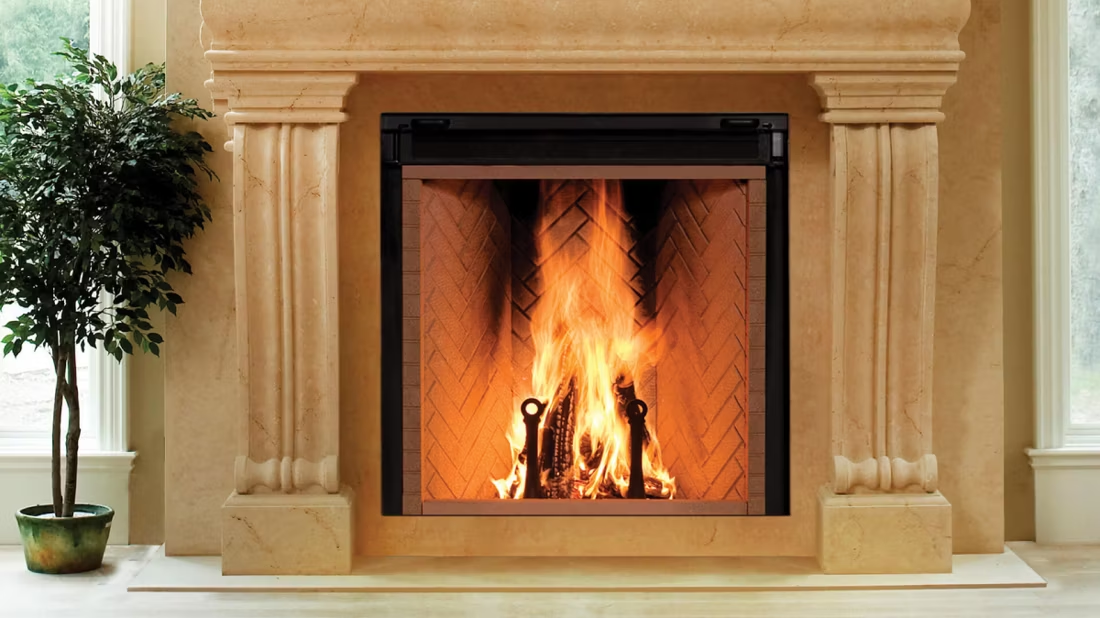
Four fuels. One honest answer for Graham County.
Three steps. No salesperson until you're ready.
Tell us about your project
Your zip code, your situation, and the fuel you're leaning toward—or let the answers point you to one.
See what's actually available
The brands dealers within 100 miles genuinely carry—real options, never a catalog mirage.
Get your dealer & Project Guide
A trusted local dealer, plus the free Project Guide & Parts List that names every component of the job.
Frequently Asked Questions
Which fireplace fuel makes the most sense in Graham County?
All four fuels work here, but which one fits depends on your setup. Wood is the traditional backbone in this part of northwest Kansas—oak and hickory from farmstead windbreaks are common, and osage orange (hedge), planted across the county as shelterbelts a century ago, burns so dense and hot that a lot of local households treat it as their go-to overnight wood. Gas fireplaces and inserts are popular for convenience, though most rural homes here run on propane rather than piped natural gas, since gas mains don't reach every farmstead across a county this sparsely populated. Pellet stoves have a following too—Lignetics and Indeck Energy Services both distribute into this part of Kansas—and they're a lower-maintenance option if you don't want to split and stack wood every fall. Electric fireplaces work well as supplemental heat in a bedroom or living room addition, but with 5,739 heating degree days and winter lows averaging 16°F, they're not what most homes here rely on to get through January.
Do I need a permit to install a fireplace or stove in Graham County?
Most installations do require a permit, whether you're putting in a wood stove, a gas insert, or a pellet unit. Building permits for the county run through the Graham County building office at the courthouse in Hill City; if your project involves running or extending a gas line, you'll also need a licensed propane or gas fitter to sign off on that portion separately. Electric fireplaces usually skip the permit process unless you're hardwiring a built-in unit that requires a new circuit. Because Graham County isn't a designated non-attainment area, there's no additional emissions paperwork or curtailment restriction layered on top of the standard building permit—that's one less hurdle than counties dealing with winter inversion problems.
Is osage orange actually a good firewood, and where does it come from locally?
It's some of the hottest-burning firewood available, and it's practically native to this part of Kansas—osage orange, often called hedge, was planted across Graham County by the thousands as windbreaks and shelterbelts starting in the early 1900s. It's dense enough that a properly sized stove loaded with hedge alongside oak or hickory will hold heat well into a cold plains night. The tradeoff is that it throws sparks more than oak does, so it's worth asking your installer whether your stove and hearth pad are rated for it, and most local burners save it for overnight loads rather than the first fire of the evening.
How do I find a dealer if I live outside Hill City?
With a county population under 2,000 spread across Hill City, Morland, Penokee, and Bogue, there isn't a hearth retailer on every corner—most dealers serving Graham County are actually based out of Hays, about 30 to 40 minutes southeast, and run installation crews out to farmsteads and in-town homes across the county. That's normal for this part of Kansas, and it doesn't mean service quality suffers; it just means scheduling a visit usually means planning a day or two ahead rather than a same-day appointment. We match you with a dealer whose service area and fuel lineup actually covers your address rather than the nearest name on a map.
What should I expect for installation and service on a rural Graham County property?
Expect a trip charge built into quotes for farmsteads outside Hill City, and expect installers to pay close attention to wind when they size and place venting—this county sits wide open on the high plains, and a chimney cap or gas vent that isn't rated for sustained wind exposure can cause downdraft problems that a sheltered-lot install in a bigger town wouldn't run into. It's worth booking your annual chimney sweep or gas inspection in late summer, before harvest and before the first cold snap, since technician schedules tighten up once temperatures start dropping into the 16°F winter-low range this county sees on average.
What does a fireplace installation typically cost in Graham County?
Pricing here tracks fairly close to regional Kansas averages, with a modest add for travel if you're on a farmstead outside Hill City. Wood stove or insert installs generally run $3,800–$8,500, depending on chimney work. Gas fireplaces, inserts, and stoves run roughly $4,000–$10,000, and that range shifts depending on whether you're tying into an existing propane tank or running new gas line. Pellet stove or insert installs typically land at $4,200–$7,000. Electric fireplaces are the most affordable entry point—usually $200–$2,800 for the unit, plus $300–$1,000 in labor if it's more than a plug-and-play placement. The county + fuel pages above break these down further with dealer-specific pricing.
Does a fireplace add value to my home?
On average, a fireplace adds back to the home about the same amount you spent installing it. Add the monthly savings from heating the rooms you actually use instead of the whole house—often hundreds of dollars a year—and the value case is strong before you even count what a fire does for how your family uses the room.
Wood, gas, pellet, or electric—how do I choose?
Match the fuel to your life, not the other way around. Wood: lowest fuel cost and total power-outage independence, but you're hauling and stacking. Gas: press a button, set a thermostat, no maintenance to speak of. Pellet: wood economics with automatic feeding, in exchange for weekly cleaning and a need for electricity. Electric: plugs in anywhere with honest supplemental heat. Nobody regrets the fuel that fits how they actually live.
What is an in-home preview and do I need one?
It's a visit where a hearth professional measures your space, confirms the model you picked actually works in your home, and walks the specs—framing, gas line, venting, finish work—before anything is ordered. Some details you just can't know until you see the house. Never make a down payment without one; it's the single most-skipped step that burns buyers.
Can a fireplace actually lower my heating bill?
Yes—by creating a comfort zone. A furnace heats every square foot of the house just to warm the one room you're in; a gas fireplace on low burns roughly a sixth of the gas a typical furnace does. Set the furnace around 55–60 degrees as a baseline, then heat the rooms your family actually uses. Families who heat this way commonly save $20–$60 a month.
Get matched with a local Graham County dealer.
Pick your fuel below and we'll put together a free Project Guide & Parts List—the right unit, the vent kit it needs, and the local dealer we recommend for your Graham County project.
Find Your Fireplace →