
Steady, low-fuss heat for Franklin County winters.
With a heating season comparable to Madison, Wisconsin and overnight lows that settle around 18°F, Franklin County gets cold enough to need real heat—without the splitting and stacking that oak and hickory firewood demand. Find the right pellet stove or insert and connect with a trusted local dealer.
Every Project Starts From One of These Five Situations
Consistent heat without the wood pile.
Franklin County's winter heating load puts it in roughly the same territory as Madison, Wisconsin, though the winters here are gentler—average lows hover around 18°F rather than the extended sub-zero stretches Madison sees. Still, that's a real heating season, and it stretches from Ottawa down through Wellsville, Pomona, and Rantoul long enough that homeowners want something more consistent than tending an open wood fire through oak and hickory country every night.
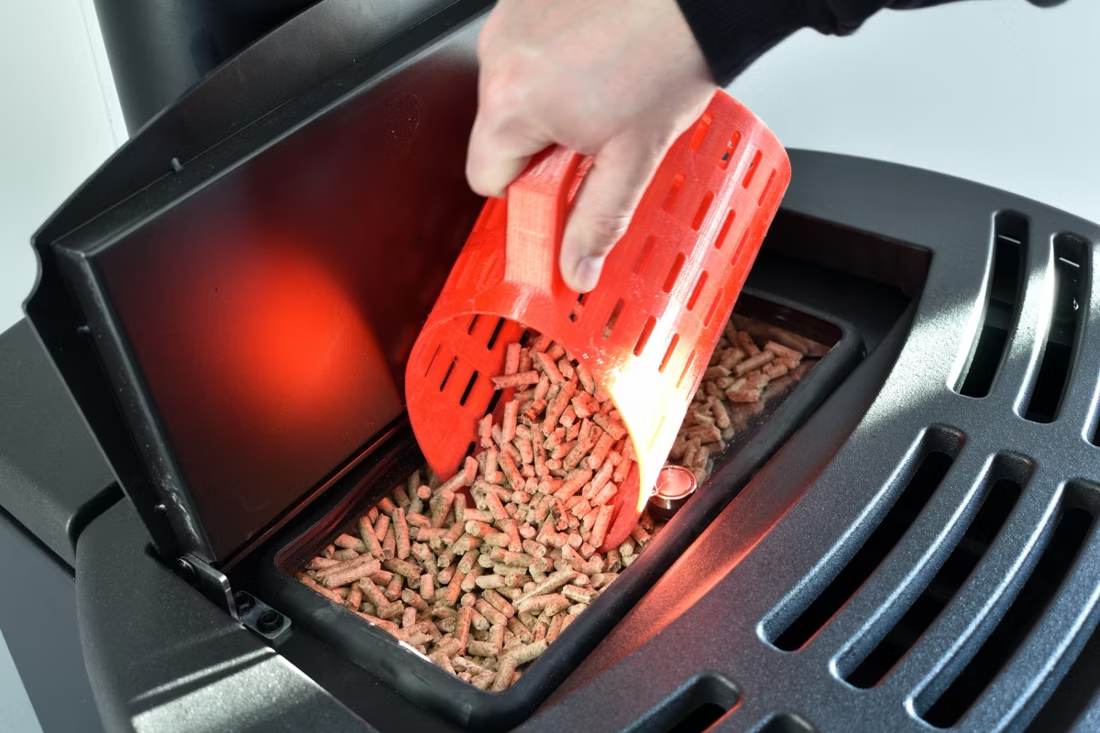
Franklin County has no air quality non-attainment designation and no winter burn restrictions, so the draw toward pellet heat here isn't about smoke—it's about convenience and steady output. A pellet stove loads from a hopper, runs on a thermostat, and burns cleaner and more consistently than cordwood, without the labor of splitting osage orange hedgerow wood or seasoning oak for a year before it's ready to burn. Lignetics and Indeck Energy Services both distribute bagged pellets through the region, and most local hearth dealers can set up either delivery or a standing pickup arrangement for the season.
Three steps. No salesperson until you're ready.
Tell us about your project
Your zip code, your situation, and the fuel you're leaning toward—or let the answers point you to one.
See what's actually available
The brands dealers within 100 miles genuinely carry—real options, never a catalog mirage.
Get your dealer & Project Guide
A trusted local dealer, plus the free Project Guide & Parts List that names every component of the job.
Frequently Asked Questions
How much does a pellet stove installation cost in Franklin County?
Most pellet stove and insert installations in Franklin County run $3,000 to $6,500, depending on whether you're installing a freestanding stove with a simple through-wall vent kit or a pellet insert into an existing masonry fireplace. Inserts typically run toward the higher end because of the liner and surround work involved. Homes in Ottawa or Wellsville with easy access for delivery tend to land on the lower end; rural properties outside town may see a modest travel charge added to the install quote. A local dealer will give you a firm number after seeing your fireplace or install location in person.
Pellet stove vs. wood stove—which makes more sense for my home?
Wood is abundant in Franklin County—oak, hickory, and dense osage orange from old hedgerows are all common and burn hot—but splitting, stacking, and seasoning that wood is real labor, and an open wood stove needs tending every few hours. A pellet stove loads from a hopper and runs on a thermostat, often for 24 hours or more between refills, with far less ash and no chimney creosote to manage. The tradeoff is that pellet stoves need electricity to run the auger and blower, so during an ice storm outage—which does happen in eastern Kansas winters—a pellet stove without a battery backup won't run. If backup heat during outages matters most to you, wood or a pellet stove paired with a small battery backup are both worth discussing with a local dealer.
Where do I buy pellet fuel in Franklin County?
Lignetics and Indeck Energy Services both distribute bagged pellets into the eastern Kansas market, and most local hearth dealers either stock pellets directly or can point you to a nearby farm and ag supply store that carries them by the pallet. Typical pricing in this region runs roughly $230 to $280 per ton in 40-pound bags, with better per-ton pricing if you buy a full pallet (usually 50 bags, or one ton) ahead of the season rather than a bag at a time. Buying early in the fall, before the first cold snap drives up local demand, is generally the better move.
What size pellet stove do I need for my home?
Sizing depends on square footage, insulation, and whether the stove is your primary heat source or a supplement to central heat. In Franklin County's climate zone—moderately cold with real winter lows but not extreme by national standards—a small to mid-size pellet stove (rated for 1,000 to 1,800 square feet) handles most single-family homes as primary heat, while larger farmhouses or drafty older homes around Ottawa and Pomona may need a stove rated for 2,000+ square feet. A local dealer will size the unit based on an in-home look at your layout rather than square footage alone.
Do I need a permit to install a pellet stove in Franklin County?
Most jurisdictions in Kansas require a building permit for a new solid-fuel heating appliance, and Franklin County is no exception—check with the county's building or codes office, or with city hall if you're inside Ottawa or Wellsville city limits, before installation. Because a pellet stove vents through a simpler PL-rated pipe rather than a full masonry chimney, the permitting and inspection process is usually more straightforward than a wood stove install. Most local dealers handle the permit paperwork as part of the installation so you don't have to track it down yourself.
What's the best pellet stove for Franklin County's climate?
For a heating season with real cold stretches but not extreme lows, a mid-size pellet stove with a large hopper (40-60 lbs) is a good fit for most Franklin County homes—it gets you through an overnight burn without a refill and holds steady output through the coldest nights of the year. Brands like Harman and Quadra-Fire are commonly carried by regional hearth dealers and hold up well to daily winter use. If backup power during outages is a priority, ask about models compatible with a small battery backup system, since the auger and blower both require electricity to run.
How is a pellet stove vented, and is that different from a wood stove?
Pellet stoves vent through a smaller PL-rated pipe, typically routed straight out a side wall rather than up through a full masonry or Class A chimney. That makes installation faster and generally cheaper than a wood stove, especially in homes without an existing chimney—which is common in newer construction around Ottawa and the surrounding townships. A pellet insert going into an existing fireplace still uses the chimney as a chase for the vent pipe, but the pipe itself is much smaller in diameter than what a wood-burning insert requires.
How much maintenance does a pellet stove need?
Pellet stoves need more frequent light maintenance than a wood stove but less heavy cleaning. Plan on emptying the ash pan weekly during regular winter use, cleaning the burn pot every few days to keep the flame consistent, and vacuuming the hopper and heat exchanger tubes every few weeks. An annual professional service—checking the auger motor, gaskets, and exhaust blower—is worth scheduling in late summer before the heating season starts, the same way you'd schedule a chimney sweep for a wood stove.
Pellet vs. gas—which is right for my home?
Gas fireplaces offer instant on-off operation with a remote or wall switch and no fuel to load, which suits homeowners who want zero-maintenance daily heat. Pellet stoves take a bit more hands-on effort—loading the hopper, emptying ash—but burn a renewable, often cheaper fuel and give you the visual and radiant feel of a real fire, which propane and natural gas units in Franklin County's mostly rural, propane-served areas can't fully match. For homes without natural gas service and reliant on propane delivery, pellet fuel can also be a more predictable cost than propane, which fluctuates seasonally. A local dealer can walk through both options against your specific home and utility setup.
What's the difference between an insert and a zero-clearance fireplace?
An insert is a fireplace that slides into a pre-existing wood-burning fireplace—if you don't have one, there's nothing to insert it into. A zero-clearance fireplace is built into a framed wall, which makes it the answer for remodels and new construction. Simple test: existing masonry fireplace means insert; blank or framed wall means zero-clearance.
Why is my open fireplace making my house colder?
Open fireplaces suck—literally. As the fire burns, it consumes air your furnace already paid to heat and pulls it out through the chimney, so the house is actually colder after the fire goes out than before you lit it. An insert fixes this: it seals the chimney, puts fixed glass across the front, and turns that hole in your house into a real heat source.
What is an in-home preview and do I need one?
It's a visit where a hearth professional measures your space, confirms the model you picked actually works in your home, and walks the specs—framing, gas line, venting, finish work—before anything is ordered. Some details you just can't know until you see the house. Never make a down payment without one; it's the single most-skipped step that burns buyers.
Does a fireplace add value to my home?
On average, a fireplace adds back to the home about the same amount you spent installing it. Add the monthly savings from heating the rooms you actually use instead of the whole house—often hundreds of dollars a year—and the value case is strong before you even count what a fire does for how your family uses the room.
Pellet Brands Stocked Around Franklin County
Manufacturers will point you to the nearest stocking dealer.
Find your pellet stove in Franklin County.
Tell us a bit about your home and we'll match you with the right pellet stove or insert, plus a free Project Guide & Parts List with your recommended local dealer in Franklin County.
Find Your Fireplace →