
Instant heat for De Soto's fastest-growing neighborhood.
With new subdivisions rising near the Panasonic plant and along the Kansas River bluffs, gas fireplaces are the practical choice for De Soto's newest homes. Find the right unit and get matched with a trusted local dealer.
Every Project Starts From One of These Five Situations
A growing suburb built on natural gas convenience.
De Soto sits at 858 feet in the Kansas River valley of Johnson County, in climate zone 4A with a solid multi-month heating season and average winter lows near 18°F. That's a real Midwestern winter—cold enough to matter, but nowhere near the brutal, months-long deep freeze of Fargo, ND or Duluth, MN. Historically a small farm town, De Soto is now one of the fastest-growing addresses in the Kansas City metro, thanks in large part to the Panasonic EV battery plant that broke ground nearby—and that growth means a wave of new-construction homes already wired and plumbed for gas.
Most new subdivisions going up around De Soto tie into natural gas mains serving Johnson County, with propane as the standard fallback on the rural edges of town where lines haven't reached yet. Unlike parts of the country dealing with winter inversion or wildfire smoke advisories, De Soto has no listed air quality concerns—there's no non-attainment status here restricting burning. For homeowners who want zone heat that switches on instantly, works alongside a furnace, and doesn't require managing firewood, a gas fireplace or insert is usually the natural fit in this market.
Three steps. No salesperson until you're ready.
Tell us about your project
Your zip code, your situation, and the fuel you're leaning toward—or let the answers point you to one.
See what's actually available
The brands dealers within 100 miles genuinely carry—real options, never a catalog mirage.
Get your dealer & Project Guide
A trusted local dealer, plus the free Project Guide & Parts List that names every component of the job.
Frequently Asked Questions
How much does a gas fireplace installation cost in De Soto?
Costs vary with the unit, venting path, and whether new gas line work is required, but homeowners in the Johnson County area typically budget $3,500 to $8,500 for a direct-vent gas fireplace or insert installation. New-construction homes going into De Soto's newer subdivisions often land on the lower end since the gas line and framing are already roughed in during the build. Older homes near the historic De Soto core, or installations requiring a longer gas line run from the meter, tend toward the higher end. A local dealer will give you a firm number after seeing your specific setup.
Can I convert my existing wood fireplace to gas?
Yes, and it's a common project in De Soto's older homes, many of which have masonry fireplaces originally built to burn local oak, hickory, or osage orange. A gas insert typically slides into that existing firebox, using a stainless liner run up the chimney as the vent path, which keeps the exterior look of the fireplace intact while eliminating the wood handling and ash cleanup. Because wood heat is not particularly common as a primary heat source in this fast-growing Johnson County suburb, most homeowners making this switch are doing it for convenience rather than replacing a heat source they actually rely on.
Do I need natural gas service, or can I use propane?
Either works. Homes inside De Soto's newer subdivisions are generally tied into natural gas mains as part of the Johnson County utility grid, which makes adding a fireplace straightforward if you already have gas to a furnace or water heater. Homes on the rural fringes of town, where mains haven't been extended yet, typically run on propane with a tank installed on the property. Most gas fireplace models can be set up for either fuel—your installer just configures the correct orifice and regulator for whichever you have.
Will my gas fireplace still work if the power goes out?
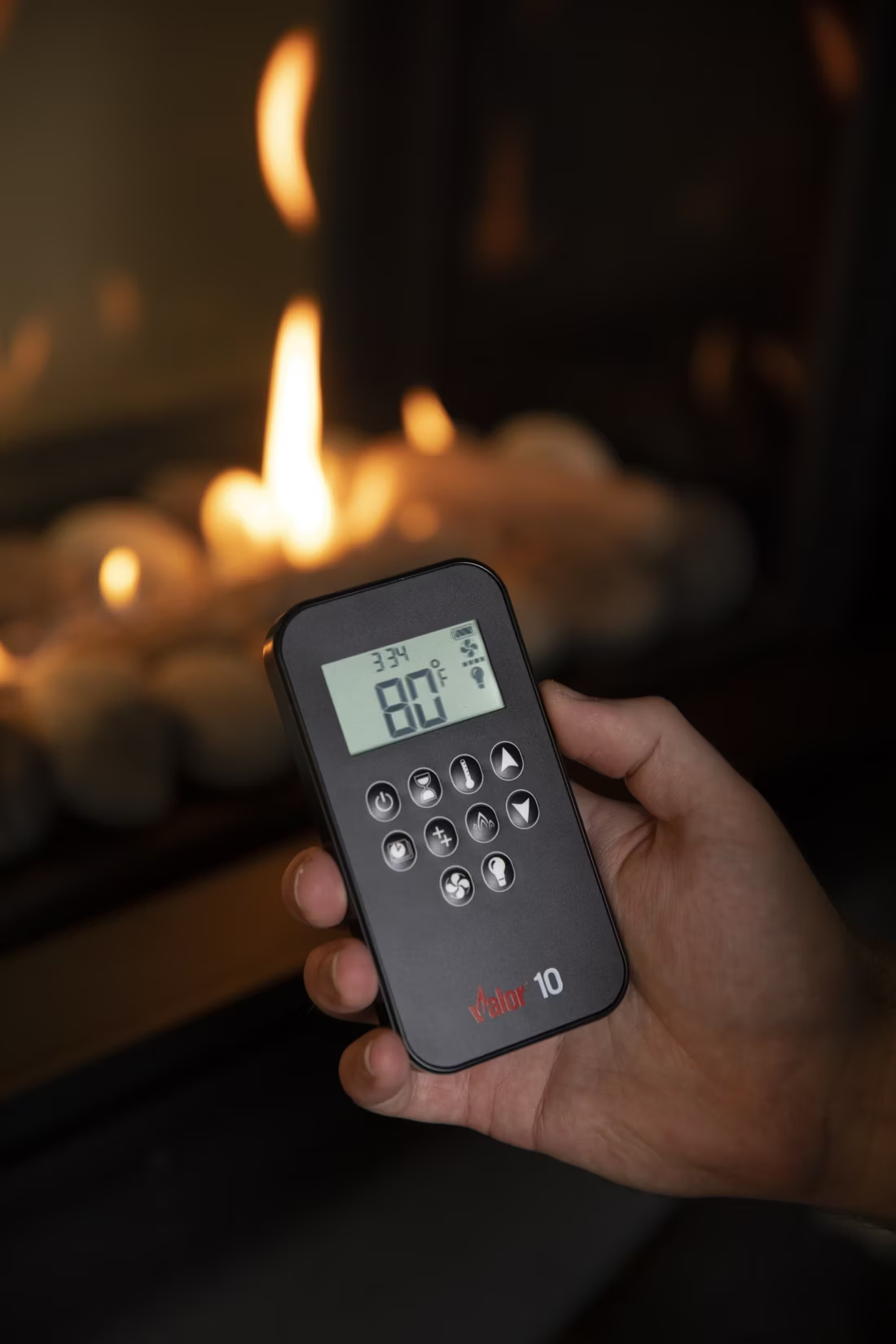
Most modern direct-vent gas fireplaces will, provided they have a battery backup. Units with intermittent pilot ignition (IPI) run on AA batteries that automatically kick in when Evergy Kansas Central power drops, so the fireplace still lights on demand. Some brands, notably Valor, skip batteries entirely and generate their own current off the pilot's thermocouple—one less thing to maintain. Given De Soto's exposure to Midwestern ice storms and spring severe weather, it's worth asking your local dealer which ignition system a given model uses before you buy.
What's the difference between a gas fireplace, gas insert, and gas stove?
A gas fireplace is a fully built-in unit framed into a wall—the standard choice for new construction, which describes a lot of what's being built around De Soto right now. A gas insert drops into an existing masonry firebox and uses the chimney as its vent, which suits the town's older homes. A gas stove is a freestanding cabinet-style unit that sits on the floor, useful in a room without an existing chimney or framed opening. Which one fits depends mostly on whether you're building new, renovating, or upgrading an existing fireplace.
Do I need a permit to install a gas fireplace in De Soto?
Generally yes—as is standard across Johnson County, a new gas fireplace installation typically requires both a building permit and a gas line permit, the latter requiring a licensed gas-fitter. Check with the City of De Soto Building Department for the current requirements on your project. Most established hearth dealers handle the permitting and inspection coordination as part of the installation, which is one reason to avoid a big-box or handyman install for anything involving a new gas line.
Vented vs. vent-free gas fireplaces—what should I know?
Vented (direct-vent) units draw combustion air from outside and exhaust it back outside through sealed pipe—they're the safer, more universally recommended option and the one most local dealers push for primary installations. Vent-free units burn directly into the room air; they're legal in Kansas but come with strict room-sizing and oxygen-depletion-sensor requirements, and some states restrict them outright. Since De Soto has no listed air quality restrictions of its own, either option is technically available here, but for new-construction homes going up around town, direct-vent is almost always the standard choice.
How often does a gas fireplace need to be serviced?
Plan on an annual inspection, ideally before the first cold snap each fall. A technician checks the burner, pilot assembly, venting, and any electronic ignition parts, and cleans the glass. This is a much lighter lift than wood chimney sweeping—most gas appliance service visits in the Kansas City metro run $150 to $250—but skipping it is still the main way small issues (a dirty pilot, a failing thermocouple) turn into no-heat calls during a January cold front.
Should I consider a wood stove instead of gas?
For most De Soto homeowners, no—wood heat isn't a practical fit here the way it is in more rural, forested parts of Kansas. With natural gas mains reaching most of the new subdivisions going up around town and no local tradition of cutting or burning the oak and hickory that grow along the Kansas River bottoms for heat, wood stoves are genuinely rare in De Soto and mostly show up as a novelty in older acreages rather than a primary heat source. Gas is the far more common, far more practical choice for this fast-growing suburb, delivering instant heat without firewood storage, ash, or chimney maintenance.
What's the difference between an insert and a zero-clearance fireplace?
An insert is a fireplace that slides into a pre-existing wood-burning fireplace—if you don't have one, there's nothing to insert it into. A zero-clearance fireplace is built into a framed wall, which makes it the answer for remodels and new construction. Simple test: existing masonry fireplace means insert; blank or framed wall means zero-clearance.
Is my gas fireplace wasting gas?
If it was installed more than 15 years ago, probably. Older gas fireplaces keep a standing pilot light burning all the time, and that little flame can cost a couple hundred dollars a year. Newer models use pilot-on-demand ignition—the pilot lights only when you use the fireplace and goes out when you turn it off.
Can a fireplace actually lower my heating bill?
Yes—by creating a comfort zone. A furnace heats every square foot of the house just to warm the one room you're in; a gas fireplace on low burns roughly a sixth of the gas a typical furnace does. Set the furnace around 55–60 degrees as a baseline, then heat the rooms your family actually uses. Families who heat this way commonly save $20–$60 a month.
How much should I budget for a fireplace?
For an average home—covering the fireplace, the vent pipe, and basic installation—a budget between $3,900 and $5,500 gives you a lot of options across wood, gas, and pellet. By the time you add finish work, gas line, and electrical, the average complete installation lands between $5,000 and $12,000 all-in. In a remodel or new build, a good rule is to put about 2.5% of the total project cost toward the fireplace.
Nearby Dealers
Hearth shops serving De Soto and the surrounding area. Every listing shows whether it is a WhyFire partner, a dealer we have verified as authorized for the brands we recommend, or a local business carrying hearth products. No manufacturer pays for placement. How we verify dealers →
Midwest Fireplace
Jay Henges Enterprises
Complete Home Concepts - Riverside
21st Century Chimney Sweep
The Hayes Co.
Find your gas fireplace in De Soto.
Tell us a bit about your home and we'll put together a free Project Guide & Parts List—the exact parts, including the vent kit, and our recommended local dealer for your De Soto gas fireplace project.
Find Your Fireplace →