
Find the right electric fireplace for your Chase County home.
No gas line, no chimney, no venting—just plug-in warmth for homes across the Flint Hills, from Cottonwood Falls to Strong City. We'll match you with a local dealer who can size and install it right.
Every Project Starts From One of These Five Situations
Simple heat for a small, spread-out county.
Chase County is home to roughly 1,461 people scattered across Flint Hills ranch country, with Cottonwood Falls and Strong City as the only real population centers. That kind of density makes electric fireplaces a practical fit—there's no need to run new gas line miles out into ranch country, and no chimney or masonry work required. An electric insert or built-in unit plugs into a standard outlet (or a dedicated 20-amp circuit for larger units) and goes to work immediately, which matters in a county where the nearest hearth specialist or gas-fitter may be a drive away.
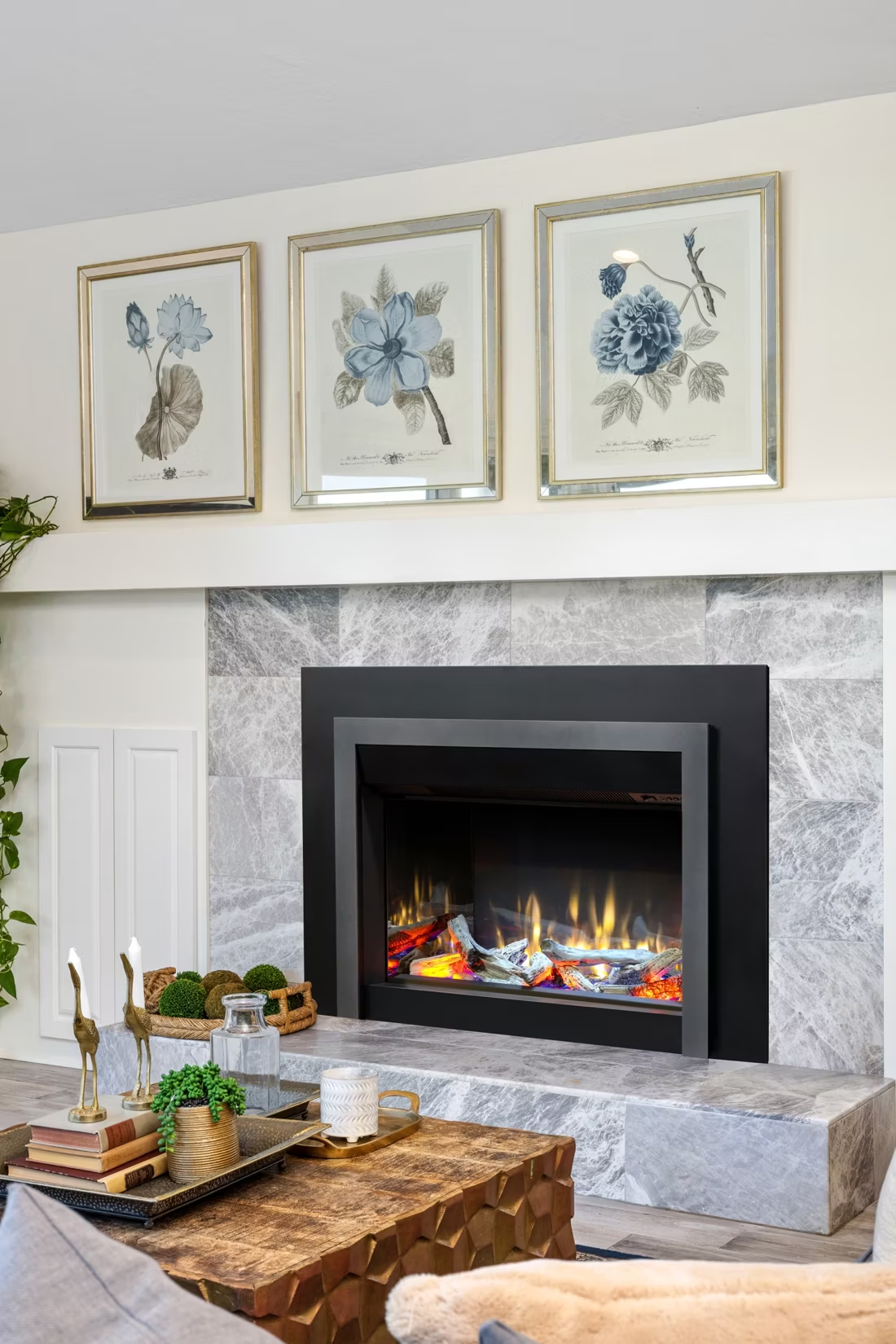
Climate zone 4A means Chase County sees real winter cold, but many homes here already lean on wood heat from local oak, hickory, and osage orange for primary warmth, or propane furnaces for whole-house heating. Electric fireplaces fill a different role—supplemental warmth in a living room, den, or bedroom, plus the ambiance of a real-looking flame without smoke, ash, or a flue to maintain. For older farmhouses and stone Flint Hills homes without existing masonry fireplaces, an electric insert or wall-mounted unit is often the fastest, least invasive way to add a heat source to a single room.
Three steps. No salesperson until you're ready.
Tell us about your project
Your zip code, your situation, and the fuel you're leaning toward—or let the answers point you to one.
See what's actually available
The brands dealers within 100 miles genuinely carry—real options, never a catalog mirage.
Get your dealer & Project Guide
A trusted local dealer, plus the free Project Guide & Parts List that names every component of the job.
Frequently Asked Questions
How much does an electric fireplace installation cost in Chase County?
Most electric fireplace projects in Chase County run $400 to $1,200 installed, which is dramatically less than wood or gas hearth projects because there's no chimney, no gas line, and no venting to install. A plug-in freestanding or wall-mounted unit on the low end simply needs a nearby outlet. A built-in electric insert set into existing cabinetry or a stud wall, or a unit requiring a new dedicated circuit, sits toward the higher end once an electrician is involved. Because there's no combustion, there's also no chimney sweep or annual gas inspection cost to budget for afterward.
Do I need an electrician to install an electric fireplace?
Smaller electric fireplaces (under about 1,500 watts) typically plug into a standard household outlet and don't require an electrician. Larger built-in units, or any installation where you want a dedicated circuit to avoid tripping breakers alongside other appliances, should be wired by a licensed electrician. Given how few electrical contractors serve a county of Chase's size, most homeowners coordinate this through the hearth retailer selling the unit, since they can recommend someone who already knows the product and won't need a second visit to troubleshoot.
Will an electric fireplace actually heat my room, or is it just for looks?
Most electric fireplaces include a real heating element—typically a fan-forced coil or infrared quartz heater—capable of warming a single room by several degrees, similar to a space heater but with a more finished look. In Chase County's zone 4A winters, an electric unit works well as supplemental heat in a den, bedroom, or sunroom, but it's not sized to replace whole-home heating the way a wood stove or propane furnace is. Many local homeowners run the flame effect year-round for ambiance and switch on the heater only during shoulder-season chill or as backup warmth in one room.
Can I put an electric fireplace anywhere in my house?
Yes—that's the main advantage over wood or gas. Since there's no venting or gas line requirement, an electric fireplace can go on any interior wall near an outlet, including upstairs bedrooms, converted porches, or rooms in older Flint Hills stone homes where running a chimney or gas line would be impractical or expensive. The main constraints are electrical (does the circuit support the wattage) and clearance to combustibles listed in the manufacturer's manual, which any local dealer will check during a quick home visit.
Do I need a permit to install an electric fireplace in Chase County?
In most cases, no—plug-in electric fireplaces that don't require new wiring generally don't trigger a building permit in Chase County. If your installation involves adding a new electrical circuit or breaker, that electrical work may need to be pulled by the electrician doing the job, separate from any hearth-specific permitting. Because Chase County has no dedicated hearth building department given its size, questions about permitting are best directed to the county courthouse in Cottonwood Falls, and most retailers can tell you upfront whether your specific unit needs one.
How does an electric fireplace compare to the wood stoves common in Chase County?
Wood remains the dominant hearth fuel in Chase County, with plenty of local oak, hickory, and osage orange available for cutting or purchase, and wood stoves can serve as genuine primary heat during outages—a real consideration on exposed Flint Hills properties where ice storms can down power lines. Electric fireplaces can't run without grid power and won't heat a whole house, but they install in minutes, need no wood supply or ash cleanup, and work well as a second heat source in a room far from the wood stove, like a converted upstairs bedroom.
What's the difference between an electric insert and a freestanding electric fireplace?
An electric insert is built to slide into an existing fireplace opening or a custom-built mantel surround, giving a more finished, built-in look. A freestanding electric fireplace or electric stove sits on the floor like furniture and can be moved between rooms, which suits renters or homeowners who aren't ready to commit to permanent installation. For Chase County's older homes with existing but unused masonry fireplaces, an insert is often the cleanest way to reclaim that fireplace opening without any chimney work, since it simply needs a nearby outlet or a short electrical run behind the mantel.
Are electric fireplaces expensive to run?
Running costs are modest. Most electric fireplace heaters draw around 1,500 watts on the heat setting, which typically costs somewhere in the range of 15 to 25 cents per hour depending on local electric rates—a fraction of running a whole-house furnace to warm just one room. The flame-only mode, with the heater switched off, draws only a few watts and costs almost nothing to run for ambiance. For Chase County homeowners supplementing propane or wood heat, running an electric unit in the room you're actually using can meaningfully cut overall heating costs during shoulder seasons.
Electric vs. pellet stove—which makes more sense for a Chase County home?
Pellet stoves burn compressed wood pellets—brands like Lignetics are available regionally—and can supply serious heat output plus operate as backup during power outages if paired with a battery backup, since the auger and blower still need electricity. Electric fireplaces need grid power outright and don't approach a pellet stove's heat output, but they cost far less to install, require no pellet storage or ash removal, and go in almost anywhere. For a small-population county like Chase where hauling pellet bags from a distant dealer is a real logistical factor, an electric unit is often the lower-hassle choice for supplemental warmth, while a pellet stove suits homeowners wanting a genuine second heat source.
Can I put a TV above my fireplace?
Yes—with an asterisk. Fireplaces are hot and TVs don't like heat. Either put a mantel between them to deflect rising warmth, or choose a fireplace with heat-management technology that creates a cool zone on the wall above—the wall stays around 125 degrees, barely warm, while the room still gets full heat. If you like clean lines and don't want a mantel, heat management is the answer.
Do electric fireplaces actually produce heat?
Yes—most put out around 4,800–5,000 BTUs from a standard outlet, which comfortably warms a bedroom, office, or den as a comfort-zone heater. What they won't do is carry a whole house the way wood, gas, or pellet can. Think of electric as ambiance-first with honest supplemental heat: flames on with no heat in July, flames plus warmth in January.
Can I install a fireplace myself?
If you're putting a fire in your house on purpose, it's best to work with an expert. Unless you're genuinely experienced in framing, gas line, vent pipe, and the national code on clearances to combustibles, have a professional do it—and ideally the same company that sells you the fireplace, so warranty, service, and liability all live under one roof.
Can a fireplace actually lower my heating bill?
Yes—by creating a comfort zone. A furnace heats every square foot of the house just to warm the one room you're in; a gas fireplace on low burns roughly a sixth of the gas a typical furnace does. Set the furnace around 55–60 degrees as a baseline, then heat the rooms your family actually uses. Families who heat this way commonly save $20–$60 a month.
Find your electric fireplace in Chase County.
Tell us a bit about your home and we'll match you with the right electric fireplace or insert, plus a free Project Guide & Parts List with your recommended local dealer.
Find Your Fireplace →