
Find the right fireplace for your Flint Hills home.
Wood, gas, pellet, and electric fireplace resources for Cottonwood Falls, Strong City, and every ranch and rural property across Chase County. Get matched with a local hearth retailer who knows what actually works out here.
Every Project Starts From One of These Five Situations
Heating a small county in the Flint Hills.
Chase County sits in the tallgrass prairie region of east-central Kansas, population under 1,500, with Cottonwood Falls and Strong City as the two population centers and a lot of open ranchland in between. Zone 4A winters here bring genuine cold—nights well below freezing, wind off the open prairie that makes any heat loss obvious fast—but the region doesn't see the sustained sub-zero stretches you'd find in Fargo or Bismarck. Oak, hickory, and osage orange are the wood species locals actually burn, and osage orange in particular is a Flint Hills staple—dense, long-burning, and often available as a byproduct of fence-line clearing on area ranches.
What you'll find on this hub: hearth retailers, service technicians, and fuel suppliers who cover the whole county, not just the two incorporated towns. Because Chase County is small and rural, most homeowners here work with dealers based in Emporia or the greater Wichita area who travel out for installs and service. Pick your fuel below to see local dealers, typical installation costs, and unit recommendations suited to a Flint Hills property—whether that's a farmhouse outside Cedar Point or a place in town in Cottonwood Falls.
Four fuels. One honest answer for Chase County.
Three steps. No salesperson until you're ready.
Tell us about your project
Your zip code, your situation, and the fuel you're leaning toward—or let the answers point you to one.
See what's actually available
The brands dealers within 100 miles genuinely carry—real options, never a catalog mirage.
Get your dealer & Project Guide
A trusted local dealer, plus the free Project Guide & Parts List that names every component of the job.
Frequently Asked Questions
Which fuel works best for a home in Chase County?
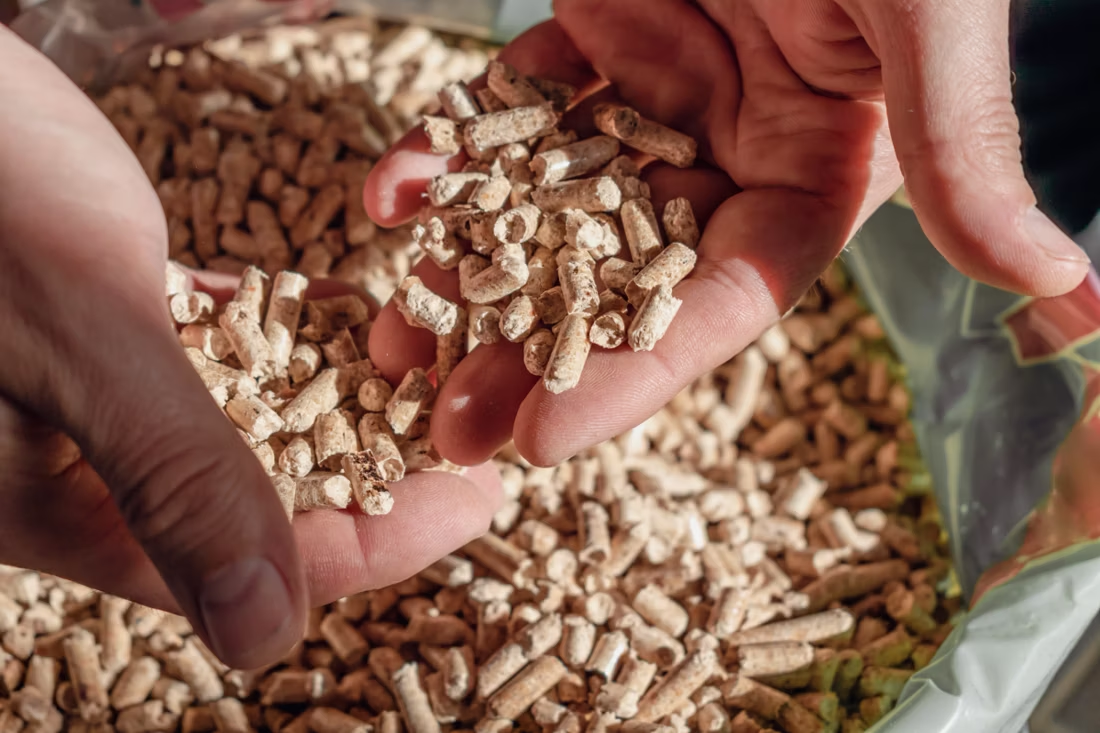
It depends on the property and how you use it. Wood is a strong fit here—osage orange and oak are both locally available (often free, if you're clearing fence lines or managing timber on ranch acreage), and a good catalytic or non-catalytic stove handles Flint Hills winters without trouble. Gas is the low-maintenance option, particularly for in-town properties in Cottonwood Falls or Strong City with access to propane delivery, since there's no municipal natural gas system covering most of the county. Pellet stoves are a solid middle ground if you want wood-style heat without the wood-splitting labor, and both Lignetics and Indeck Energy Services pellets are available through regional suppliers. Electric works well as a supplemental heat source in a bedroom or sunroom, but isn't typically the primary heater in a county where winter wind chill can make single-source electric heat expensive to run.
Do I need a permit to install a fireplace in Chase County?
Most likely, yes, though enforcement and process vary by whether you're inside Cottonwood Falls or Strong City city limits or out in the unincorporated county. Wood stoves, inserts, gas appliances, and pellet stoves generally require a building permit, and gas installations need a licensed propane or gas fitter for the line connection. Because Chase County is rural and small, permitting isn't always as formalized as in larger counties—your best move is to call the county clerk's office or your city hall directly to confirm the current process before you start. Most hearth retailers who service the area, even those based out of Emporia, are familiar with Chase County's requirements and will pull permits as part of the installation.
Are there air quality or burn restrictions in Chase County?
No—Chase County has no air quality non-attainment designation and no formal wood-burning curtailment program. This is open tallgrass prairie country, not a basin or valley prone to winter inversions, so smoke doesn't accumulate the way it can in geographically enclosed regions. That said, Kansas does regulate open burning tied to Flint Hills prairie management (the annual spring pasture burns), which is a separate matter from home heating appliances. For wood stove installs, new units still need to meet EPA emissions standards, but there's no local ordinance restricting when you can run your stove.
Can one retailer handle wood, gas, pellet, and electric for my Chase County home?
Given how few dealers are based directly in Chase County, most homeowners end up working with a multi-fuel retailer out of Emporia or Wichita that carries several or all four fuel types. That's actually an advantage in a small rural county—one trip out to Cottonwood Falls or a ranch property near Matfield Green can cover a consultation across fuel types rather than needing separate visits from separate specialists. Ask any retailer upfront which fuels they carry and install, since coverage does vary dealer to dealer.
How does installation and service work for rural properties outside Cottonwood Falls and Strong City?
Since most of Chase County is rural ranchland rather than town lots, expect a travel fee built into service and installation quotes—dealers coming from Emporia or Wichita are often driving 40-60 miles each way. Scheduling in late summer or early fall, before the first cold snap, tends to get you faster appointments than waiting until a December cold front hits. If your property is far off a maintained road, mention that when booking—it affects how technicians plan delivery of stoves, inserts, or venting materials, and whether a smaller service vehicle is needed.
What's the typical cost range for fireplace installation across fuel types in Chase County?
Costs run similar to other rural Kansas counties, with rural travel fees sometimes added to the base install price. Wood stove or insert: roughly $4,000-$8,500 depending on chimney work, higher for new full masonry chimneys. Gas fireplace, insert, or stove: $4,000-$10,000, with propane tank setup or line work affecting the low versus high end. Pellet stove or insert: $4,000-$7,000 for a typical install. Electric fireplace: $200-$2,800 for the unit itself, plus $300-$1,000 in labor for anything beyond a simple plug-in unit. Rural travel fees for installers coming from Emporia or Wichita can add a few hundred dollars depending on distance—ask for an all-in quote before booking.
How much should I budget for a fireplace?
For an average home—covering the fireplace, the vent pipe, and basic installation—a budget between $3,900 and $5,500 gives you a lot of options across wood, gas, and pellet. By the time you add finish work, gas line, and electrical, the average complete installation lands between $5,000 and $12,000 all-in. In a remodel or new build, a good rule is to put about 2.5% of the total project cost toward the fireplace.
What is an in-home preview and do I need one?
It's a visit where a hearth professional measures your space, confirms the model you picked actually works in your home, and walks the specs—framing, gas line, venting, finish work—before anything is ordered. Some details you just can't know until you see the house. Never make a down payment without one; it's the single most-skipped step that burns buyers.
Can I install a fireplace myself?
If you're putting a fire in your house on purpose, it's best to work with an expert. Unless you're genuinely experienced in framing, gas line, vent pipe, and the national code on clearances to combustibles, have a professional do it—and ideally the same company that sells you the fireplace, so warranty, service, and liability all live under one roof.
Can a fireplace actually lower my heating bill?
Yes—by creating a comfort zone. A furnace heats every square foot of the house just to warm the one room you're in; a gas fireplace on low burns roughly a sixth of the gas a typical furnace does. Set the furnace around 55–60 degrees as a baseline, then heat the rooms your family actually uses. Families who heat this way commonly save $20–$60 a month.
Stove and Fireplace Dealers in Chase County
Listings include WhyFire partner dealers, dealers we have verified as authorized for the brands we recommend, and established local businesses that carry hearth products. Every listing shows which one it is. The ones marked Preferred run on WhyFire's software, so they can show you real pricing and book your appointment right here. No manufacturer pays for placement. How we verify dealers →
Modern Air Conditioning, Inc
Services Unlimited
Chimney And Stone Specialists
Fireplace Stone & Patio
Bocote Showroom
All Things Bbq
Dod Installations
Get matched with a hearth dealer serving Chase County.
Tell us about your fuel and your project and we'll match you with a trusted local dealer, plus a free Project Guide & Parts List—the exact parts and venting your Chase County installation needs, and who can install it.
Find Your Fireplace →