
Warm up a room without a chimney in Winnebago County.
No flue, no gas line, no combustion byproducts—just plug in and heat the room you're actually using. Find the right electric fireplace or insert for a Forest City, Lake Mills, or Buffalo Center home, and connect with a trusted local dealer.
Every Project Starts From One of These Five Situations
Zone heat that doesn't need a flue.
Winnebago County sits on the Iowa-Minnesota border in the state's north-central corner, with Forest City as the county seat—best known outside the county as the manufacturing home of Winnebago Industries, the RV maker that shares the county's name. With roughly 8,000 residents spread across Forest City, Lake Mills, Buffalo Center, and Thompson, this is flat farm country with a genuinely cold, snowy climate: a long, harsh heating season and a winter low average of 6°F put it in the same cold-climate 6A tier as Minneapolis, just across the state line. Whole-home heat here is typically handled by LP (propane) furnaces or geothermal systems rather than a fireplace of any kind—natural gas mains don't reach every farmstead—which is exactly the gap electric fireplaces fill.
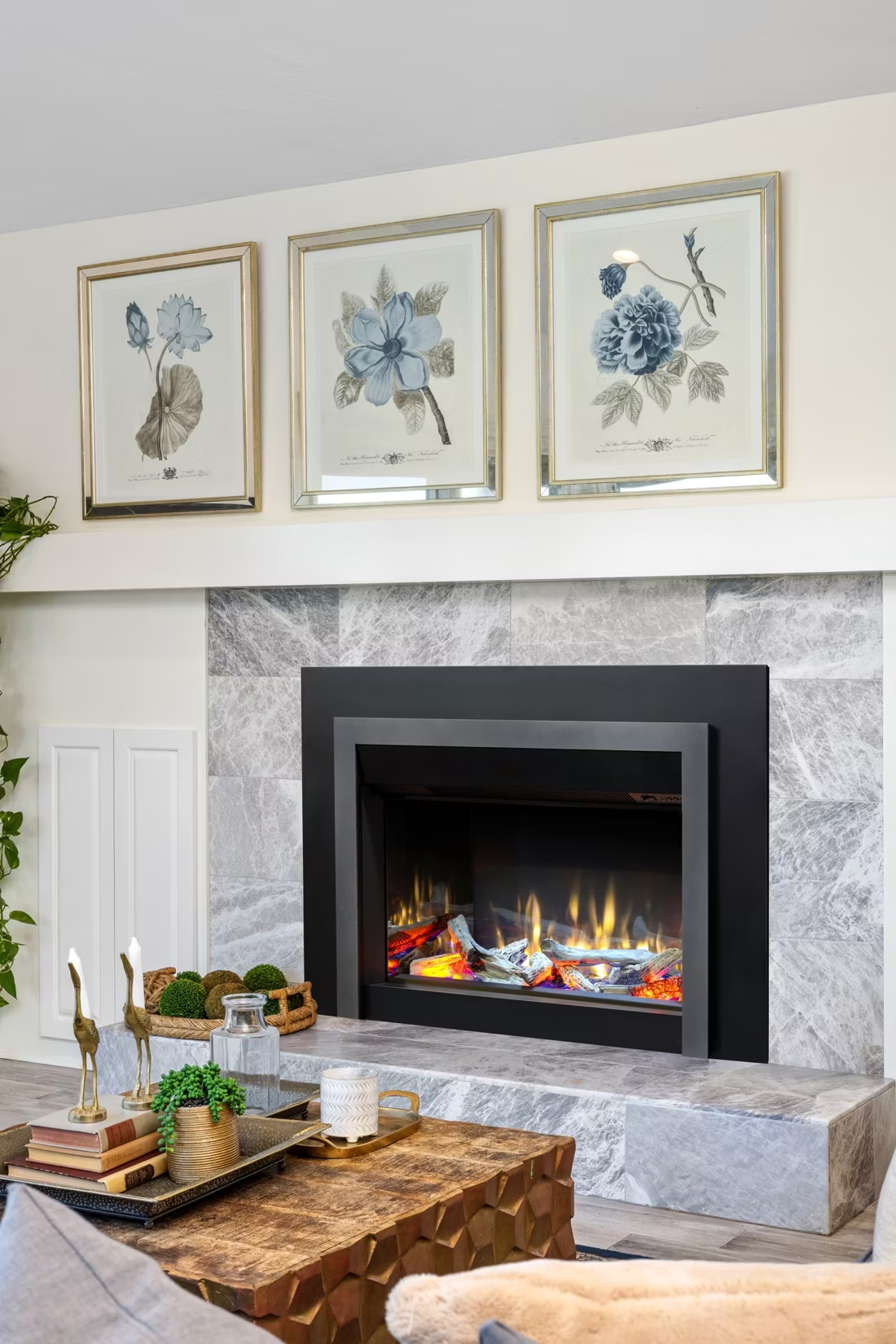
An electric fireplace or insert in Winnebago County isn't competing to heat the whole house through a January cold snap. It's solving a narrower problem: warming the room people are actually sitting in—a finished basement, a primary bedroom, a living room in a Forest City rental—without adding a chimney, a gas line, or combustion exhaust to manage. Plug-in units need nothing more than a standard outlet; built-in linear models draw more power and usually call for a dedicated circuit, which is where a local installer's electrical work comes in. Either way, there's no venting to size and no annual sweep, which is a real advantage over the wood and gas appliances that dominate elsewhere in cold-climate Iowa.
Three steps. No salesperson until you're ready.
Tell us about your project
Your zip code, your situation, and the fuel you're leaning toward—or let the answers point you to one.
See what's actually available
The brands dealers within 100 miles genuinely carry—real options, never a catalog mirage.
Get your dealer & Project Guide
A trusted local dealer, plus the free Project Guide & Parts List that names every component of the job.
Frequently Asked Questions
How much does an electric fireplace installation cost in Winnebago County?
A plug-in electric insert or freestanding stove that drops into an existing opening runs roughly $300 to $900 installed, since it just needs a standard 120-volt outlet. A built-in linear electric fireplace set into a wall—the more common upgrade in newer Forest City and Lake Mills homes—typically runs $1,200 to $2,500 once you include the unit, framing, and an electrician running a dedicated circuit if your panel doesn't already have capacity. Rural properties with older panels sometimes need a small panel upgrade, which adds to the electrician's portion of the bill.
What size electric fireplace do I need for my room?
Electric fireplaces are rated in BTU, and most residential units top out around 4,600 to 5,200 BTU—enough to noticeably warm a 400 to 600 square foot room, not a whole house. Given Winnebago County's long, harsh heating season, don't expect an electric unit to keep pace with a January cold snap on its own; it's meant to supplement your propane furnace or geothermal system in the specific room you're heating, whether that's a finished basement rec room or a primary bedroom. A local dealer can match wattage to your room size and tell you whether you need a dedicated circuit for the heater's draw.
Do I need a permit to install an electric fireplace in Winnebago County?
A plug-in electric insert or freestanding stove generally doesn't require a permit since no wiring changes are involved. A built-in linear electric fireplace that requires a new dedicated circuit typically does need an electrical permit through the Winnebago County Building & Zoning office, since it involves work at the panel. Most local dealers who sell built-in units either handle the permitting directly or work with a licensed electrician who does.
What's the difference between an electric insert, a built-in fireplace, and an electric stove?
An electric insert is sized to drop into an existing fireplace opening—a common choice if a Winnebago County home has an old, unused masonry firebox that never gets used for wood. A built-in (or linear) electric fireplace is framed into a wall like a piece of trim carpentry, popular in newer construction and remodels around Forest City. An electric stove is a freestanding unit styled to look like a traditional wood stove, which works well in a mobile home, rental, or any space where you want the look without any structural work at all.
Will my electric fireplace still work during a power outage?
No—unlike a wood stove or a battery-backed gas fireplace, an electric fireplace stops working the moment the power goes out, which matters in a county where winter storms and ice can knock out lines for hours at a time. For homes relying on electric fireplaces as their only supplemental heat, it's worth keeping a propane space heater or a generator on hand for outages. Most Winnebago County homes already lean on an LP furnace as their primary heat source, so this is usually a secondary concern rather than a dealbreaker.
What's the best electric fireplace for a Winnebago County home?
Look for a linear model with a true heater rating near 5,000 BTU rather than a decorative flame-only unit—brands like Dimplex, Napoleon, and Touchstone make models built for actual supplemental heat rather than just ambiance. For a finished basement or bedroom, a unit with a variable-speed fan and thermostat control gives you more usable heat on the coldest nights, when outdoor lows average around 6°F. If ambiance matters more than heat output—say, in a room already served by the furnace—a flame-effect-only insert with minimal heater draw is the simpler and cheaper option.
How much maintenance does an electric fireplace need?
Very little compared to wood or gas. There's no chimney to sweep and no burner to inspect—just occasional dusting of the fan intake, a wipe of the glass front, and eventually a bulb or LED module replacement after years of use. That low-maintenance profile is part of why electric units are popular in Winnebago County rental properties and second homes, where nobody wants to schedule an annual service call.
Electric vs. propane—which should heat my Winnebago County home?
These aren't really competing for the same job. Propane (LP) furnaces are the backbone of whole-home heating across rural Winnebago County, since natural gas mains don't reach every farmstead, and they're built to keep a house livable through a stretch of single-digit nights. An electric fireplace is a supplemental, room-by-room solution—instant heat and flame effect in the space you're using, with none of the venting or fuel storage a propane appliance requires. Most local homes run both: propane for the furnace, electric for the room where the family actually spends the evening.
Electric vs. wood—which fits Winnebago County better?
Wood heat is a smaller part of the picture here than in more forested parts of the Midwest—plenty of local oak, hickory, maple, and walnut exists, but new wood stove installs are uncommon in Winnebago County's current housing mix, particularly in town and in rental stock. Electric fireplaces have largely taken that supplemental-heat role instead, since they need no chimney, no cutting permits, and no ash cleanup. If you already have cordwood and an existing wood stove on a rural property, it's still a legitimate backup heat source during outages—but for most Forest City and Lake Mills homeowners adding new supplemental heat today, electric is the simpler path.
Can I put a TV above my fireplace?
Yes—with an asterisk. Fireplaces are hot and TVs don't like heat. Either put a mantel between them to deflect rising warmth, or choose a fireplace with heat-management technology that creates a cool zone on the wall above—the wall stays around 125 degrees, barely warm, while the room still gets full heat. If you like clean lines and don't want a mantel, heat management is the answer.
Does an electric fireplace need a vent or chimney?
No—that's its superpower. An electric fireplace needs a wall and an outlet, period. No vent pipe, no gas line, no clearances to design around, which is why it works in bedrooms, offices, apartments, and walls where venting a gas or wood unit would be impractical or impossible. Installation is typically the simplest and least expensive of any fireplace type.
How much should I budget for a fireplace?
For an average home—covering the fireplace, the vent pipe, and basic installation—a budget between $3,900 and $5,500 gives you a lot of options across wood, gas, and pellet. By the time you add finish work, gas line, and electrical, the average complete installation lands between $5,000 and $12,000 all-in. In a remodel or new build, a good rule is to put about 2.5% of the total project cost toward the fireplace.
Can a fireplace actually lower my heating bill?
Yes—by creating a comfort zone. A furnace heats every square foot of the house just to warm the one room you're in; a gas fireplace on low burns roughly a sixth of the gas a typical furnace does. Set the furnace around 55–60 degrees as a baseline, then heat the rooms your family actually uses. Families who heat this way commonly save $20–$60 a month.
Stove and Fireplace Dealers in Winnebago County
Find your electric fireplace in Winnebago County.
Tell us about your room and your panel, and we'll match you with the right electric fireplace, insert, or stove—plus a free Project Guide & Parts List with your recommended local dealer serving Forest City, Lake Mills, and Buffalo Center.
Find Your Fireplace →