
Dependable heat for Winnebago County's long, cold winters.
Fireplace resources for Forest City, Lake Mills, Buffalo Center, and every town in Winnebago County. Get matched with a trusted local dealer who can size the unit right for a place with a winter heating load about as heavy as Fargo, North Dakota's.
Every Project Starts From One of These Five Situations
Flat farmland, hard winters, right on the Minnesota line.
Winnebago County sits at the top of Iowa, its northern edge running along the Minnesota border a few miles north of Forest City, the county seat and headquarters of Winnebago Industries. With roughly 8,092 residents spread across corn and soybean farmland, this is a small, close-knit county—but the climate is not mild. Zone 6A winters bring an average low of 6°F, and the county's winter heating load is about as heavy as Fargo, North Dakota's, putting it in the same cold-climate tier. The heating season here runs long, typically October through April, and a reliable secondary heat source matters as much as the furnace.
Here's what's a little different about Winnebago County: even with oak, hickory, maple, and walnut growing throughout the county and plenty of farm woodlots to cut from, wood stoves and pellet inserts haven't developed into much of a local retail category—most households run gas or electric as their supplemental or primary hearth appliance, with firewood burned informally rather than through a certified, dealer-installed stove. Indeck Energy Services, one of the regional pellet suppliers listed for this area, is an industrial biomass producer rather than a residential pellet-stove retailer—a good indicator of how this market actually shakes out. This hub rolls up hearth retailers, service technicians, and fuel suppliers across the whole county—Forest City, Lake Mills, Buffalo Center, Thompson, Rake, Leland, and Scarville—with gas and electric as the fuels you'll actually find dealers stocking locally.
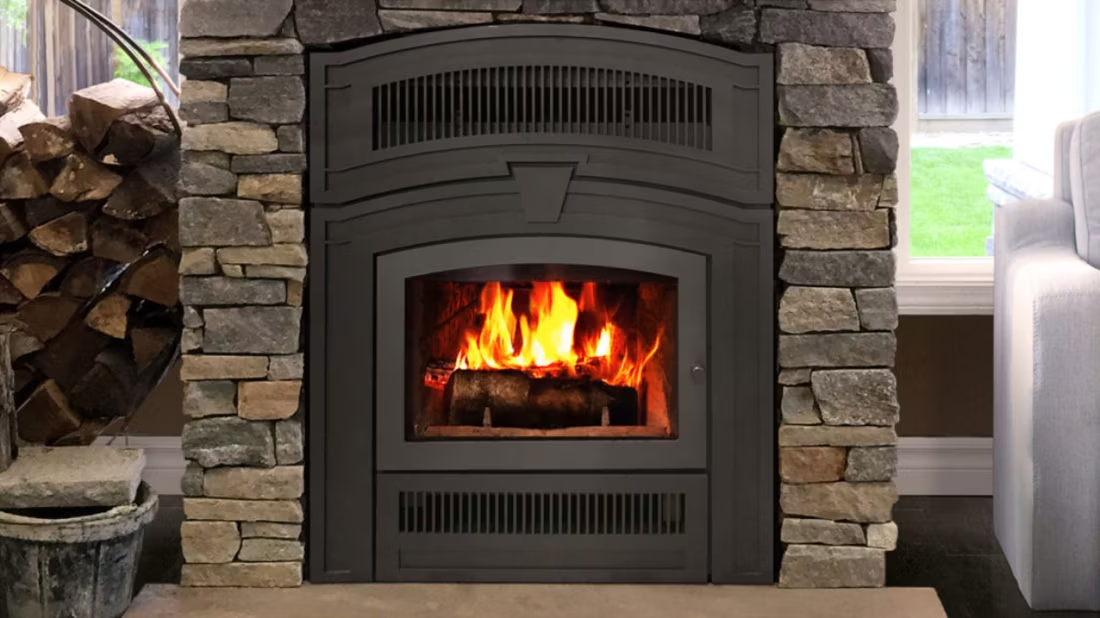
Four fuels. One honest answer for Winnebago County.
Three steps. No salesperson until you're ready.
Tell us about your project
Your zip code, your situation, and the fuel you're leaning toward—or let the answers point you to one.
See what's actually available
The brands dealers within 100 miles genuinely carry—real options, never a catalog mirage.
Get your dealer & Project Guide
A trusted local dealer, plus the free Project Guide & Parts List that names every component of the job.
Frequently Asked Questions
Which fuel works best in Winnebago County?
For most homes here, it comes down to gas or electric. If your home has natural gas service—mostly in Forest City and Lake Mills—a gas fireplace or insert gives you instant, thermostat-controlled heat with no wood to haul, which matters over a heating season that runs from October into April. Rural homes without gas lines typically run on propane-fed units instead. Electric fireplaces are a strong supplemental option in bedrooms, additions, or older farmhouses where running new gas or propane line isn't worth it. Wood stoves and pellet inserts exist in the county—there's plenty of oak, hickory, maple, and walnut on local farm woodlots—but they're not a developed retail category here; most wood burning is informal, in older masonry fireplaces, rather than a certified EPA stove installed by a dealer.
Do I need a permit to install a fireplace in Winnebago County?
Generally, yes, for anything beyond a plug-in electric unit. Gas fireplace and insert installs require a building permit and a licensed gas-fitter for the line connection—inside Forest City or Lake Mills, that permit is pulled through the city; in unincorporated parts of the county, it runs through the Winnebago County Zoning Office. Electric fireplaces usually don't need a permit unless you're hardwiring a built-in unit or adding a new circuit. A local dealer handling your installation will typically pull the permit for you rather than leaving that step to the homeowner.
Are there air quality restrictions on wood burning in Winnebago County?
No—Winnebago County doesn't have wood-smoke restrictions, inversion advisories, or non-attainment designations. That's consistent with the fact that wood burning here is mostly informal supplemental use rather than a heavily regulated primary heat source. If you do install a new certified wood stove, it will need to meet EPA 2020 NSPS emissions standards like anywhere else in the country, but you won't run into local burn bans or curtailment periods the way homeowners do in smoke-prone basins out West.
Can one local retailer handle both gas and electric fireplace installs?
Yes—most of the dealers serving Winnebago County, generally based out of Mason City, Iowa or Albert Lea, Minnesota, carry both gas and electric units and can walk you through the trade-offs for your specific house. If you're set on wood or pellet, though, expect to travel a bit further or work with a dealer who special-orders that category—it's simply not the core business for hearth retailers covering this part of north Iowa.
How does fireplace service work in a rural county like this?
Technicians serving Winnebago County generally drive in from Mason City (about 25-30 miles south) or Albert Lea, Minnesota (about 20 miles north), covering gas fireplace inspections, pilot and igniter service, and electrical hookup work for built-in electric units. Expect to schedule a few weeks out during the fall rush—September and October are the busiest months as households get their gas units checked before the first hard freeze. A handful of older Forest City and Lake Mills homes still have working masonry wood fireplaces that need occasional chimney sweeping, though that's a smaller slice of the service calls out here.
What's the typical installation cost for a gas or electric fireplace in Winnebago County?
Gas fireplace or insert installs typically run $4,000–$9,500, with the higher end covering new gas line runs for homes further from existing service—common in rural parts of the county on propane. Electric fireplaces run $200–$2,500 for the unit itself, plus $300–$1,000 in labor for anything beyond a simple plug-in, such as a wall-mount or built-in with a new circuit. If you're pursuing a wood or pellet install despite the limited local market, budget for a dealer traveling from outside the county, which can add to both cost and lead time.
What is an in-home preview and do I need one?
It's a visit where a hearth professional measures your space, confirms the model you picked actually works in your home, and walks the specs—framing, gas line, venting, finish work—before anything is ordered. Some details you just can't know until you see the house. Never make a down payment without one; it's the single most-skipped step that burns buyers.
How much should I budget for a fireplace?
For an average home—covering the fireplace, the vent pipe, and basic installation—a budget between $3,900 and $5,500 gives you a lot of options across wood, gas, and pellet. By the time you add finish work, gas line, and electrical, the average complete installation lands between $5,000 and $12,000 all-in. In a remodel or new build, a good rule is to put about 2.5% of the total project cost toward the fireplace.
Can a fireplace actually lower my heating bill?
Yes—by creating a comfort zone. A furnace heats every square foot of the house just to warm the one room you're in; a gas fireplace on low burns roughly a sixth of the gas a typical furnace does. Set the furnace around 55–60 degrees as a baseline, then heat the rooms your family actually uses. Families who heat this way commonly save $20–$60 a month.
What are the biggest mistakes people make buying a fireplace?
Five come up constantly: budgeting for the unit but not the full job (vent, gas line, electrical, finish work); drowning in options instead of starting from style and fuel; buying without an in-home preview; handing installation to a handyman instead of a pro; and giving up out of sheer indecision. Every one is avoidable with a clear plan—step one, step two, step three.
Stove and Fireplace Dealers in Winnebago County
Listings include WhyFire partner dealers, dealers we have verified as authorized for the brands we recommend, and established local businesses that carry hearth products. Every listing shows which one it is. The ones marked Preferred run on WhyFire's software, so they can show you real pricing and book your appointment right here. No manufacturer pays for placement. How we verify dealers →
Young Plumbing & Heating
Daley's Plumbing & Heating
Johnson Heating & A/c
Christianson P & H Fireplace
Jim & Dudes Plumbing & Heating
Jim And Dude’s
Find the right fireplace for your Winnebago County home.
Get matched with a trusted local dealer and receive a free Project Guide & Parts List—the exact parts, including the vent kit, and a recommended installer for your gas or electric fireplace project.
Find Your Fireplace →