
Warmth on demand, no chimney required—for homes across Washington County.
With winter lows averaging 12°F and a heating season cold enough to rival Madison, Wisconsin, Washington County homeowners from the county seat to Kalona and Riverside are turning to electric fireplaces for zone heat and ambiance without touching a gas line or a flue. We'll match you with a local dealer who can size the right unit for your room.
Every Project Starts From One of These Five Situations
Instant heat for cold Iowa winters—no gas line or chimney needed.
Washington County is home to about 14,600 people spread across the county seat of Washington and smaller communities like Kalona, Wellman, Ainsworth, and Riverside. Sitting in climate zone 5A, the county sees real winter—an average low of 12°F and a winter heating season comparable in length and severity to Madison, Wisconsin. That's serious heating load for a rural Iowa county, and it's part of why so many homeowners here look beyond the central furnace for supplemental heat in specific rooms.
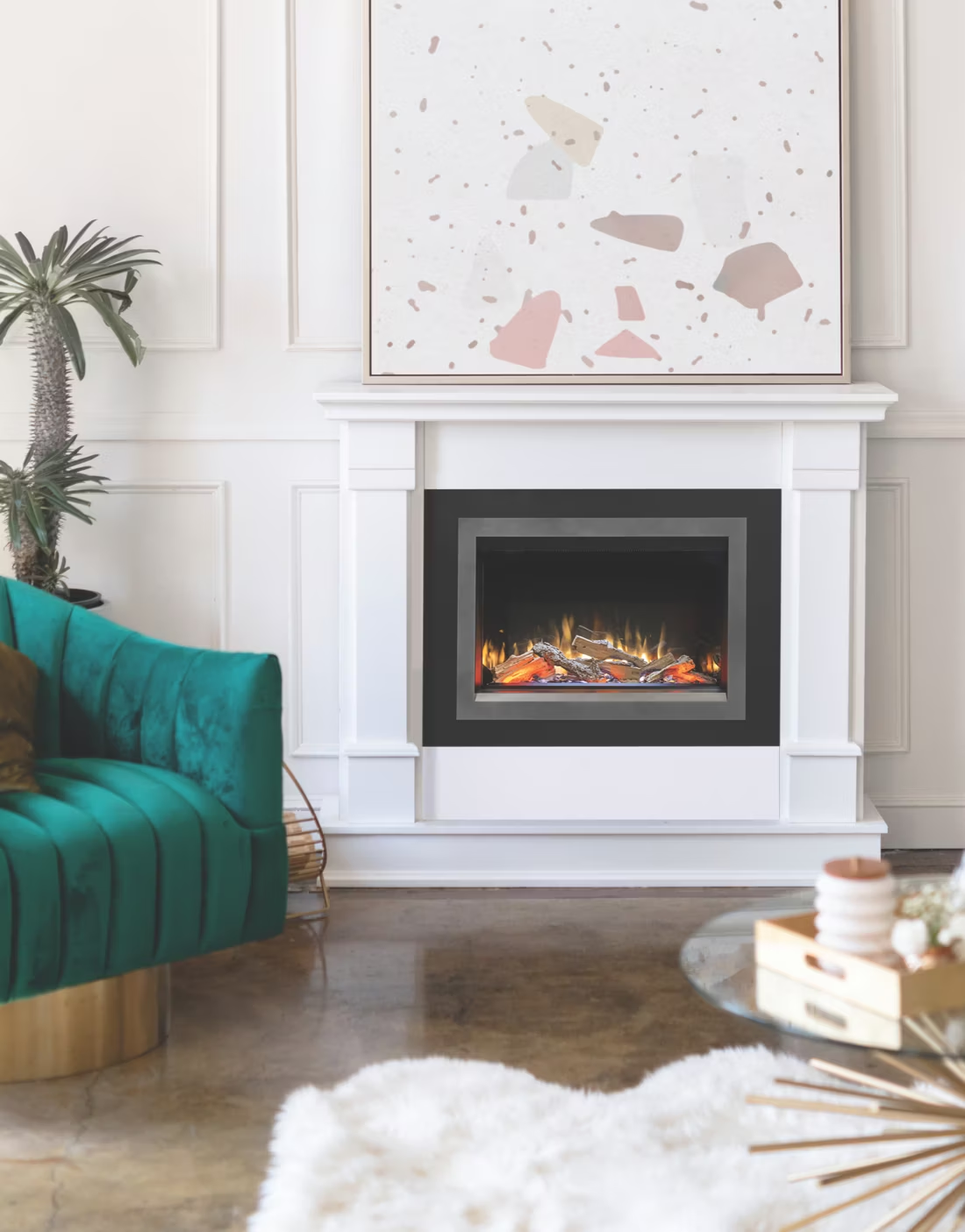
Electric fireplaces fit that need well. A finished bonus room over the garage in Ainsworth, a converted porch in Kalona, or a bedroom addition in Riverside can all get real supplemental warmth from a plug-in or built-in electric unit without the cost of running a gas line or building a chimney. Many local landlords and homeowners in older farmhouse-style homes around the county also like that electric units carry no combustion byproducts and no clearance-to-combustible headaches the way a wood stove would. It's not a replacement for your furnace on the coldest nights, but it's a practical, low-hassle way to add heat and ambiance to the rooms your furnace struggles to reach.
Three steps. No salesperson until you're ready.
Tell us about your project
Your zip code, your situation, and the fuel you're leaning toward—or let the answers point you to one.
See what's actually available
The brands dealers within 100 miles genuinely carry—real options, never a catalog mirage.
Get your dealer & Project Guide
A trusted local dealer, plus the free Project Guide & Parts List that names every component of the job.
Frequently Asked Questions
How much does an electric fireplace installation cost in Washington County?
A plug-in electric fireplace or insert that uses a standard 120-volt outlet typically runs $300 to $900 installed, since there's no venting or gas line to run—most of that cost is the unit itself plus a licensed electrician confirming the circuit can handle the draw. A built-in electric fireplace that requires a dedicated 20-amp circuit, in-wall wiring, or a custom mantel surround usually lands between $1,000 and $1,800 once electrical work and finish carpentry are included. Homes in older parts of Washington or Kalona with knob-and-tube or aging panel wiring sometimes need panel work first, which adds to the total—a local dealer's in-home visit will flag that before you buy anything.
What size electric fireplace do I need for my room?
Most electric fireplace heaters are rated for roughly 400 to 1,000 square feet of supplemental heat, which covers a single bedroom, bonus room, or open living area in a typical Washington County home. Given the county's long, Madison-Wisconsin-level winter heating season, treat the heater output as a comfort boost rather than a whole-room primary source on the coldest days—it's meant to work alongside your furnace, not replace it. For larger open-concept spaces common in newer builds around Washington and Ainsworth, some homeowners install two smaller units on separate walls rather than one oversized unit, which spreads the heat more evenly.
Do I need a permit for an electric fireplace in Washington County?
A plug-in unit that just uses an existing wall outlet typically doesn't require a permit anywhere in the county. If your installation involves a new dedicated circuit, in-wall wiring, or a built-in unit set into a new mantel or wall cavity, that electrical work needs a permit and inspection—through the City of Washington's building department if you're inside city limits, or through the county for rural addresses around Kalona, Wellman, and Ainsworth. Most local dealers coordinate a licensed electrician for that step so you're not left tracking down the paperwork yourself.
What's the difference between an electric fireplace, insert, and mantel unit?
A built-in electric fireplace is designed to be framed into a wall, similar to how you'd frame in a window—common in new construction or larger remodels. An electric insert is sized to slide into an existing masonry fireplace opening, which is a popular option for older homes in the city of Washington that already have a fireplace but want to retire the wood-burning side of it. A mantel or stand-alone unit is a self-contained cabinet with the heater and flame effect built in—no framing or existing fireplace required, and it can move with you if you relocate. For renters in Kalona or Riverside, the mantel style is usually the only practical choice.
Will an electric fireplace work as backup heat during a power outage?
No—and this is worth being direct about. Electric fireplaces need grid power to run both the heater and the flame effect, so during an ice storm outage they go dark along with everything else. If backup heat during outages is a priority for your Washington County home, a wood stove or a gas unit with a battery-backed ignition system is the better fit for that specific need. Electric fireplaces are best understood as a supplemental comfort and ambiance feature for normal day-to-day use, not an emergency heat source.
What's a good electric fireplace for a cold-climate Iowa home?
Look for units with a true 1,500-watt heating element (the industry-standard max for a 120-volt plug-in unit) and a thermostat with multiple heat settings, so you can run it on low for ambiance in the shoulder seasons and full output during a cold snap. Brands like Dimplex and Napoleon build models with more even heat distribution and quieter blowers, which matters if you're running one for hours in a bedroom in Wellman or Ainsworth overnight. If you want real supplemental heat rather than just the flame effect, skip decorative-only units and ask your local dealer specifically about heater output, not just the visual effect.
How much does an electric fireplace cost to run?
A typical 1,500-watt electric fireplace heater costs roughly 15 to 25 cents per hour to run on full heat, depending on your electric rate—running it a few hours an evening through a Washington County winter adds up to somewhere around $15 to $30 a month if used regularly. On flame-only mode with the heater off, the draw drops to just a few watts, so leaving it on for ambiance without heat costs almost nothing. Local utility rates and any time-of-use plans will shift these numbers slightly, so check your latest bill if you want a more precise estimate.
Electric vs. wood vs. gas—which is right for my Washington County home?
Wood stoves, well suited to the oak, hickory, and walnut common in the county's timber, deliver the most heat per dollar and keep working when the power's out—a real advantage given how often winter storms roll through eastern Iowa. Gas fireplaces offer instant, consistent heat and can be configured with battery backup ignition, but need either a gas line or a propane tank. Electric fireplaces are the simplest to install, require no venting or fuel storage, and work well for renters or homes where a chimney isn't practical—but they depend entirely on grid power and cost more per BTU to run than wood. Many Washington County homeowners land on electric for a spare bedroom or basement family room while keeping wood or gas as the primary heat source elsewhere in the house.
Is an electric fireplace a good fit for rental properties in Washington County?
Yes—it's one of the more common uses we see for the smaller towns in the county. A mantel-style electric fireplace requires no permit, no venting, and no permanent alteration to the property, which makes it attractive to landlords in Kalona, Riverside, and the city of Washington who want to add a comfort feature to a rental unit without triggering a capital improvement project. Tenants can plug it in, use it for supplemental heat and ambiance, and take it with them if they move—something that's simply not possible with a wood or gas installation.
Can I put a TV above my fireplace?
Yes—with an asterisk. Fireplaces are hot and TVs don't like heat. Either put a mantel between them to deflect rising warmth, or choose a fireplace with heat-management technology that creates a cool zone on the wall above—the wall stays around 125 degrees, barely warm, while the room still gets full heat. If you like clean lines and don't want a mantel, heat management is the answer.
Does an electric fireplace need a vent or chimney?
No—that's its superpower. An electric fireplace needs a wall and an outlet, period. No vent pipe, no gas line, no clearances to design around, which is why it works in bedrooms, offices, apartments, and walls where venting a gas or wood unit would be impractical or impossible. Installation is typically the simplest and least expensive of any fireplace type.
Can a fireplace actually lower my heating bill?
Yes—by creating a comfort zone. A furnace heats every square foot of the house just to warm the one room you're in; a gas fireplace on low burns roughly a sixth of the gas a typical furnace does. Set the furnace around 55–60 degrees as a baseline, then heat the rooms your family actually uses. Families who heat this way commonly save $20–$60 a month.
What is an in-home preview and do I need one?
It's a visit where a hearth professional measures your space, confirms the model you picked actually works in your home, and walks the specs—framing, gas line, venting, finish work—before anything is ordered. Some details you just can't know until you see the house. Never make a down payment without one; it's the single most-skipped step that burns buyers.
Stove and Fireplace Dealers in Washington County
Find your electric fireplace in Washington County.
Tell us about your home and room size, and we'll match you with a trusted local Washington County dealer and send you a free Project Guide & Parts List—the exact unit specs, electrical requirements, and installation steps for your electric fireplace project, plus their recommendation for your space.
Find Your Fireplace →