
Heat Your Home Through Every Washington County Winter.
Wood, gas, pellet, and electric fireplace resources for every town and farmstead in Washington County—from the county seat of Washington to Kalona, Wellman, and Riverside. Find the right unit and connect with a trusted local hearth retailer.
Every Project Starts From One of These Five Situations
Steady, hardwood-fed heat across Washington County, Iowa.
Washington County sits in the rolling farmland of southeast Iowa, where climate zone 5A winters average a 12-degree overnight low and rack up roughly 6,536 heating degree days a year—a heating season not far off from what Madison, Wisconsin sees, running from mid-October well into April. The county's oak, hickory, maple, and walnut timber—much of it cut from woodlots and farm hedgerows rather than public forest—has heated farmhouses here for generations, and dense, well-seasoned oak or hickory splits still burn 8-10 hours overnight in a modern catalytic stove.
This hub covers the whole county: hearth retailers, service technicians, and fuel suppliers reaching every community, from Washington and Kalona down to Wellman, Ainsworth, Brighton, and Riverside. Pick your fuel below to see local dealers, typical installation costs, and the units that make sense for a farmhouse, a Kalona bungalow, or a place along the English River. That's the starting point—whichever fuel fits your home and your winter.
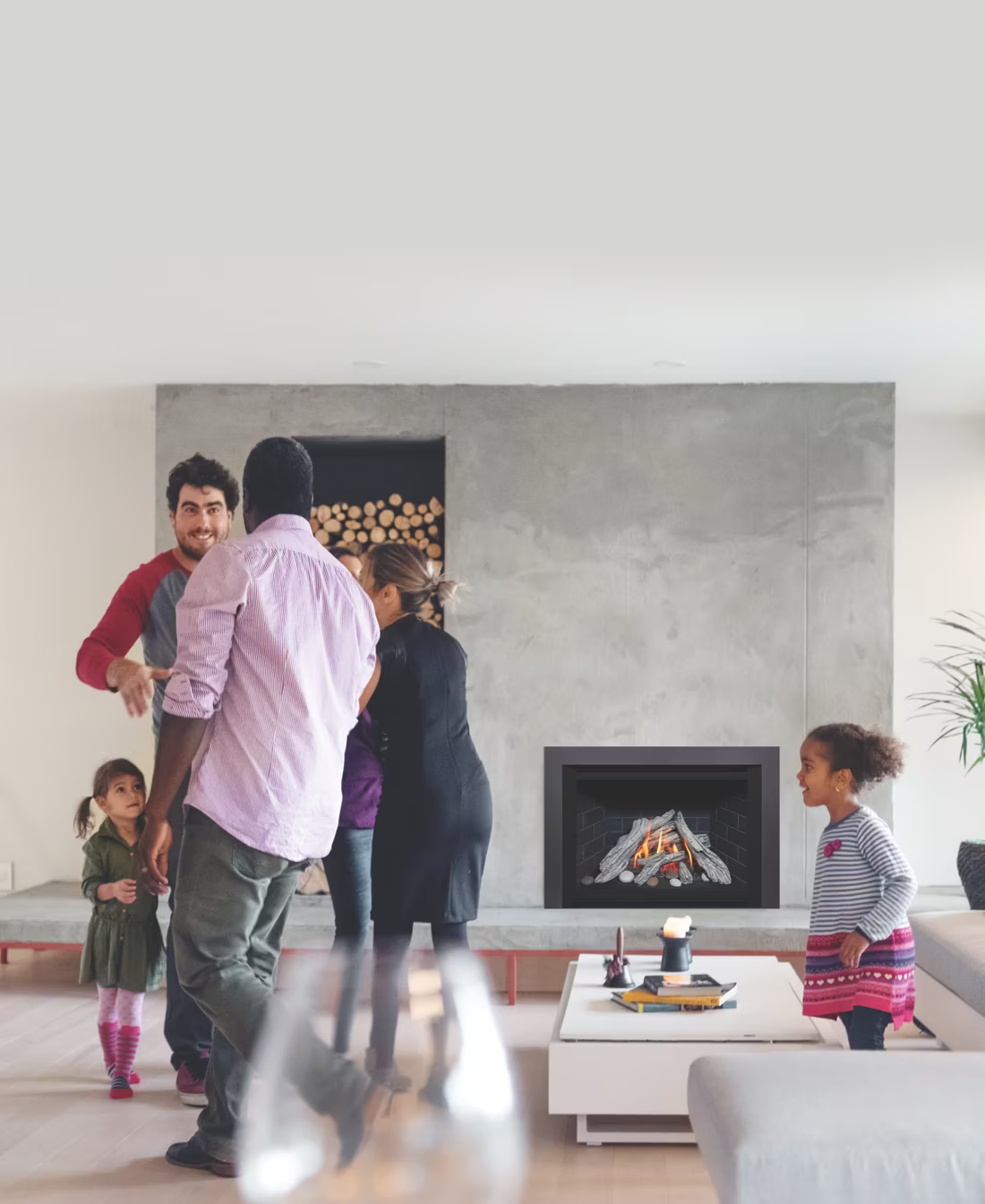
Four fuels. One honest answer for Washington County.
Three steps. No salesperson until you're ready.
Tell us about your project
Your zip code, your situation, and the fuel you're leaning toward—or let the answers point you to one.
See what's actually available
The brands dealers within 100 miles genuinely carry—real options, never a catalog mirage.
Get your dealer & Project Guide
A trusted local dealer, plus the free Project Guide & Parts List that names every component of the job.
Frequently Asked Questions
Which fuel works best for a home in Washington County?
It depends on the house and the wood lot. Wood remains a strong choice in rural Washington County—oak, hickory, and walnut cut from farm timber burn hot and long, and a catalytic stove can hold an overnight fire through a 12-degree low without much trouble. Gas is the low-maintenance option, whether that's natural gas in town in Washington or Kalona, or propane on outlying farmsteads—no wood to split or stack, and instant heat on the coldest mornings. Pellet stoves are a solid middle path: they burn Lignetics or Indeck Energy Services bags with far less mess than cordwood and less daily attention than a wood stove, though you're buying fuel rather than cutting your own. Electric is mostly supplemental here—good for a bedroom, a basement, or ambiance in a room that doesn't need full heat, but not built to carry a Washington County winter on its own. A lot of households end up running two fuels: wood or pellet as the workhorse, gas or electric as backup.
Do I need a permit to install a fireplace or stove in Washington County?
In most cases, yes. New wood stoves, inserts, gas fireplaces, gas inserts, and pellet stoves typically require a building permit, and any new gas line needs a licensed installer and a separate gas permit. New wood-burning appliances also need to meet current EPA emissions standards—this rules out installing an old uncertified stove pulled from a barn or a previous house. Within the city of Washington, permits run through the city; in Kalona, Wellman, and the rest of unincorporated Washington County, they go through the county building department. Most local hearth retailers pull the permit as part of the installation, so it's rarely something a homeowner has to handle solo.
Are there wood-burning or air quality restrictions in Washington County?
No—Washington County has no air quality non-attainment designation and no winter burn advisories, unlike basin or valley counties out West that deal with temperature inversions trapping wood smoke. That doesn't mean anything goes: new wood stoves and inserts still need to meet EPA 2020 NSPS emissions standards to be installed legally, and a well-seasoned load of oak or hickory always burns cleaner than green wood regardless of local rules. But there's no yellow/red curtailment system here—if you're set up with a certified stove and dry wood, you can burn through the winter without checking an advisory page first.
Can one local hearth retailer handle wood, gas, pellet, and electric?
Many can, at least for three of the four. Hearth retailers serving Washington County typically stock wood and gas as their core lines, with pellet stoves as a strong secondary offering given the local availability of Lignetics and Indeck Energy Services bags. Electric fireplaces are increasingly carried as well, especially for buyers looking at a bedroom or basement install rather than a primary heat source. If you're trying to compare fuels side by side, ask a retailer directly which lines they carry and stock in-showroom—smaller-town dealers sometimes special-order less common fuel types rather than keeping a floor model on hand.
How does installation and service work for the small towns around Washington?
Most retailers and techs are centered in or near Washington and drive out to Kalona, Wellman, Ainsworth, Brighton, Crawfordsville, and Riverside for both installs and annual service. Expect a modest trip charge for the farther-out addresses, and expect scheduling to tighten up fast once temperatures drop—booking your chimney sweep or gas inspection in September or October, ahead of the cold snap, is a lot easier than trying to get someone out in January. If you're on a rural route outside any of the towns, mentioning your nearest town and rough mileage when you call helps a dealer quote an accurate service window.
What does fireplace installation typically cost across fuel types in Washington County?
Costs vary by fuel and by how much venting or gas line work is involved. Wood stove or insert installation usually runs $4,000-$8,500, more if a full chimney liner or new masonry is needed. Gas fireplace, insert, or stove installs typically fall between $4,000-$10,000, with cost driven mostly by how far the gas line has to run. Pellet stoves or inserts generally land in the $4,000-$7,000 range for a standard install. Electric fireplaces are the cheapest entry point—often $200-$3,000 for the unit itself, plus $300-$1,000 in labor unless it's a simple plug-and-play unit. The county + fuel pages above break these down further with local retailer pricing.
Can I install a fireplace myself?
If you're putting a fire in your house on purpose, it's best to work with an expert. Unless you're genuinely experienced in framing, gas line, vent pipe, and the national code on clearances to combustibles, have a professional do it—and ideally the same company that sells you the fireplace, so warranty, service, and liability all live under one roof.
Should the dealer who sells my fireplace also install it?
Ideally, yes. A fireplace project involves vent pipe, gas line, electrical, and often tile or stone. Hire three or four separate trades and you own the liability and the game of telephone between them. One company selling and installing means one accountable party, start to finish—ask about factory training, on-time completion records, and what happens if an inspection fails.
Does a fireplace add value to my home?
On average, a fireplace adds back to the home about the same amount you spent installing it. Add the monthly savings from heating the rooms you actually use instead of the whole house—often hundreds of dollars a year—and the value case is strong before you even count what a fire does for how your family uses the room.
How much should I budget for a fireplace?
For an average home—covering the fireplace, the vent pipe, and basic installation—a budget between $3,900 and $5,500 gives you a lot of options across wood, gas, and pellet. By the time you add finish work, gas line, and electrical, the average complete installation lands between $5,000 and $12,000 all-in. In a remodel or new build, a good rule is to put about 2.5% of the total project cost toward the fireplace.
Stove and Fireplace Dealers in Washington County
Listings include WhyFire partner dealers, dealers we have verified as authorized for the brands we recommend, and established local businesses that carry hearth products. Every listing shows which one it is. The ones marked Preferred run on WhyFire's software, so they can show you real pricing and book your appointment right here. No manufacturer pays for placement. How we verify dealers →
Graber Heating & Air
Brandt Heating And Air Conditioning
Brick House Ops.
Hearth And Home Solutions
Find your fireplace in Washington County.
Pick your fuel below to see local dealers, installation costs, and get matched with a trusted retailer who'll put together a free Project Guide & Parts List for your home.
Find Your Fireplace →