
Pellet heat that keeps up with Wapello County's long winters.
From Ottumwa to Eldon, Agency, and Chillicothe, winters here average 14°F lows and add up to a long, steady heating season comparable to Madison, Wisconsin. A thermostat-controlled pellet stove or insert delivers steady, hands-off heat—find the right unit and a trusted local dealer to install it.
Every Project Starts From One of These Five Situations
Automated heat without the wood-splitting work.
Wapello County sits along the Des Moines River in southeast Iowa, anchored by Ottumwa and the smaller communities of Eldon, Agency, and Chillicothe. At climate zone 5A with an average winter low of 14°F, the county's heating season runs comparable to Madison, Wisconsin—long, cold, and steady rather than brutally extreme. Homeowners here have traditionally burned oak, hickory, maple, and walnut cordwood, all of which grow abundantly in the county's river-bottom timber, but a growing number choose pellet stoves and inserts for the hands-off convenience: load the hopper, set the thermostat, and let the auger do the rest.
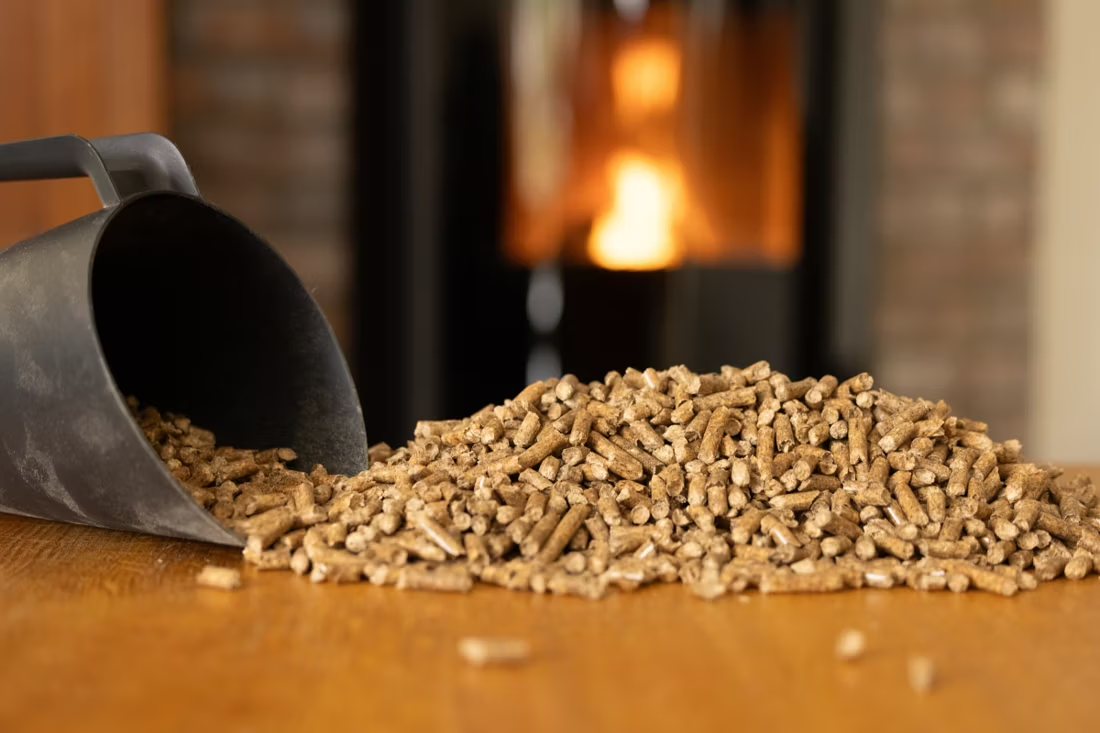
Southeast Iowa doesn't carry the wildfire-smoke or winter-inversion restrictions you'd find in parts of the West—Wapello County has no listed air quality curtailment periods, so pellet appliances here are chosen for convenience and consistent output rather than to dodge burn bans. Pellets from Lignetics and Indeck Energy Services are both distributed through the regional supply chain and available at farm and hardware retailers across southeast Iowa. A pellet stove or insert gives Ottumwa-area homes a cleaner-burning, lower-maintenance alternative to cordwood—less ash, no splitting or stacking, and BTU output that holds steady through a Wapello County February.
Three steps. No salesperson until you're ready.
Tell us about your project
Your zip code, your situation, and the fuel you're leaning toward—or let the answers point you to one.
See what's actually available
The brands dealers within 100 miles genuinely carry—real options, never a catalog mirage.
Get your dealer & Project Guide
A trusted local dealer, plus the free Project Guide & Parts List that names every component of the job.
Frequently Asked Questions
How much does a pellet stove or insert installation cost in Wapello County?
Most pellet stove and insert installations in Wapello County run in the $3,000 to $6,000 range, depending on the unit, whether it's a freestanding stove or an insert into an existing fireplace, and how much venting work is needed. Pellet appliances vent through a smaller-diameter pipe than wood stoves and can often exit through an exterior wall rather than requiring a full chimney, which keeps costs down for homes in Ottumwa, Eldon, Agency, and Chillicothe that don't already have masonry chimneys. A local dealer can give you a firm number after an in-home look at your venting path and electrical access, since pellet stoves need a standard outlet nearby for the auger and blower.
How much pellet fuel will I need to get through a Wapello County winter?
With a long, steady heating season and winter lows averaging 14°F, a mid-size pellet stove used as primary heat in an average Ottumwa-area home typically burns through 2 to 3 tons of pellets across a full heating season—more in an older, less-insulated farmhouse, less in a well-sealed newer build used for supplemental zone heat. Most hopper sizes hold 40 to 80 pounds, good for 24 to 48 hours of burn time on a moderate setting, so plan on refilling daily during the coldest stretches of January and February.
Where can I buy pellets in Wapello County?
Lignetics and Indeck Energy Services both distribute pellets through the regional supply chain that reaches southeast Iowa, and you'll find bags at farm supply stores and hardware retailers around Ottumwa. Buying a full season's supply early—before the first cold snap in November—is worth doing, since pellet demand and pricing both tighten up once temperatures drop. Look for PFI (Pellet Fuels Institute) certified bags; certified pellets have lower ash and moisture content, which means fewer clinkers and less maintenance on your auger and burn pot.
What's the difference between a pellet stove and a pellet insert?
A pellet stove is a freestanding unit that sits on its own hearth pad and vents through an exterior wall or existing chimney—it can go almost anywhere with an outlet nearby. A pellet insert is built to slide into an existing masonry fireplace opening, which is a common upgrade for older Ottumwa homes with a fireplace that's rarely used because it's inefficient. Both run off the same hopper-and-auger system; the choice mostly comes down to whether you have an existing fireplace opening to convert or need a standalone unit in a room without one.
Do pellet stoves need electricity to run?
Yes—unlike a wood stove, a pellet stove depends on electricity to run the auger that feeds fuel and the blower that distributes heat, so it will shut down in a power outage unless you have a battery backup or generator. For Wapello County homeowners who want emergency heat during a winter storm-related outage, that's the main tradeoff versus a wood stove. Some homeowners pair a pellet stove for daily convenience with a small battery backup unit or keep a wood-burning option elsewhere in the house for outages.
What size pellet stove do I need for my home?
Sizing depends on square footage, insulation, and whether the stove is your primary heat source or supplemental. As a rough guide for Wapello County's climate: smaller units (rated under 1,000 sq ft) work well for supplemental heat in one room or a well-insulated addition, while mid-size units (rated 1,000-2,000 sq ft) handle most primary living areas in an average Ottumwa-area home. Older farmhouses with higher ceilings and less insulation typically need to size up. A local dealer will size your space based on an in-home assessment rather than square footage alone—factors like ceiling height and window count matter as much as floor area.
Do I need a permit to install a pellet stove in Wapello County?
Most jurisdictions require a building permit for a new pellet stove or insert installation, and Wapello County and the City of Ottumwa are no exception—check with your local building department before work begins. Because pellet stoves typically vent through a smaller side-wall pipe rather than a full masonry chimney, the permitting and inspection process is often simpler than a wood stove install. Most local hearth dealers handle the permit application as part of the installation, so it's worth asking upfront whether that's included in your quote.
Pellet vs. wood—which is right for my Wapello County home?
Wood offers the classic fire experience, works without electricity during outages, and pairs naturally with the oak, hickory, maple, and walnut cordwood common throughout the county's river-bottom timber. Pellet stoves trade some of that ambiance for convenience: thermostat control, less ash, no splitting or stacking, and a more consistent BTU output night after night. Since Wapello County has no air quality curtailment periods restricting either fuel, the choice here really comes down to lifestyle—homeowners who want set-it-and-forget-it heat during Iowa's long winter tend to prefer pellet, while those with access to cheap or free cordwood and who don't mind the extra labor often stick with wood.
How often does a pellet stove need cleaning and maintenance?
Pellet stoves need more frequent light maintenance than wood stoves but far less heavy cleaning. Plan on emptying and cleaning the burn pot every few days to weekly during heavy winter use, a deeper cleaning of the exhaust venting and hopper monthly, and a full professional service annually—typically before the season starts each fall. Using PFI-certified pellets from suppliers like Lignetics or Indeck Energy Services helps keep ash and clinker buildup low, which cuts down on how often you need to clean the burn pot.
How often does a pellet stove need cleaning?
A clean pellet stove is a happy pellet stove. Plan on cleaning the burn pot about once a week when you're burning regularly—ash and clinkers gum up the air holes just like a pellet barbecue. Most pellet stove problems trace back to skipped cleaning that nobody explained up front. Some designs make it easy with a trapdoor burn pot: pull a lever and the gunk drops into the ash pan.
What's the difference between an insert and a zero-clearance fireplace?
An insert is a fireplace that slides into a pre-existing wood-burning fireplace—if you don't have one, there's nothing to insert it into. A zero-clearance fireplace is built into a framed wall, which makes it the answer for remodels and new construction. Simple test: existing masonry fireplace means insert; blank or framed wall means zero-clearance.
Can I install a fireplace myself?
If you're putting a fire in your house on purpose, it's best to work with an expert. Unless you're genuinely experienced in framing, gas line, vent pipe, and the national code on clearances to combustibles, have a professional do it—and ideally the same company that sells you the fireplace, so warranty, service, and liability all live under one roof.
Can a fireplace actually lower my heating bill?
Yes—by creating a comfort zone. A furnace heats every square foot of the house just to warm the one room you're in; a gas fireplace on low burns roughly a sixth of the gas a typical furnace does. Set the furnace around 55–60 degrees as a baseline, then heat the rooms your family actually uses. Families who heat this way commonly save $20–$60 a month.
Stove and Fireplace Dealers in Wapello County
Pellet Brands Stocked Around Wapello County
Manufacturers will point you to the nearest stocking dealer.
Find your pellet stove in Wapello County.
Tell us about your home in Ottumwa, Eldon, Agency, or elsewhere in Wapello County, and we'll match you with a trusted local dealer and send over a free Project Guide & Parts List—the exact parts, including the vent kit, for your pellet stove or insert project.
Find Your Fireplace →